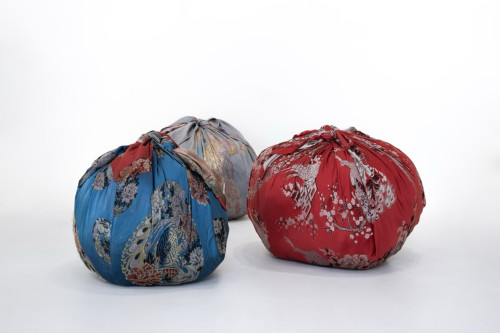
Bottari, 2022-2026
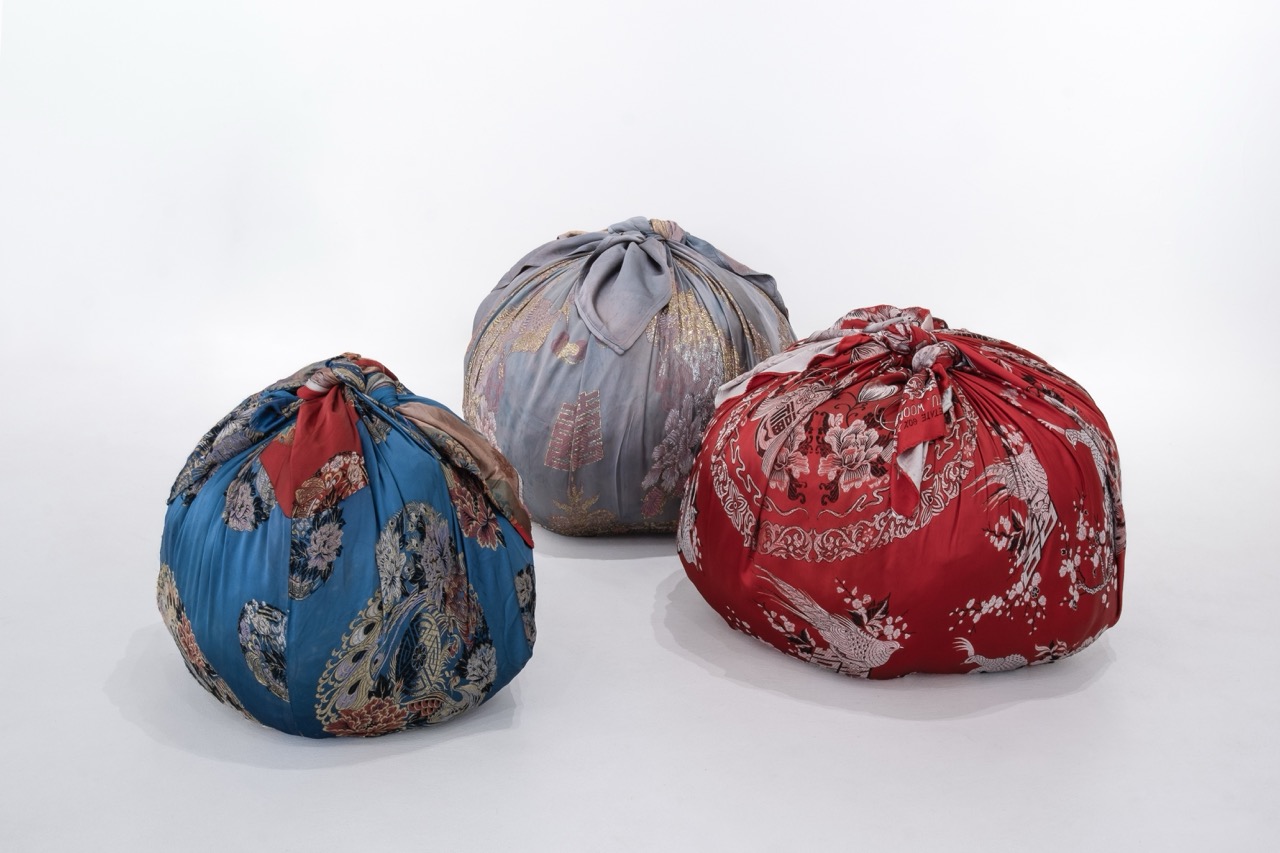
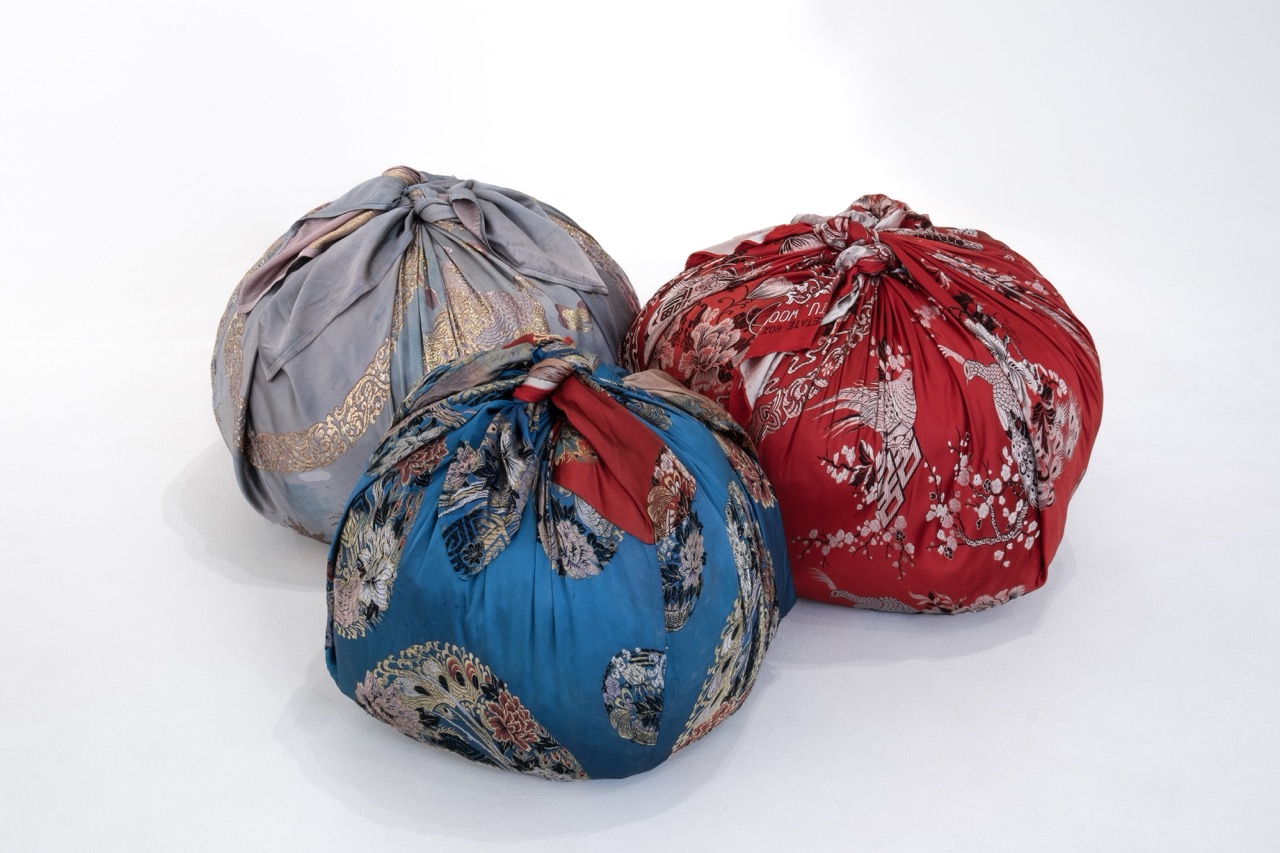
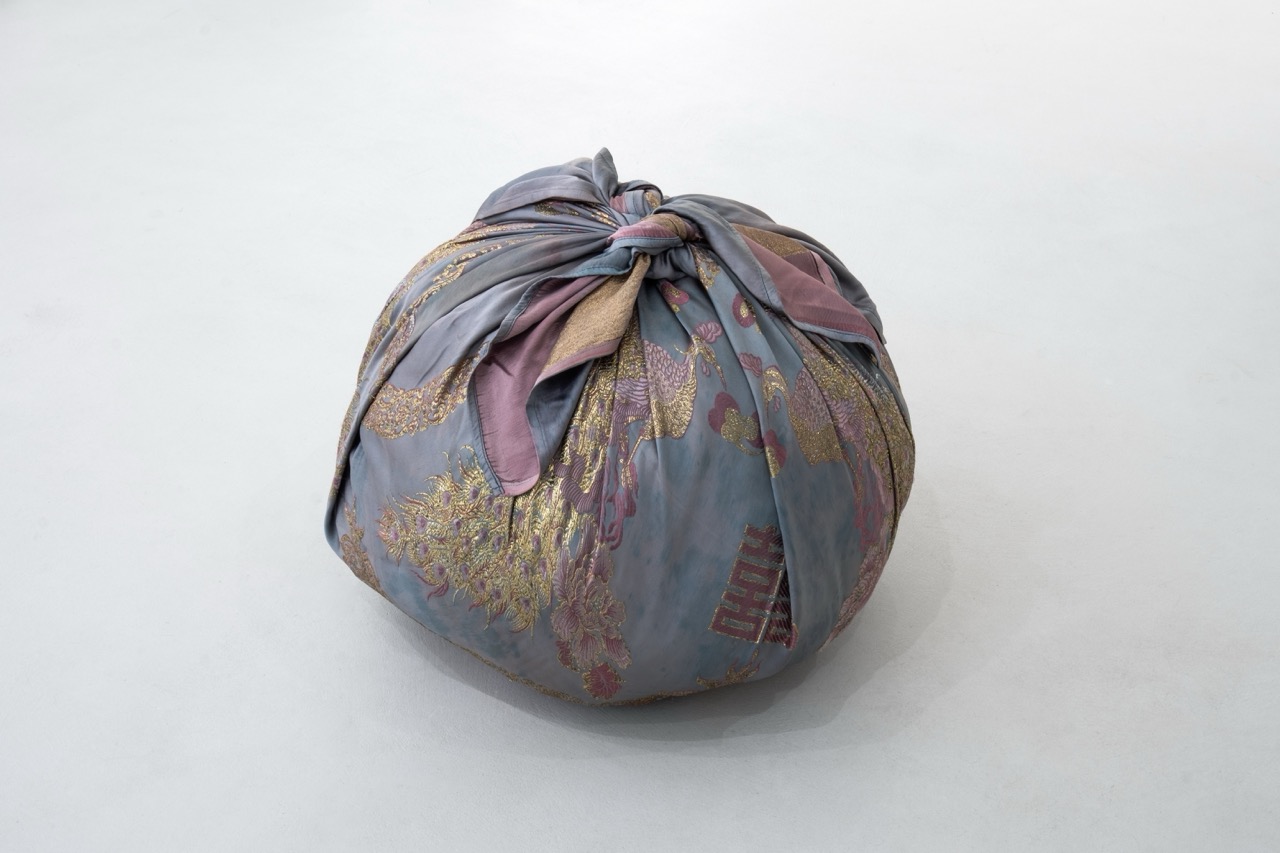
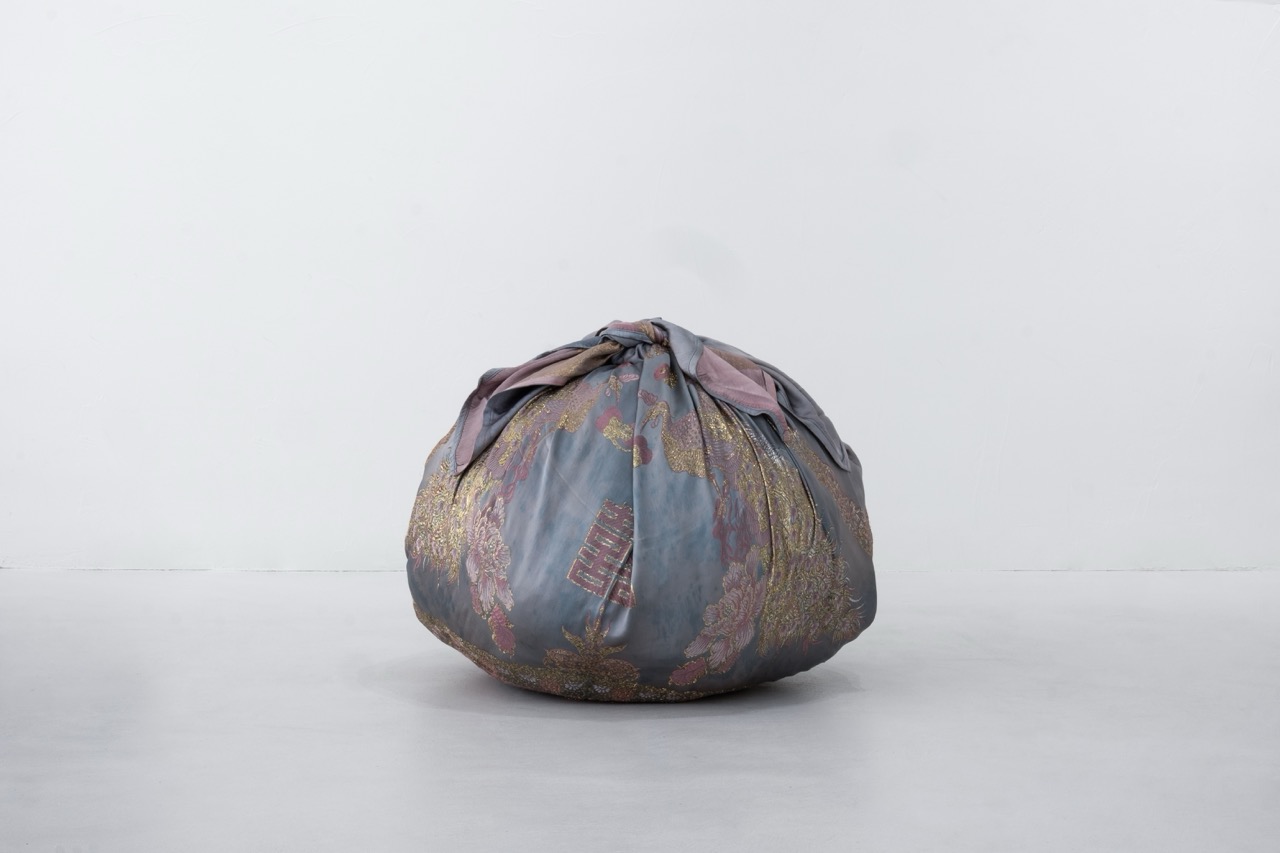
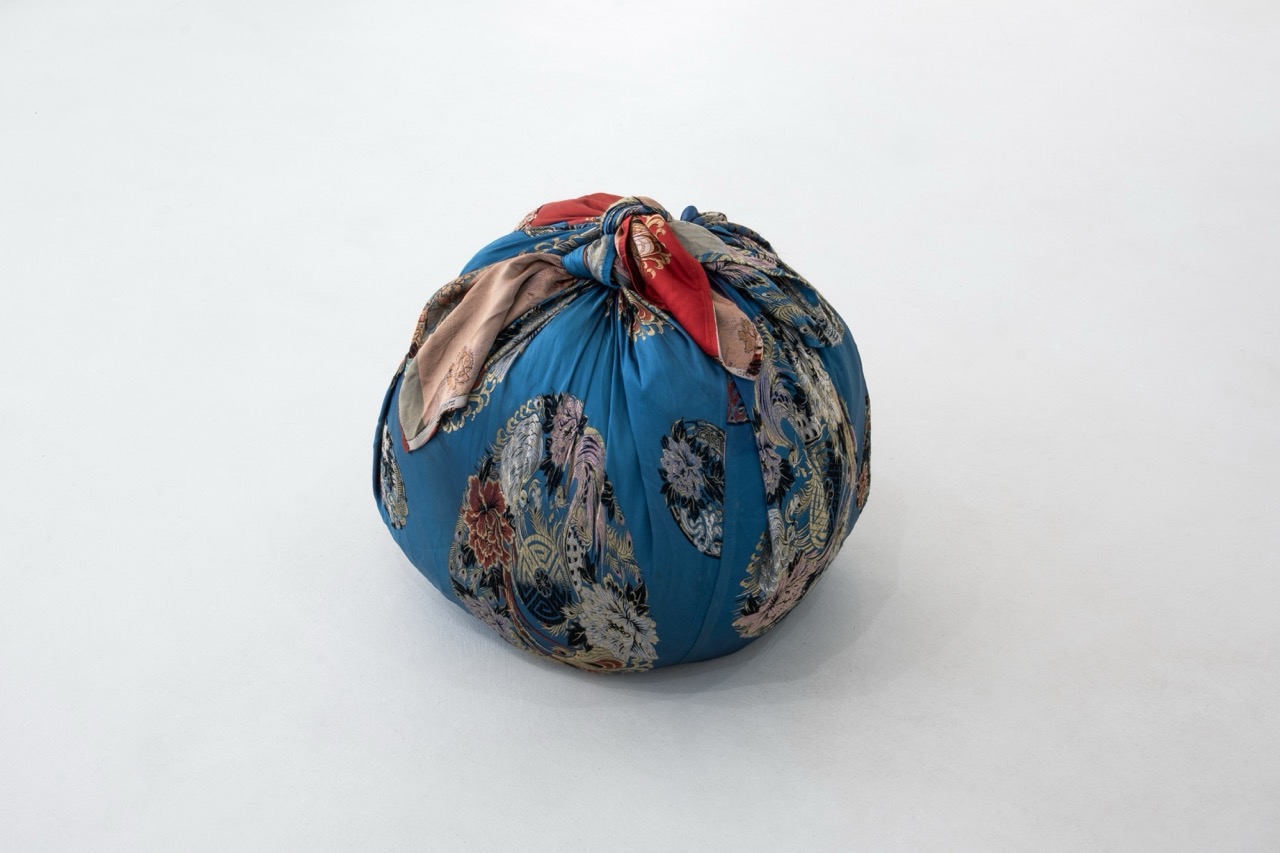
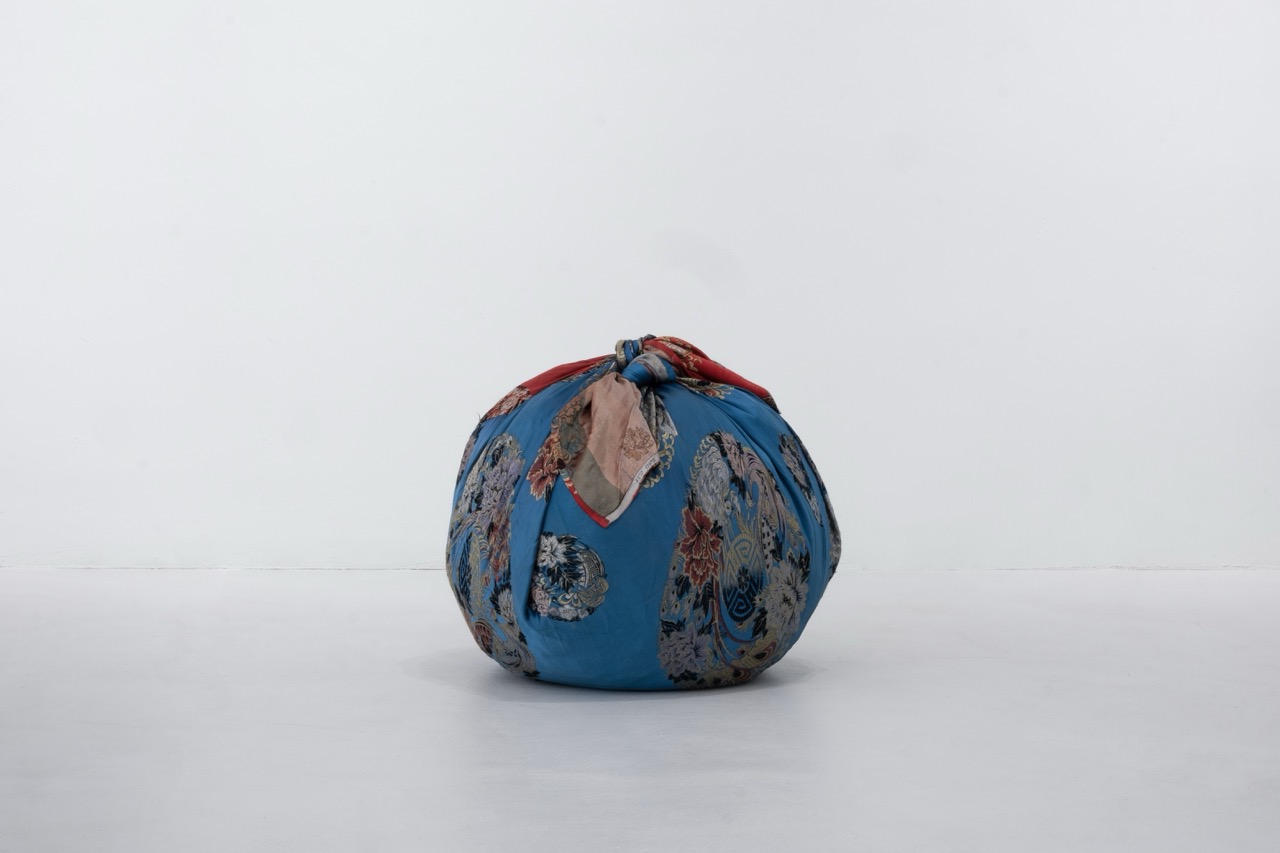
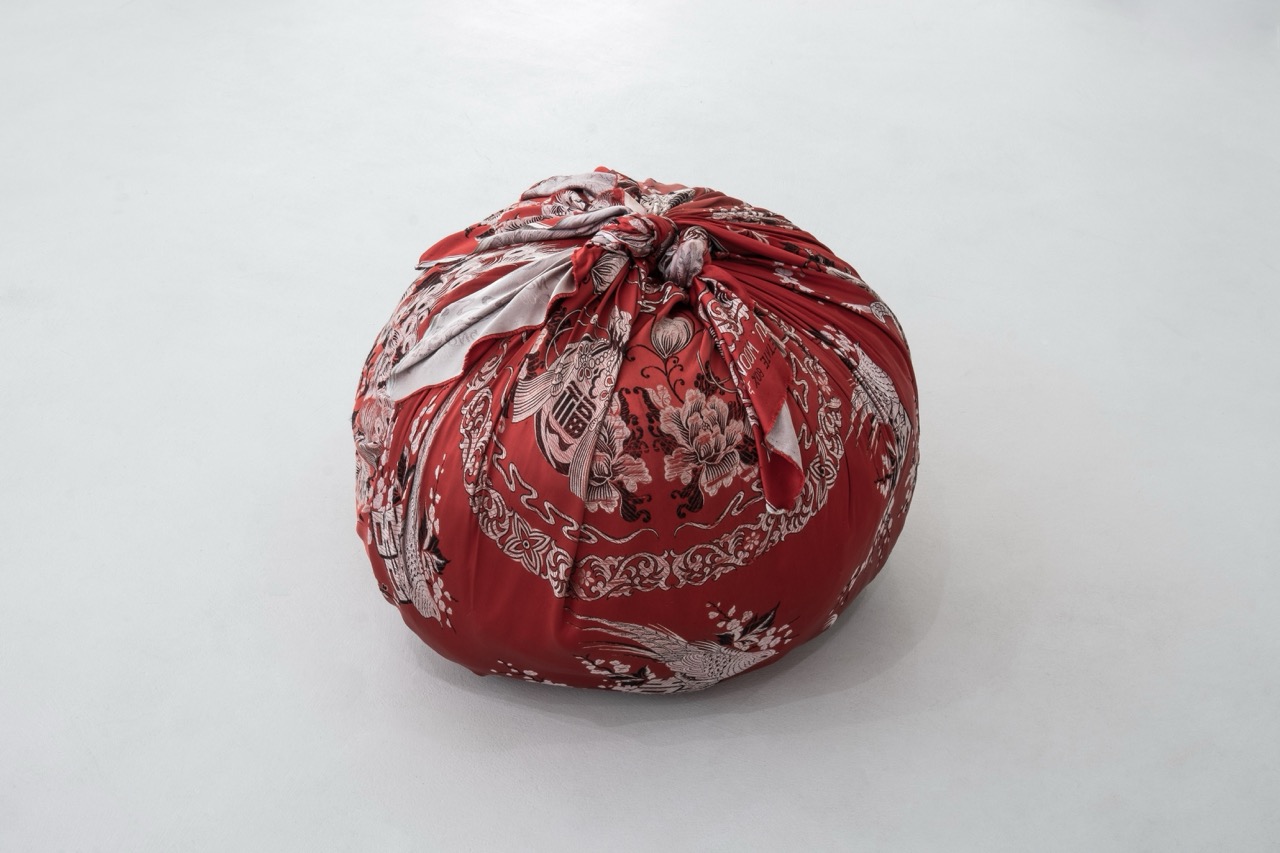
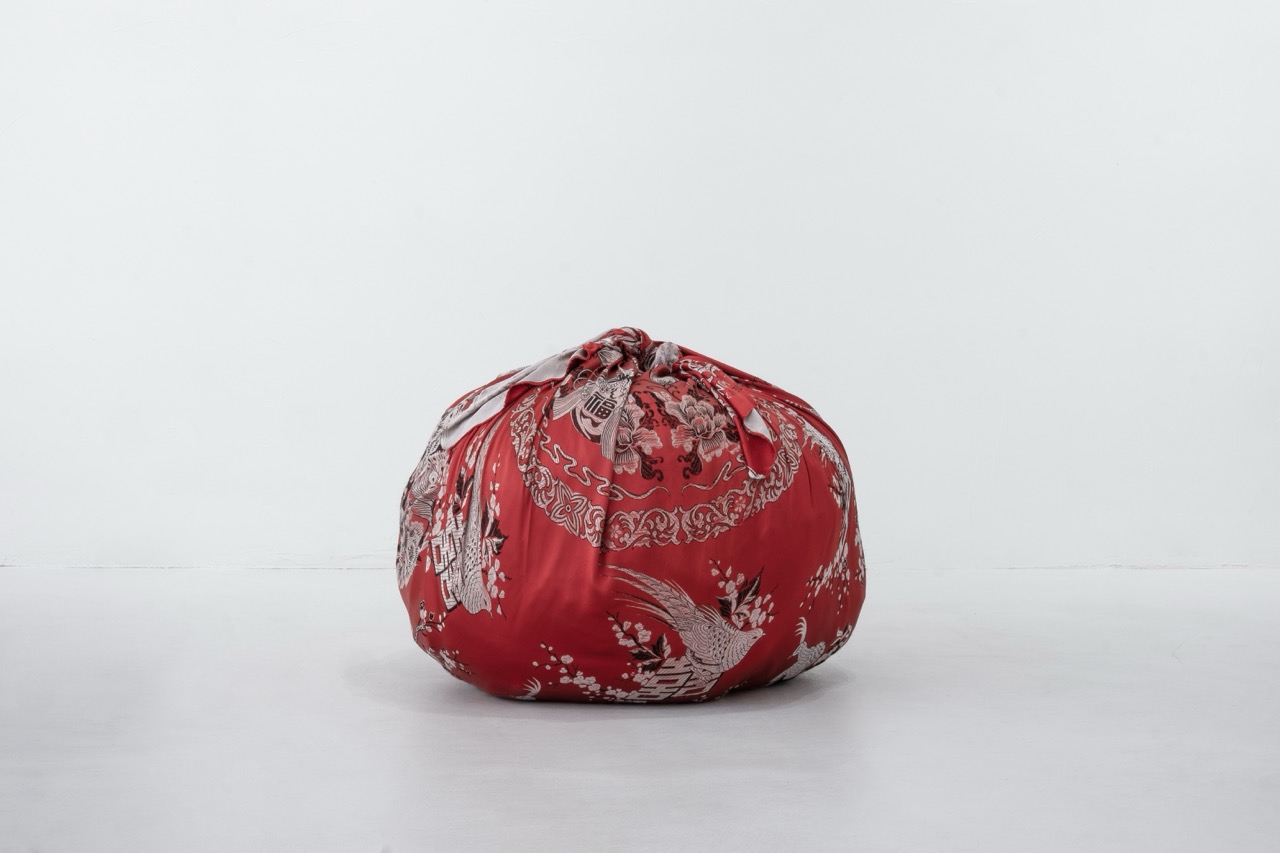
Bottari, 2022-2026
Photo by Sangwoon Jung
Kimsooja, Bottari, 2022-2026, three used korean bedcovers, used clothing, dimensions variable. Courtesy of Axel Vervoordt Gallery and Studio Kimsooja
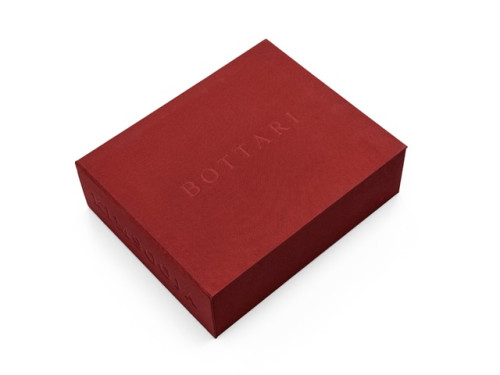
Unfolding Bottari – Geometry of Possession 2026
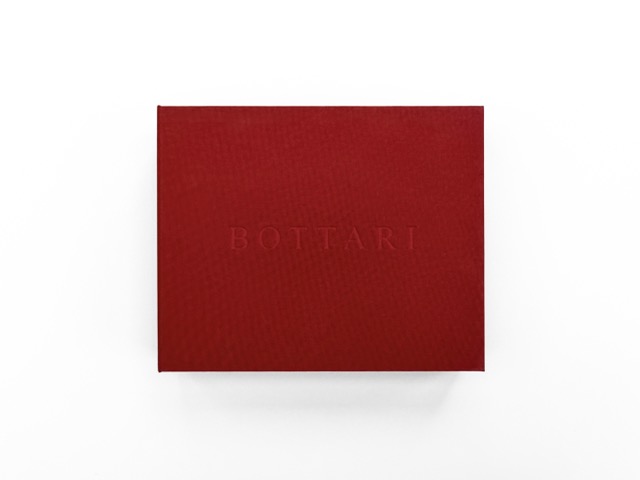
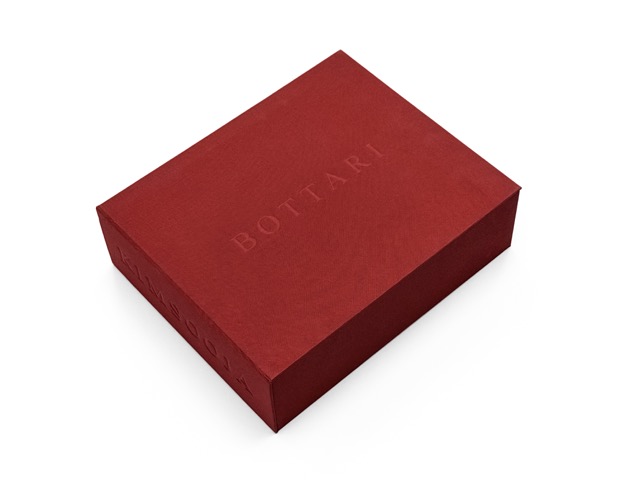
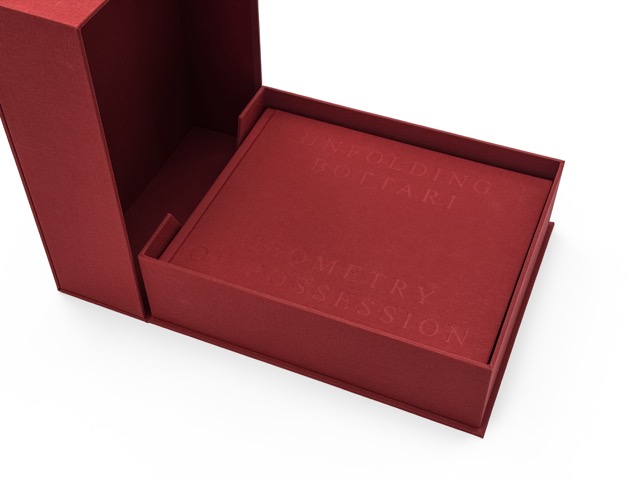
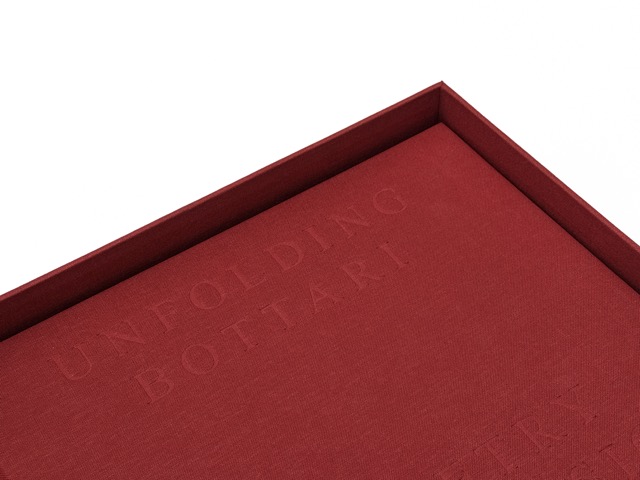
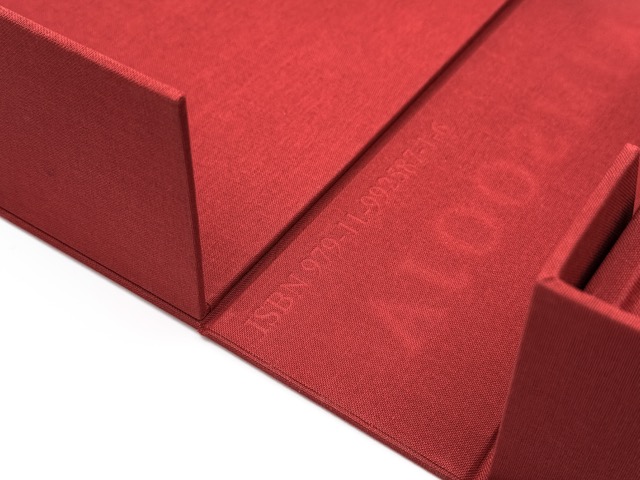
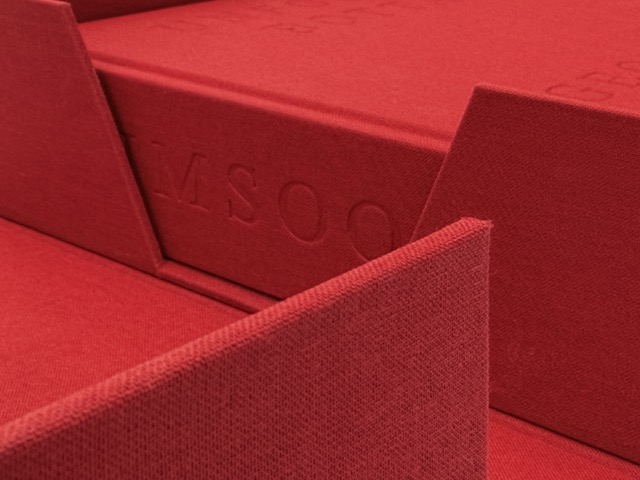
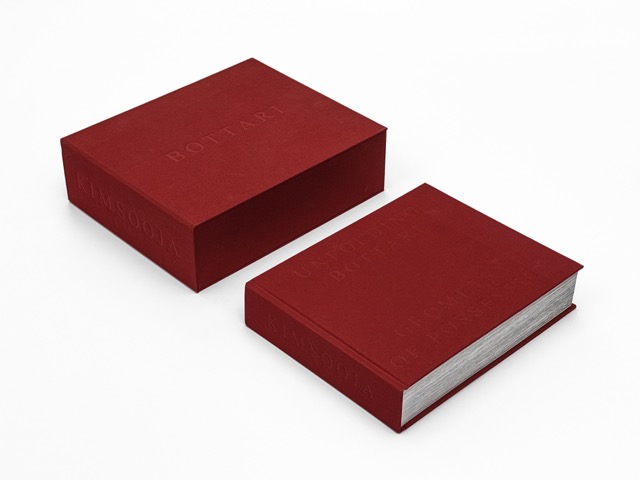
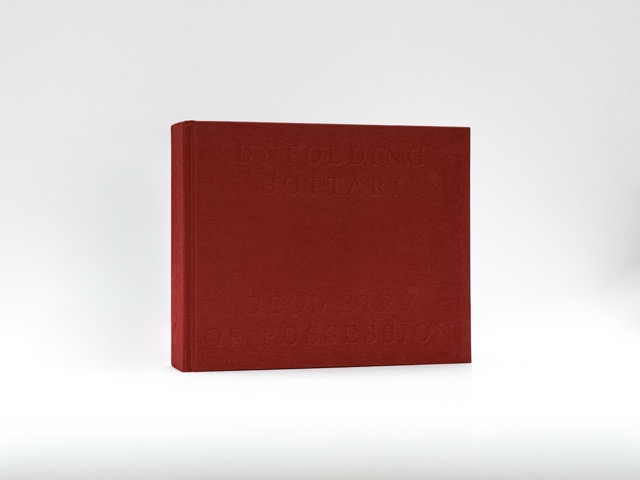
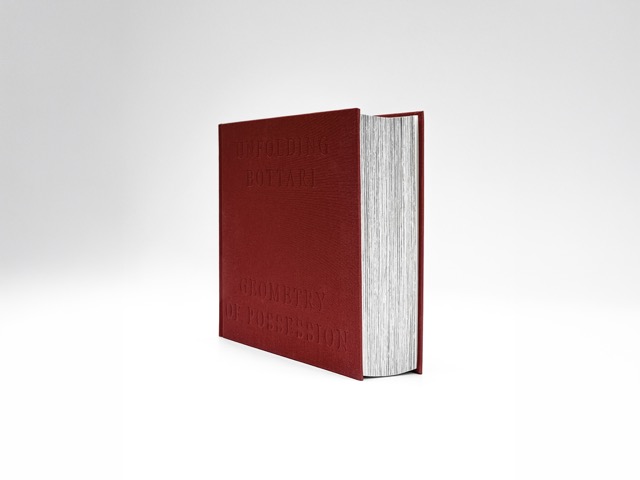
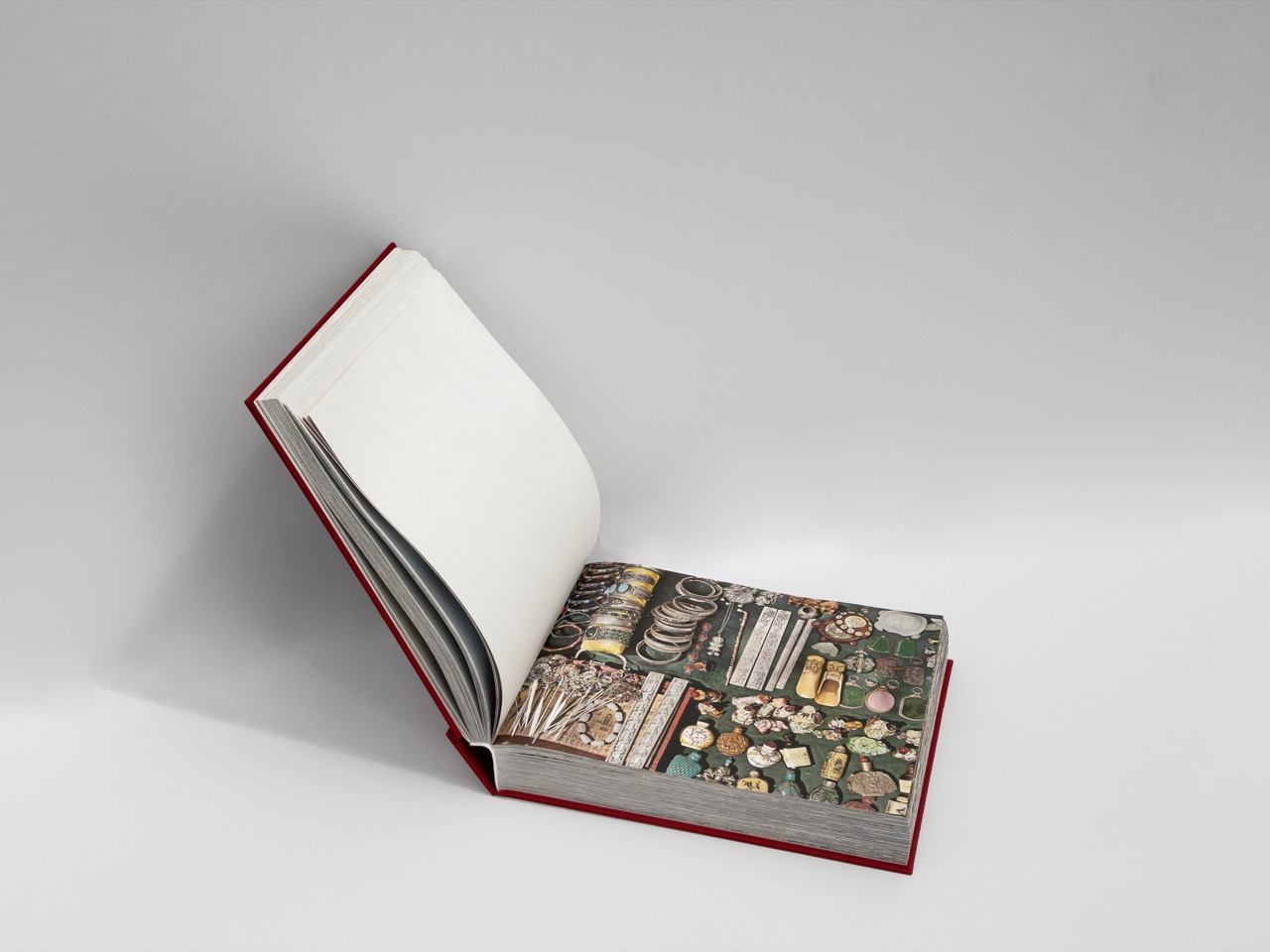
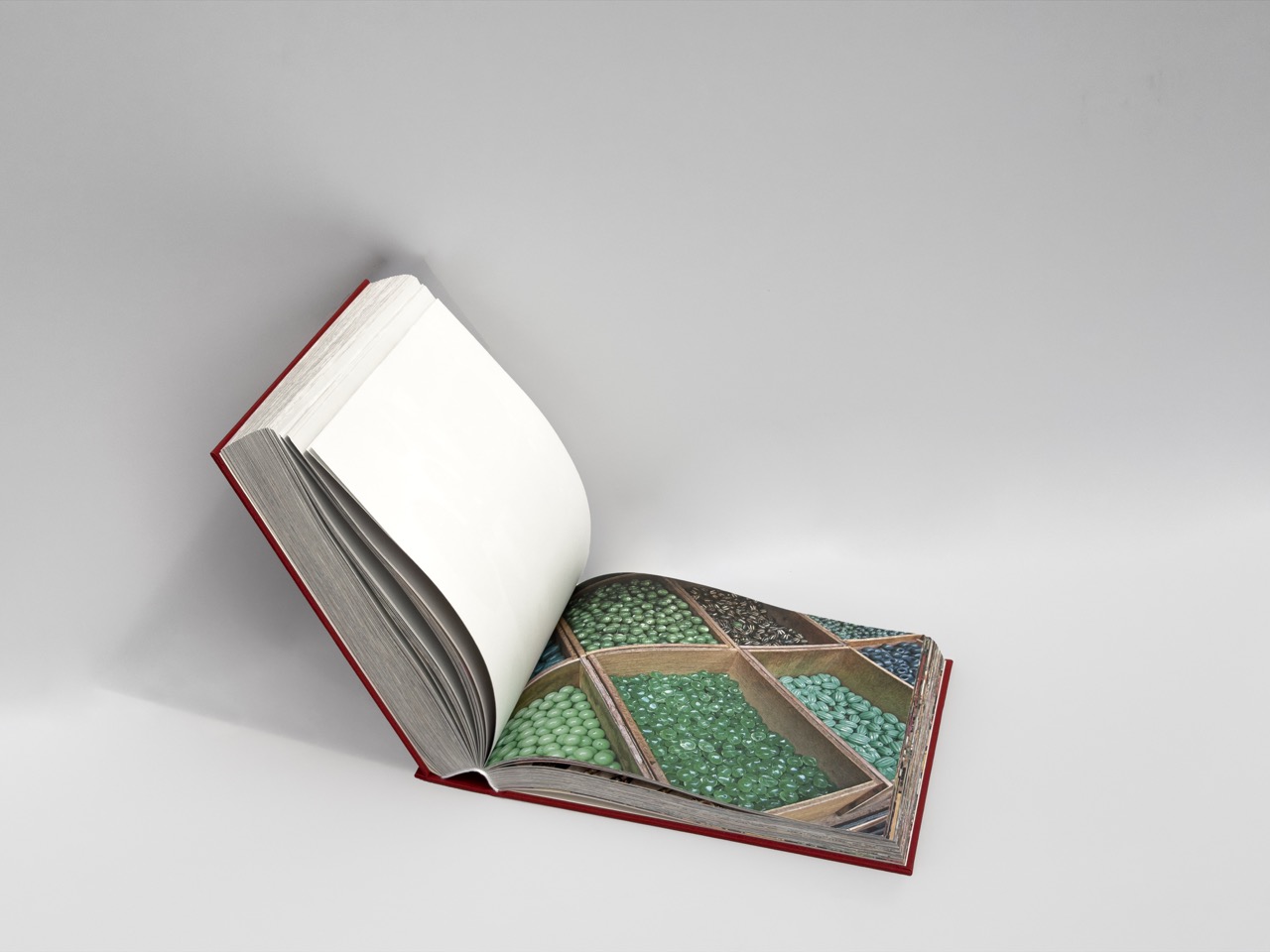
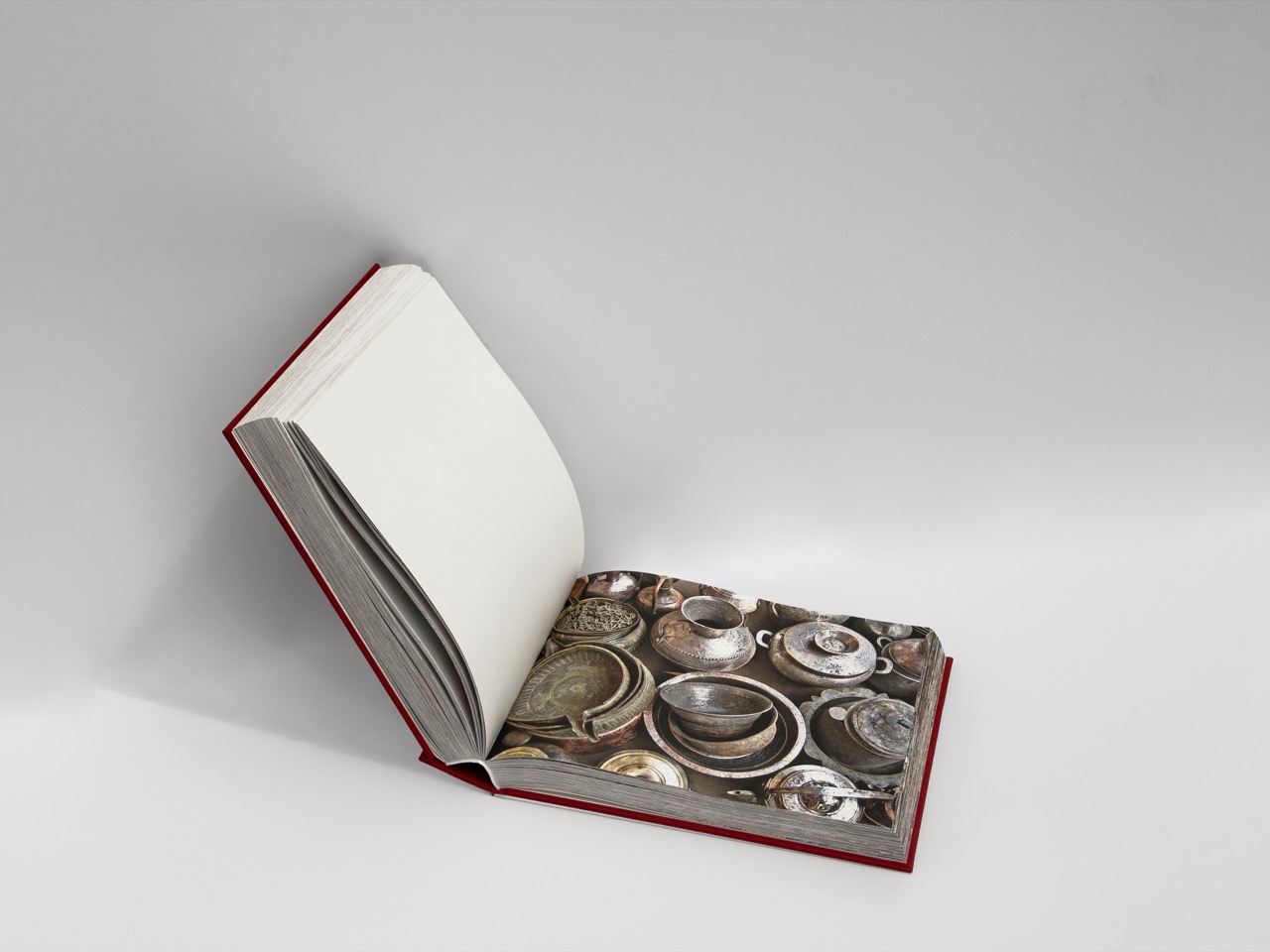
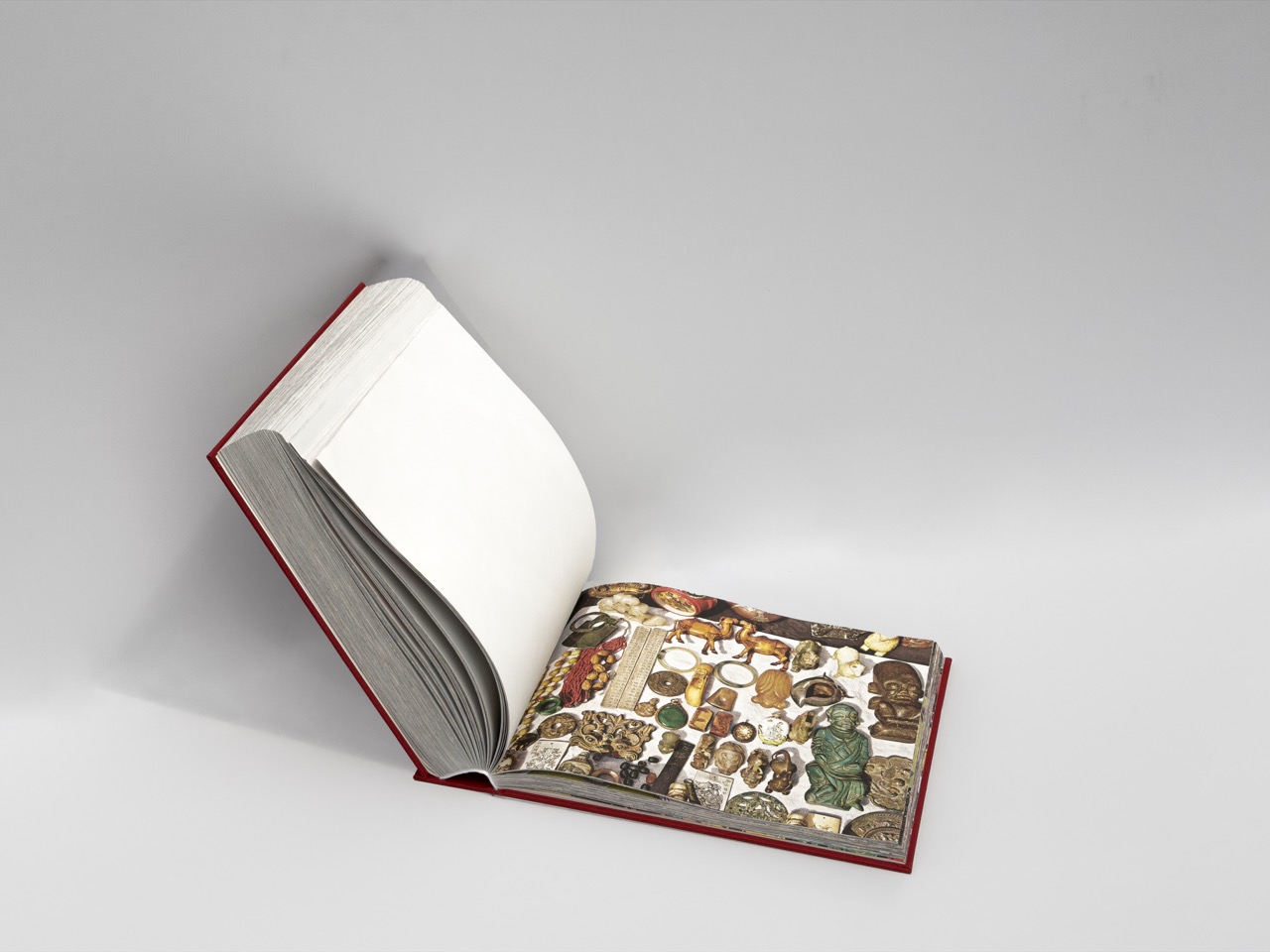
Unfolding Bottari – Geometry of Possession 2026
Unfolding Bottari – Geometry of Possession is an artist book conceived and published by Kimsooja. The two hundred and thirty-nine photographs were chosen from an ongoing documentation of found objects in various flea markets around the world. The photographs in this publication are dated from 1991 to 2023. The locations include New York, Istanbul, Berlin, Moscow, Warsaw, Beijing, and Paris. This artist book is released in two distinct editions: a limited edition of 100 copies signed by the artist and presented in a custom clamshell box, and a standard edition of 200 copies.
Photo by Sangwoon Jung
Kimsooja, Unfolding Bottari – Geometry of Possession, 2026, signed and numbered, hardcover threadbound book in clamshell box containing 239 photographs taken by the artist from 1991-2023. Edition of 100 plus 20 artist's proofs. Commissioned by Sally Wu. Courtesy of Studio Kimsooja.
A Needle Woman: galaxy was a memory, earth is a souvenir | 2025
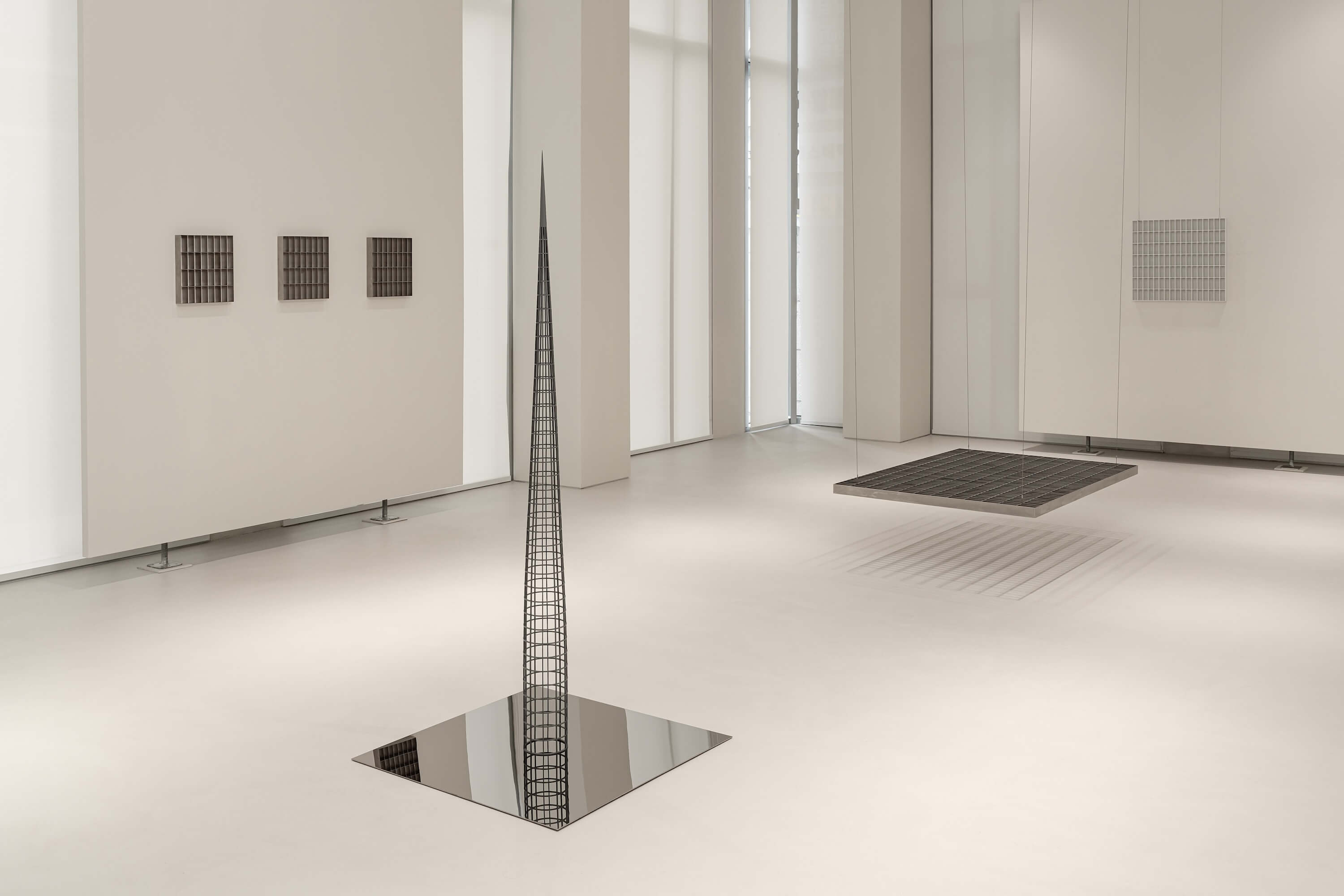
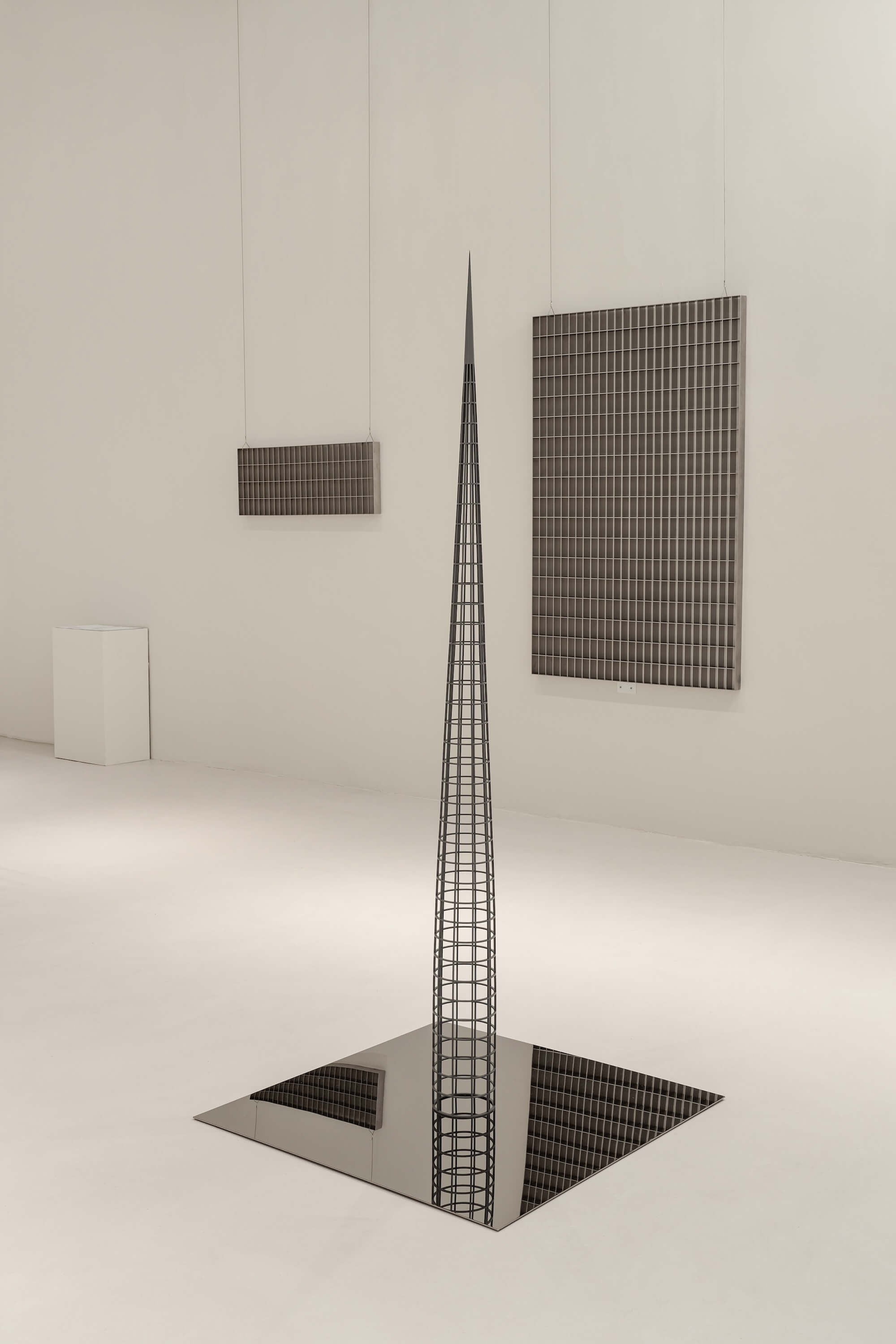
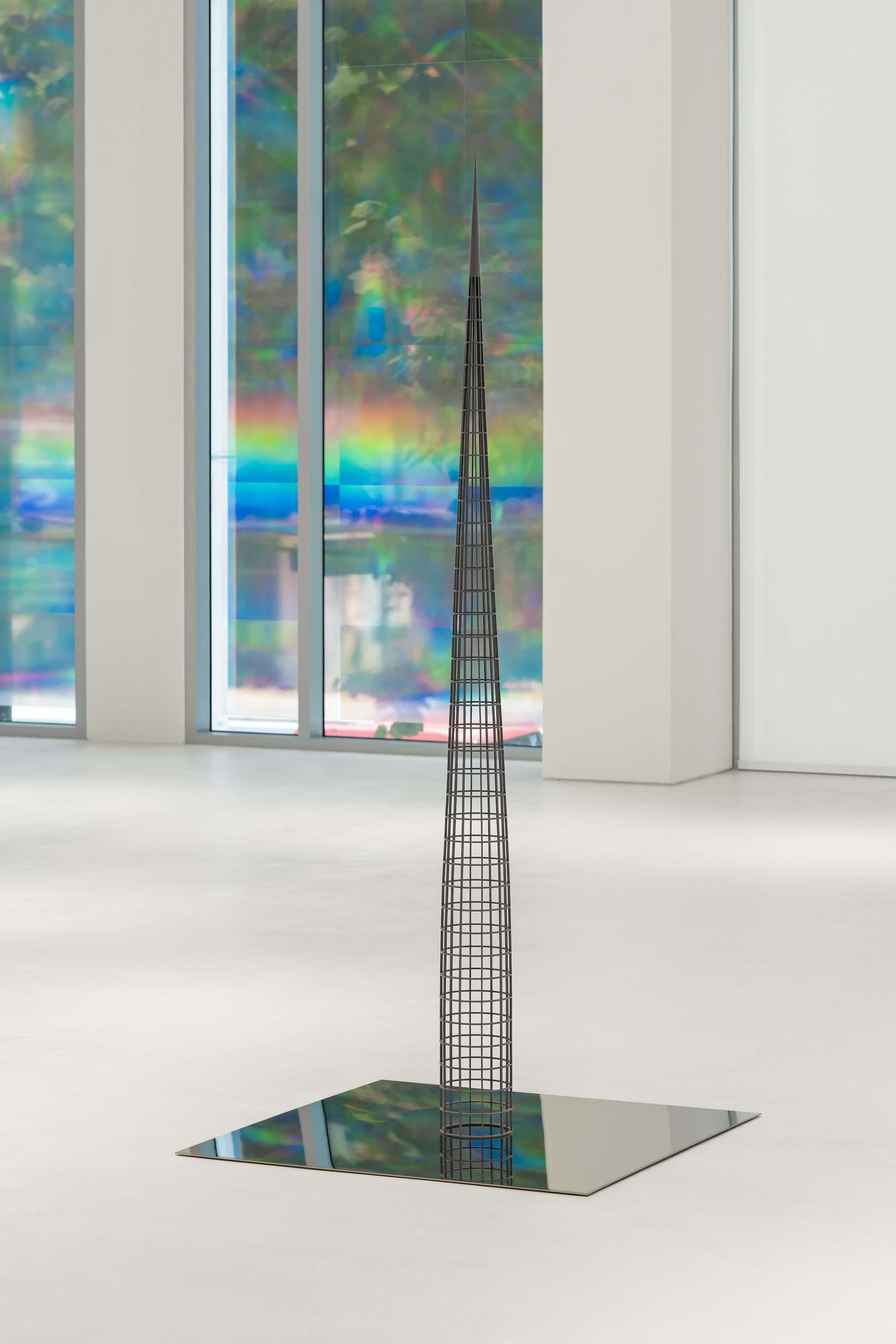
A Needle Woman: galaxy was a memory, earth is a souvenir
A Needle Woman: galaxy was a memory, earth is a souvenir (2025)
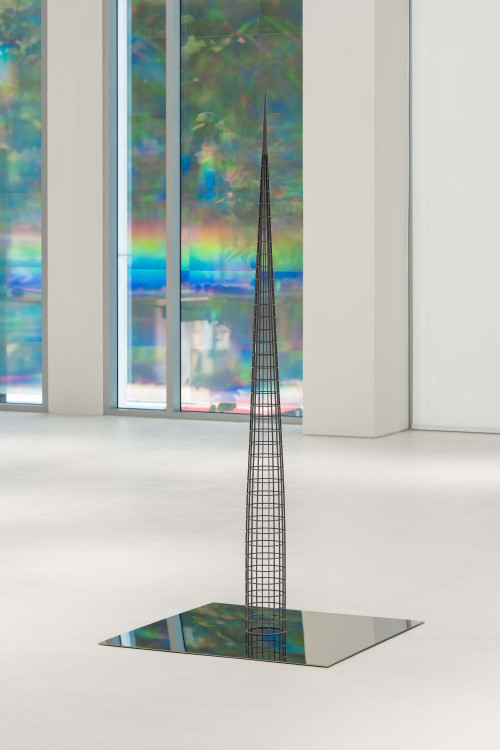
Developed by architect Jaeho Chong, collaborator on Kimsooja’s site-specific conical sculpture A Needle Woman: Galaxy was a Memory, Earth is a Souvenir (2014), this work unfolds as a dialogue between their distinct yet converging vocabularies. Rooted in painting for Kimsooja and in architecture for Chong, their practices meet in a shared meditation on spatiality, surface and the formal logic of the grid. The tower’s proportions unfold from its needle point downward, each segment halving the last in an infinite progression. This recursive structure mirrors the relationship between canvas and frame, balancing surface and support. At once an object and monument, the sculpture engages the viewer at a human scale while evoking the abstract precision of architectural thought.
Photo by Shim Kyuho
Installations at Studio Kimsooja, Seoul
Kimsooja, A Needle Woman: galaxy was a memory, earth is a souvenir, 2025, steel, Sculpture: 200 x 18.2 x 18.2 cm, Base: 90 x 90 cm
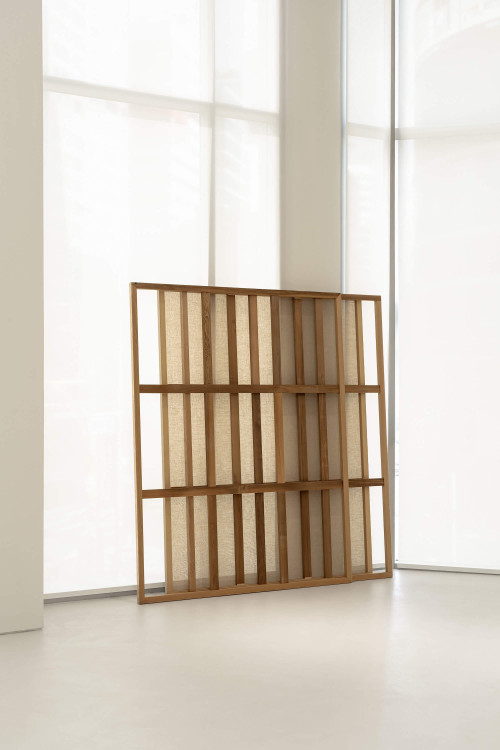
Deductive Object | 2025
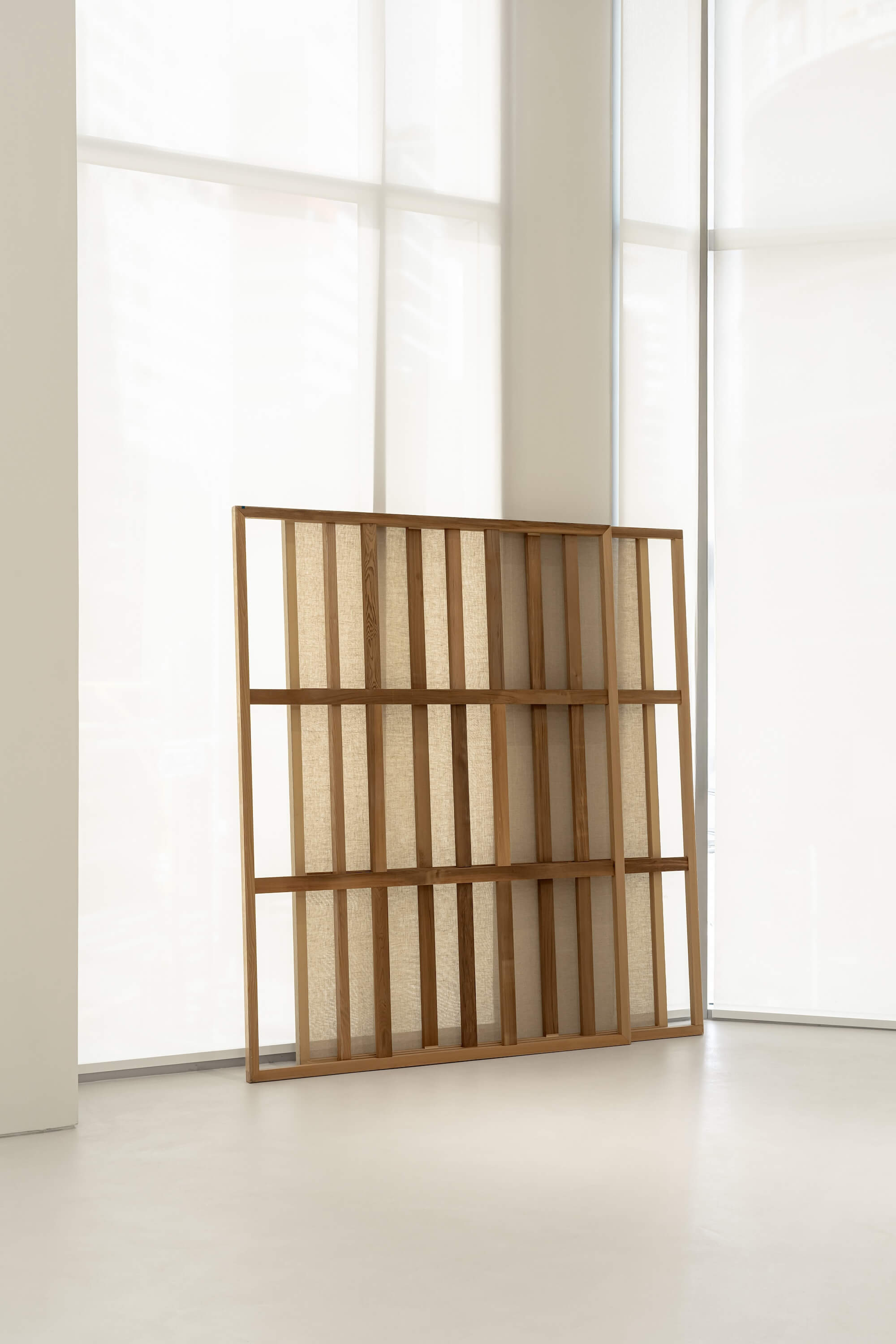
Deductive Object
Photo by Shim Kyuho
Installations at Studio Kimsooja, Seoul
Kimsooja, Deductive Object, 2025, wooden canvas frame, 220 x 210 x 15 cm
Deductive Object – Black Garden | 2024
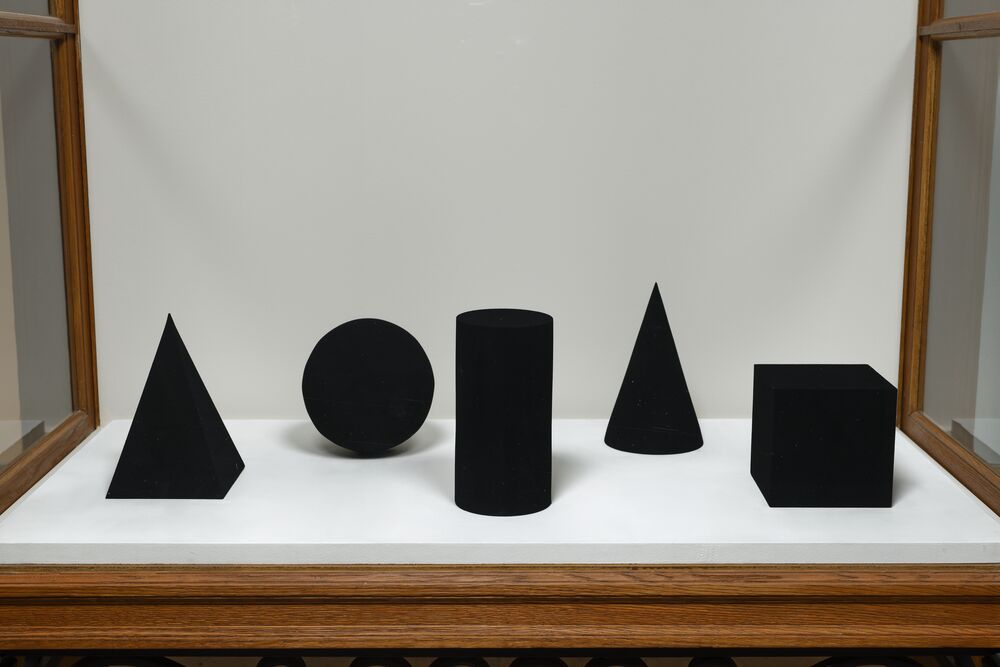
Deductive Object – Black Garden
Deductive Object – Black Garden, 2024
Matte black paint on 5 wooden sculptures, wooden board
Courtesy Kimsooja Studio
Deductive Object – Black Garden comprises five geometric forms painted in a deep black hue. The surface of these forms absorbs enough light to make them appear bi-dimensional, opening a space of uncertainty. Though it is black, there is an absence of shadow, and thus an absence of light; it embraces all colors, but resists our discernment. This investigation into color, light, and primitive symbols resonates with the notion of duality, which has been a recurring motif in Kimsooja’s body of work. The geometric structures present in Kimsooja’s art often disclose contrasting forces inherent in art and life—light and shadow, interiority and exteriority, and life and death.
–
짙은 흑색으로 채색된 다섯 개의 기하학적 형태로 이루어져 있는 이 구조물들의 표면은 빛을 흡수하여 마치 이차원적 평면처럼 보이게 만듦으로써 불확실성의 공간을 열어 둔다. 비록 검은색이지만, 그림자가 존재하지 않기에 빛도 부재하며 모든 색을 포용하면서도 우리의 인지를 끊임없이 거부한다. 이는 색과 빛, 그리고 원초적 상징에 대한 탐구로 김수자 작업 전반에 반복적으로 등장하는 이중성의 개념과 깊이 공명한다. 김수자의 작업에 자주 나타나는 기하학적 구조는 예술과 삶 속에 내재한 대립적 힘, 즉 빛과 그림자, 내면과 외부, 삶과 죽음 등을 드러내는 장치로 기능한다. 이러한 대비는 작가의 사유가 지향하는 근원적 질문을 시각화하며, 형태와 색채 너머의 존재론적 깊이를 제시한다.
View of the exhibition To Breathe – Constellation , Bourse de Commerce – Pinault Collection, Paris, 2024.
© Tadao Ando Architect & Associates, Niney et Marca Architectes, agence Pierre-Antoine Gatier.
Photo: Aurélien Mole / Pinault Collection.
© Kimsooja/ADAGP, Paris, 2024.
Deductive Object | 2023
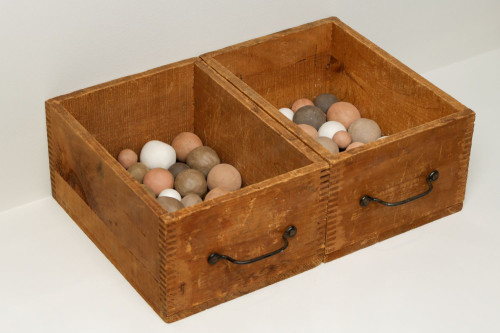
Deductive Object
Deductive Object, 2023
Argile / Clay
Courtesy Kimsooja Studio et Axel Vervoordt Gallery, Anvers /Hong Kong
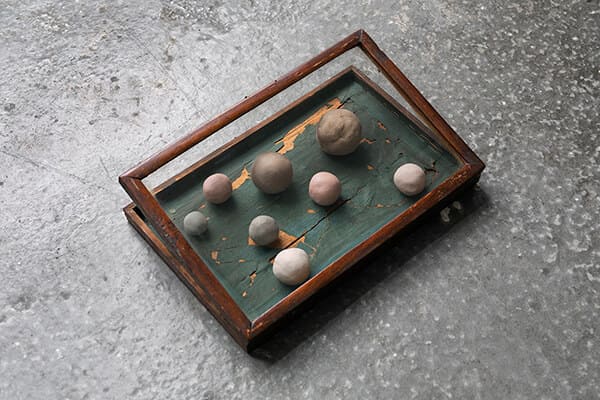
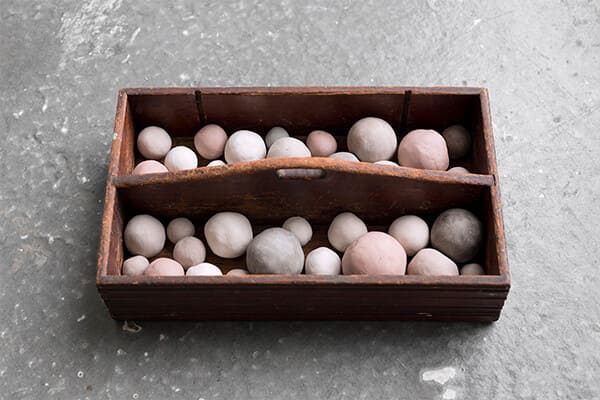
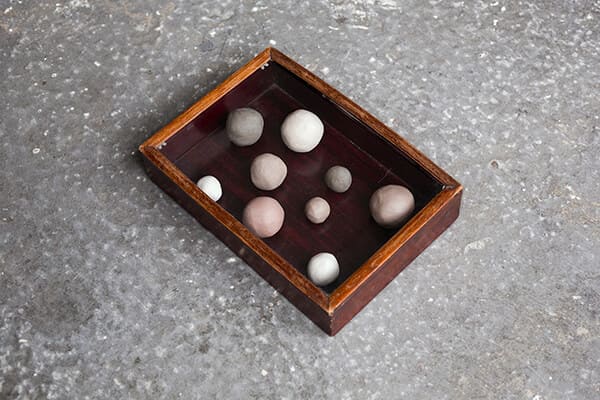
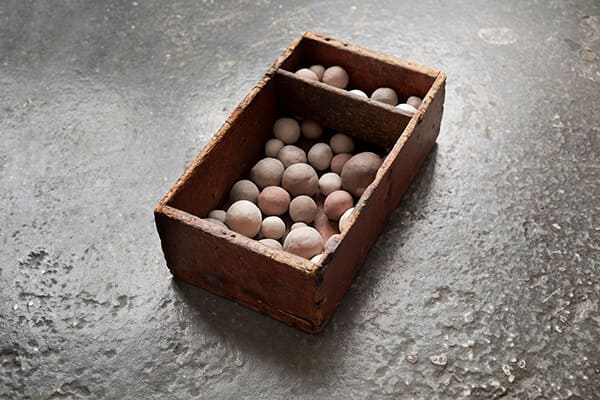
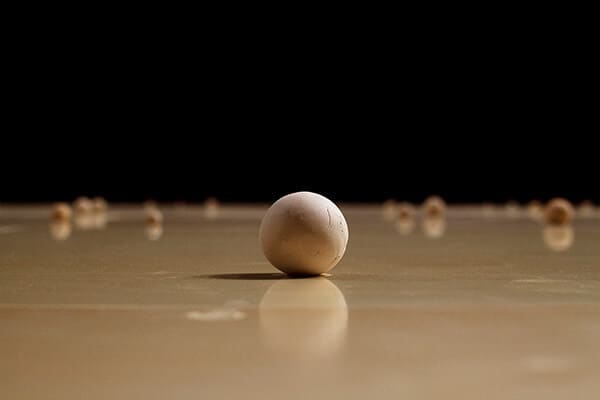
This piece was conceived following the participatory performance Archive of Mind, MMCA Hyundai Motors Series 2016. The artist invited visitors to sit around a 19-meter-long elliptical table and form a sphere with a handful of clay before leaving them in place as part of a collective constellation. In Deductive Object series, Kimsooja places her clay balls in found objects and transforms them into vessels of collective memory. This particular piece was made with local clays at Axel Vervoordt Gallery Hong Kong when the artist had a solo show in 2023.
–
〈연역적 오브제〉는 참여형 퍼포먼스 〈마음의 기하학〉(MMCA 현대자동차 시리즈, 2016) 이후 구상된 작업이다. 당시 작가는 관람객들을 길이 19미터에 이르는 타원형 테이블에 앉게 한 뒤 그들에게 한 줌의 점토를 손으로 빚어 구체를 만들도록 요청하였고, 이렇게 만들어진 점토 구체들은 자리에 남아 거대한 별자리의 일부로 축적되었다. 〈연역적 오브제〉 연작에서 김수자는 이러한 점토 구체들을 발견된 오브제 안에 배치함으로써 집합적 기억을 담은 하나의 그릇으로 변환시켰다. 본 작품은 2023년 홍콩의 악셀 베르보르트 갤러리에서 열린 개인전 당시, 현지 점토를 사용해 제작된 것이다.
View of the exhibition “Le monde comme il va”, Bourse de Commerce – Pinault Collection, Paris, 2024.
© Tadao Ando Architect & Associates, Niney et Marca Architectes, agence Pierre-Antoine Gatier.
Photo: Aurélien Mole / Pinault Collection.
© Kimsooja/ADAGP, Paris, 2024.
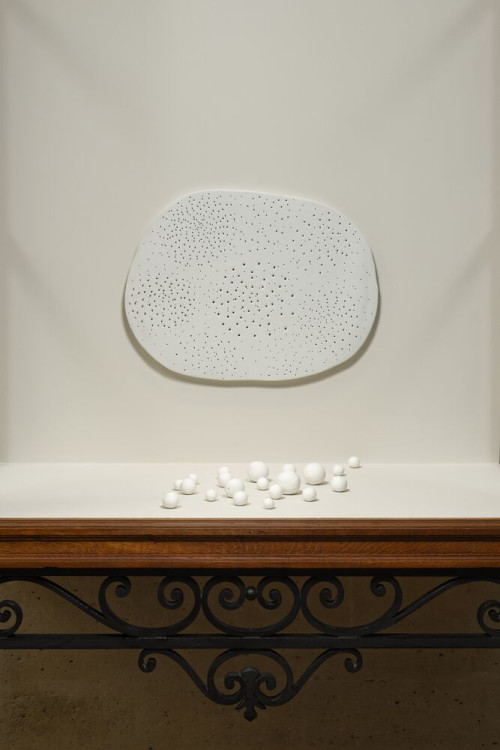
Sewing into Soil: Invisible Needle, Invisible Thread, 2023 / Deductive Object, 2019
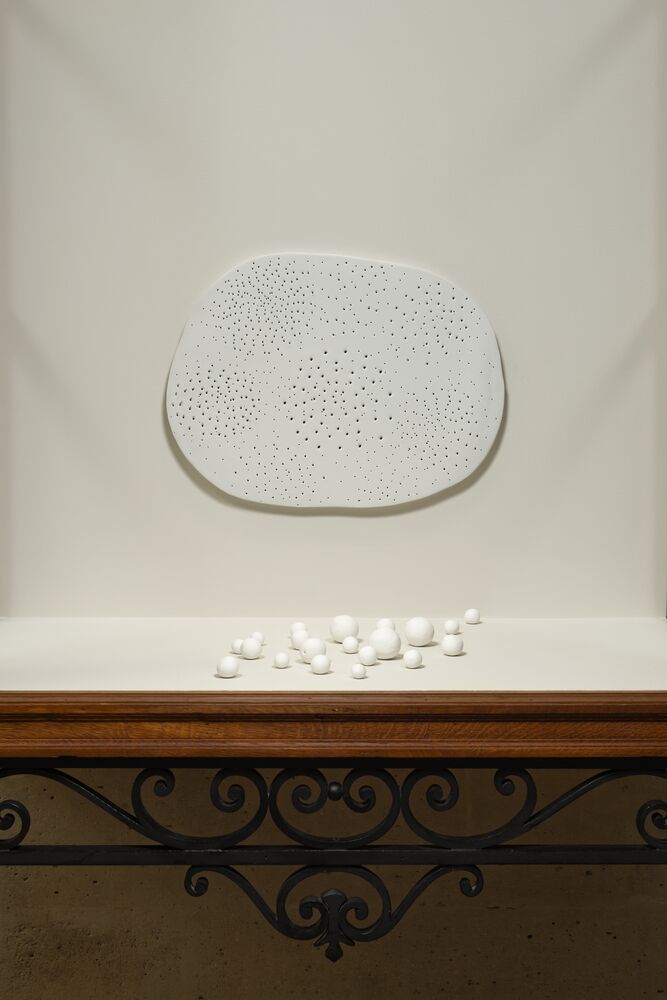
Sewing into Soil: Invisible Needle, Invisible Thread, 2023 / Deductive Object, 2019
Sewing Into Soil: Invisible Needle, Invisible Thread, 2023
Porcelaine
Courtesy Kimsooja Studio; KEWENIG, Berlin; Staatliche Museen zu Berlin, Museum für Asiatische Kunst, Berlin, Staatliche Porzellan-Manufaktur Meissen, Germany
–
Deductive Object, 2019
Porcelaine
Courtesy Kimsooja Studio et Manufacture de Sèvres – Cité de la Céramique
In Sewing Into Soil: Invisible Needle, Invisible Thread Kimsooja needles a slab of porcelain as if sewing into a fabric. The needle doubles as a paint brush and shapes an irregular surface that registers the artist’s physical action. Like on a landscape, or a freshly planted field, she associates the act of piercing into the porcelain mass with that of sowing seeds in the earth.
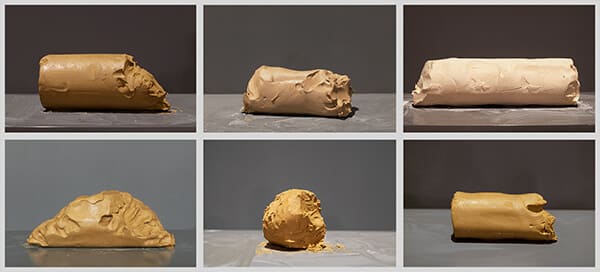
The porcelain balls of Deductive Object form through contrasting forces of the body. When making them, the two palms press into and rotate about a center, a point of gravitational pull, where the earthen matter absorbs the temperature and temperament of the person shaping it. The two works seen side by side draw a field of voids out of spheres, both contained and empty.
–
〈흙으로 바느질하기: 보이지 않는 바늘, 보이지 않는 실〉에서 김수자는 도자판을 천을 꿰매듯 바늘로 찌르고 꿰뚫는 행위를 수행한다. 이 바늘은 동시에 붓처럼 기능하며, 작가의 신체적 행위가 고스란히 새겨진 불규칙한 표면을 만들어낸다. 마치 풍경 위에 자국을 남기거나 막 파종을 마친 밭고랑을 형성하듯, 작가는 도자 덩어리를 관통하는 바느질을 땅에 씨앗을 심는 행위와 겹쳐 사유한다.
〈연역적 오브제〉의 도자 구체는 신체의 상반된 힘을 통해 형성된다. 양손은 흙의 중심점을 향해 눌러붙고 회전하며, 그 중력의 중심에서 흙덩어리는 이를 빚는 사람의 체온과 기질을 흡수한다. 나란히 놓인 두 작품은 비어 있으면서도 품고 있는, 공백의 장을 그려낸다.
View of the exhibition To Breathe – Constellation, Bourse de Commerce – Pinault Collection, Paris, 2024.
© Tadao Ando Architect & Associates, Niney et Marca Architectes, agence Pierre-Antoine Gatier.
Photo: Aurélien Mole / Pinault Collection.
© Kimsooja/ADAGP, Paris, 2024.
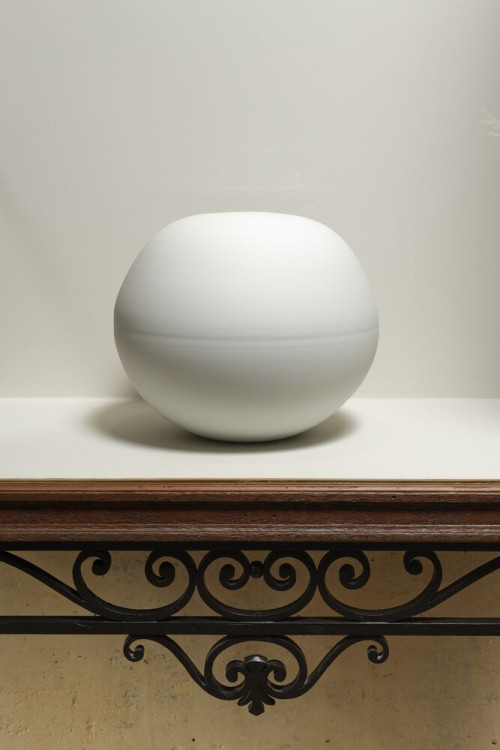
Deductive Object – Bottari | 2023
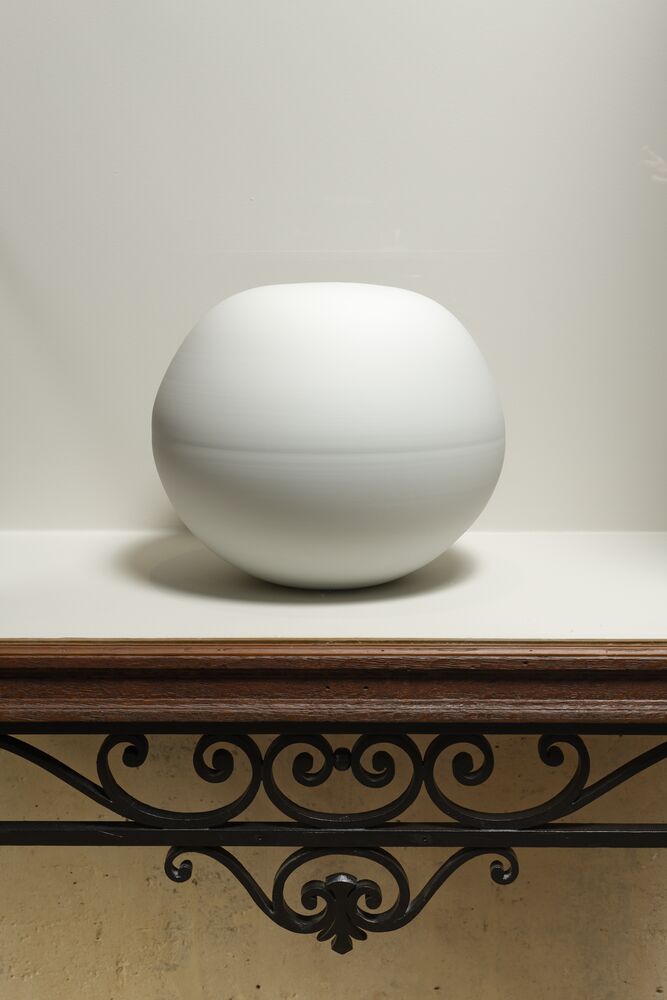
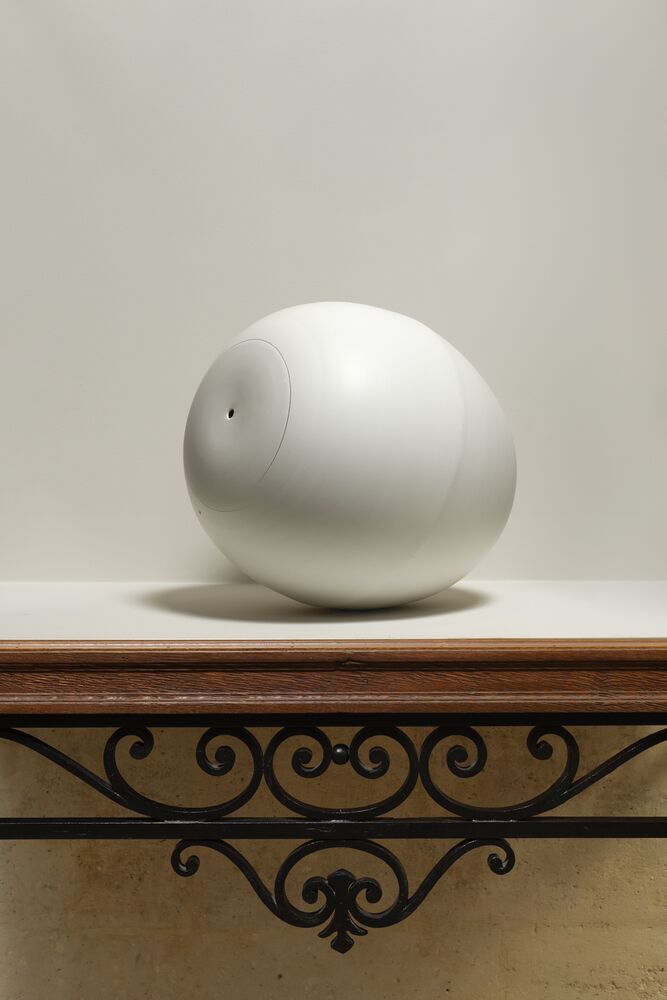
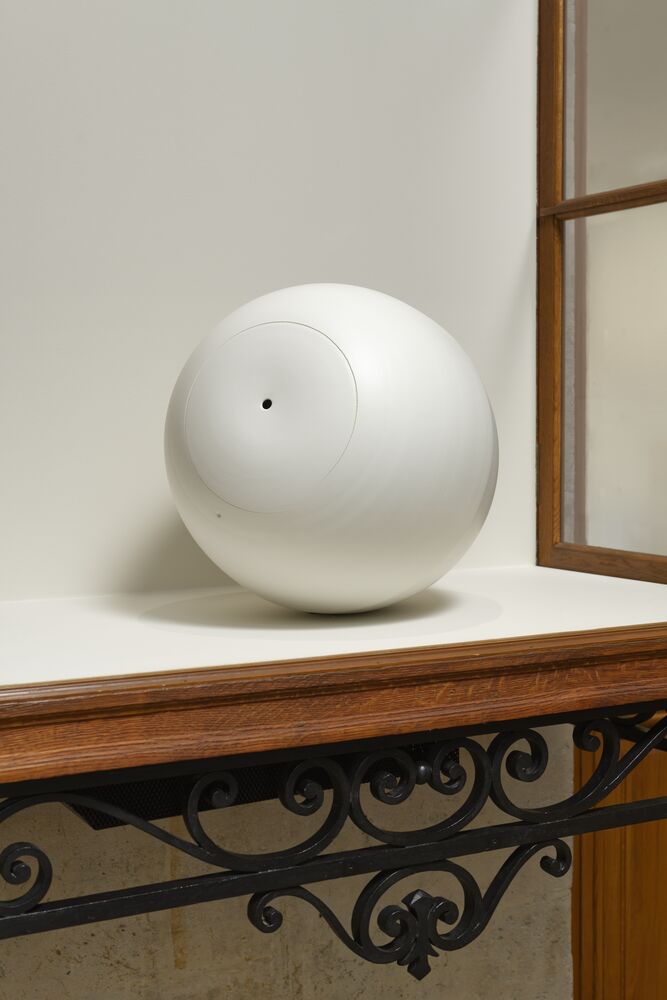
Deductive Object – Bottari
Deductive Object – Bottari, 2023
Bisque porcelain
Courtesy Kimsooja Studio; KEWENIG, Berlin; Staatliche Museen zu Berlin, Museum für Asiatische Kunst, Berlin, Staatliche Porzellan-Manufaktur Meissen, Germany
–
Kimsooja began the Deductive Object series in 1990. She stitched and wrapped used pieces of fabric around commonly found domestic objects, such as a window frame, a ladder, and farming tools. The wrapping of used cloth reaffirms the object's structure and its existence.
Here conceptualized as bottari, moon jars are made by putting together top and bottom halves of a sphere, joining two polarities into a singular whole. What was once a lump of clay gains vertical and horizontal breadth, expanding an inner space through continuous orbital movement around its center. Upon full enclosure, the artist opens a small hole at the top using the tip of a wooden needle. The vestigial surface embraces a breath of air contained within, in the form of a wrapped void.
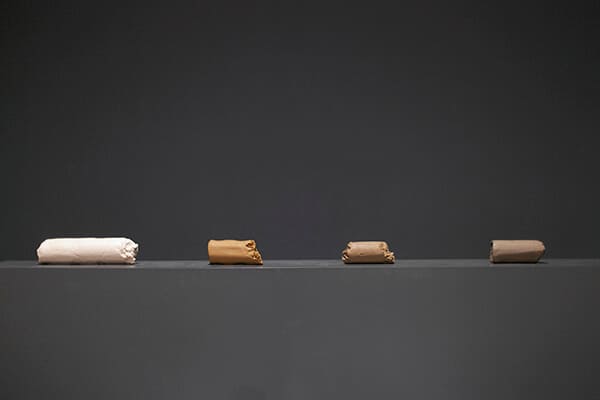
Many of the works in the vitrines explore the link between the body’s traces (hand-shaped ceramics, fingerprint, hair) and the infinitely large (the sun and the moon, celestial bodies). Their relationships hinge on a state of duality alluded by the logic of its construct: movement and stillness, fullness and emptiness, and life and death. Produced in collaboration with the Manufacture de Sèvres, this porcelain sculpture takes the form of a traditional Korean moon jar, but without any of its functional traits. Kimsooja uses only a needle to pierce into the vertical axis that generated this spherical form, releasing the heat and air that breathes life into this earthen body during its firing process.
김수자는 1990년 〈연역적 오브제〉 연작을 시작했다. 그녀는 창틀, 사다리, 농기구와 같이 쉽게 볼 수 있는 일상 물건에 천 조각을 활용해 바느질하고 감싸는 방식을 취했다. 천으로 물건을 감싸는 행위는 오브제의 구조와 존재를 다시금 확인시켰다.
여기서 보따리로 개념화된 달항아리는 반구체(그릇, vase)의 윗부분과 아랫부분을 결합하여 두 양극을 하나의 전체로 이어 붙임으로써 만들어진다. 한 덩어리의 점토는 중심을 축으로 한 지속적인 회전 운동을 통해 상하(수직)와 좌우(수평)의 폭을 획득하며, 그 내부 공간을 확장해 나간다. 두 부분을 완전히 봉합한 뒤, 작가는 나무 바늘 끝을 이용하여 상단에 작은 구멍을 낸다. 이렇게 남겨진 흔적의 표면은 그 안에 머무는 공기의 숨결을, ‘감싸진 비어 있음’의 형태로 품어낸다.
진열장에 놓인 많은 작품들은 신체의 흔적(손 모양의 도자, 지문, 머리카락)과 태양과 달 같은 천체적 규모의 무한성과의 연결을 탐구한다. 이 관계는 움직임과 정지, 충만함과 비어 있음, 삶과 죽음이라는 구조적 논리가 암시하는 이중적 상태에 기반한다. 세브르 도자 제작소(Manufacture de Sèvres)와의 협업으로 제작된 이 도자 조각은 전통적인 한국의 달항아리 형태를 취하지만, 그 기능적 특성은 갖추고 있지 않다. 김수자는 바늘을 구형의 수직축을 따라 관통시킴으로써 소성 과정 동안 이 흙에 생명을 불어넣었던 열과 공기를 해방시킨다.
View of the exhibition To Breathe – Constellation, Bourse de Commerce – Pinault Collection, Paris, 2024.
© Tadao Ando Architect & Associates, Niney et Marca Architectes, agence Pierre-Antoine Gatier.
Photo: Aurélien Mole / Pinault Collection.
© Kimsooja/ADAGP, Paris, 2024.
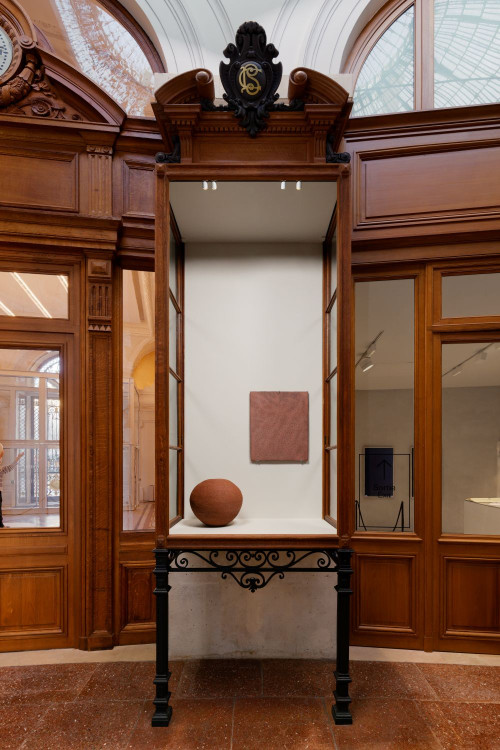
Sewing into Soil: Invisible Needle, Invisible Thread / Deductive Object – Bottari | 2019
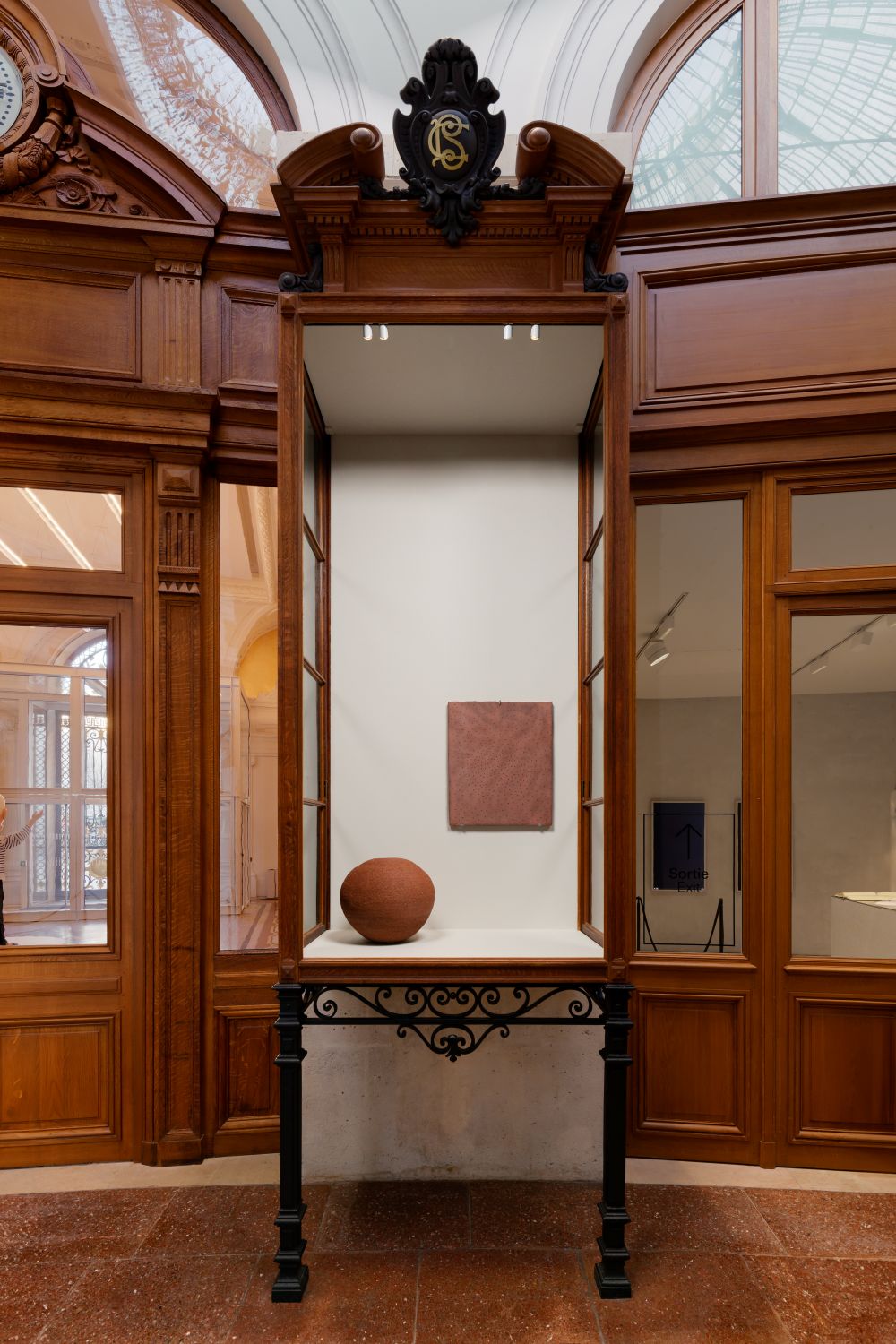
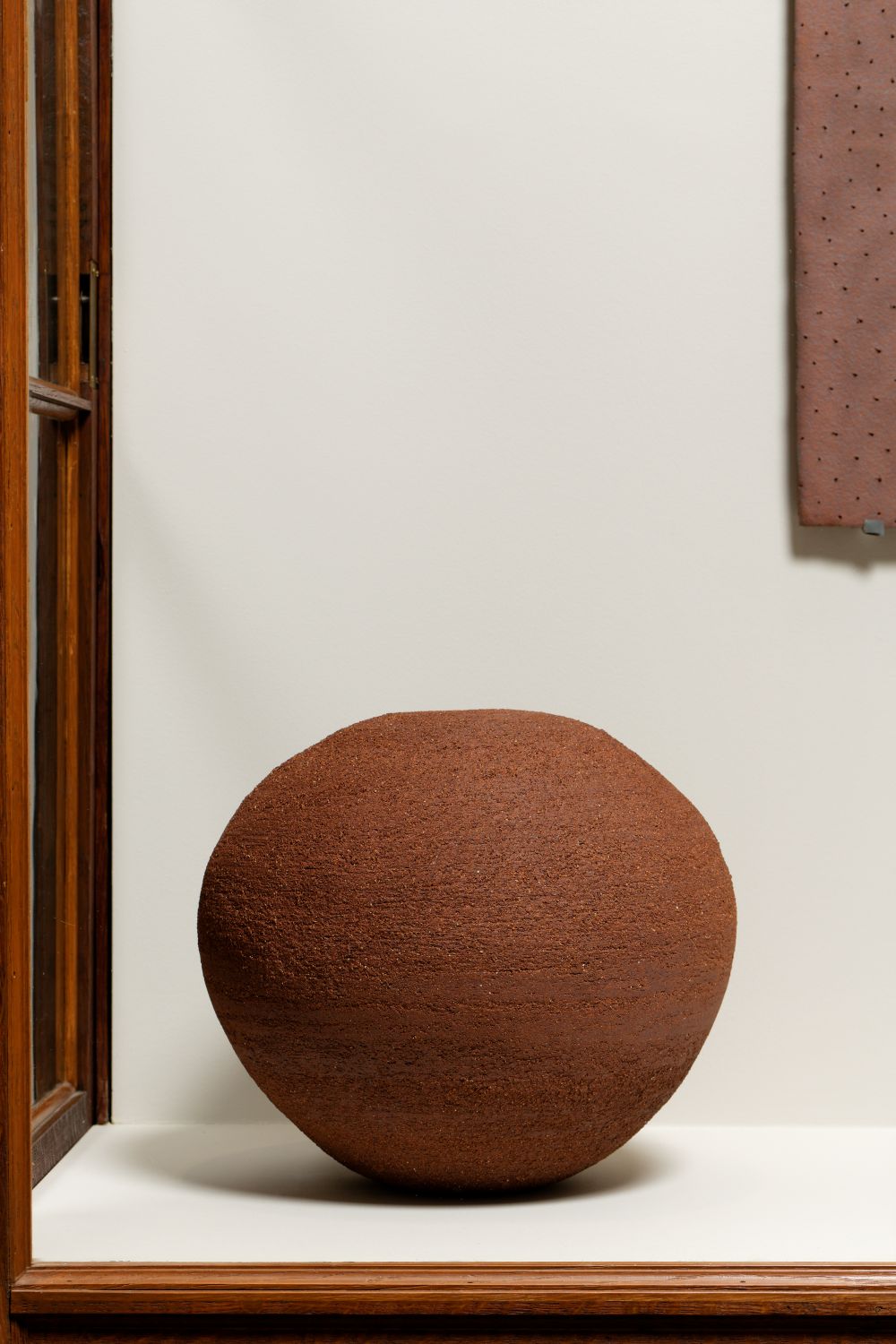
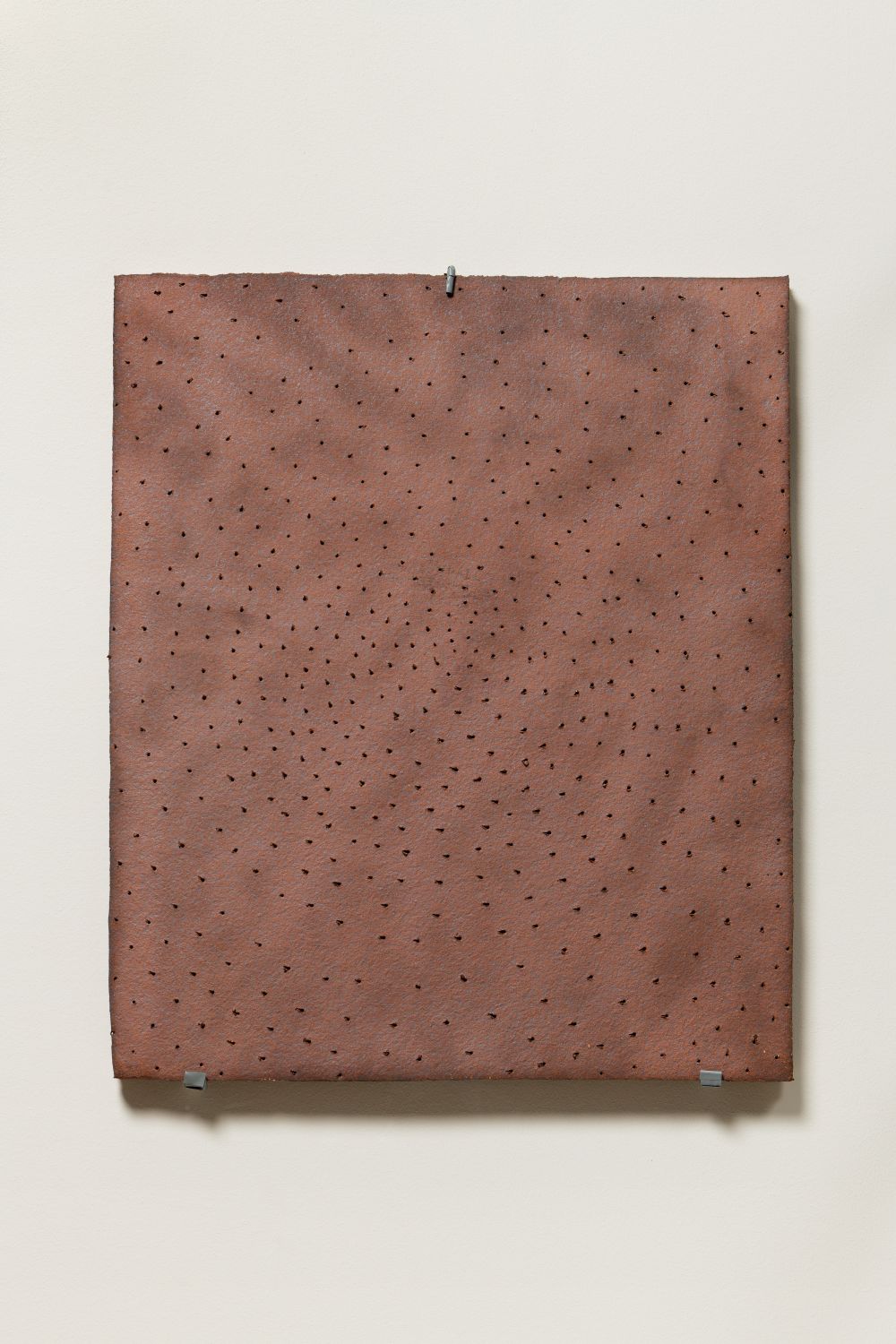
Sewing into Soil: Invisible Needle, Invisible Thread / Deductive Object – Bottari
Sewing Into Soil: Invisible Needle, Invisible Thread, 2019
Stoneware
Courtesy Kimsooja Studio et Manufacture de Sèvres – Cité de la Céramique
–
Deductive Object – Bottari, 2019
Ensemble de 9 pièces en grès et terre cuite / A set of 9 pieces of stoneware, terracotta
Courtesy Kimsooja Studio et Manufacture de Sèvres – Cité de la Céramique
Sewing Into Soil: Invisible Needle, Invisible Thread was made in collaboration with the artisans at the Manufacture de Sèvres. The artist pierces the stoneware panel with a needle, creating a constellation of holes that records the artist’s vertical action onto a horizontal surface. It is closely associated with the act of sowing on soil, which marks a beginning of painting for Kimsooja. In dialogue with this panel in relief, Deductive Object – Bottari conceptualizes the form of moon jar, a type of traditional Korean ceramic dating from the eighteenth century. This vessel forms through the logic of wrapping, which parallels that of making a bottari (Korean cloth bundle), to contain an interior punctured by a needle hole at the top.
–
〈흙으로 바느질하기: 보이지 않는 바늘, 보이지 않는 실〉은 세브르 도자기 제작소 (Manufacture de Sèvres) 장인들과 협업하여 제작되었다. 작가는 석판을 바늘로 뚫는 작업을 통해 수직적인 행위가 수평적 표면 위에 별자리처럼 기록되도록 한다. 흙 위에 씨앗을 뿌리는 행위와 유사한 이 작업은 김수자에게 있어 회화의 근원을 의미한다. 이 부조 패널과 대화하는 듯한 〈연역적 오브제 – 보따리〉는 18세기에 기원한 한국 전통 도자기인 달항아리의 형태를 개념화한 작업이다. 이 오브제는 보따리를 싸는 방식과 유사한, ‘감싸기’의 방식을 통해 구축되며, 상단에 바늘로 낸 작은 구멍을 지닌 채 내부 공간을 품도록 만들어져 있다.
View of the exhibition To Breathe – Constellation, Bourse de Commerce – Pinault Collection, Paris, 2024.
© Tadao Ando Architect & Associates, Niney et Marca Architectes, agence Pierre-Antoine Gatier.
Photo: Aurélien Mole / Pinault Collection.
© Kimsooja/ADAGP, Paris, 2024.
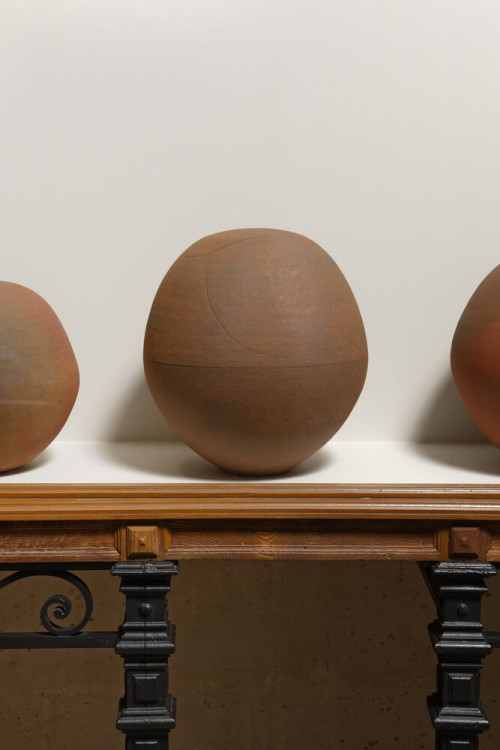
Deductive Object – Bottari | 2019
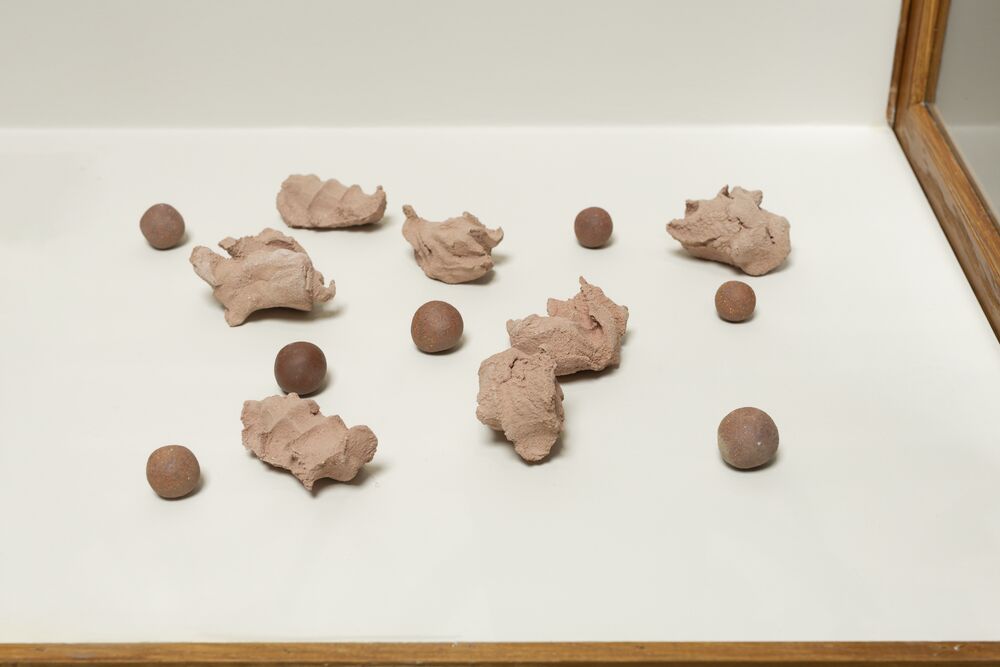
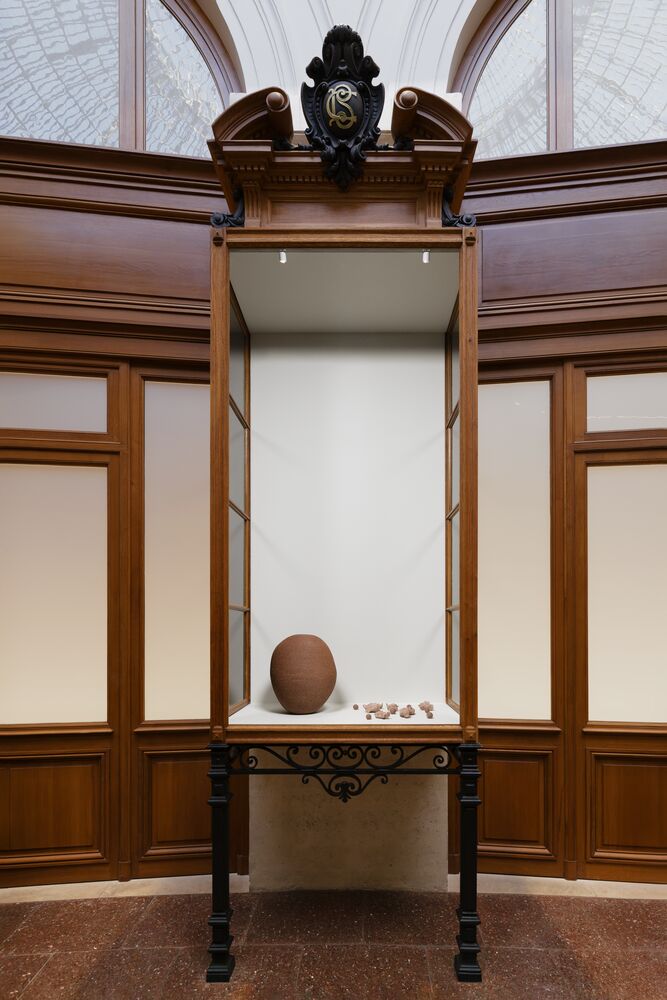
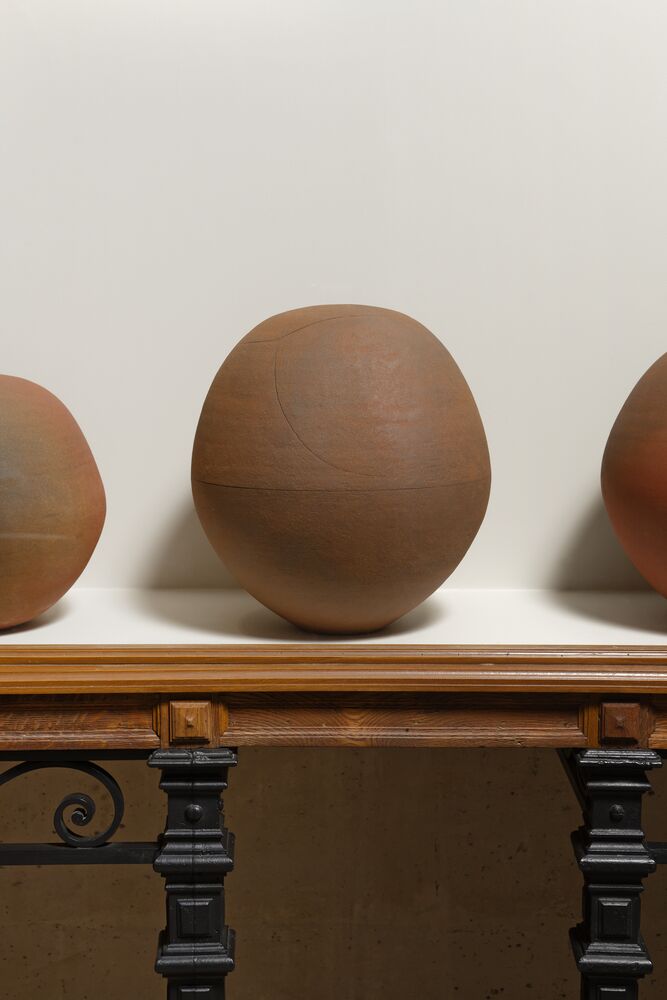
Deductive Object – Bottari
Deductive Object – Bottari, 2019
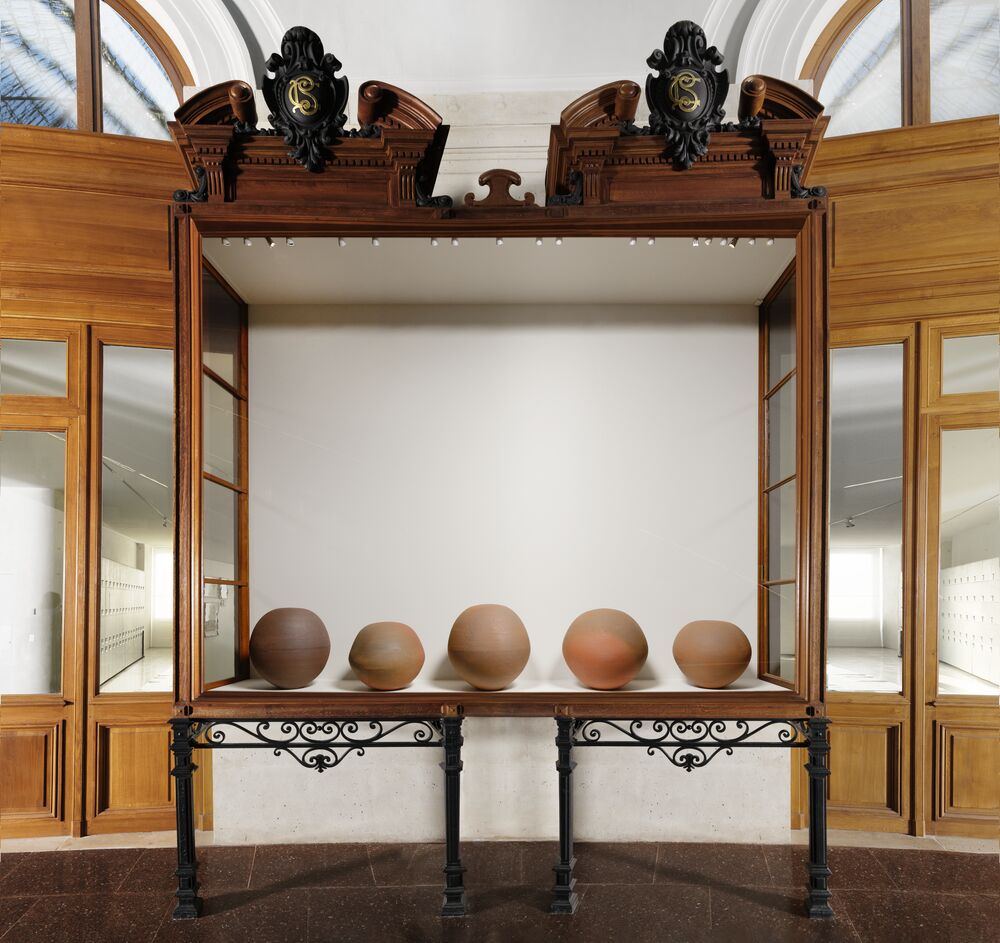
Ensemble de 9 pièces en grès et terre cuite / A set of 9 pieces of stoneware, terracotta
Courtesy Kimsooja Studio et Manufacture de Sèvres – Cité de la Céramique
–
Deductive Object, 2019
Stoneware
Courtesy Kimsooja Studio et Sèvres – Cité de la Céramique
–
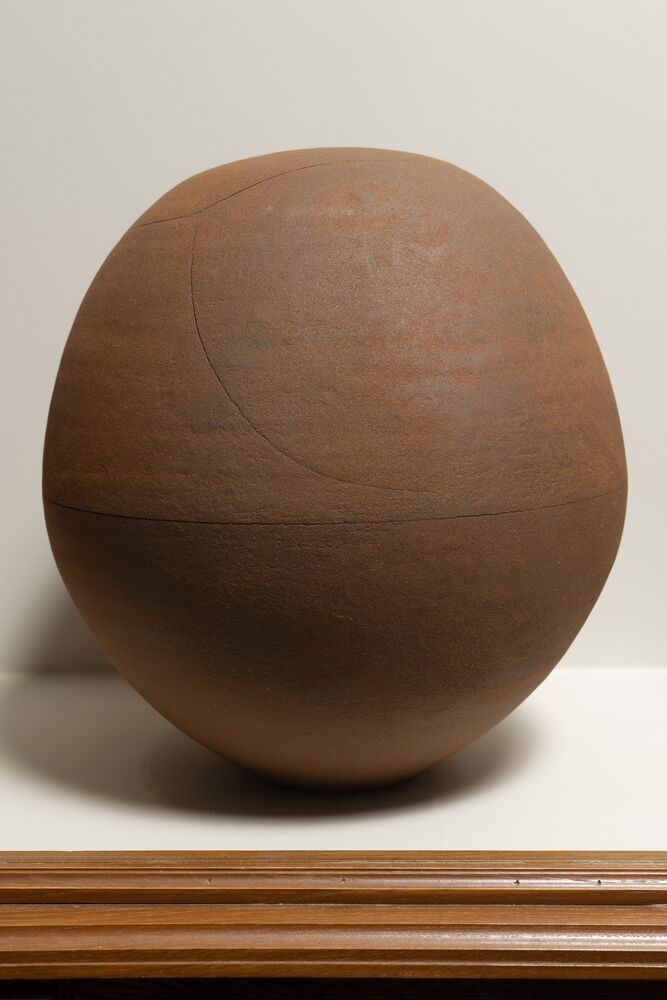
Moon jar is a traditional Korean ceramic dating from the eighteenth century, known for evoking the full moon through its round shape and brilliant color. Irregularities in the material texture and a slight asymmetry caused by the assembly of upper and lower bowls in the shape of hemispheres are the essence of its beauty, where the aesthetic imperfection makes the object even closer to nature. This series of five moon jar-shaped sculptures (out of nine as a set of installation in stoneware and terracotta) was made in collaboration with the artisans at the Manufacture de Sèvres. Kimsooja conceptualizes the moon jar as a bottari (bundle of fabric in Korean), a concept of wholeness and totality, which she developed over the past 40 years of her artistic practice.
Ceramics exemplify a transcultural practice that connects human rituals with nature by integrating earth, water, fire, and air. As part of the moon jar series, Kimsooja conceived the large stoneware and the smaller spheres and chunks as variations of bottari. The act of spinning a pottery wheel parallels a process of emptying the center, while an instance of grabbing or circling two palms around a mass of earth registers a center that is full. The stoneware’s asymmetrical form, which the artist describes as recalling the shape of a face, creates a dialogue with the hand-shaped clay beside it; all suggest a portrait of our body and our mind.
달항아리는 18세기에 제작되기 시작한 한국의 전통 도자기로, 둥근 형태와 눈부신 백색을 통해 보름달을 환기시키는 아름다움으로 잘 알려져 있다. 위·아래의 반구 형태의 그릇을 맞붙여 만드는 제작 방식에서 비롯되는 질감의 불규칙성과 미세한 비대칭성은 달항아리 미학의 핵심으로 여겨지며, 이러한 ‘불완전성’이 오히려 사물을 자연에 더욱 가깝게 만든다.
석재와 테라코타로 구성된 아홉 점 가운데, 다섯 점의 달항아리 형상 조각은 세브르 도자 제작소(Manufacture de Sèvres)의 장인들과 협업하여 제작되었다. 김수자는 이러한 달항아리를 지난 40여 년간 자신의 예술 실천 속에서 발전시켜 온, 온전함과 전체성을 나타내는 또 다른 ‘보따리’로 개념화한다.
도예는 흙, 물, 불, 공기를 통합함으로써 인간의 의례와 자연을 연결하는 대표적인 초문화적(transcultural) 실천이라고 할 수 있다. 이는 달항아리 연작의 일환으로, 김수자는 대형 석재 조각과 더 작은 구체 및 점토 덩어리를 보따리의 다양한 변주로 개념화하였다. 물레를 돌리는 행위는 중심을 비워내는 과정에 해당하는 반면, 흙덩어리를 두 손바닥으로 움켜쥐거나 원을 그리듯 감싸는 순간은 꽉 찬 중심의 형성을 의미한다. 작가가 얼굴의 형상을 연상한다고 언급한 바 있는 석재 조각의 비대칭적 형태는 그 옆에 놓인 손의 자취가 남은 점토 덩어리와 조형적 대화를 이루고 있으며, 이는 우리의 신체와 정신을 나타내는 초상을 은유한다.
View of the exhibition To Breathe – Constellation, Bourse de Commerce – Pinault Collection, Paris, 2024.
© Tadao Ando Architect & Associates, Niney et Marca Architectes, agence Pierre-Antoine Gatier.
Photo: Aurélien Mole / Pinault Collection.
© Kimsooja/ADAGP, Paris, 2024.
Bottari | 2017
Bottari
Bottari, 2017
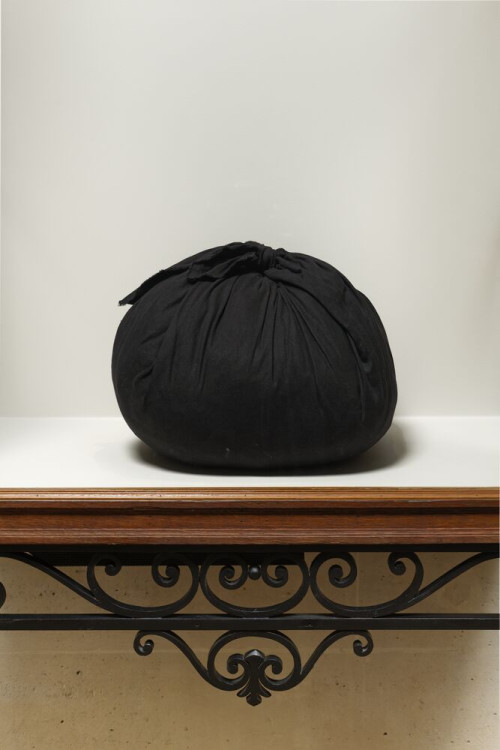
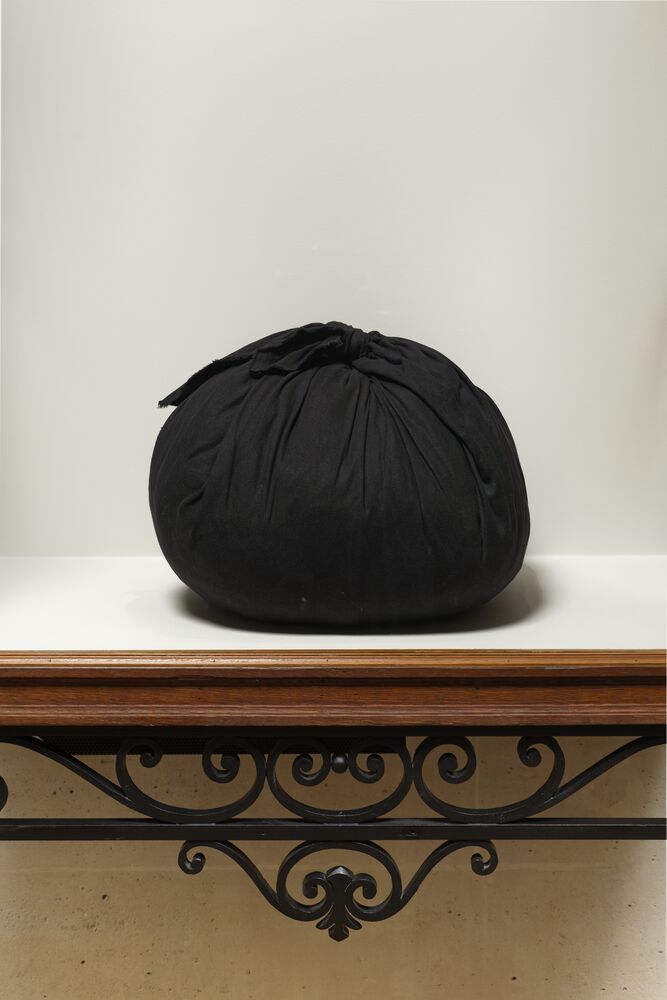
Draps coréens de seconde main, vêtements de seconde main / Used black bedcover, used clothing
Courtesy Kimsooja Studio et KEWENIG, Berlin
–
Bottari, a bundle of fabric that exemplifies a traditional way of wrapping personal belongings for departure, is integral not only to Korean life, but across different cultures. Though Kimsooja often makes bottari out of used bedcovers of newlyweds characterized by bright colors and symbols for good wishes, here it is reimagined in black. Using a neutral-colored fabric, she focuses our attention to its formal aspect, where a flat canvas surface transforms into a sculptural object through the act of tying a single knot. The fabric’s physical structure allows for this translation from one dimension to another. Kimsooja redefines bottari from a domestic mode of transport into a ready-used, multi-dimensional object that is conceptually expansive and embraces totality.
보따리는 떠남을 앞두고 개인의 소지품을 천으로 싸서 묶는 전통 방식 중 하나로, 한국뿐 아니라 여러 문화권에서 중요한 생활양식으로 존재해 왔다. 김수자는 흔히 신혼부부의 침구처럼 밝은 색채와 길상적 상징을 지닌 헌 패브릭을 사용해 보따리를 제작해왔지만, 이 작품에서는 검은색으로 새롭게 재구성하였다. 중성적 색감의 천을 사용함으로써 한 번의 매듭을 통해 캔버스적 평면이 입체적 오브제로 전환되는 형식적 측면에 주목하게 하였으며, 이로써 천의 물리적 구조가 차원 이동을 가능하게 하는 매개가 되도록 하였다. 김수자는 보따리를 더 이상 가정적 운반 방식이 아닌, 이미 사용된 삶의 흔적을 품으면서도 다차원적으로 확장되는 개념적 조형물, 더 나아가 전체성을 포용하는 사유의 장으로 재정의한다.
View of the exhibition To Breathe – Constellation, Bourse de Commerce – Pinault Collection, Paris, 2024.
© Tadao Ando Architect & Associates, Niney et Marca Architectes, agence Pierre-Antoine Gatier.
Photo: Aurélien Mole / Pinault Collection.
© Kimsooja/ADAGP, Paris, 2024.
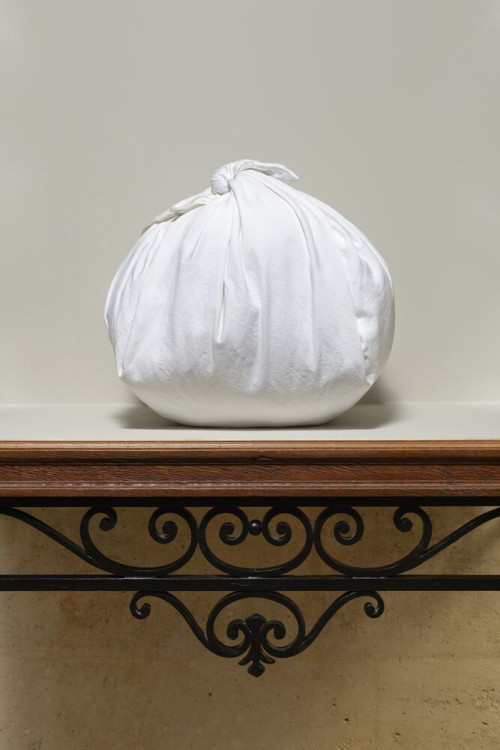
Bottari | 2017
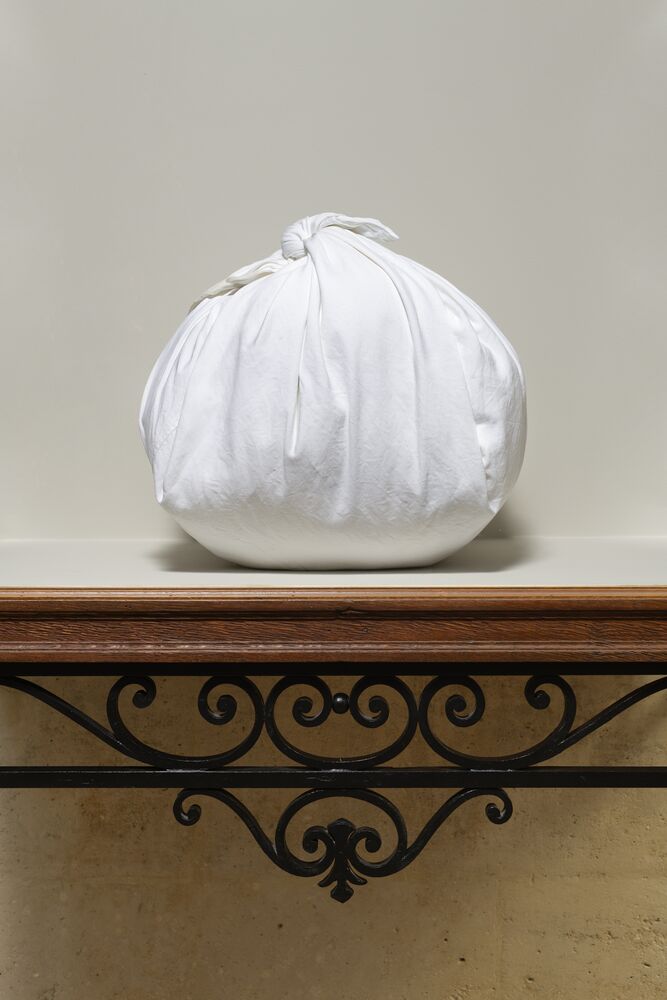
Bottari
Bottari, 2017
Used white bedcover, used clothing and belongings from late Michael O. Kewenig
Courtesy Kimsooja Studio et KEWENIG, Berlin
–
The artist made this bottari in memory of the late Michael O. Kewenig at the time of his passing in 2017, which came at the same time as the artist’s solo show at his gallery, titled Geometry of Breath. It encloses his personal belongings, such as his clothes, shoes, and glasses inside his bedsheet. Kimsooja wraps her bottari in used bedcovers as a way of addressing the site where one is born, dreams, loves, suffers, and dies. It is a frame of life, a life painting we are born into and leave behind.
이 보따리 작업은 2017년 마이클 O. 케베니히(Michael O. Kewenig)가 세상을 떠났을 때, 그를 추모하기 위해 만든 것이다. 김수자의 개인전 〈숨의 기하학〉이 그의 갤러리에서 열리던 기간은 그의 작고 시기와 맞물렸다. 보따리 안에는 마이클 O. 케베니히 의 옷, 신발, 안경 등 개인 소지품이 그의 침구에 싸인 채 담겨 있다. 김수자는 사용되던 침구로 보따리를 감싸는 방식을 통해, 인간이 태어나고, 꿈꾸고, 사랑하고, 고통받고, 죽음에 이르기까지의 삶의 자리를 다루고자 했다. 그것은 우리가 태어나 맞이하고, 떠날 때 남겨두는 삶의 틀, 생의 회화라고 할 수 있다.
View of the exhibition To Breathe – Constellation, Bourse de Commerce – Pinault Collection, Paris, 2024.
© Tadao Ando Architect & Associates, Niney et Marca Architectes, agence Pierre-Antoine Gatier.
Photo: Aurélien Mole / Pinault Collection.
© Kimsooja/ADAGP, Paris, 2024.
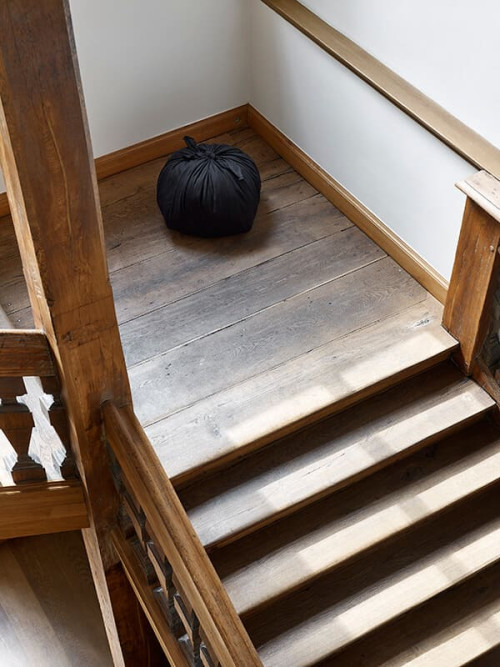
Bottari | 2017
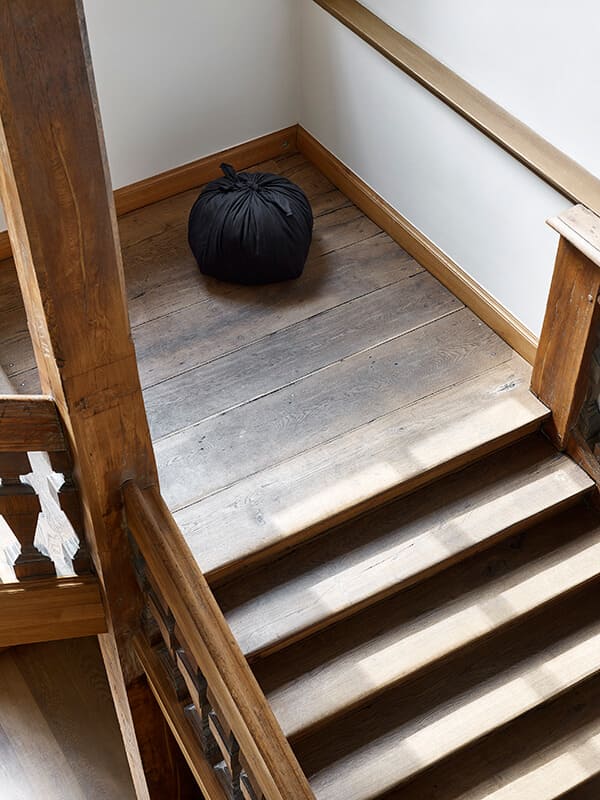
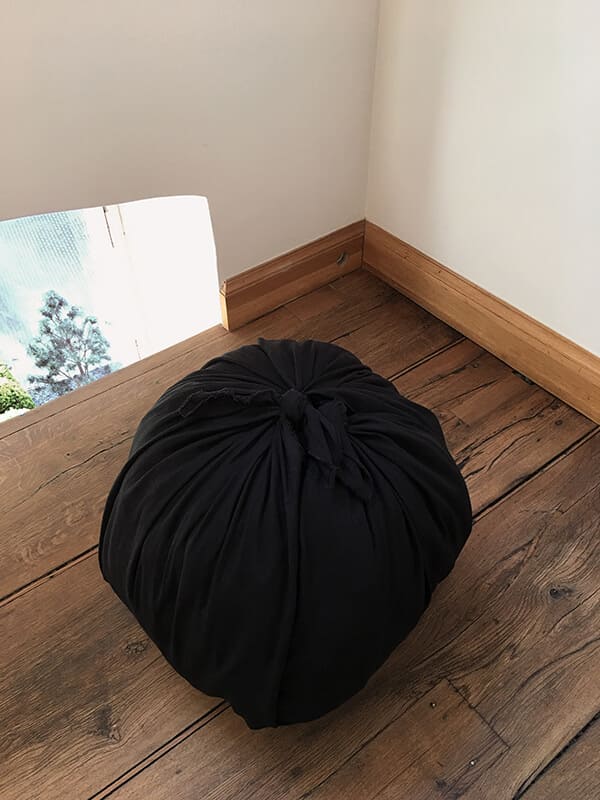
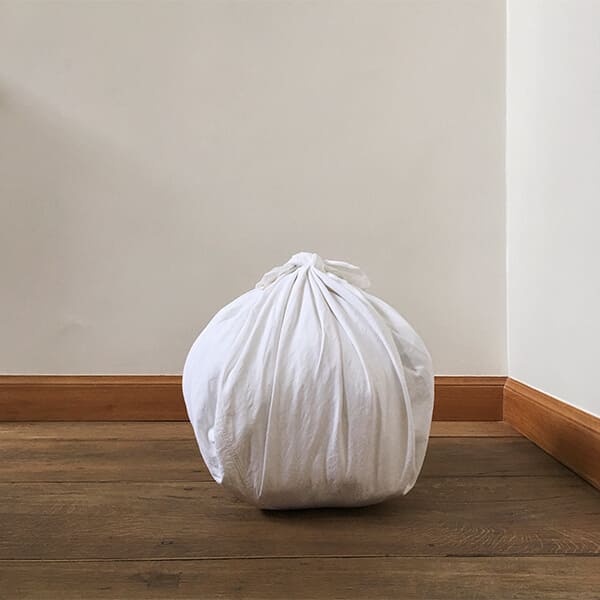
Bottari
Black Bedcover and Used Clothing, 48 x 57(dia) cm
White Bedcover and Used Clothing from Michael Kewenig, 48 x 57(dia) cm
Installation View at Kimsooja: Geometry of Breath, Kewenig Gallery, Berlin, Germany
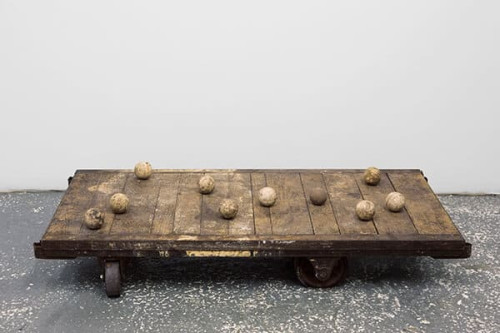
Deductive Object | 2016
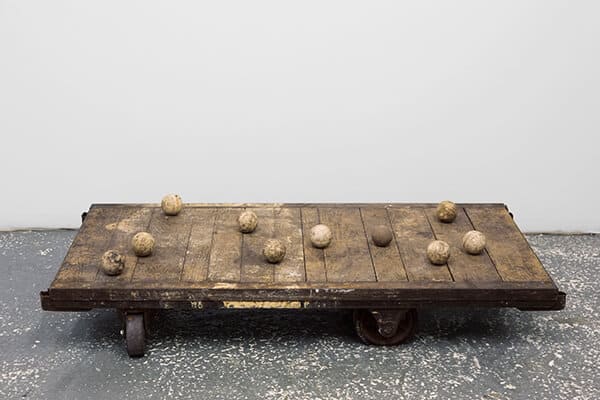
Deductive Object
Antique Wooden Cart, 9 Ceramic Balls, 1 Clay Ball
Cart: 60 x 30 x 9cm, Clay Balls: 8.89(dia.)
Unique
Photo by Aaron Wax
Installation at Kimsooja - 마음의 기하학 / Archive of Mind, National Museum of Modern and Contemporary Art, Korea(MMCA), Seoul, Korea
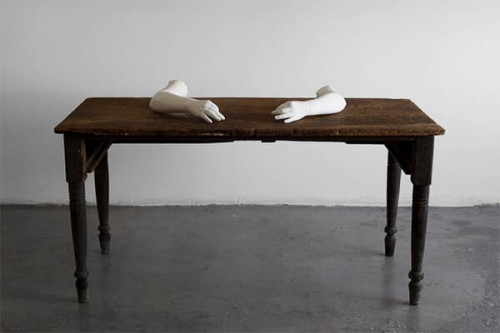
Deductive Object | 2016
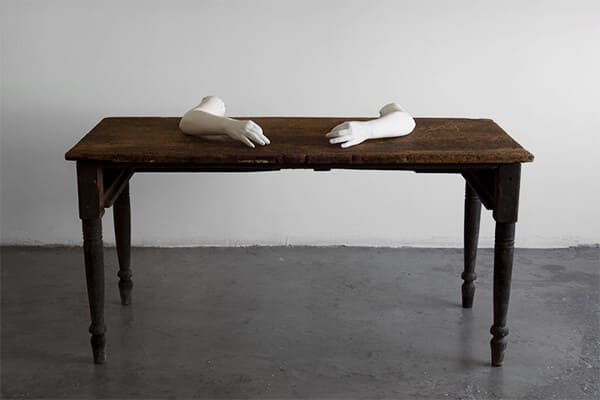
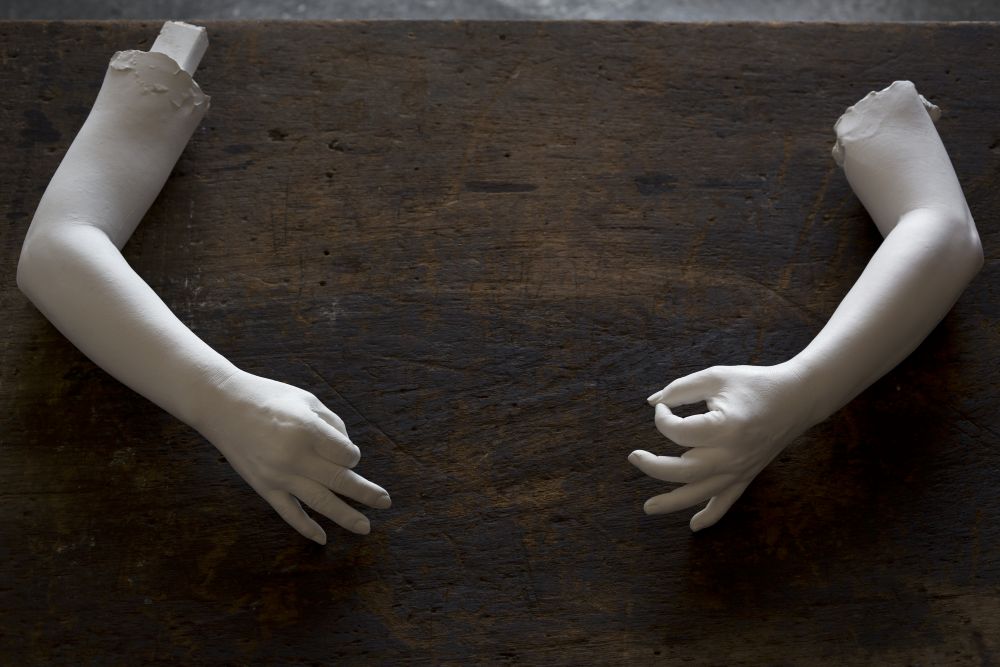
Deductive Object
Deductive Object, 2016
Paster cast of the artist’s arms on a wooden table
68.6×131×63 cm
Unique
Courtesy Kimsooja Studio et KEWENIG, Berlin
–
These castings of the artist’s arms present her two hands facing each other, with the thumb and the forefinger touching to enclose a void. The pose is reminiscent of sewing, but without a needle or thread. It speaks of connection on the basis of the artist’s principle of “non-making” and “non-doing.” The void created in the gesture of the hands encompasses an ephemeral moment, where the physical presence also embodies an uncanny absence. The hand gesture also associates with meditation in Buddhist tradition, representing a state of openness to knowledge (jnana mudra) and a connection between the individual and the universal.
이 작품은 작가의 양팔을 캐스팅 한 것으로, 두 손이 서로를 향해 마주보고 있으며 엄지와 검지가 맞닿아 빈 공간을 감싸는 형태를 이루고 있다. 손의 포즈는 바늘과 실이 없음에도 불구하고 자연스럽게 바느질 행위를 연상시키며, 동시에 작가가 지속적으로 탐구해온 ‘만들지 않기(non-making)’와 ‘무위(non-doing)’의 원칙을 암시한다. 손의 제스처로 만들어진 사이의 빈 공간은 찰나적 순간을 포착하는 동시에, 물리적 존재가 기묘한 부재를 함께 내포하는 역설적 상태를 형상화한다. 또한 이 손 모양은 불교 전통에서 지혜와 깨달음을 의미하고, 개인과 우주적 존재의 연결을 상징하는 지혜수인(智慧手印)을 떠올리게 한다.
Photo by Aaron Wax
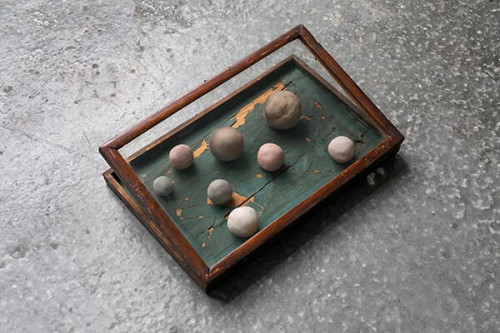
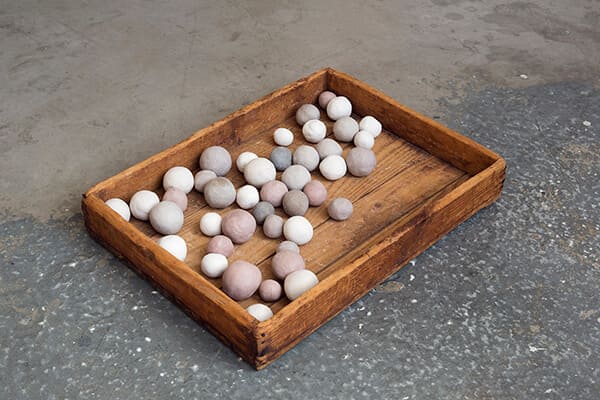
Deductive Object | 2016
Deductive Object
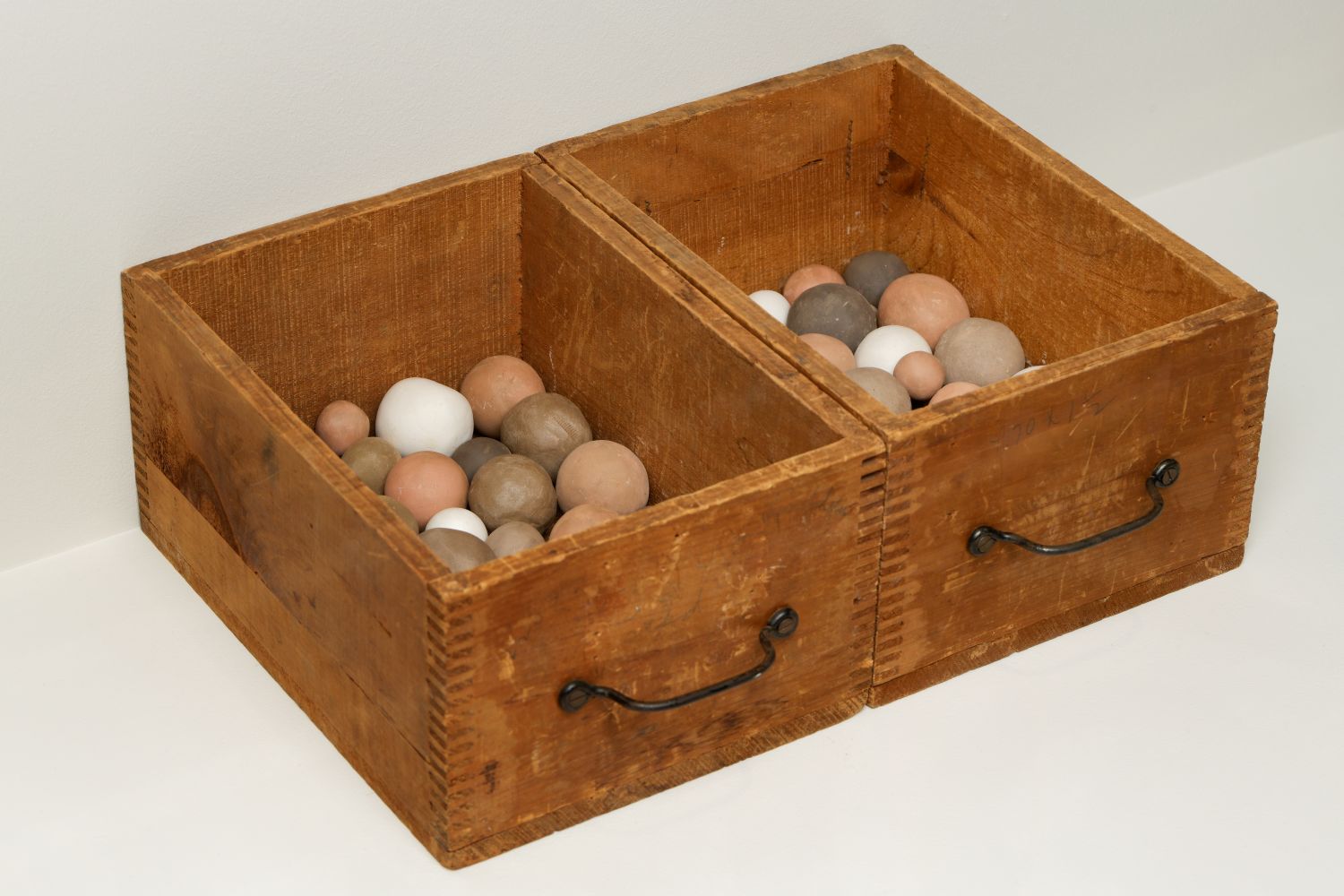
Clay Balls and Antique Wooden Box
Unique
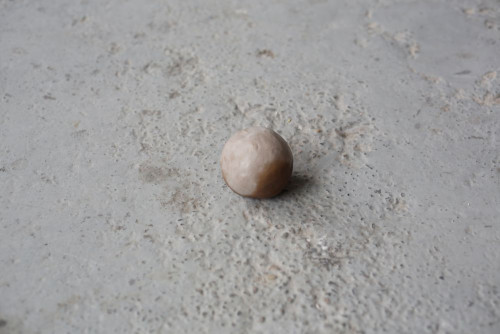
A Container of the Earth, 2016
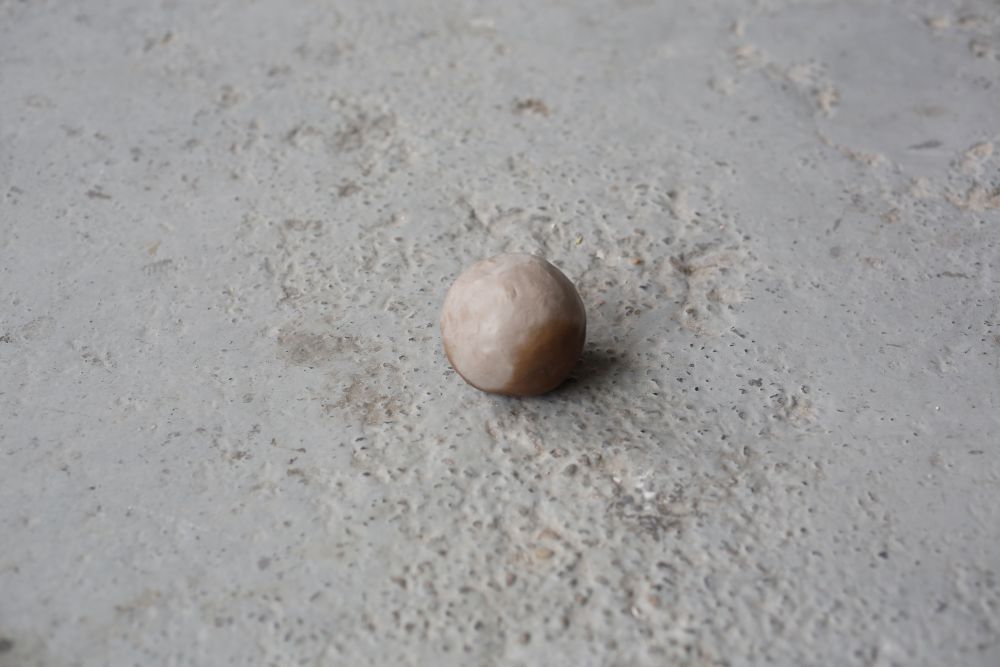
A Container of the Earth, 2016
A Container of the Earth, 2016
Argile / Clay
Courtesy Kimsooja Studio
–
Kimsooja presented her first clay ball at MAC Lyon when she was requested to make a vessel for water in response to Yoko Ono’s work We Are All Water (2006). The artist intentionally sent a ball of clay in a partially dried state as a container of water.
김수자는 요코 오노의 작품 〈We Are All Water〉(2006)에 대한 응답으로서 물 담는 그릇을 제작해 달라는 요청을 받았고, 리옹 현대미술관(MAC Lyon)에서 자신의 첫 점토 구 작업을 선보이게 되었다. 작가는 물을 담는 용기로 부분적으로 건조된 상태의 점토 공을 의도적으로 보냈는데, 이는 물을 품은 존재로서의 점토가 지닌 잠재성과 생동성을 드러내기 위해서였다.
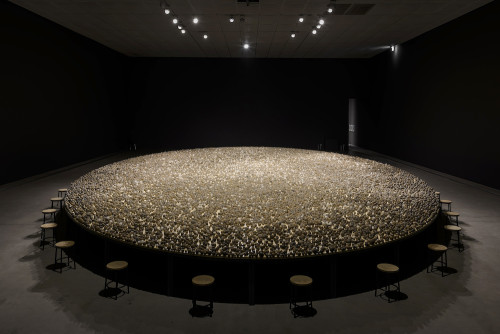
Archive of Mind | 2016
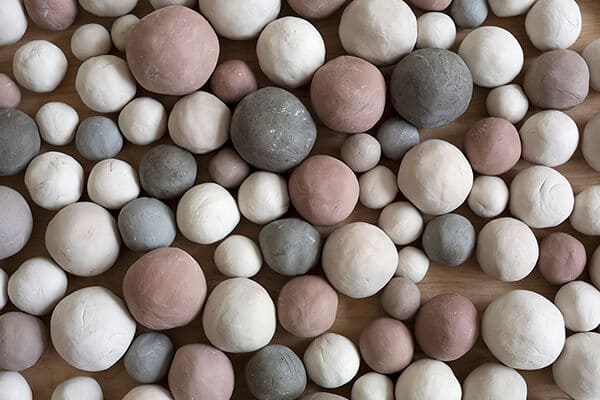
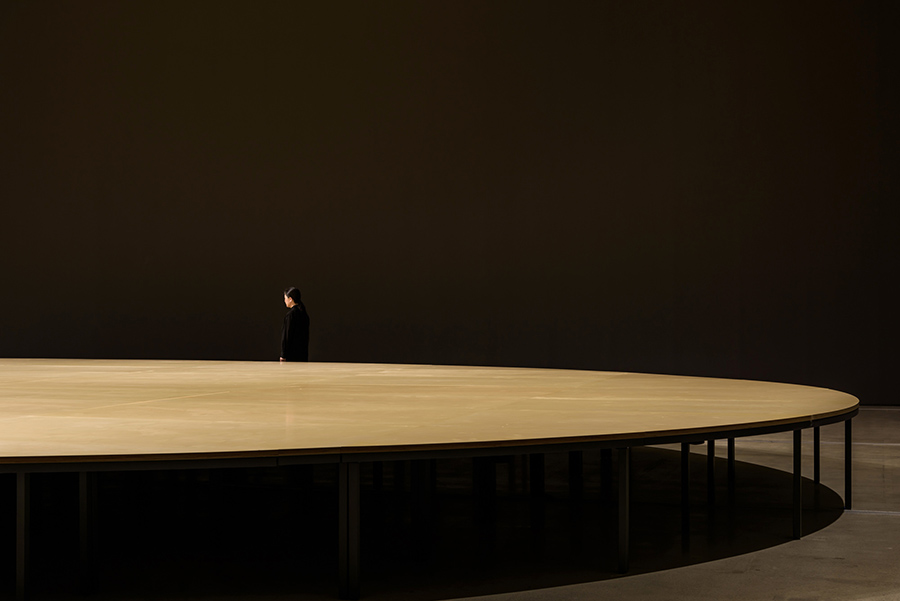
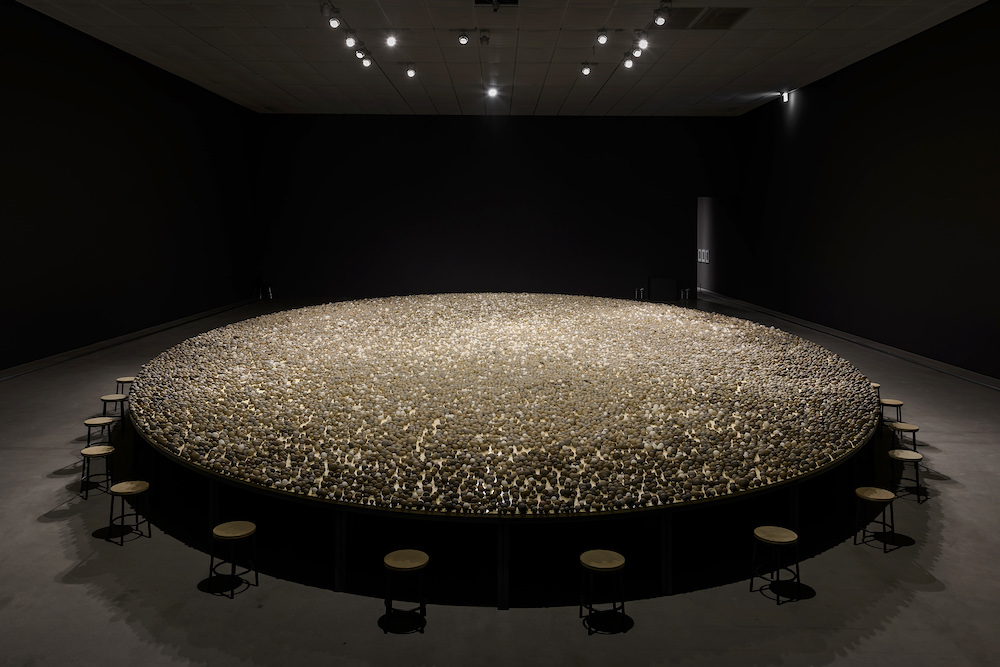
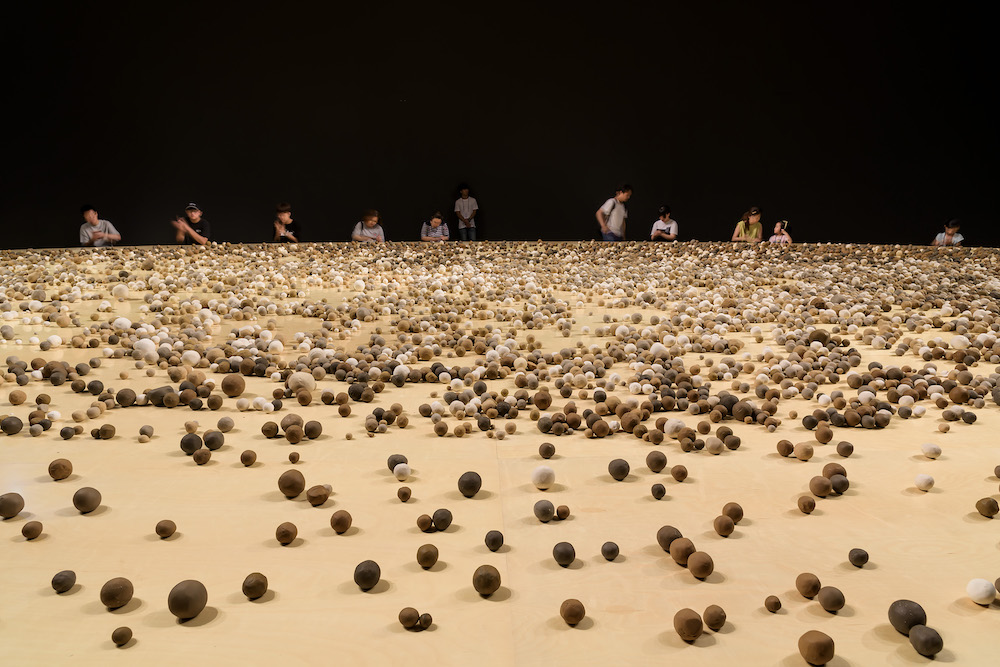
Archive of Mind
마음의 기하학 Archive of Mind
Wooden table, assorted clay
Dimensions variable
2016
–
〈마음의 기하학〉 작가가 무언가를 ‘만드는 행위’ 자체에 관해 사유한 바를 제시한다. 이 작품은 관객이 직접 작품에 개입하는 참여형 워크숍으로 진행된다. 작가는 캔버스의 기능을 겸하는 19m 길이의 타원형 나무탁자 위에 관객이 찰흙 덩어리를 구형으로 만들어 놓도록 요청한다. 작가는 그의 초기 작업에서 ‘보따리’라는 개념을 물질과 비물질을 감싸는 방법론으로 풀이했던 데에서 영감을 얻어 찰흙 구를 만드는 작업을 구상했다. 구를 만들기위해 손으로 찰흙을 감싸며 굴리는 순환적인 행위는 관객이 자신의 마음 상태를 물질로, 물질을 다시 무(無)로 전환하도록 만드는데, 이 과정에서 자신의 두 손바닥에 가하는 균형적인 힘 사이의 양극성을 체험하도록 한다. 이 작품과 함께 전시되는 사운드 퍼포먼스 신작 〈구의 궤적〉은 찰흙 구 표면의 기하학적 구조를 소리의 실타래로 풀어내고, 탁자 위에 흩어져 있는 구들과 조응하며 우주적 조형성을 드러낸다.
–
Archive of Mind offers the artist’s reflections on the canonical problem of the act of making and will transform with audience participation throughout the exhibition period. Expanding on the artist’s concept of “Bottari” as a method of wrapping, this participatory workshop invites the audience to roll a lump of clay into spherical forms on a 19 meter long wooden table, which doubles as a canvas. The cyclical act introduces a polarity between symmetrical forces of the participants’ palms that
transpose their state of mind into matter and matter into void. A new sound performance piece titled, Unfolding Sphere, presents an acoustic counterpart to the rhythmic constellation of the clay spheres.
Installation at MMCA Hyundai Motors Series 2016: KIMSOOJA - 마음의 기하학 / Archive of Mind, National Museum of Modern and Contemporary Art, Korea
(Left to right:)
01 - 06: 마음의 기하학 / Archive of Mind, 2016, participatory site specific installation consisting of clay balls, 19 m elliptical wooden table, and sound performance Unfolding Sphere, 2016, Installation at Kimsooja - 마음의 기하학 / Archive of Mind at MMCA, Seoul, Photo by Aaron Wax, Courtesy of MMCA and Hyundai Motor Co. and Kimsooja Studio
07: 마음의 기하학 / Archive of Mind, 2016, participatory site specific installation consisting of clay balls, 19 m elliptical wooden table, and sound performance Unfolding Sphere, 2016, Installation at Kimsooja - 마음의 기하학 / Archive of Mind at MMCA, Seoul, Photo by Jeon Byung Cheol, Courtesy of MMCA and Hyundai Motor Co. and Kimsooja Studio
Unfolding Bottari – Geometry of Possession, 1991-2015
Unfolding Bottari – Geometry of Possession, 1991-2015
Digital Slideshow
Selected 223 Flea-Marktet Photographs from the Artist's on going photo project around the world
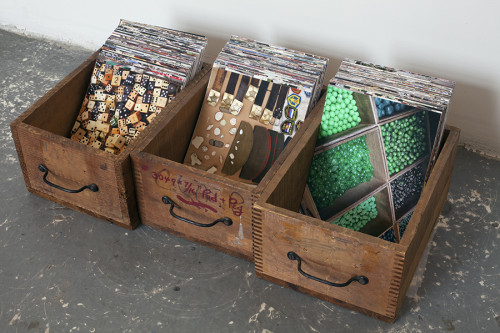
Unfolding Bottari – Geometry of Possession, 1991-2015
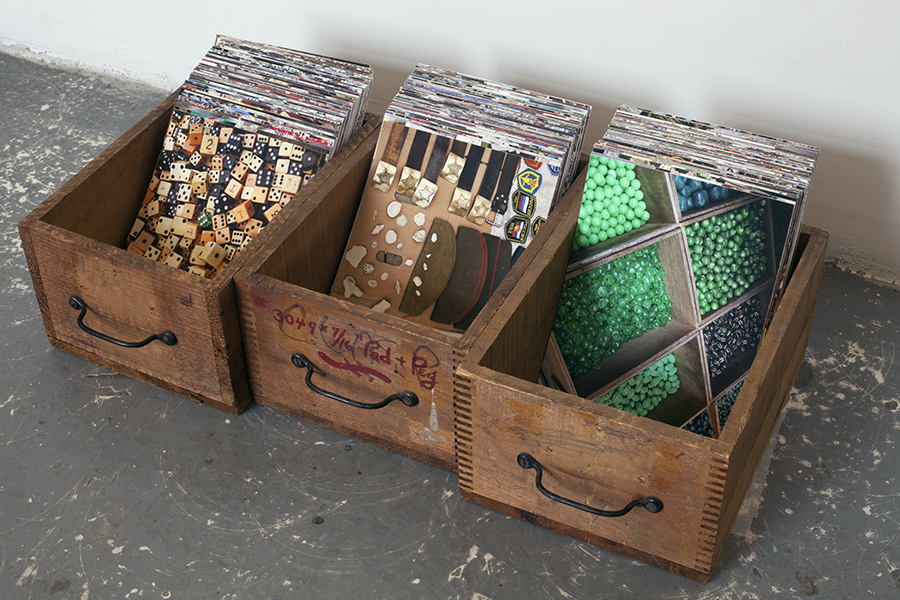
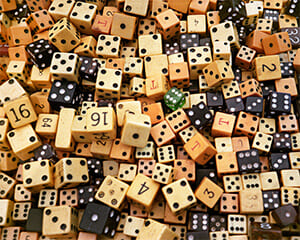
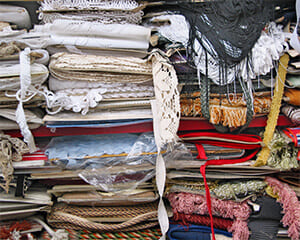
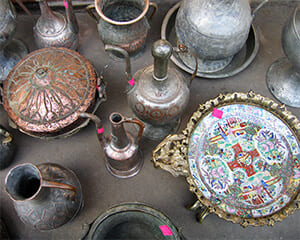

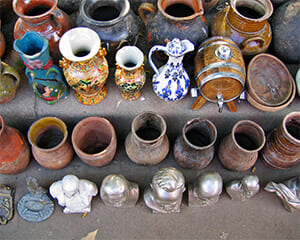
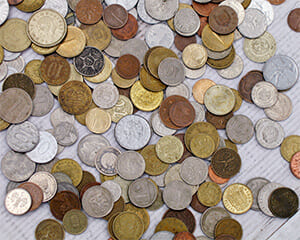
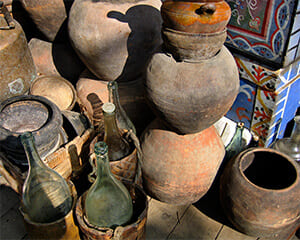
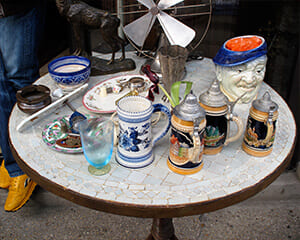
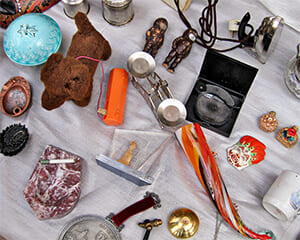
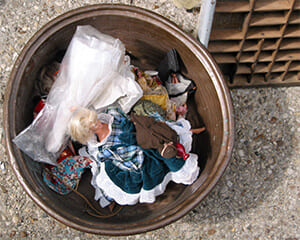
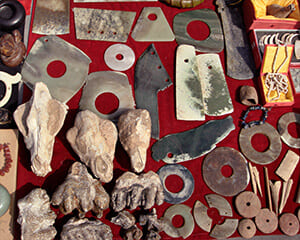
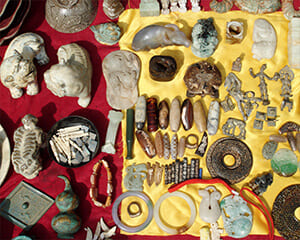
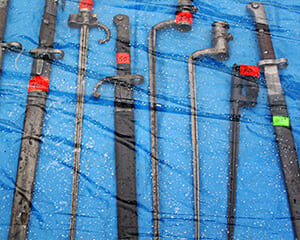
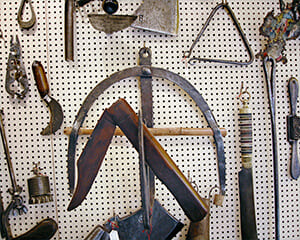
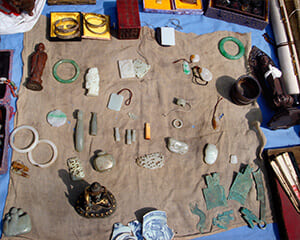
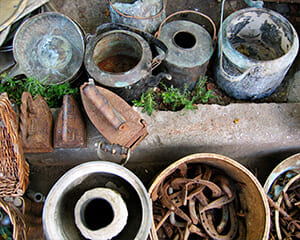
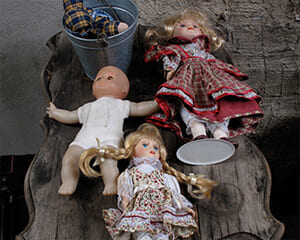
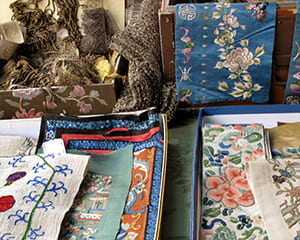
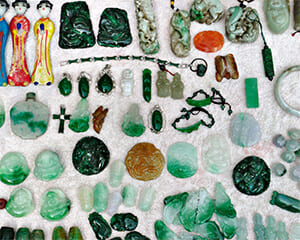
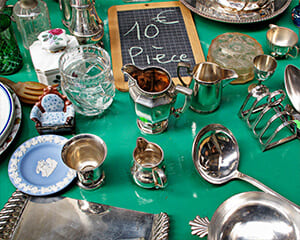
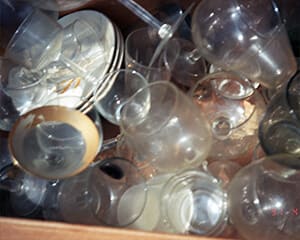
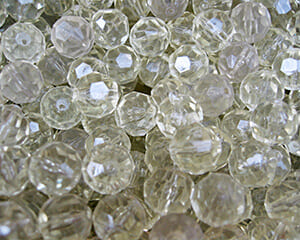
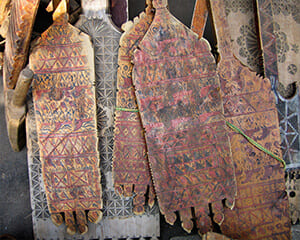
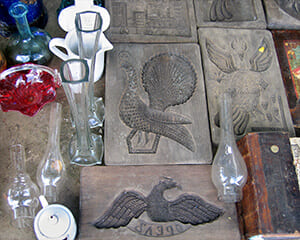
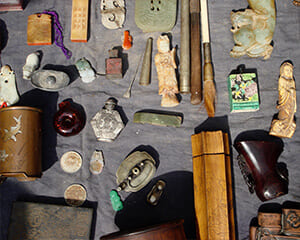
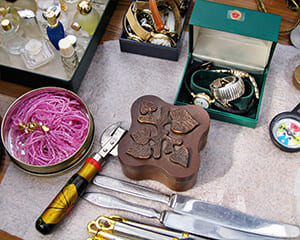
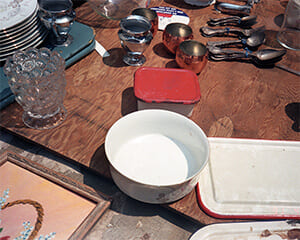
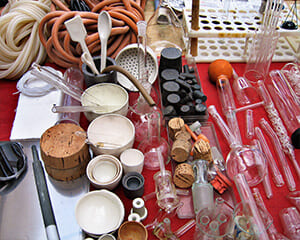
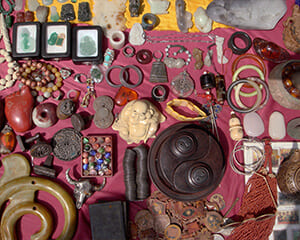
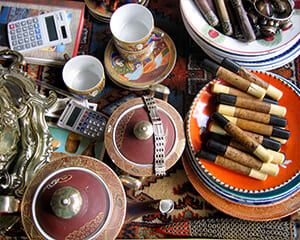
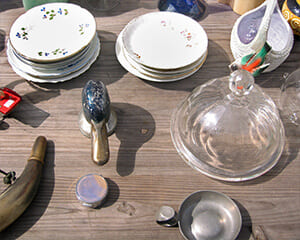
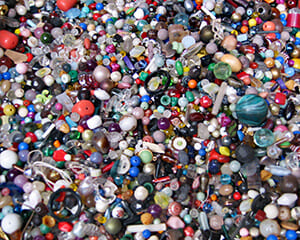
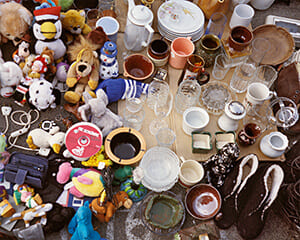
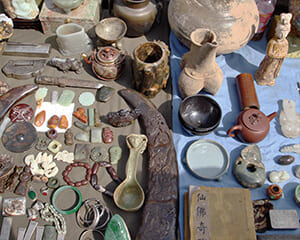
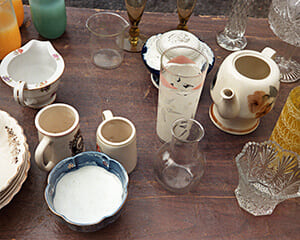
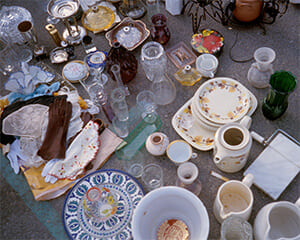
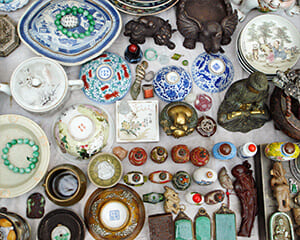

Unfolding Bottari – Geometry of Possession, 1991-2015
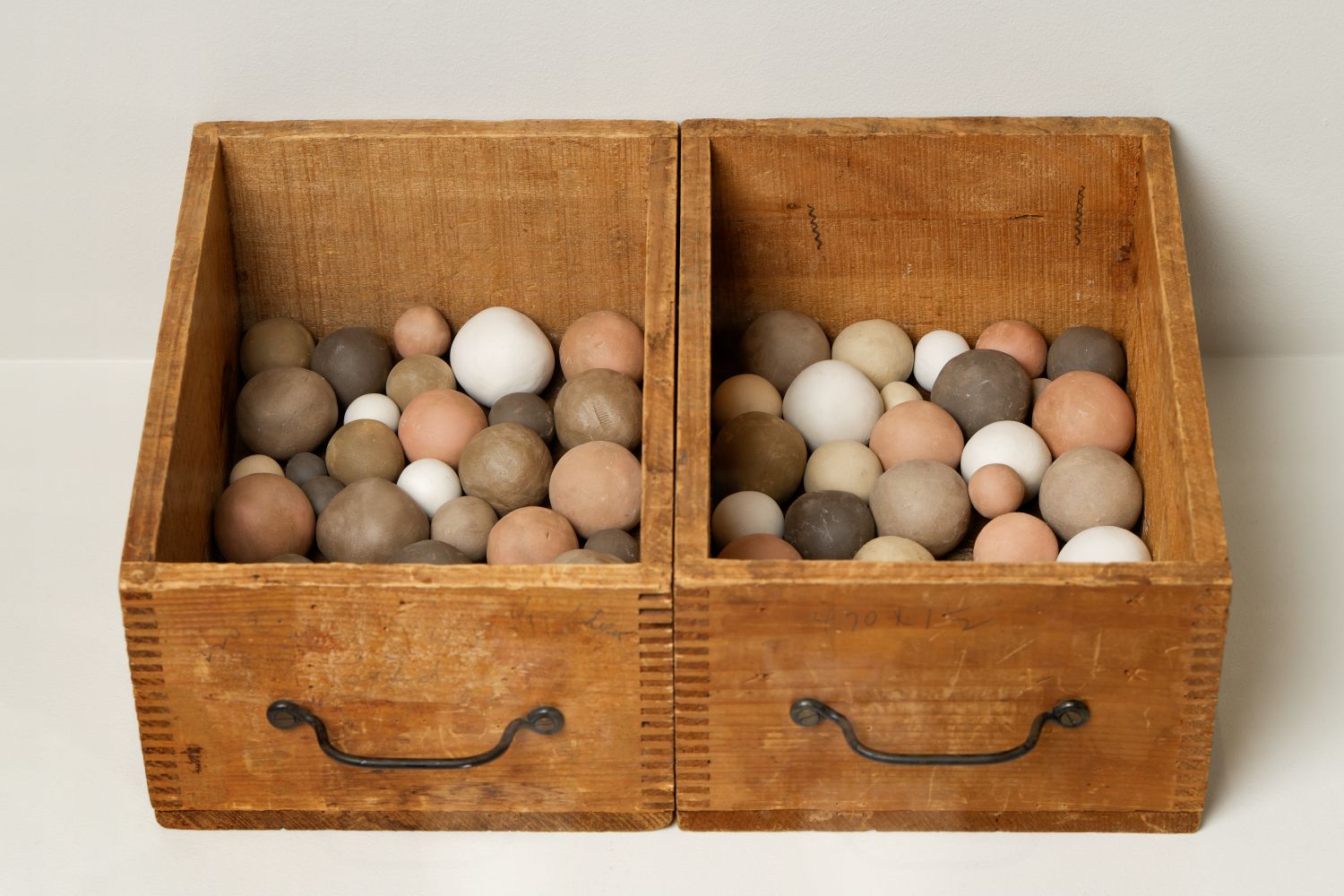
223 Prints on Hahnemuhle Paper Divided into Three Used Wooden Boxes
Print: each 17.3 x 18.4 cm
Drawer: each 21.6 x 27.9 x 15.2 cm
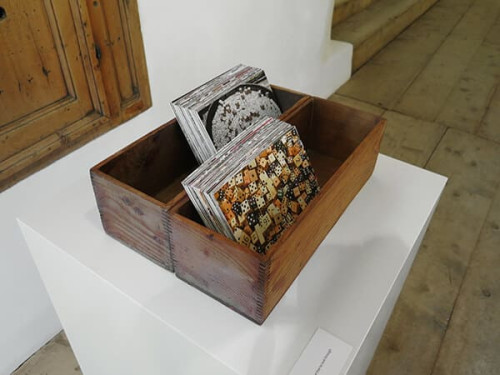
Unfolding Bottari – Geometry of Possession, 1991-2014
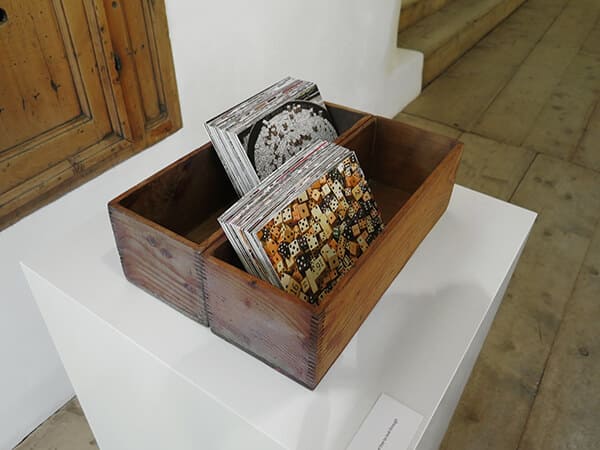
Unfolding Bottari – Geometry of Possession, 1991-2014
113 Prints on Hahnemuhle Paper Divided into Two Used Wooden Boxes
Print: each 17.8 x 22.2 cm
Box: each 13.3 x 44.5 x 15.9 cm
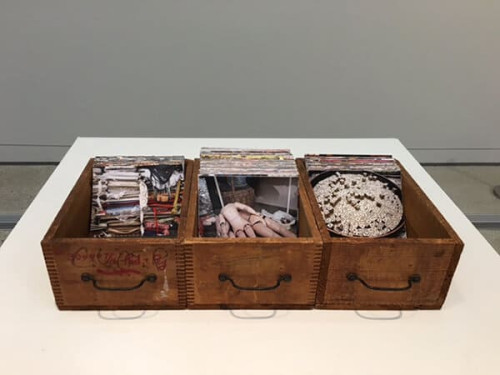
Unfolding Bottari – Geometry of Possession | 2015
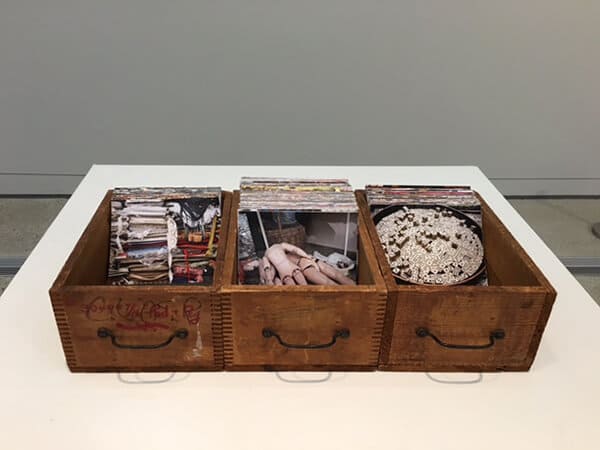
Unfolding Bottari – Geometry of Possession
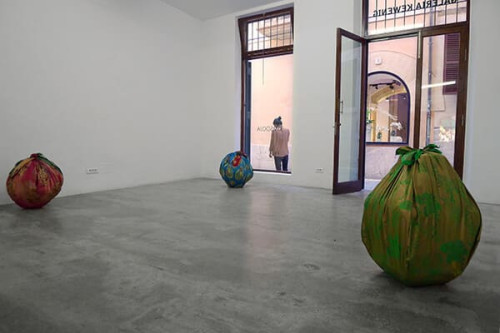
Bottari – An Island | 2014
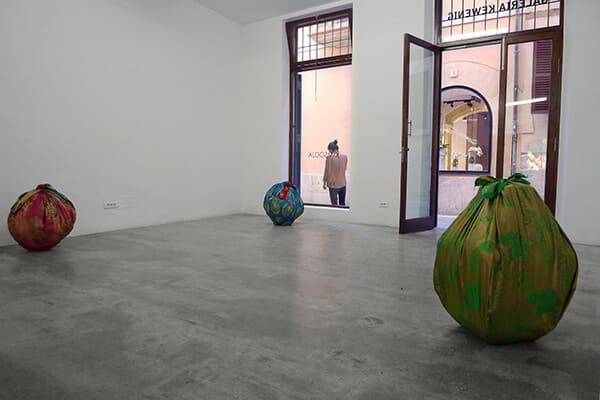
Bottari – An Island
Installation at Kimsooja, To Breathe: Mandala, Kewenig Galerie, Palma, Majorca, Spain
Courtesy of Kewenig Galerie, Palma and Kimsooja Studio
[left] ] Bottari, 2009/2014, Used Korean Bedcover, Used Clothes, Clay Basin from Mallorca, 62 x 49cm (approx)
[center] Bottari, 2009/2014, Used Korean Bedcover, Used Clothes, Clay Basin from Mallorca, 63 x 53cm (approx)
[right] Bottari, 2014, Used Korean Bedcover, Fabric, Catholic Mass Reading/Chant Book for Fathers, 80 x 45 cm (approx)
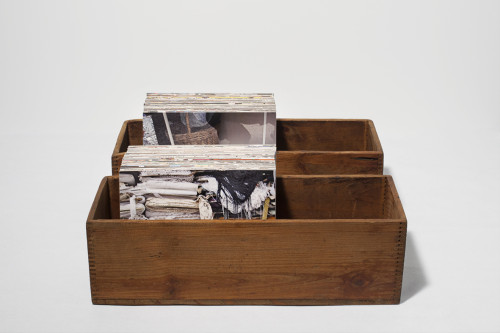
Unfolding Bottari – Geometry of Possession, 1991-2014
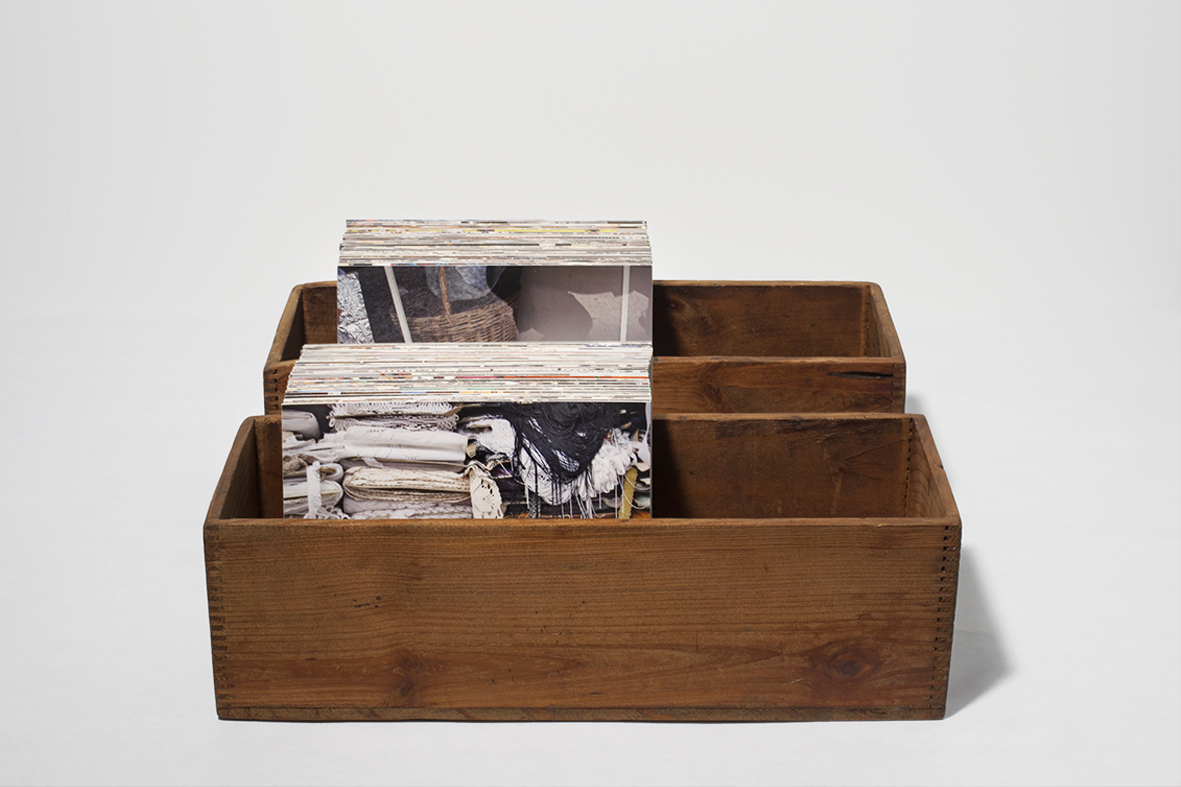
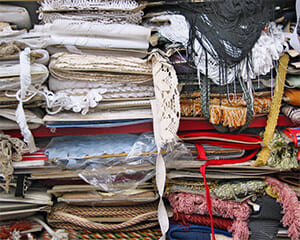
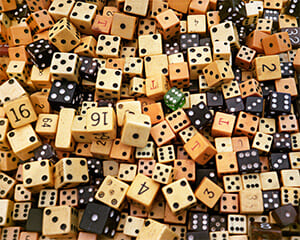
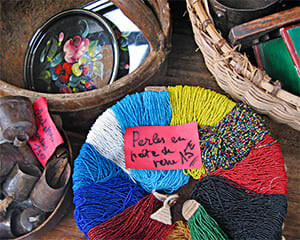
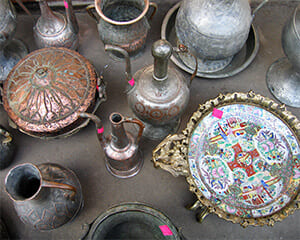
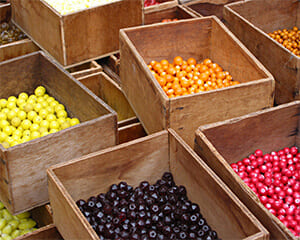

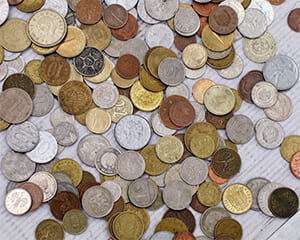
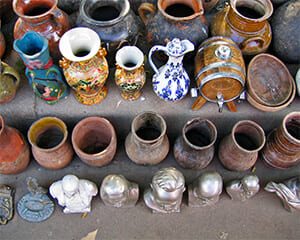
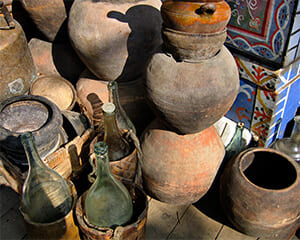
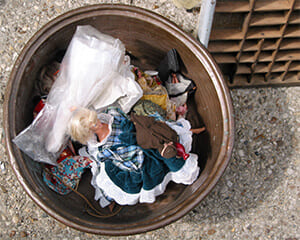
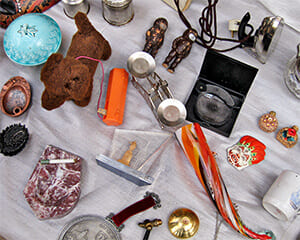
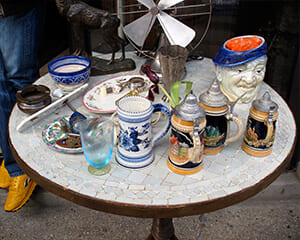
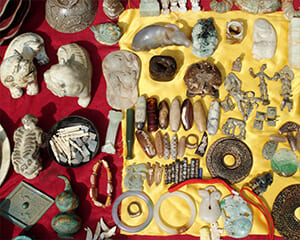
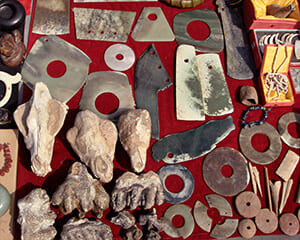
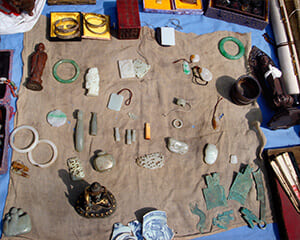
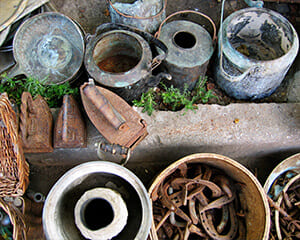
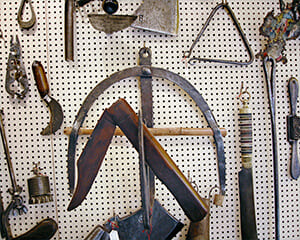
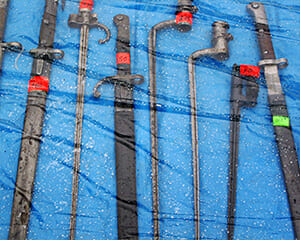
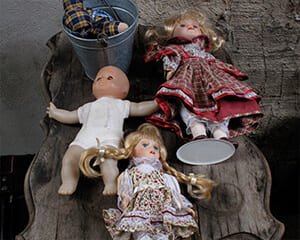
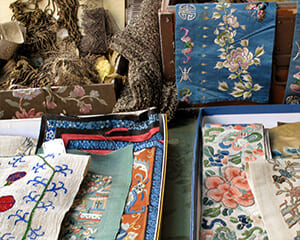
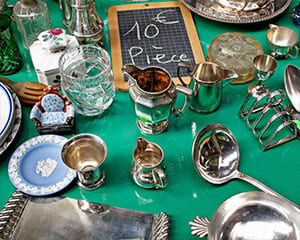
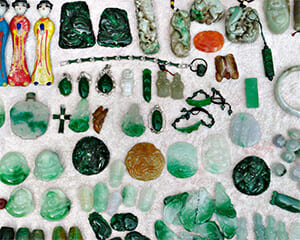
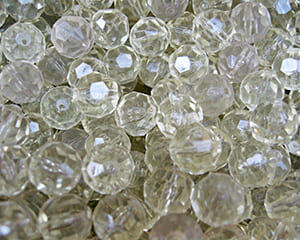
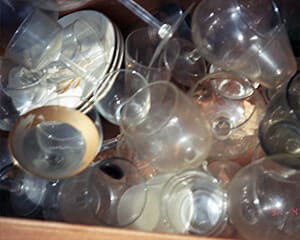
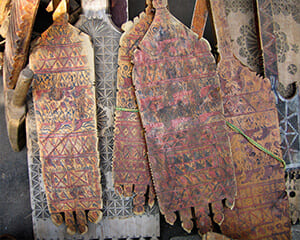
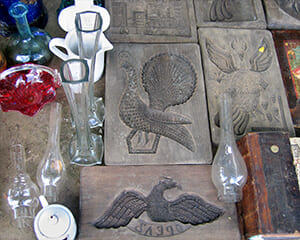
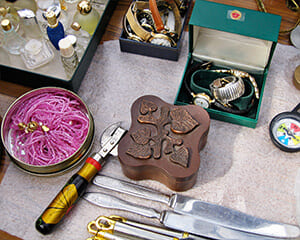
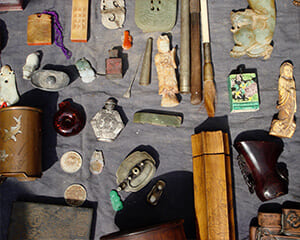
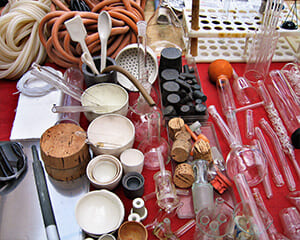
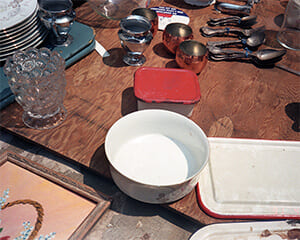
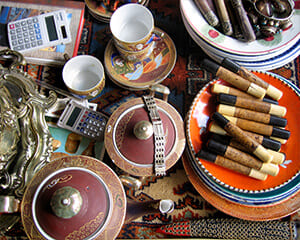
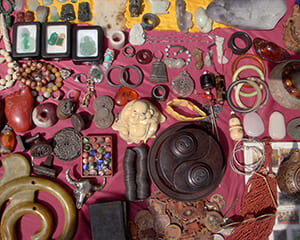
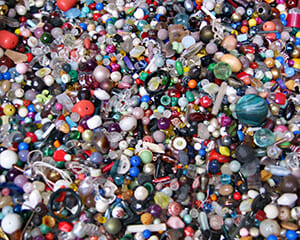
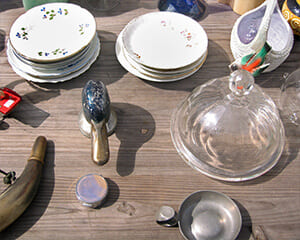
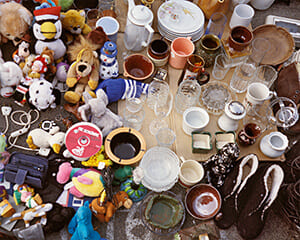
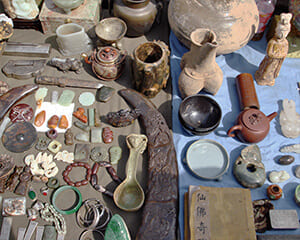
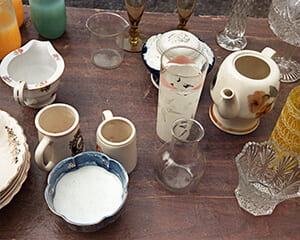
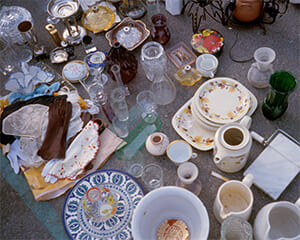
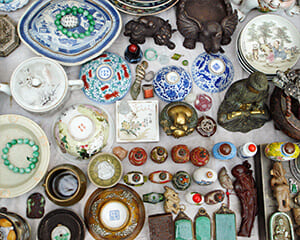

Unfolding Bottari – Geometry of Possession, 1991-2014
223 Prints on Hahnemuhle Paper Divided into Two Used Wooden Boxes
Print: each 17.8 x 22.2 cm
Box: each 13.3 x 44.5 x 15.9 cm
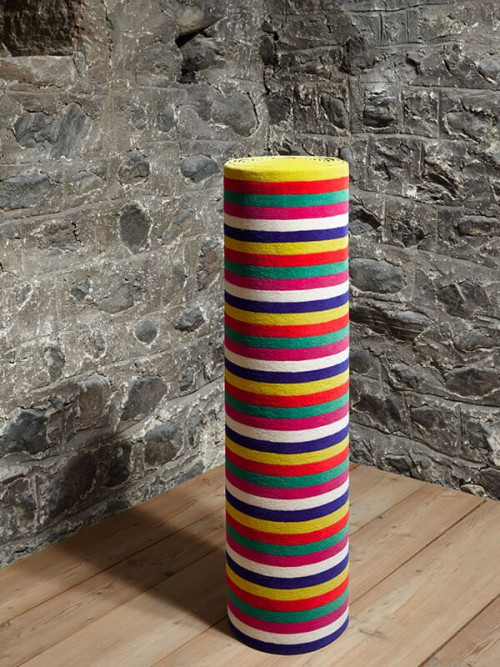
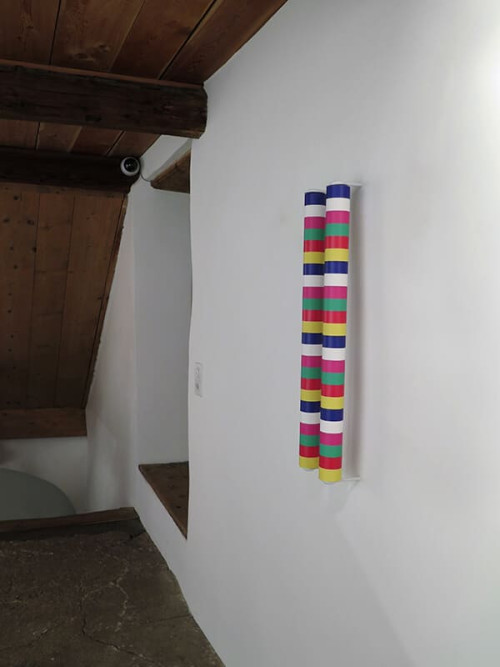
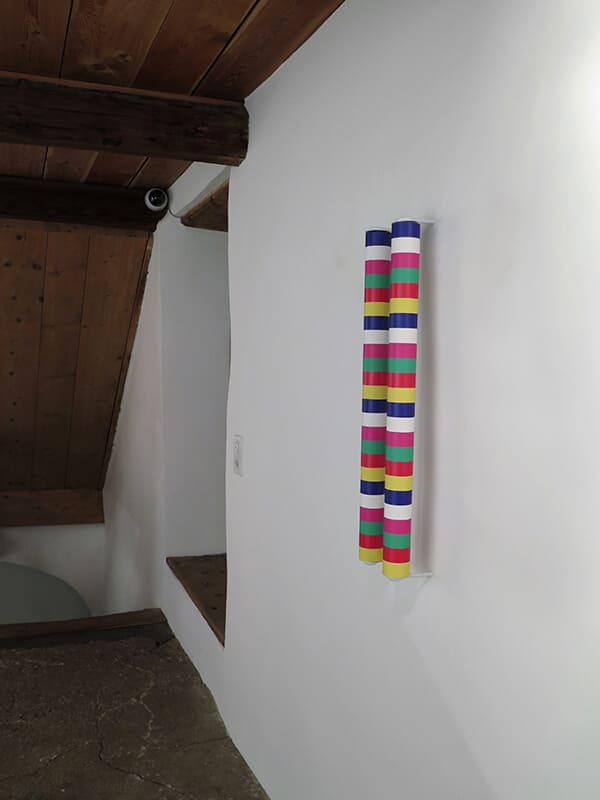
Deductive Object: Obangsaek | 2014
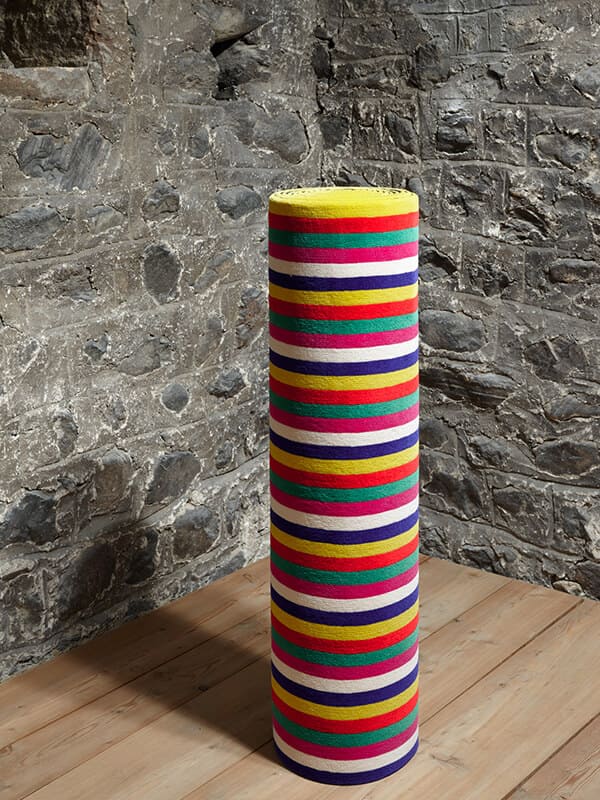
Deductive Object: Obangsaek
Woven Carpet - Semi Worsted Wool Carpet
120 x 30(dia)cm
Site-specific Installation at Kimsooja, To Breathe: Obengsaek,Gallery Tschudi, Zuoz, Switzerland, 2014-2015
Deductive Object: Obangsaek | 2014
Deductive Object: Obangsaek
Wallpaper
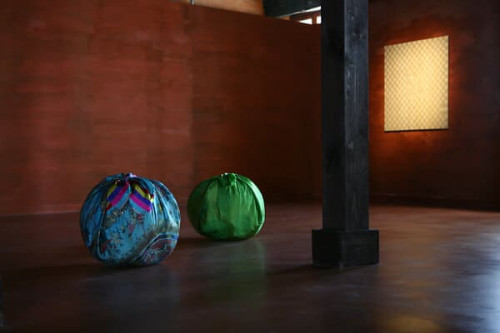
Bottari: The Island | 2011
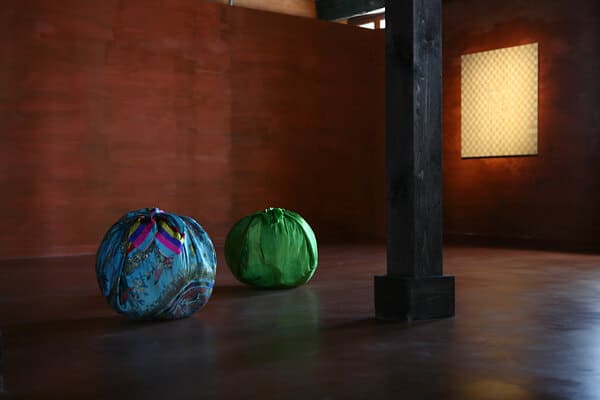
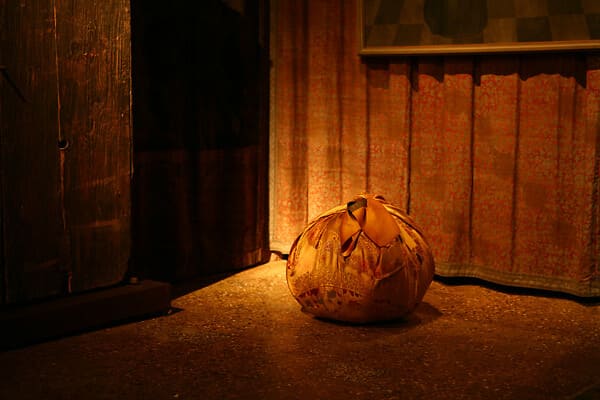
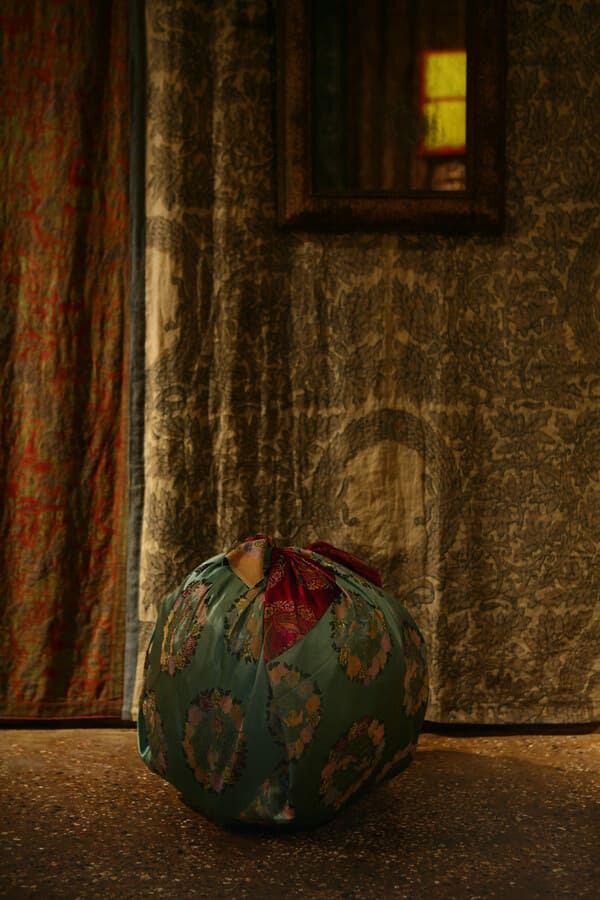
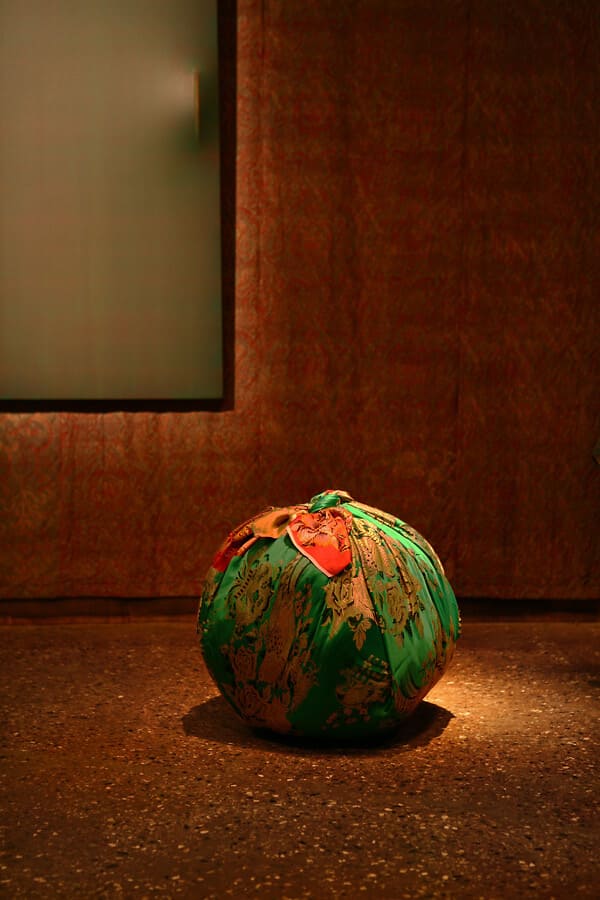
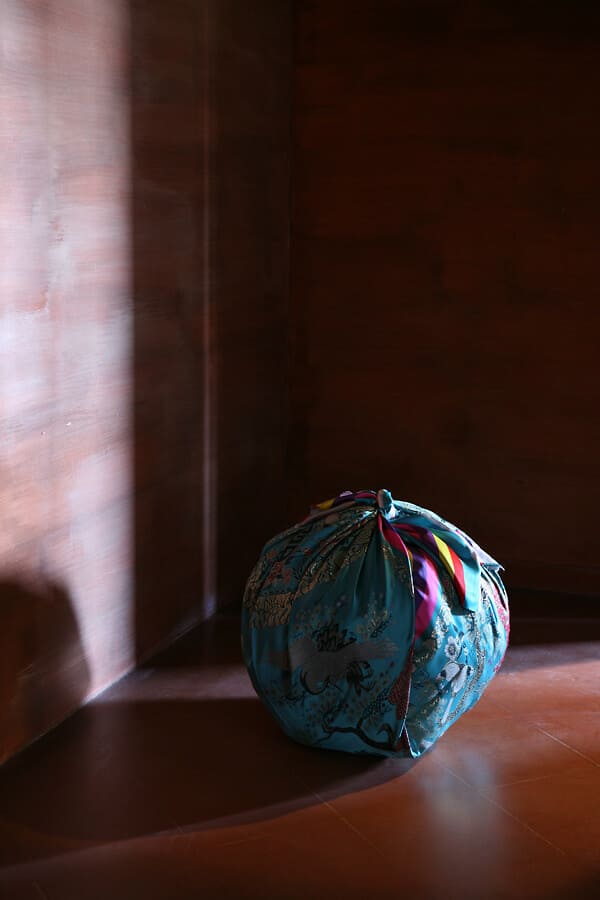
Bottari: The Island
Used Korean Bedcovers, Used Japanese Clothes
Dimensions Variable
Courtesy Axel Vervoordt Foundation and Raffaella Cortese Gallery, Milan, Italy
Photo by Jaeho Chong
Site specific Bottari Installation at Group Exhibition Tra: Edge of Becoming, Palazzo Fortuny, Venice, Italy
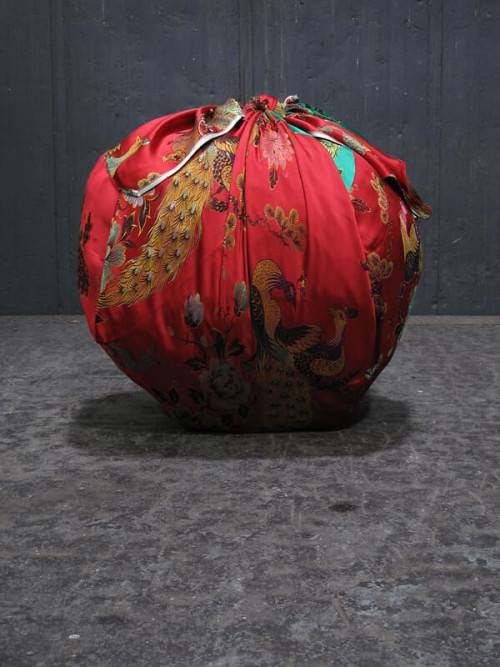
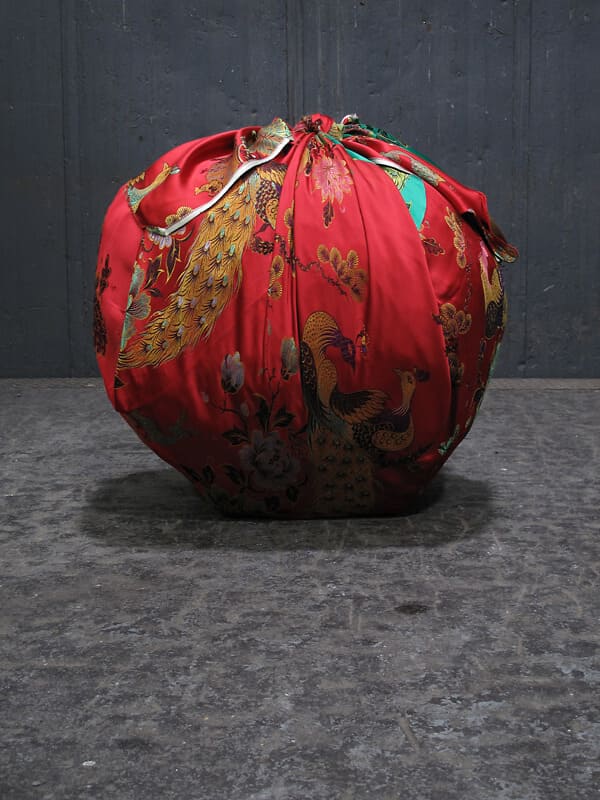
Bottari | 2011
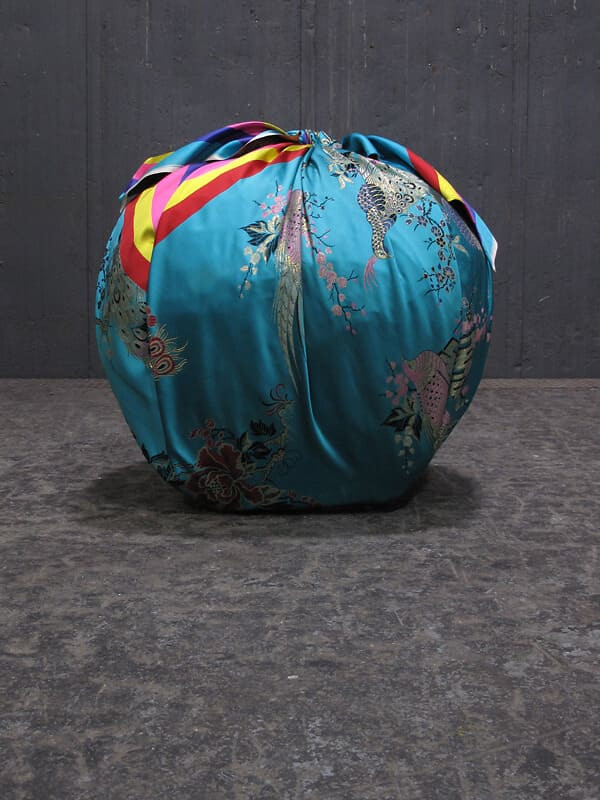
Bottari
Used Korean Bedcovers, Used Clothing
(Red) 53(h) x 57 x 63 cm
(Blud) 58(h) x 57 x 62 cm
Deductive Object | 2007
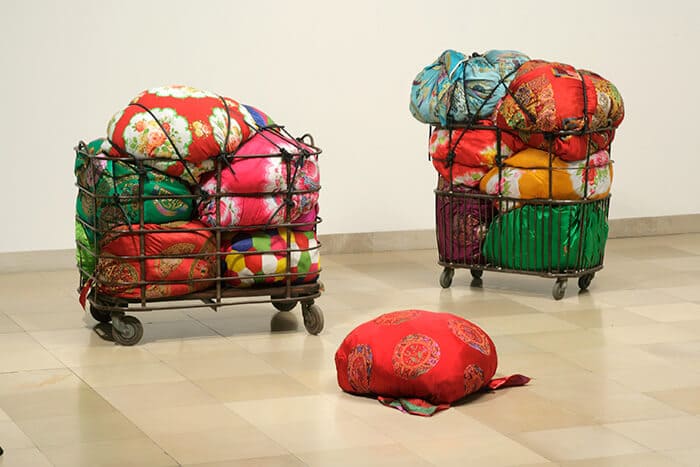
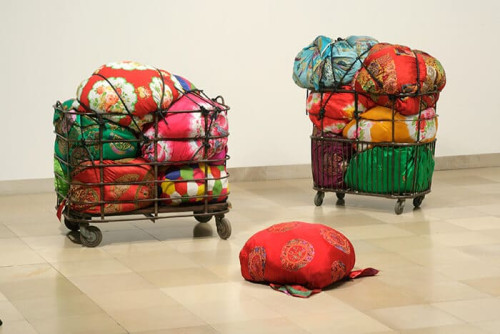
Deductive Object
Deductive Object │ 연역적 오브제
[Left] Deductive Object (Bottari cart), 19th C. Baguette Cart from France, 8 Bottaris - Used Bed Clothes and Bungee Cords, 100(h) x 100(w) x 65(d)cm
[Center] Deductive Object (Bottari), Single Bottari, Used Bed Clothes, Wrapping Cloth, 30 x 65cm
[Right] Deductive Object (Bottari cart), 19th C. Baguette Cart from France, 6 Bottaris - Used Bed Clothes and Bungee Cords, 104(h) x 75(w) x 50(d)cm
Photo by Simon Vogel
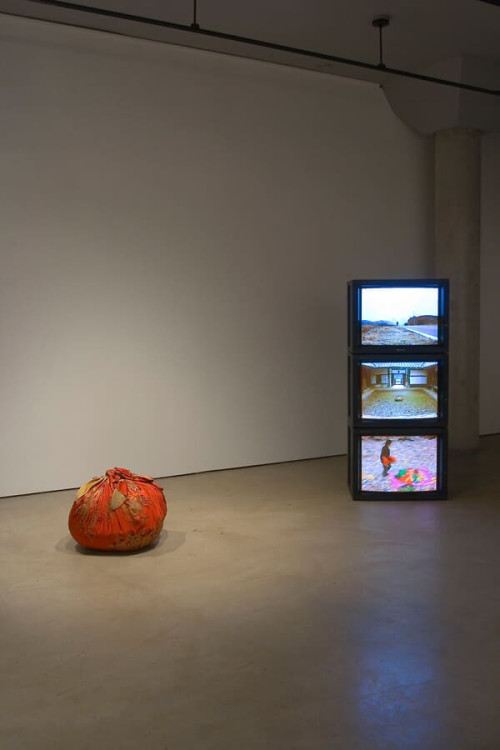
Sewing into Walking, 1994/2007
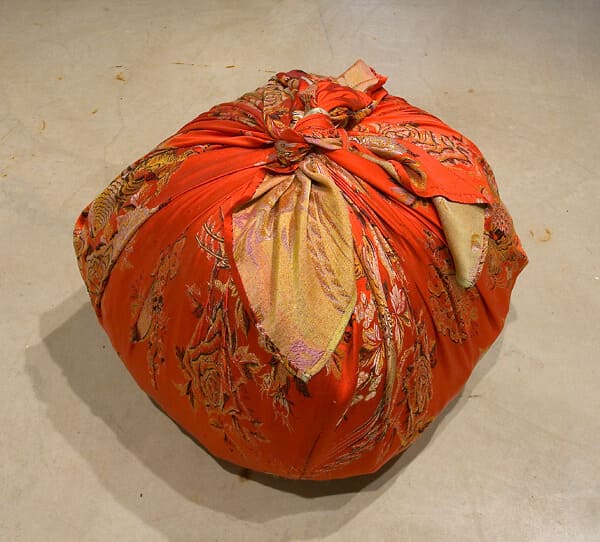
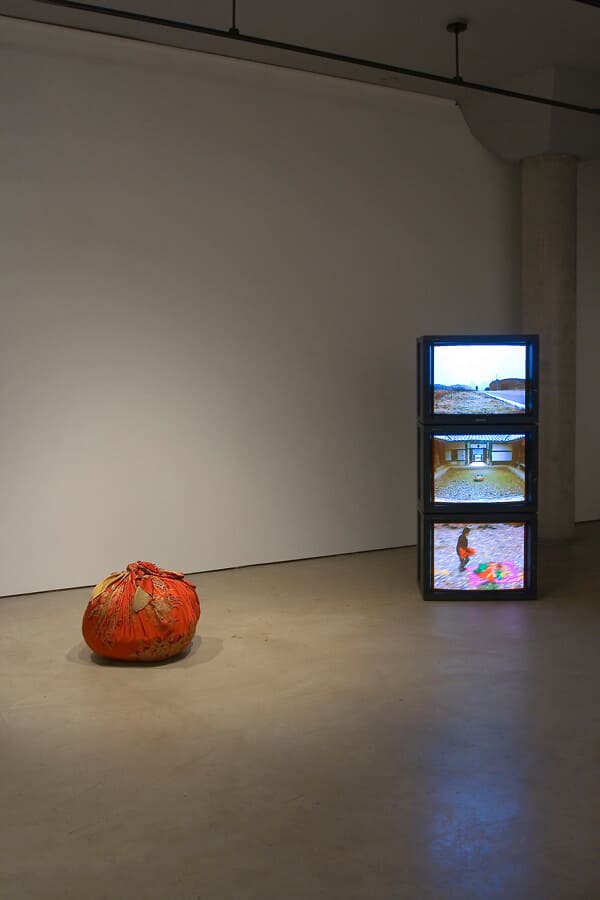
Sewing into Walking, 1994/2007
Sewing Into Walking │ 바느질하며 걷기
Bottari and Video Installation
Bottari, Used Korean Bedcovers, Used Clothing + Three Channel Video (Kyungju: 19:40 loop, Yangdong Village: 2:41 loop, Mai Mountain: 1:43 loop), Silent
Photo by Toni Hafkenscheid