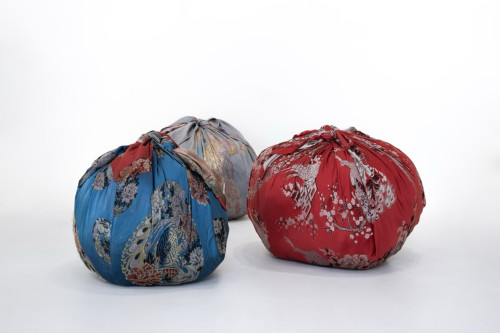
Bottari, 2022-2026
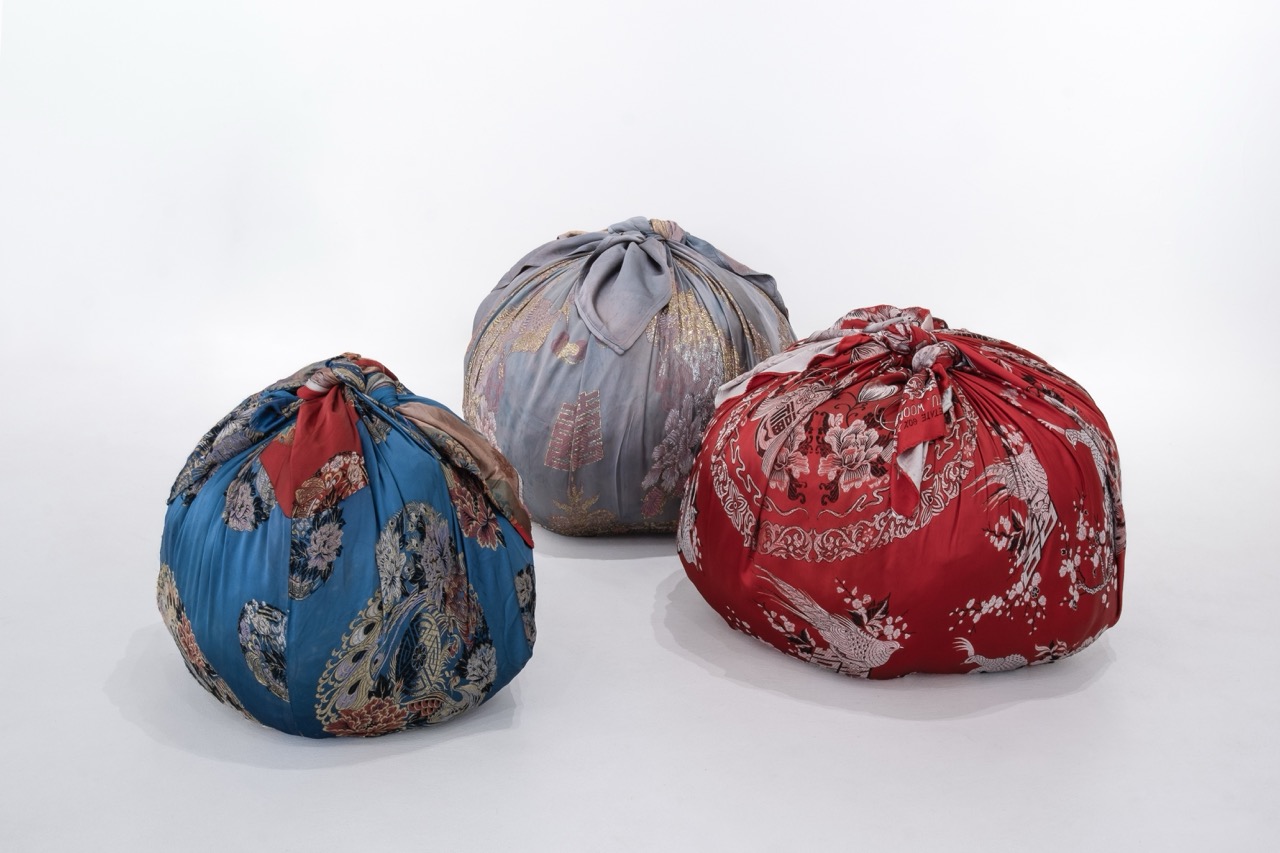
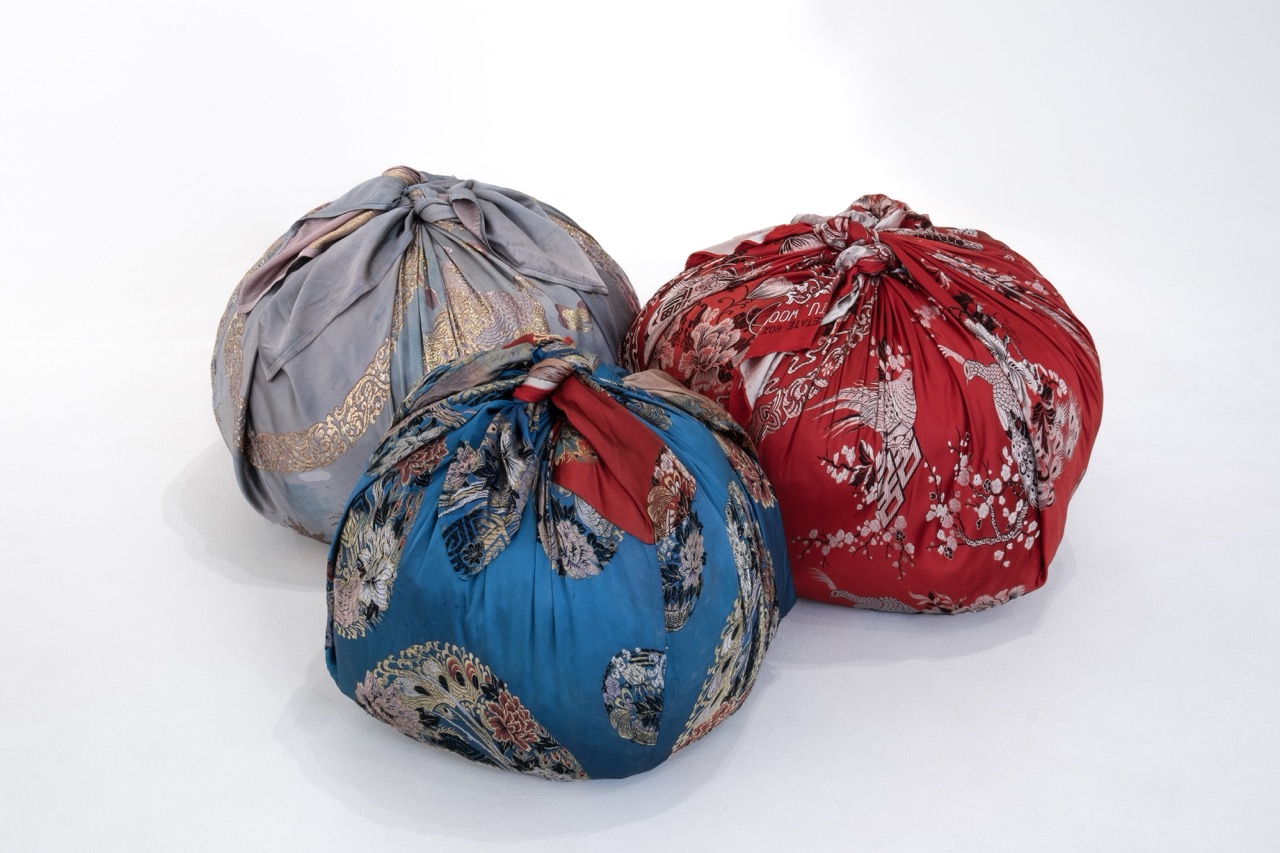
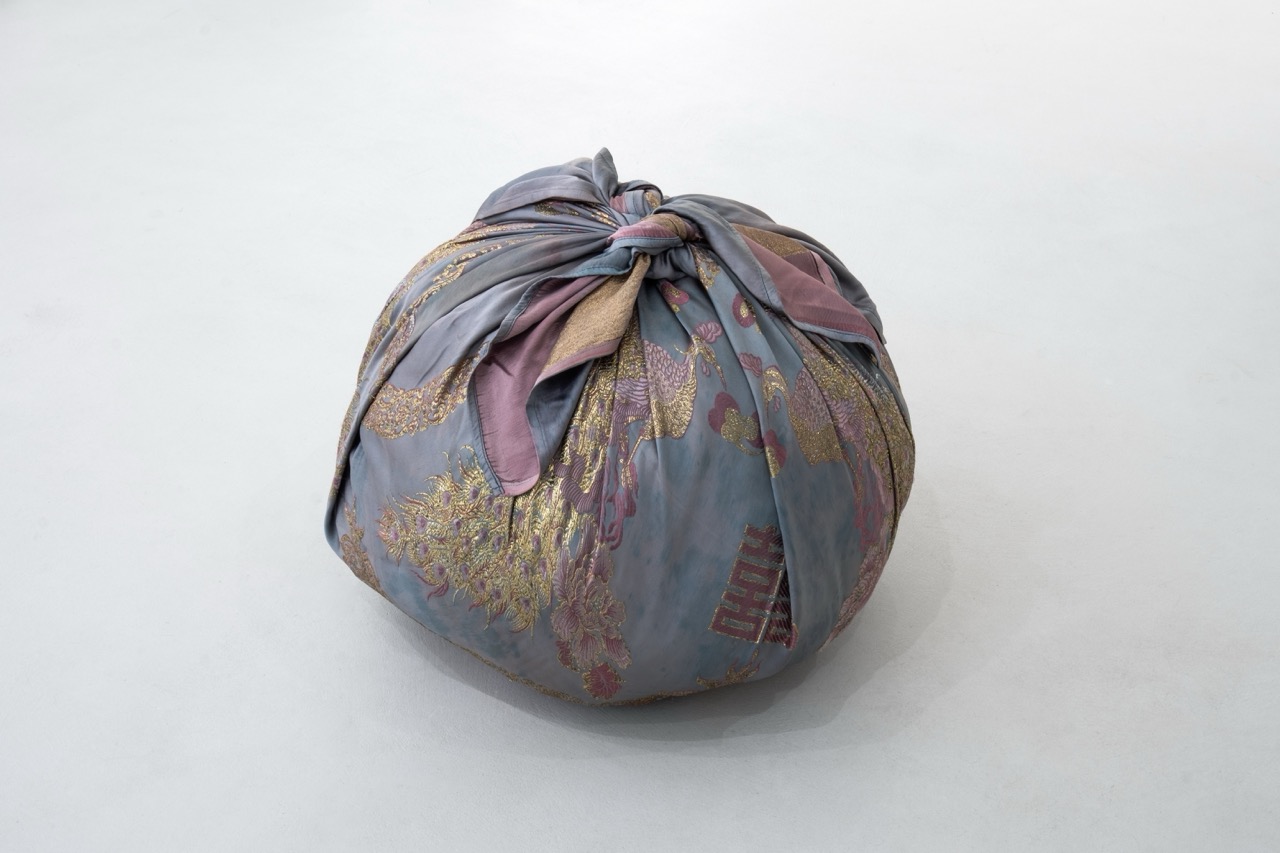
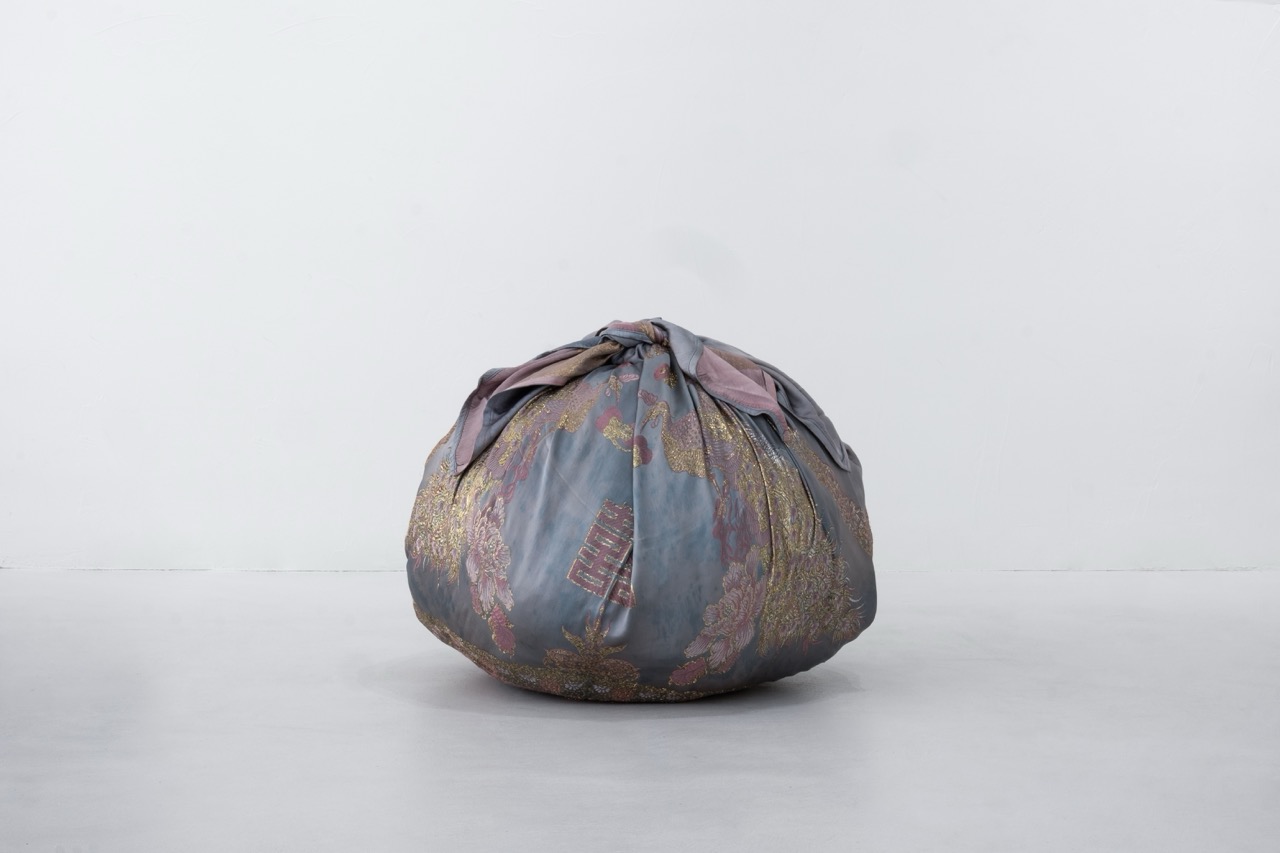
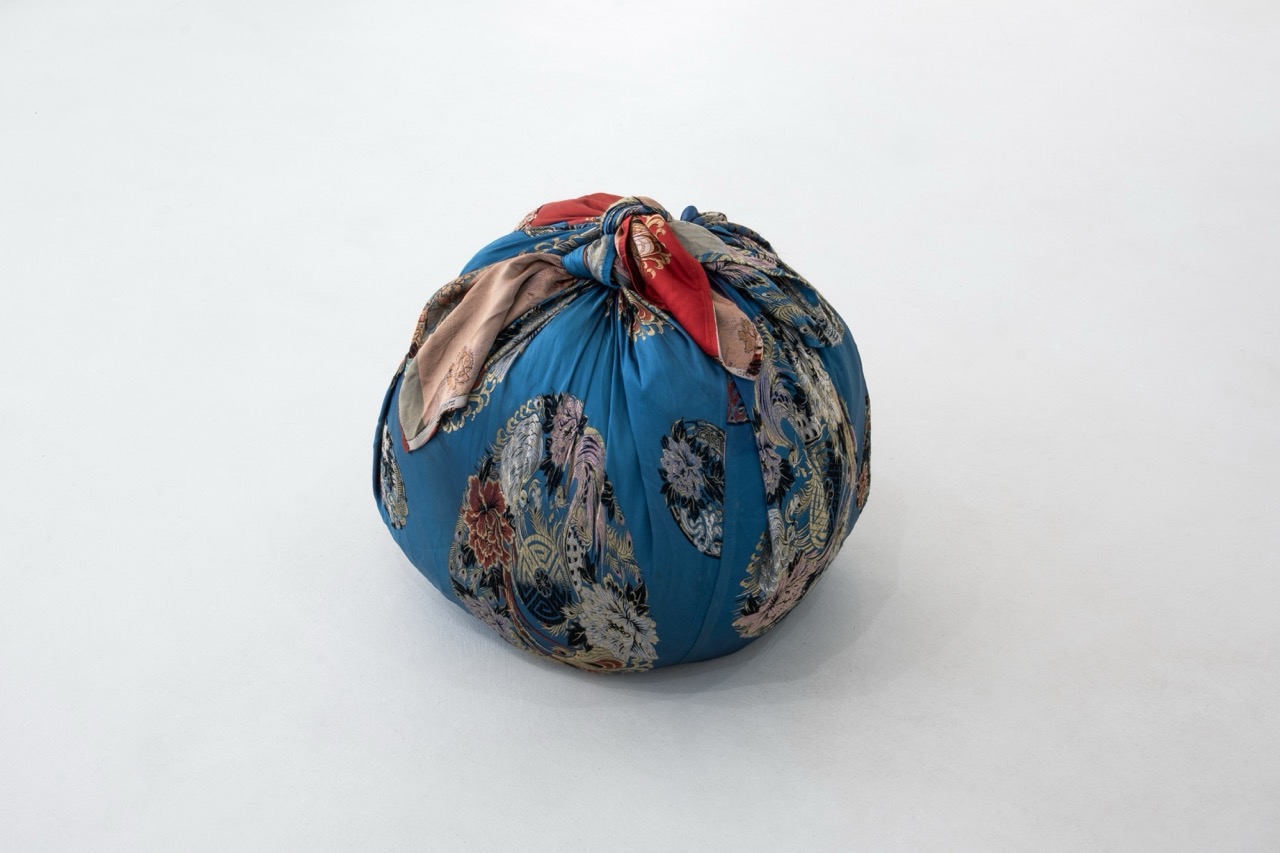
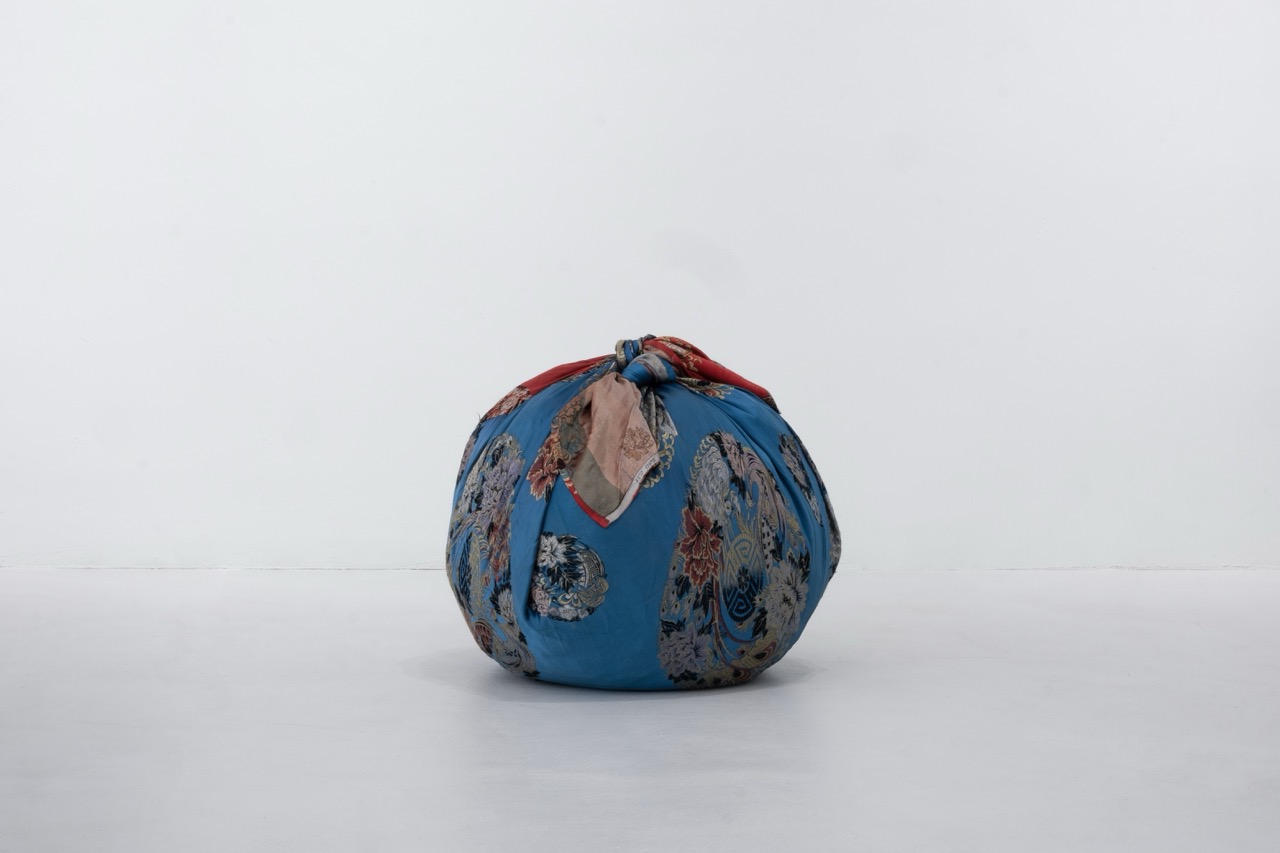
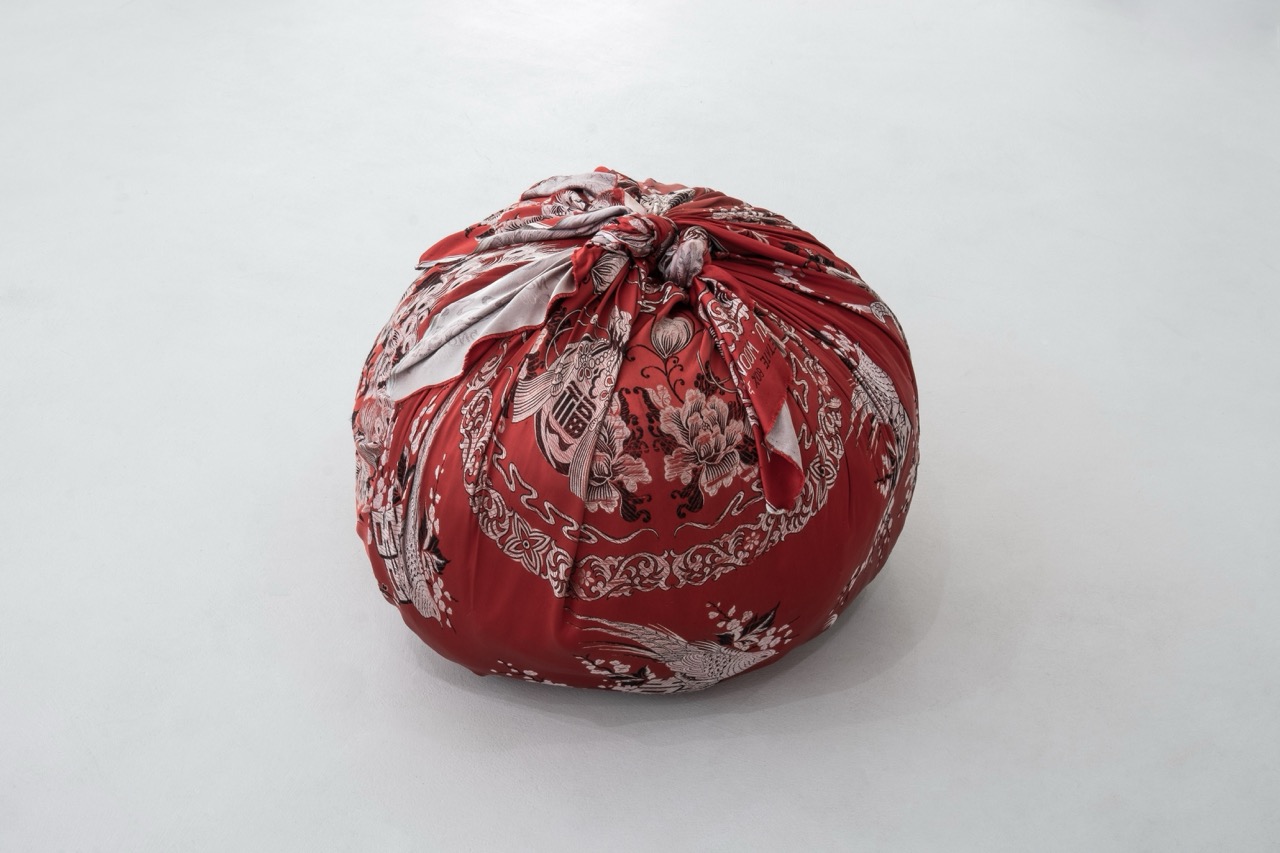
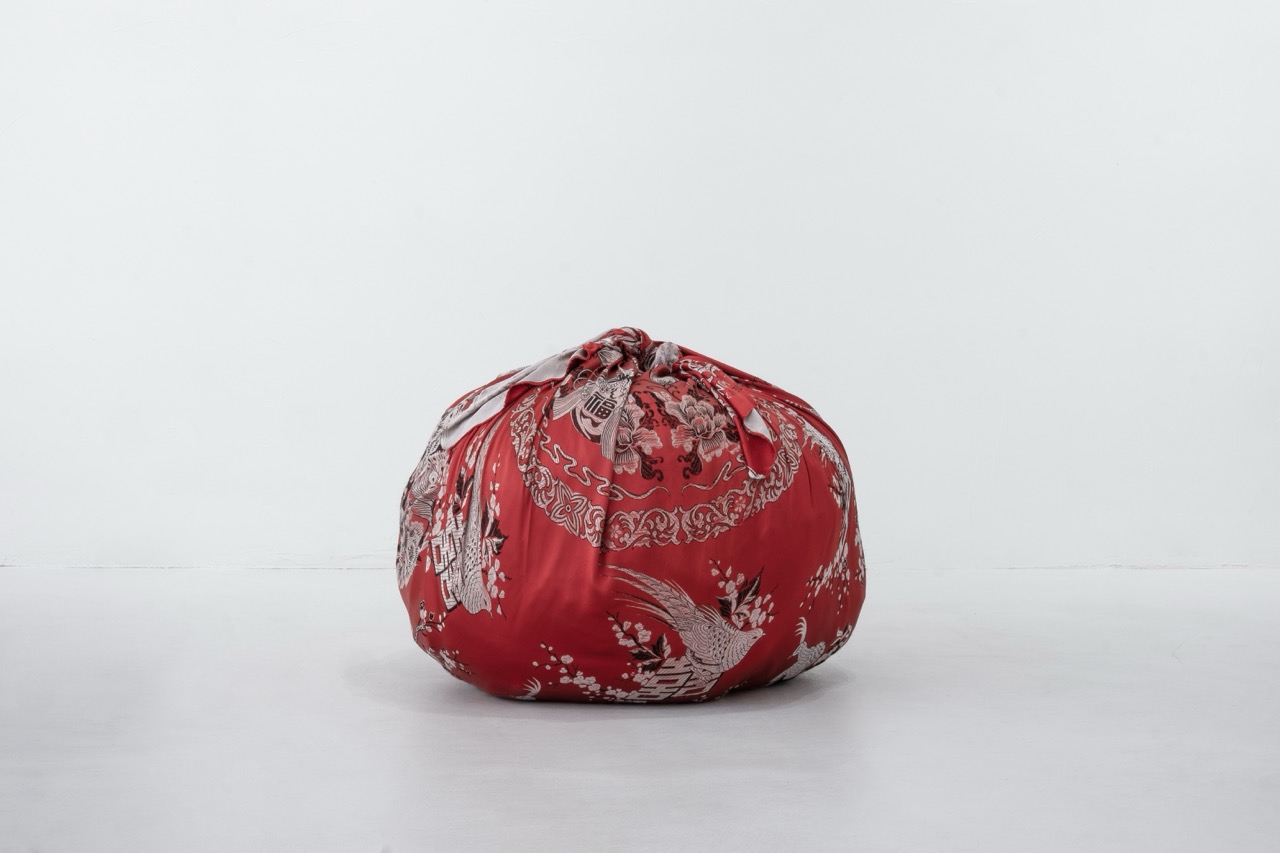
Bottari, 2022-2026
Photo by Sangwoon Jung
Kimsooja, Bottari, 2022-2026, three used korean bedcovers, used clothing, dimensions variable. Courtesy of Axel Vervoordt Gallery and Studio Kimsooja
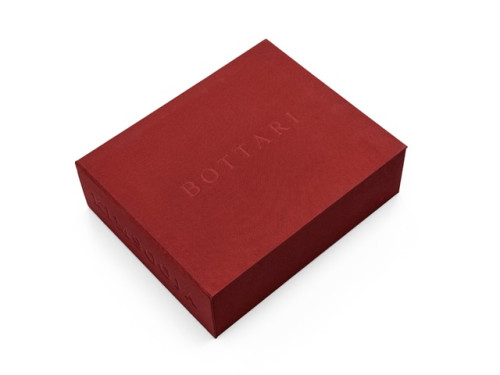
Unfolding Bottari – Geometry of Possession 2026
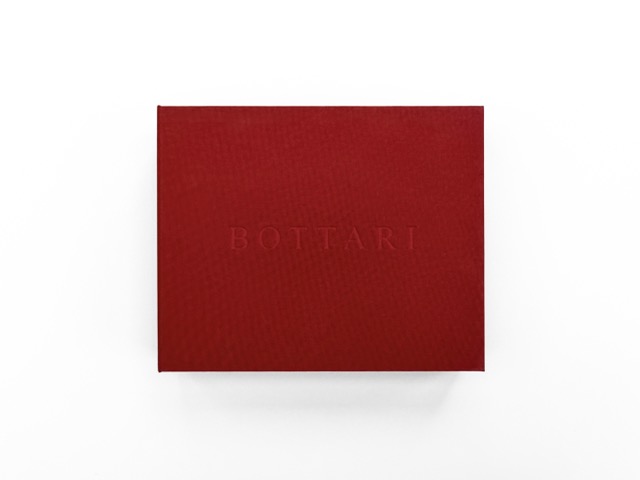
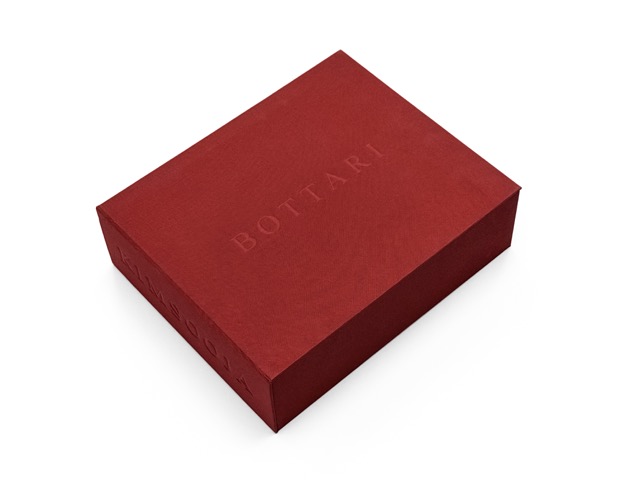
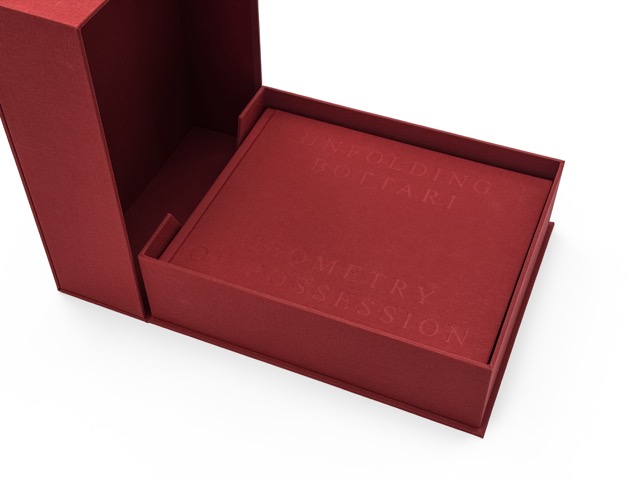
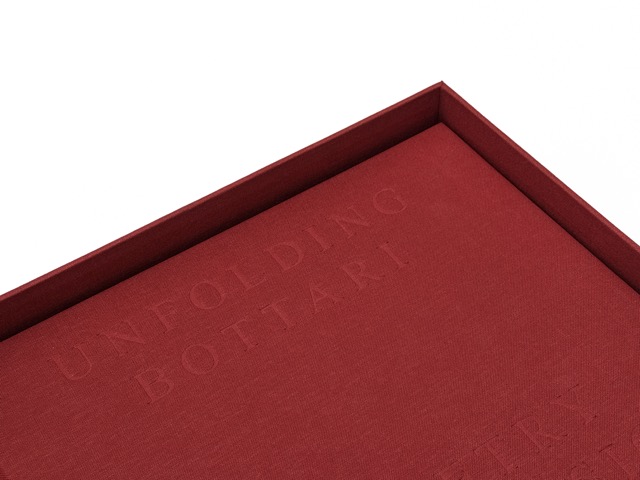
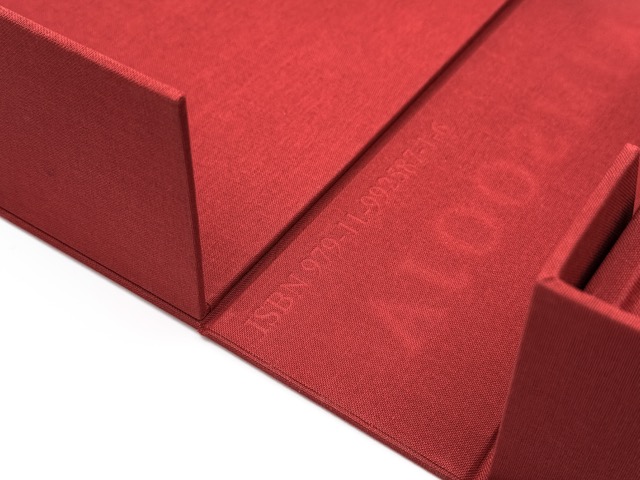
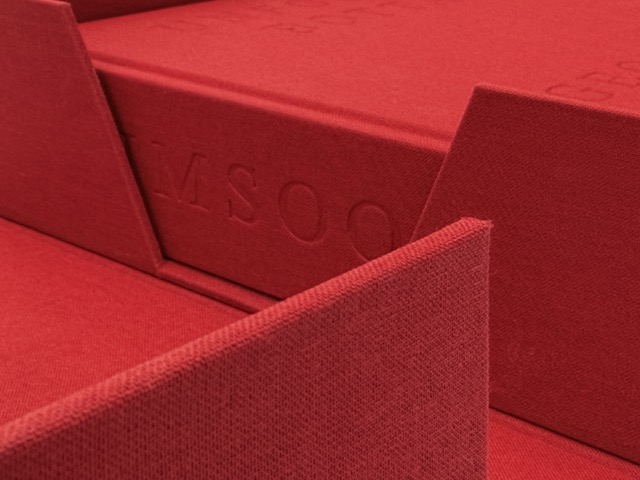
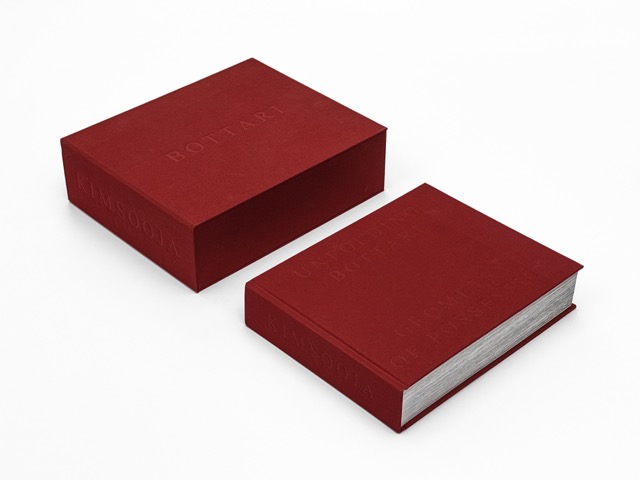
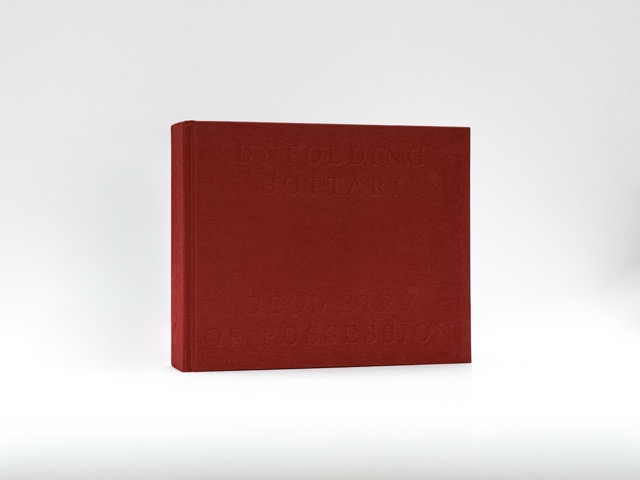
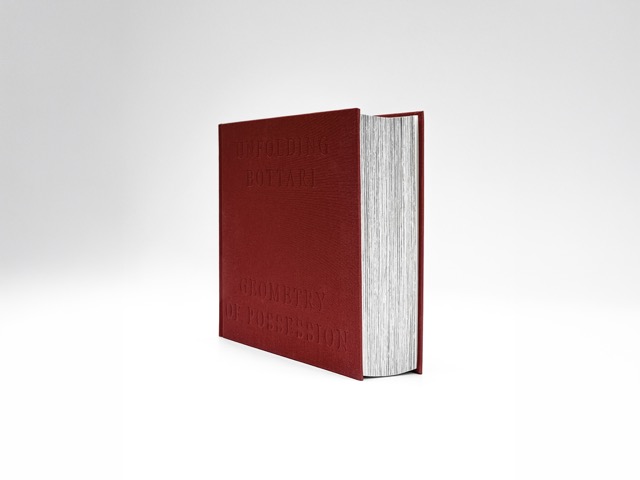
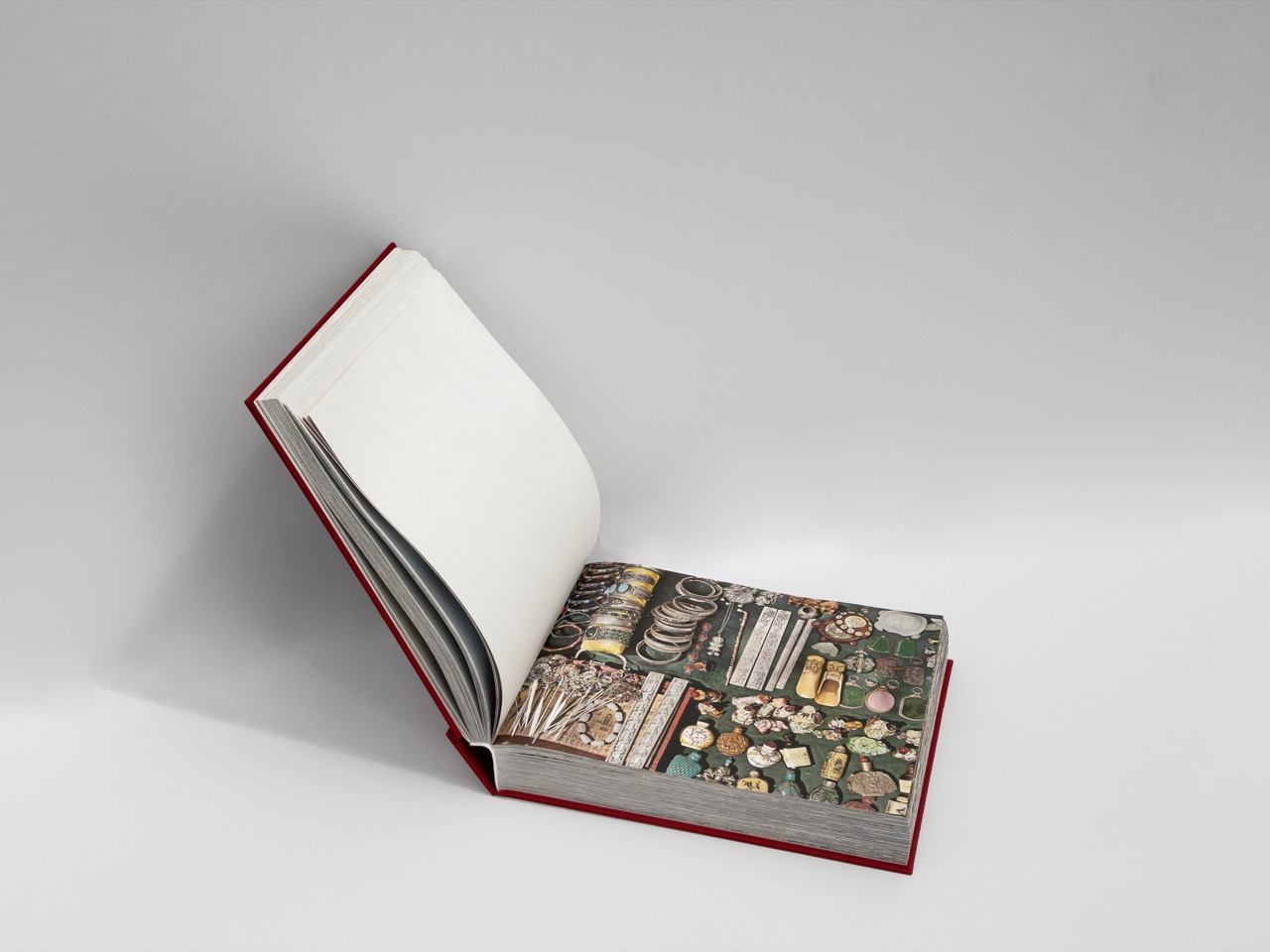
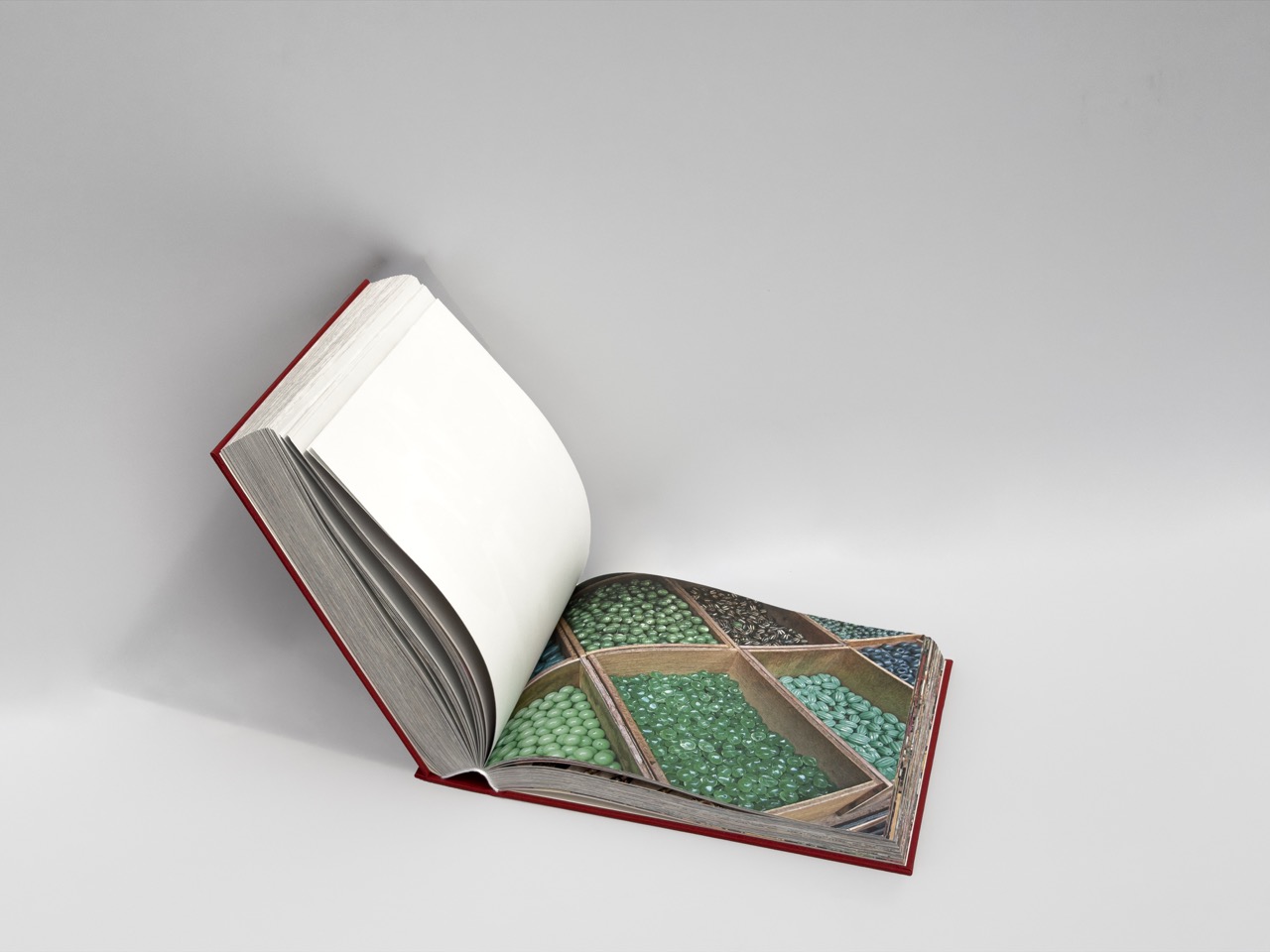
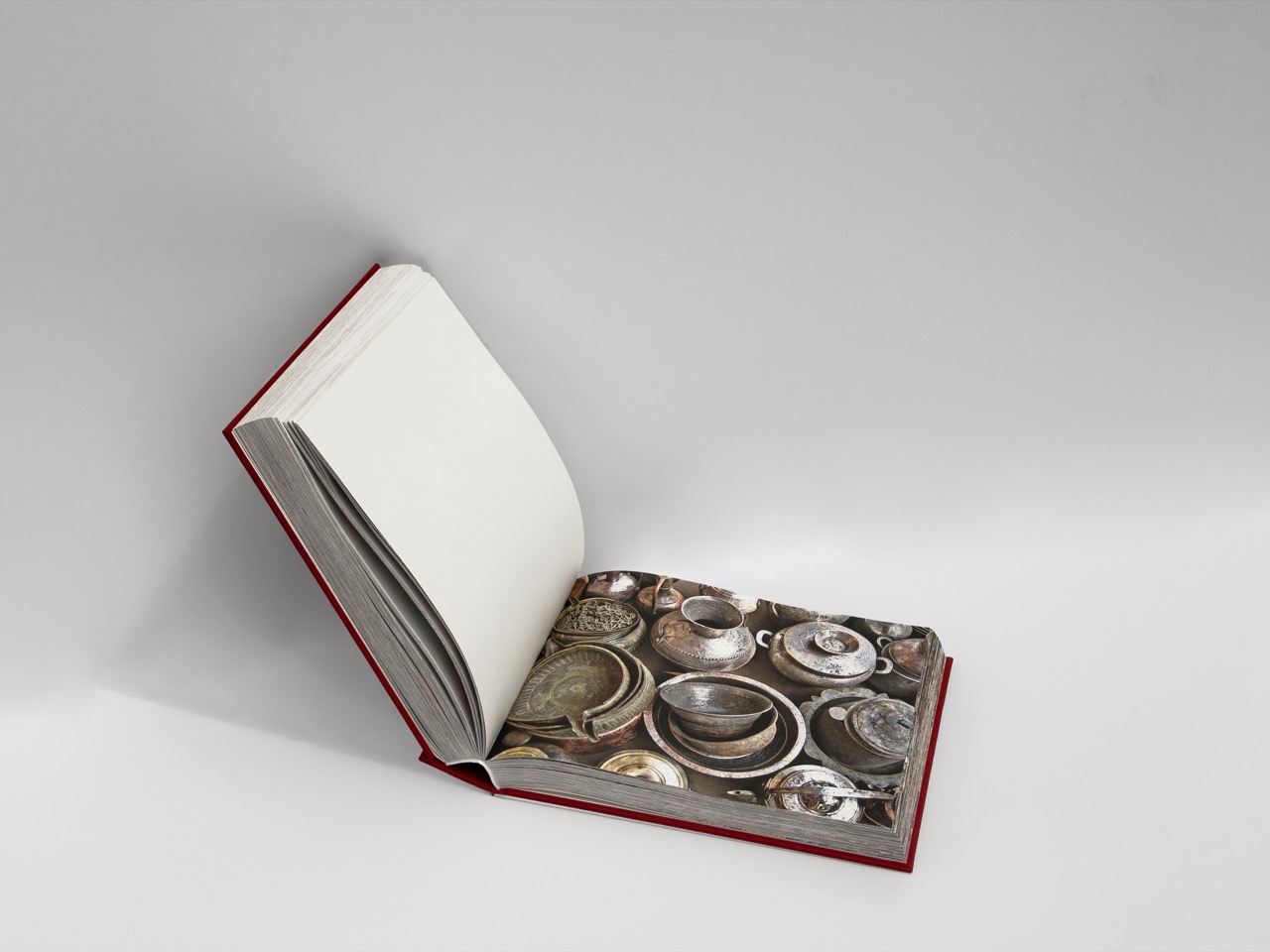
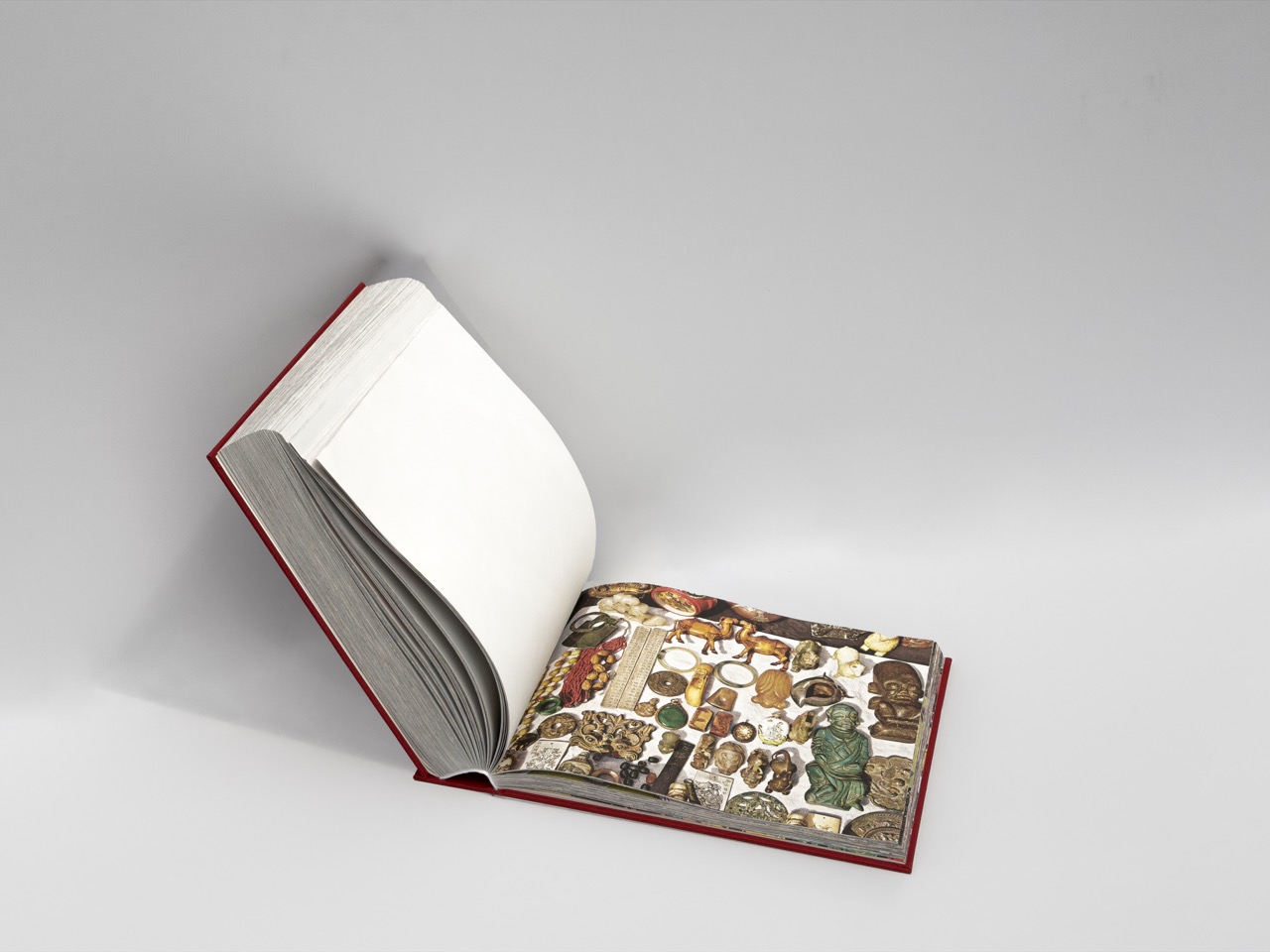
Unfolding Bottari – Geometry of Possession 2026
Unfolding Bottari – Geometry of Possession is an artist book conceived and published by Kimsooja. The two hundred and thirty-nine photographs were chosen from an ongoing documentation of found objects in various flea markets around the world. The photographs in this publication are dated from 1991 to 2023. The locations include New York, Istanbul, Berlin, Moscow, Warsaw, Beijing, and Paris. This artist book is released in two distinct editions: a limited edition of 100 copies signed by the artist and presented in a custom clamshell box, and a standard edition of 200 copies.
Photo by Sangwoon Jung
Kimsooja, Unfolding Bottari – Geometry of Possession, 2026, signed and numbered, hardcover threadbound book in clamshell box containing 239 photographs taken by the artist from 1991-2023. Edition of 100 plus 20 artist's proofs. Commissioned by Sally Wu. Courtesy of Studio Kimsooja.
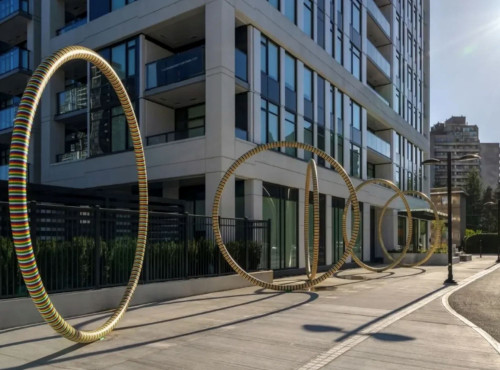
Unfolding The Horizon | 2025
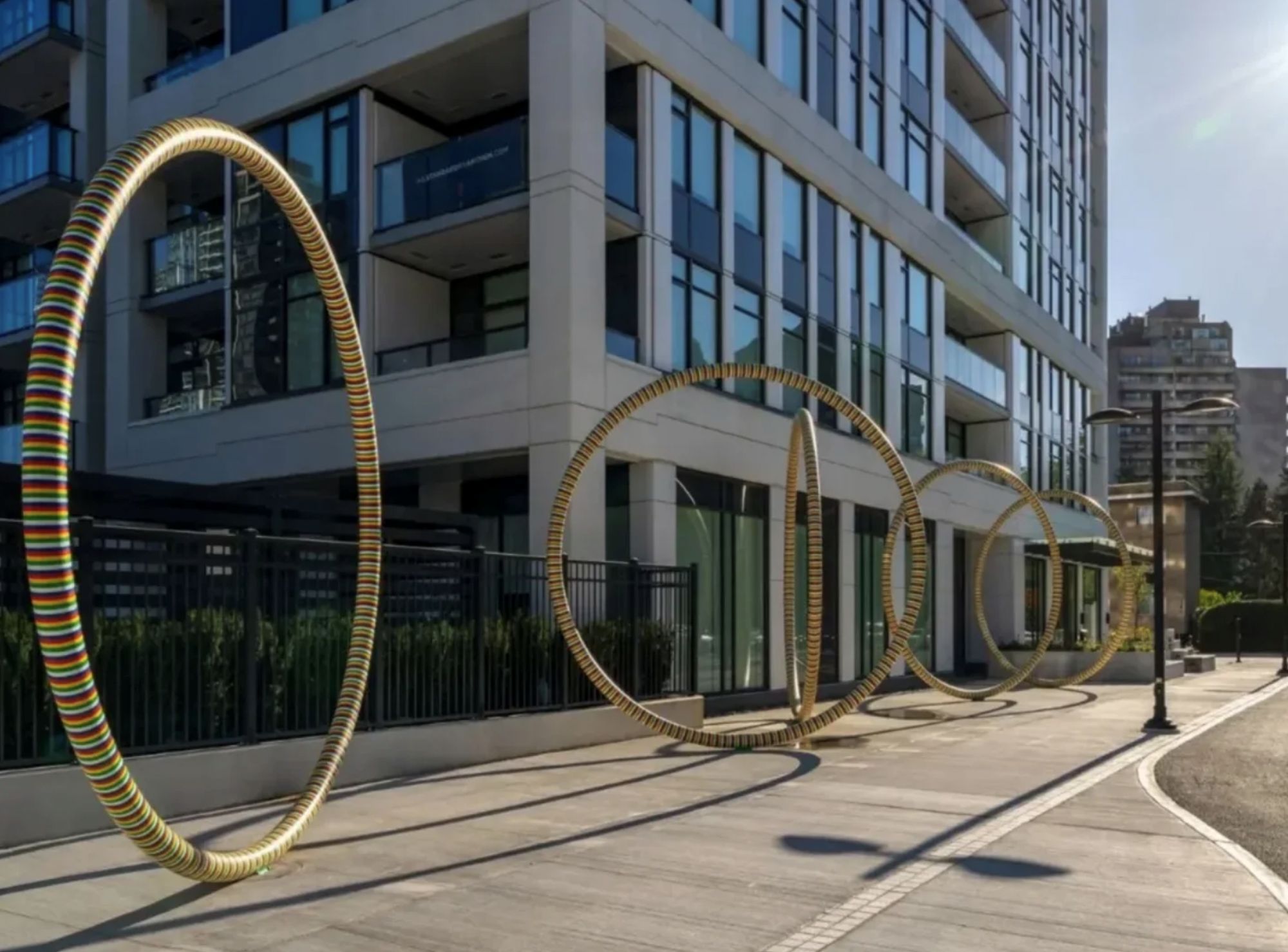
Unfolding The Horizon
Unfolding the Horizon, 2025
Five metal rings painted the colors of Obangsaek, Permanent public Art Installation
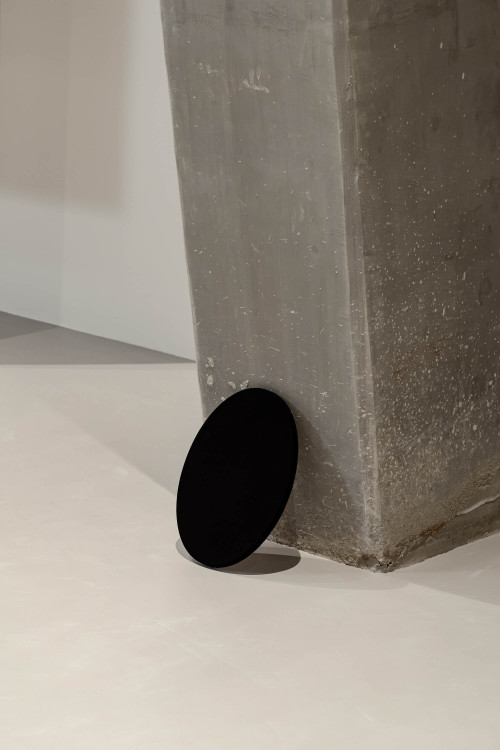
Deductive Object | 2025
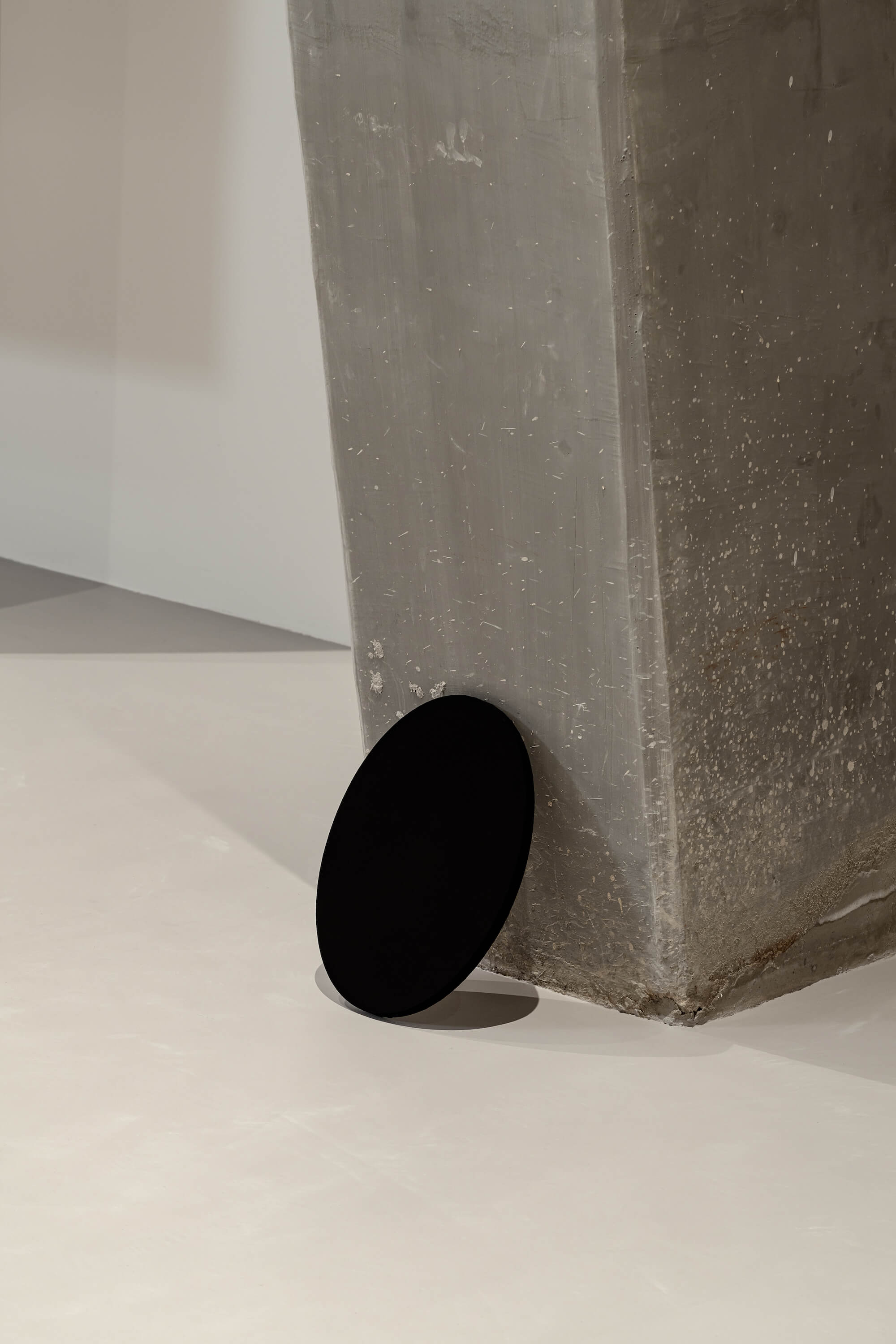
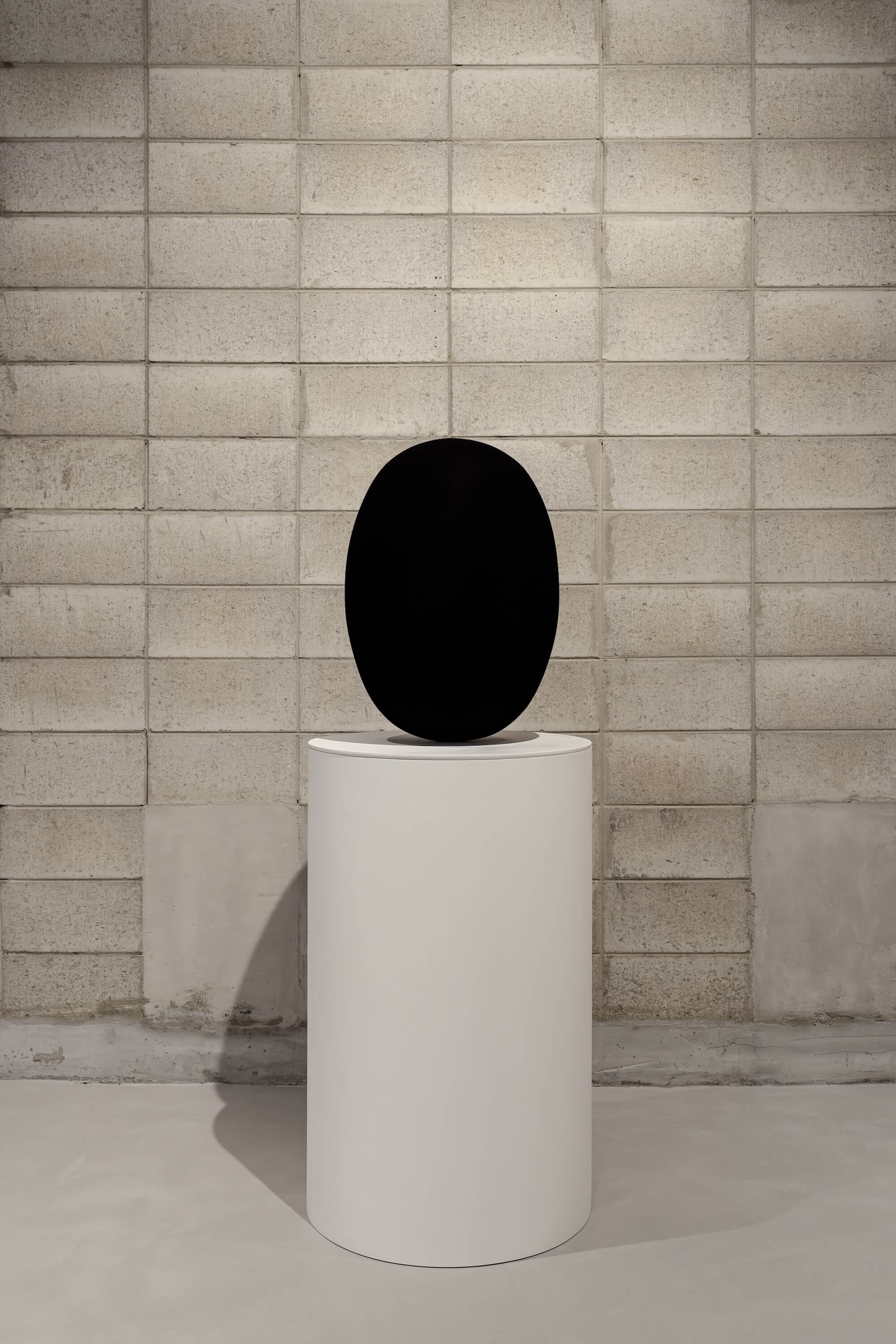
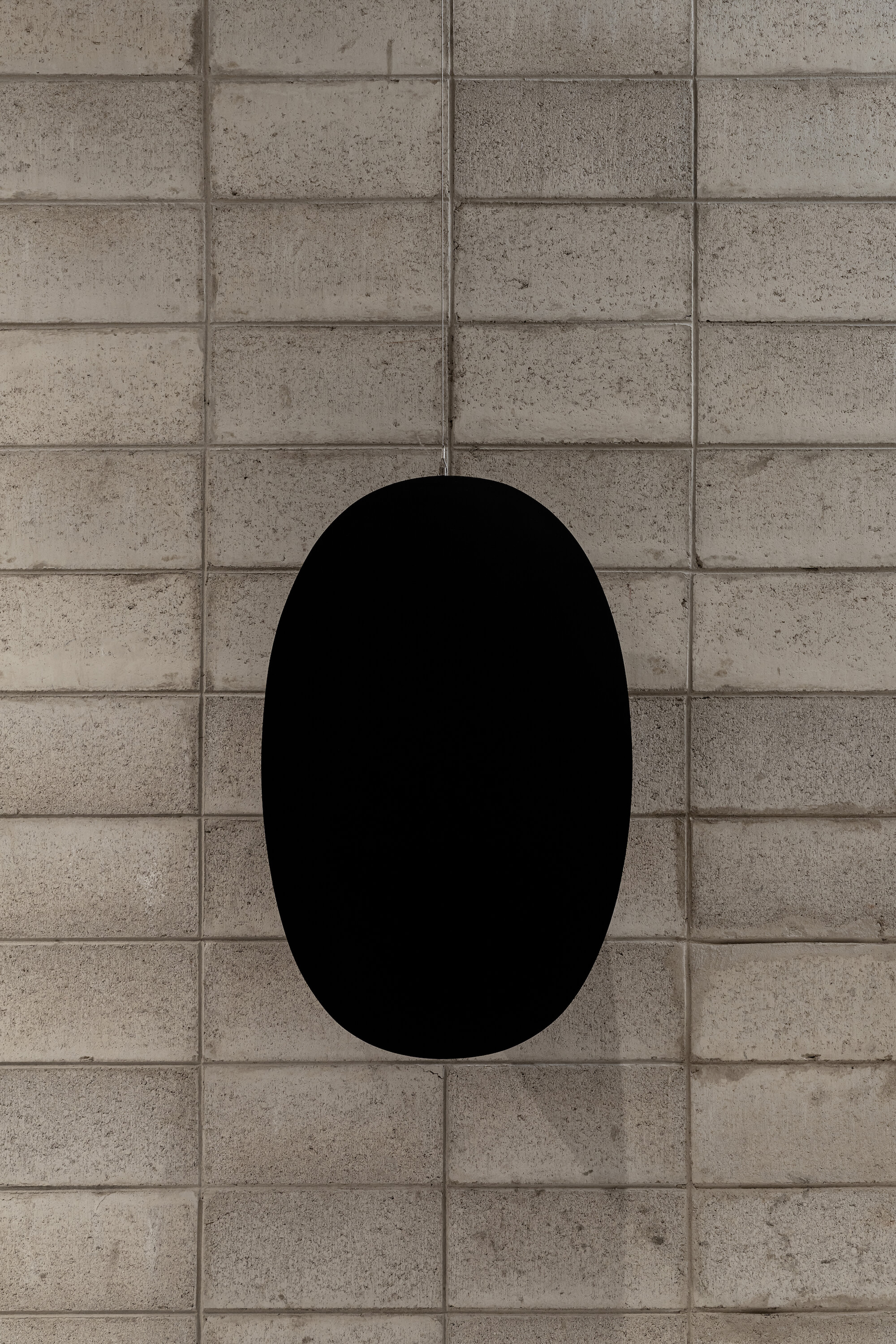
Deductive Object
Deductive Object (2025)
This scaled version of Deductive Object maintains the conceptual framework of Kimsooja’s original large-scale sculpture while rearticulating its formal presence. The work takes its form from the brahmanda stone of India, known as the “cosmic egg.” The cosmic egg symbolizes totality, encompassing both birth and death. This work may be perceived as a bottari bundle or as the body itself. Often suspended above a mirror, the black stone absorbs surrounding light, and this installation may likewise be understood “painting” as an act of “wrapping” of this elliptical sculpture.
Photo by Shim Kyuho
Installations at Studio Kimsooja, Seoul
(Left to Right:)
1 Kimsooja, Deductive Object, 2025, black paint on linen canvas, 40 x 30 cm
2 Kimsooja, Deductive Object, 2025, black paint on cast, base, 90 x 57 cm
3 Kimsooja, Deductive Object, 2025, black paint on cast, 90 x 57 cm
A Needle Woman: galaxy was a memory, earth is a souvenir | 2025
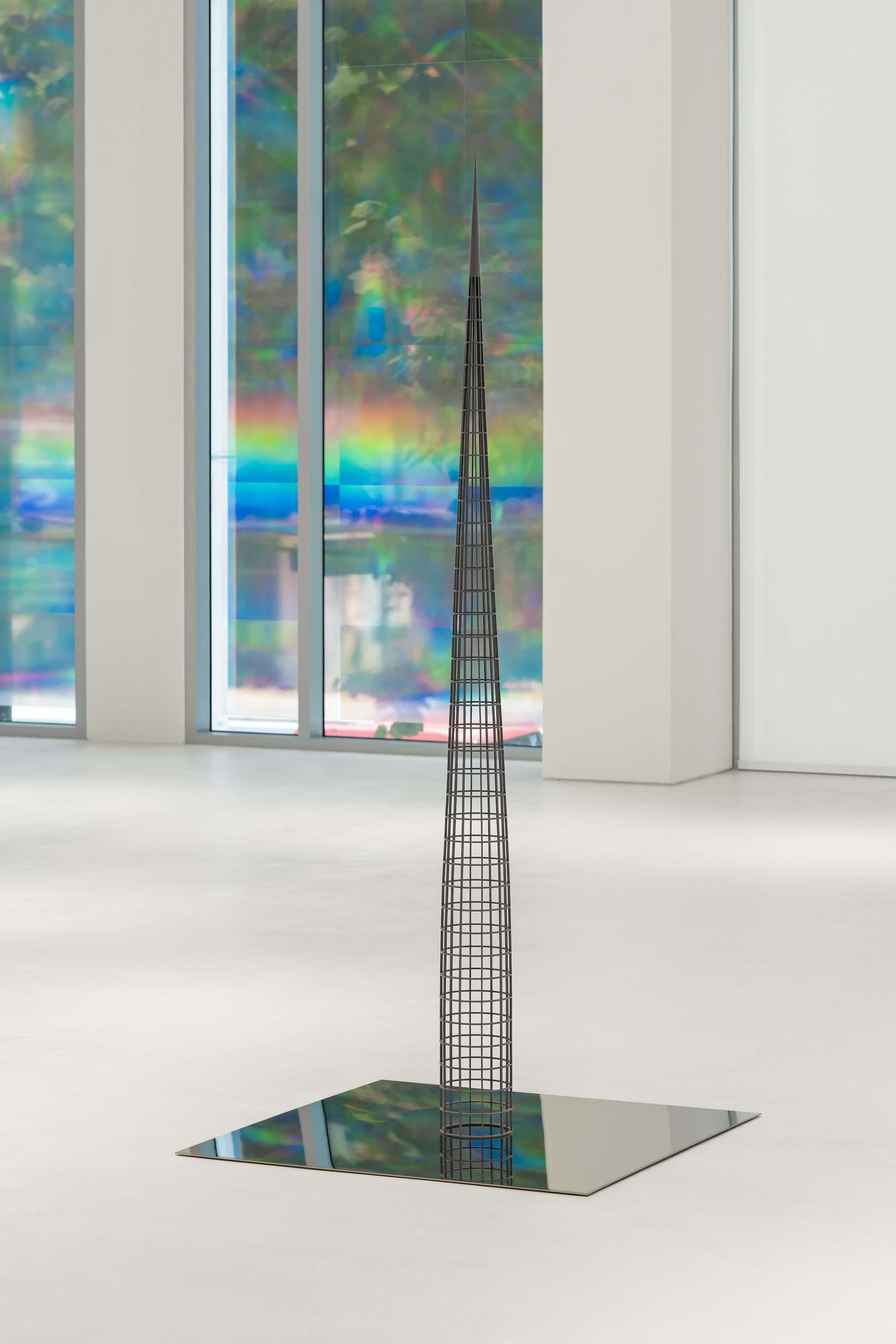
A Needle Woman: galaxy was a memory, earth is a souvenir
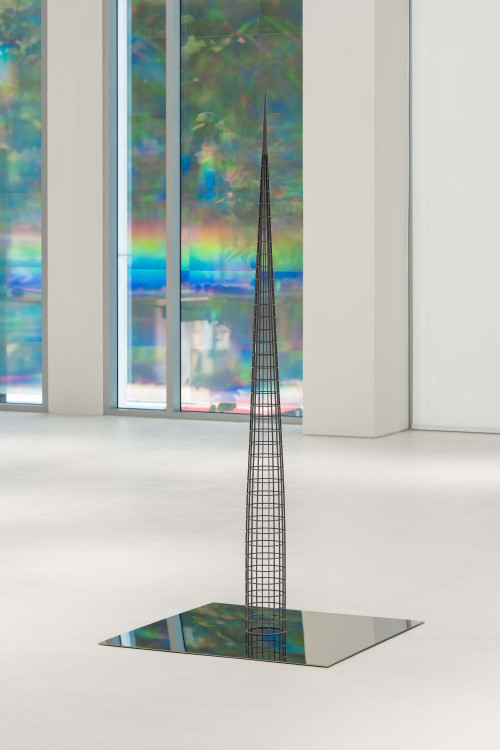
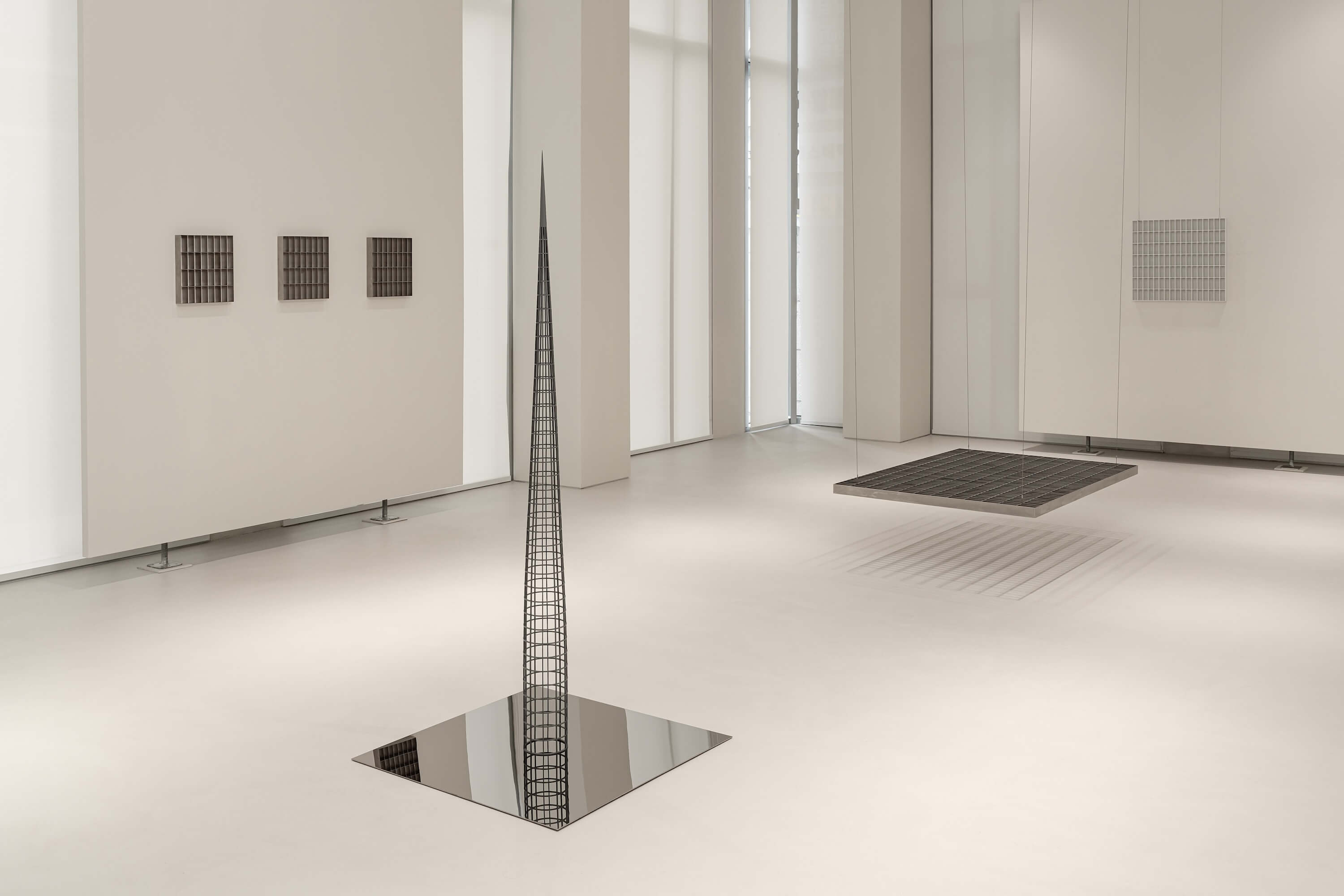
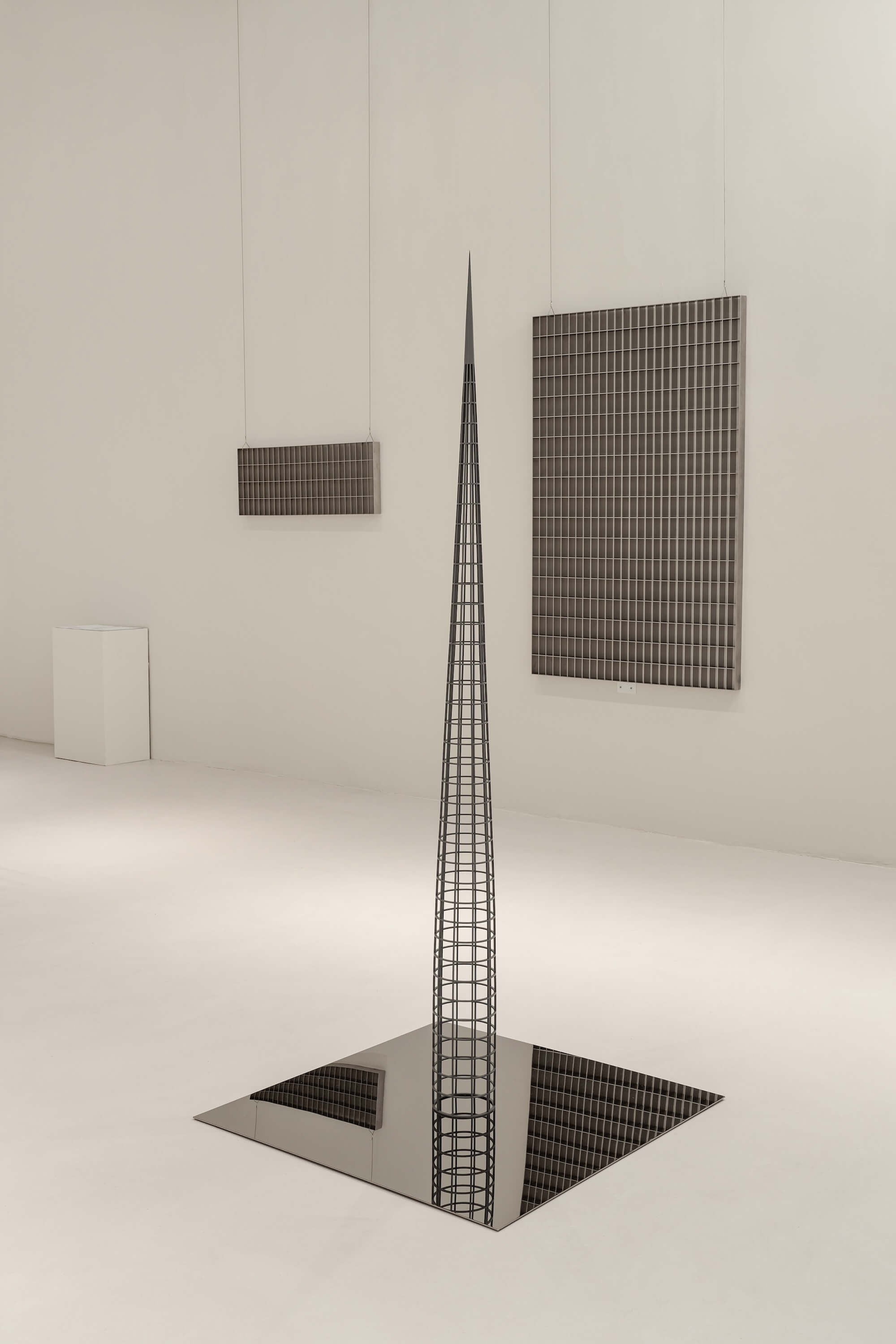
A Needle Woman: galaxy was a memory, earth is a souvenir (2025)
Developed by architect Jaeho Chong, collaborator on Kimsooja’s site-specific conical sculpture A Needle Woman: Galaxy was a Memory, Earth is a Souvenir (2014), this work unfolds as a dialogue between their distinct yet converging vocabularies. Rooted in painting for Kimsooja and in architecture for Chong, their practices meet in a shared meditation on spatiality, surface and the formal logic of the grid. The tower’s proportions unfold from its needle point downward, each segment halving the last in an infinite progression. This recursive structure mirrors the relationship between canvas and frame, balancing surface and support. At once an object and monument, the sculpture engages the viewer at a human scale while evoking the abstract precision of architectural thought.
Photo by Shim Kyuho
Installations at Studio Kimsooja, Seoul
Kimsooja, A Needle Woman: galaxy was a memory, earth is a souvenir, 2025, steel, Sculpture: 200 x 18.2 x 18.2 cm, Base: 90 x 90 cm
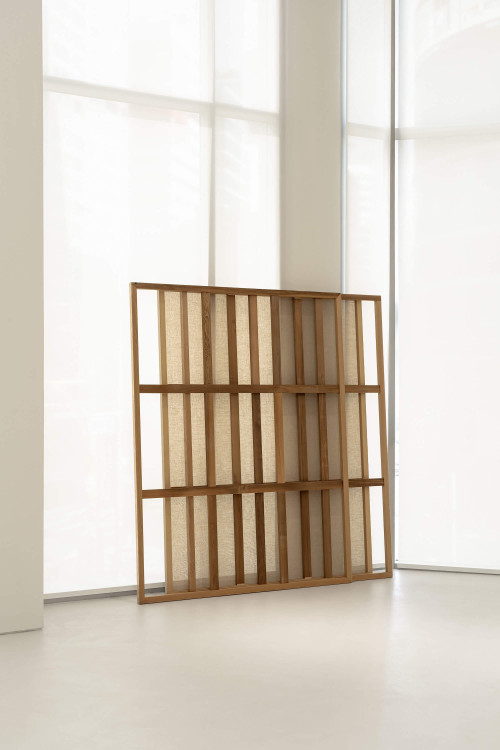
Deductive Object | 2025
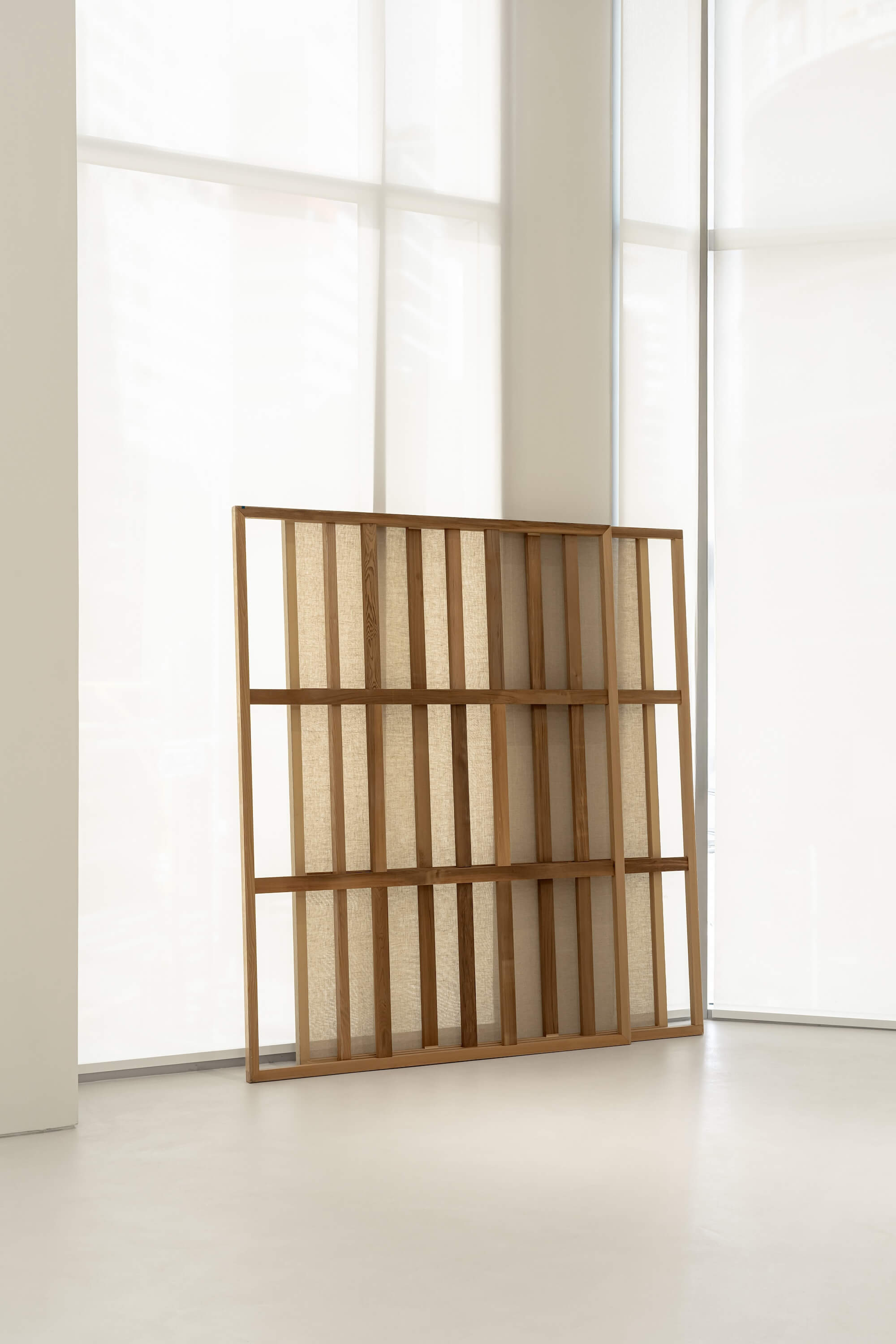
Deductive Object
Photo by Shim Kyuho
Installations at Studio Kimsooja, Seoul
Kimsooja, Deductive Object, 2025, wooden canvas frame, 220 x 210 x 15 cm
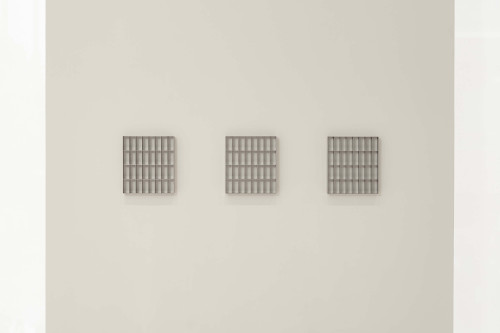
Meta Painting – The Grid | 2025
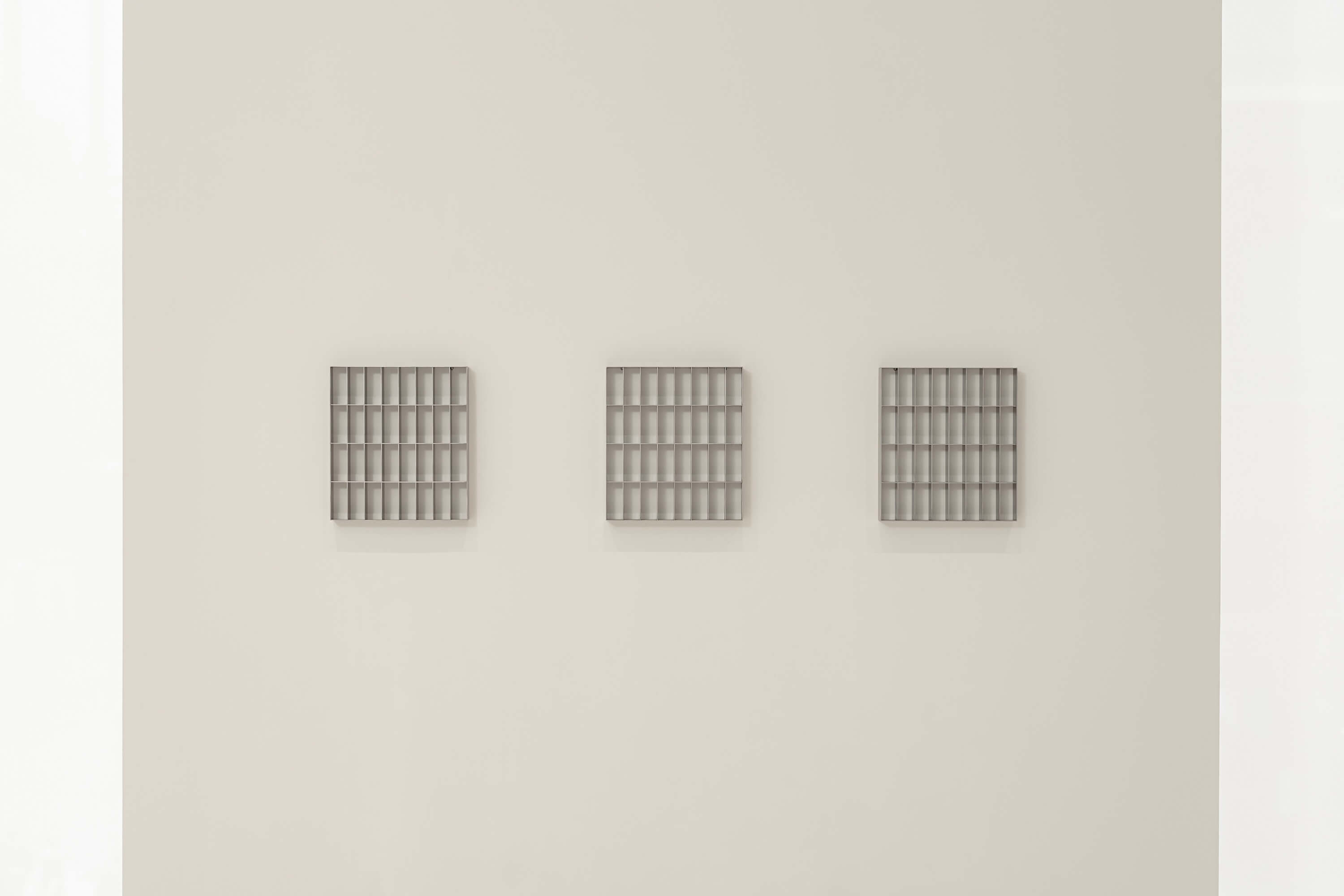
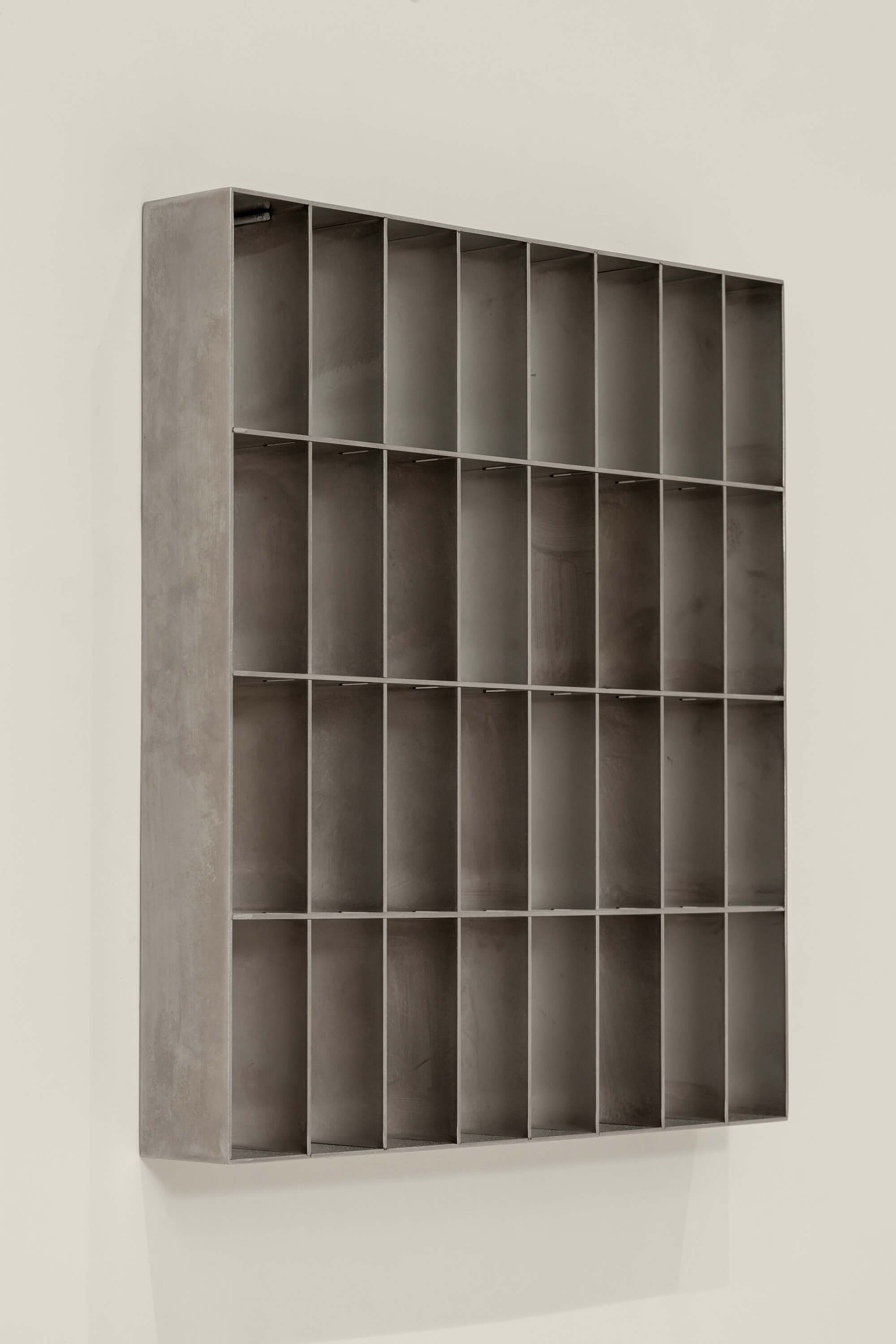
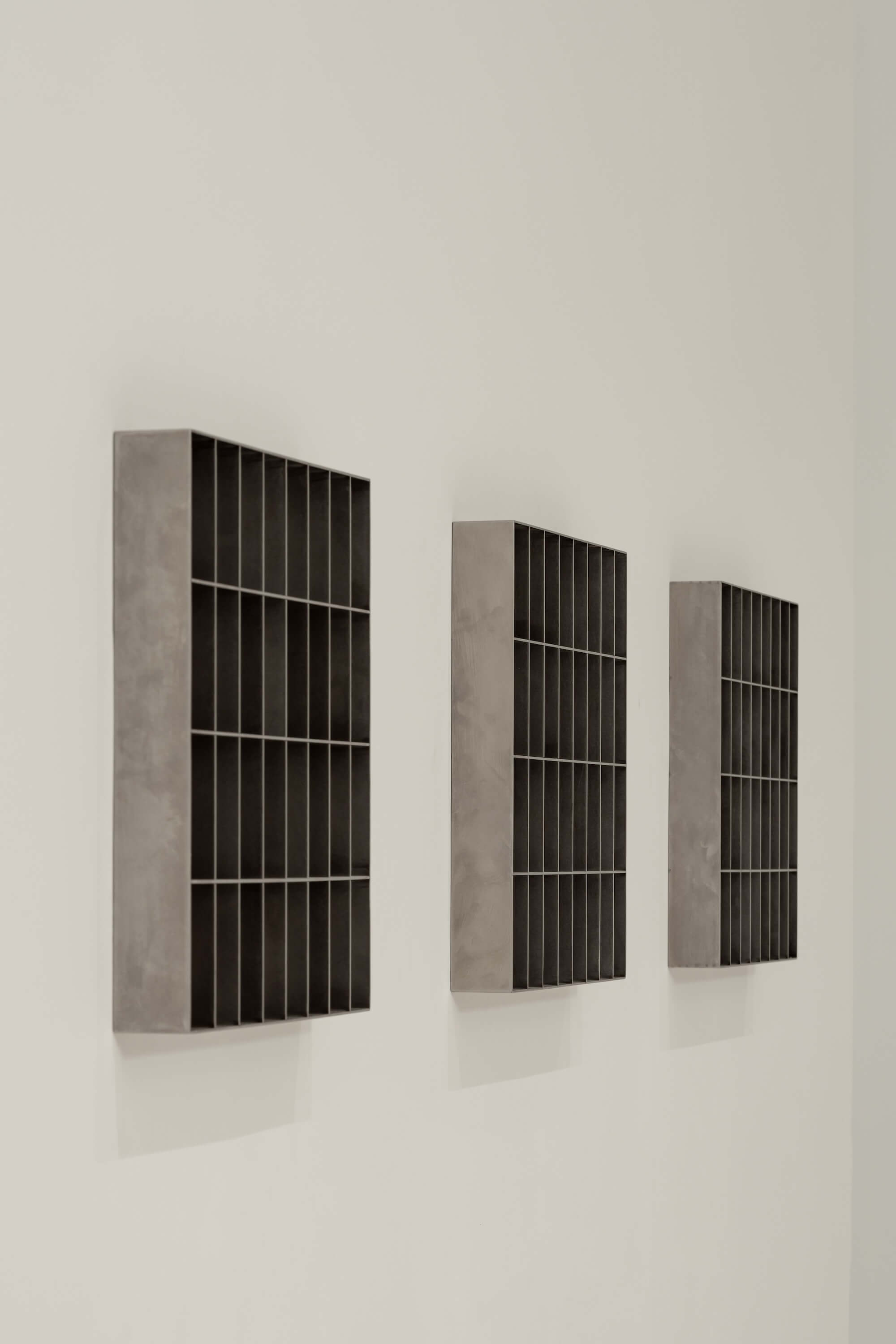
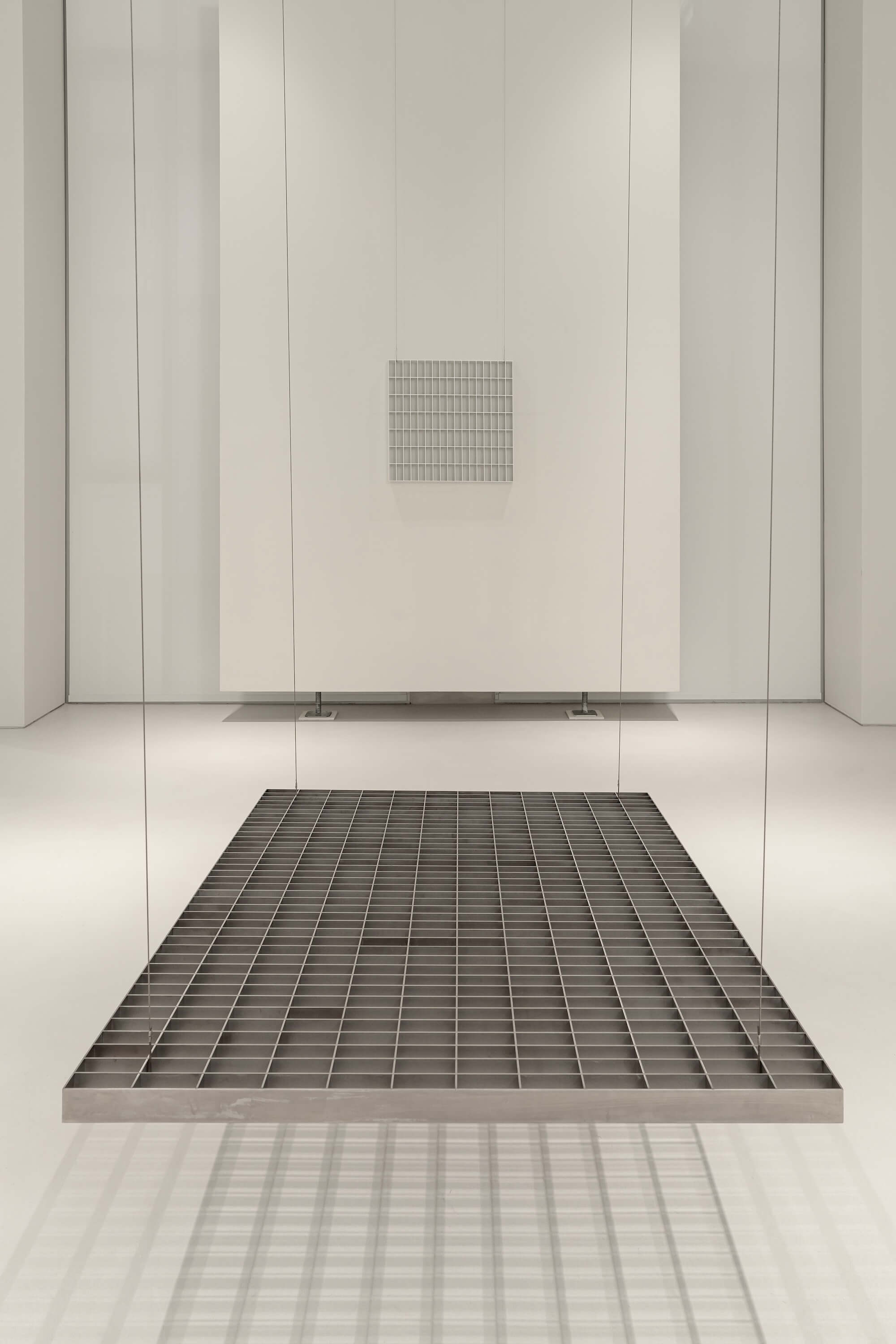
Meta Painting – The Grid
Meta Painting – The Grid (2025)
The gridded composition of the suspended works function both as a spatial framework and a contemplative drawn surface. Developed in collaboration with Jaeho Chong, these pieces built on Kimsooja's earlier object-based works, such as her textile-wrapped wooden window frames, or letterbox, where everyday forms are reimagined through acts of deduction and unfolding. Here, the grid becomes more than a visual structure: it serves as a meditative system of repetition and subtle variation of vertical and horizontal lines and surfaces. Extending Kimsooja’s longstanding exploration of verticality and horizontality as structuring axis between the grounded and the transcendent, this new series incorporates principles of seriality and modular construction. Suspended just off the wall, they occupy a liminal space between drawing and sculpture, inviting close attention to rhythm, form and intimacy through its quiet geometry.
Photo by Shim Kyuho
Installations at Studio Kimsooja, Seoul
(Left to Right:)
1 Kimsooja, Meta Painting – The Grid, 2025, steel grid, each 36 x 32 x 5 cm
2 - 3 Kimsooja, Meta Painting – The Grid, 2025, steel grid, each 36 x 32 x 5 cm
4 Kimsooja, Meta Painting – The Grid, 2025, steel grid, 160 x 109 x 5 cm, Meta Painting – The Grid, 2025, steel grid, paint, 64 x 70 x 5 cm
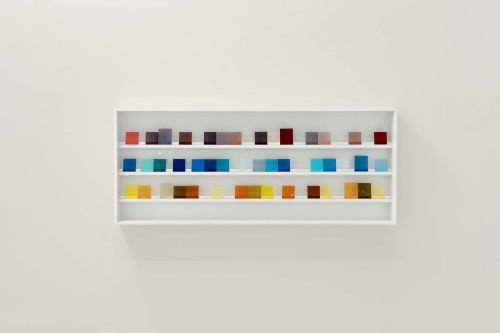
Meta Painting – Glass Swatches | 2025
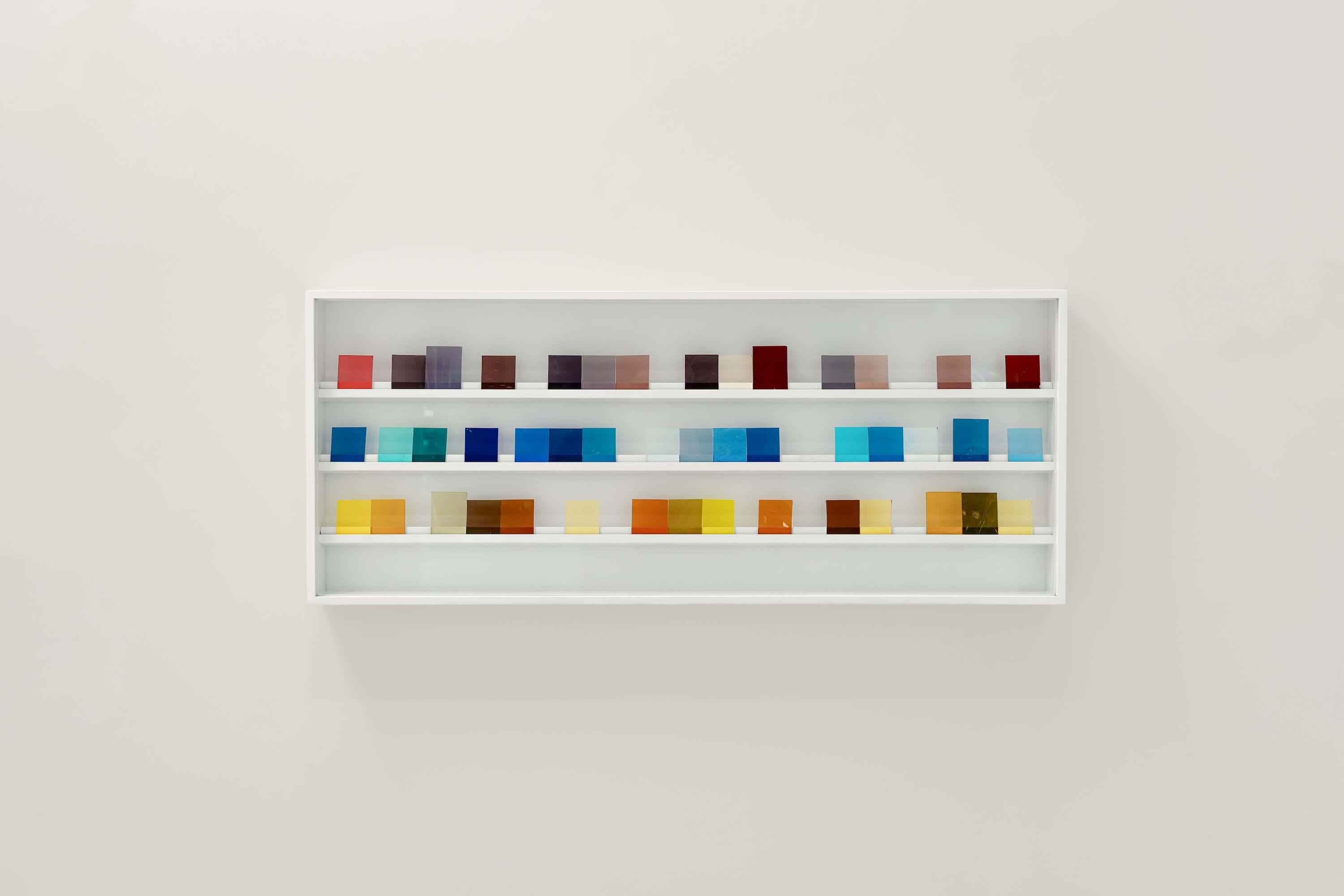
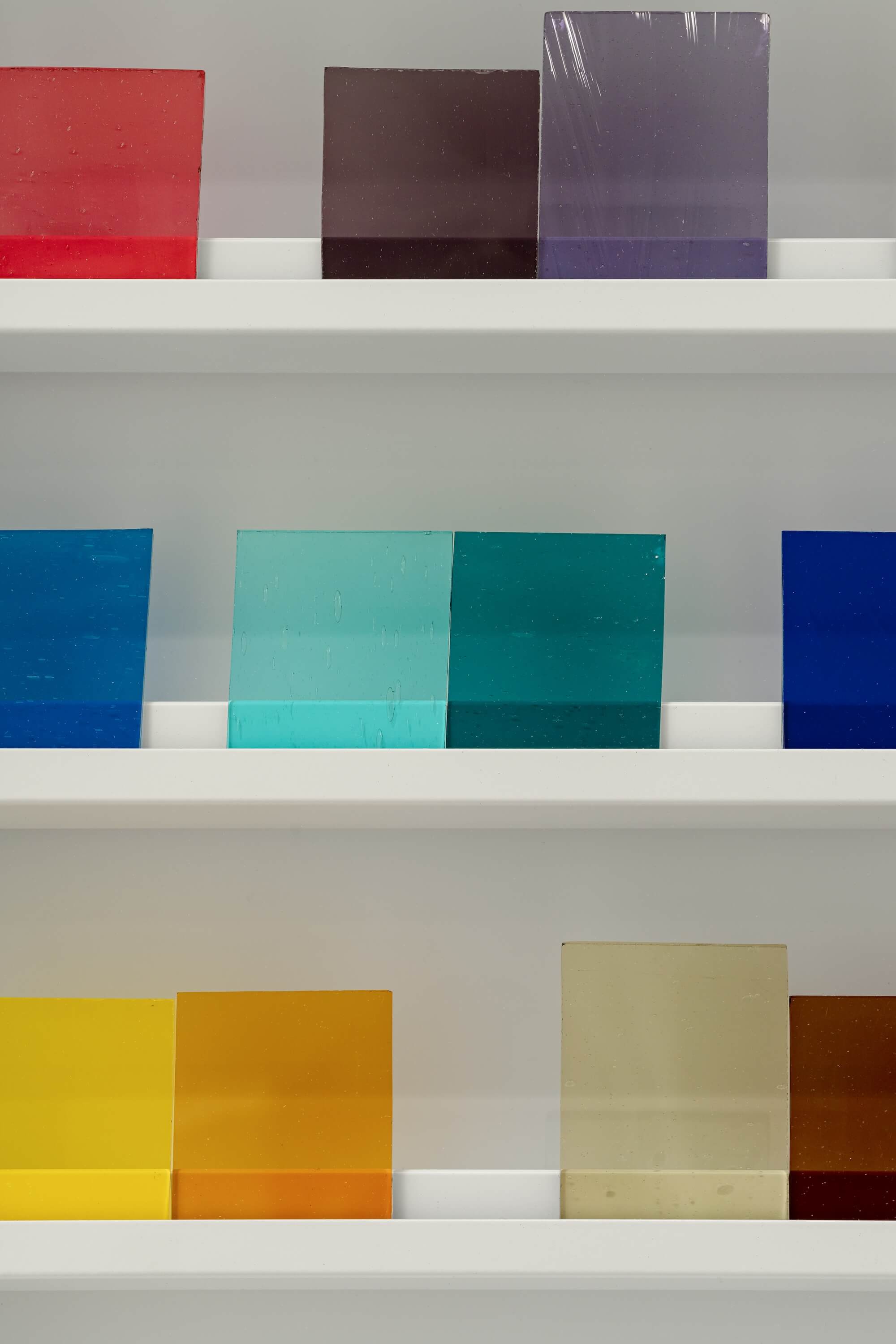
Meta Painting – Glass Swatches
Meta Painting – Glass Swatches (2025)
In Meta Painting – Glass Swatches (2025), Kimsooja presents a visual archive of handmade glass samples sourced for her permanent stained-glass installation, commissioned on the occasion of the 800th anniversary of the Cathédrale Saint-Étienne de Metz. The glass pieces—carefully selected for their light and textural qualities—reflect the artist’s interest in "non-doing" and “non-making,” where the absence of overt production gives way to the presence of its inherent qualities. The emphasis shifts from creation to observation, positioning the archive as a vessel of material reality and painterly practice.
Photo by Shim Kyuho
Installations at Studio Kimsooja, Seoul
Kimsooja, Meta Painting – Glass Swatches, 2025, glass, 36.3 x 93.5 x 6 cm
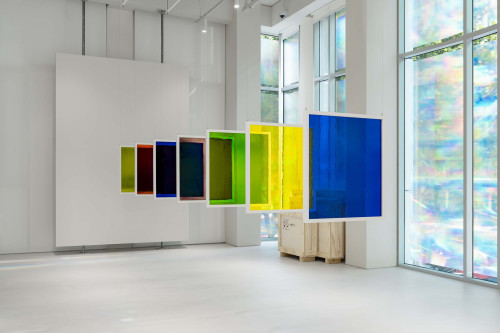
Meta Painting – Seven Colors | 2025
Meta Painting – Seven Colors
Meta Painting – Seven Colors (2025)
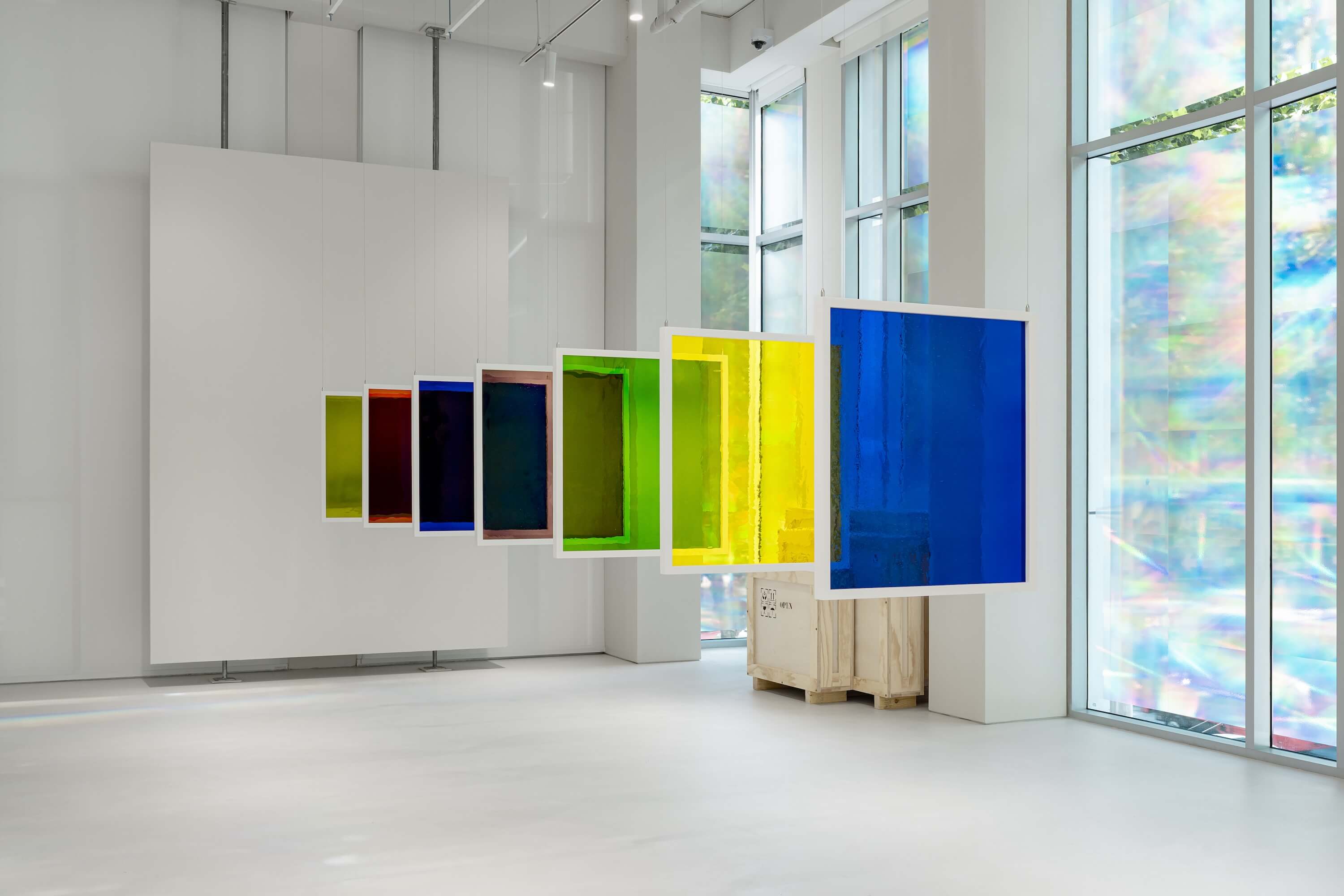
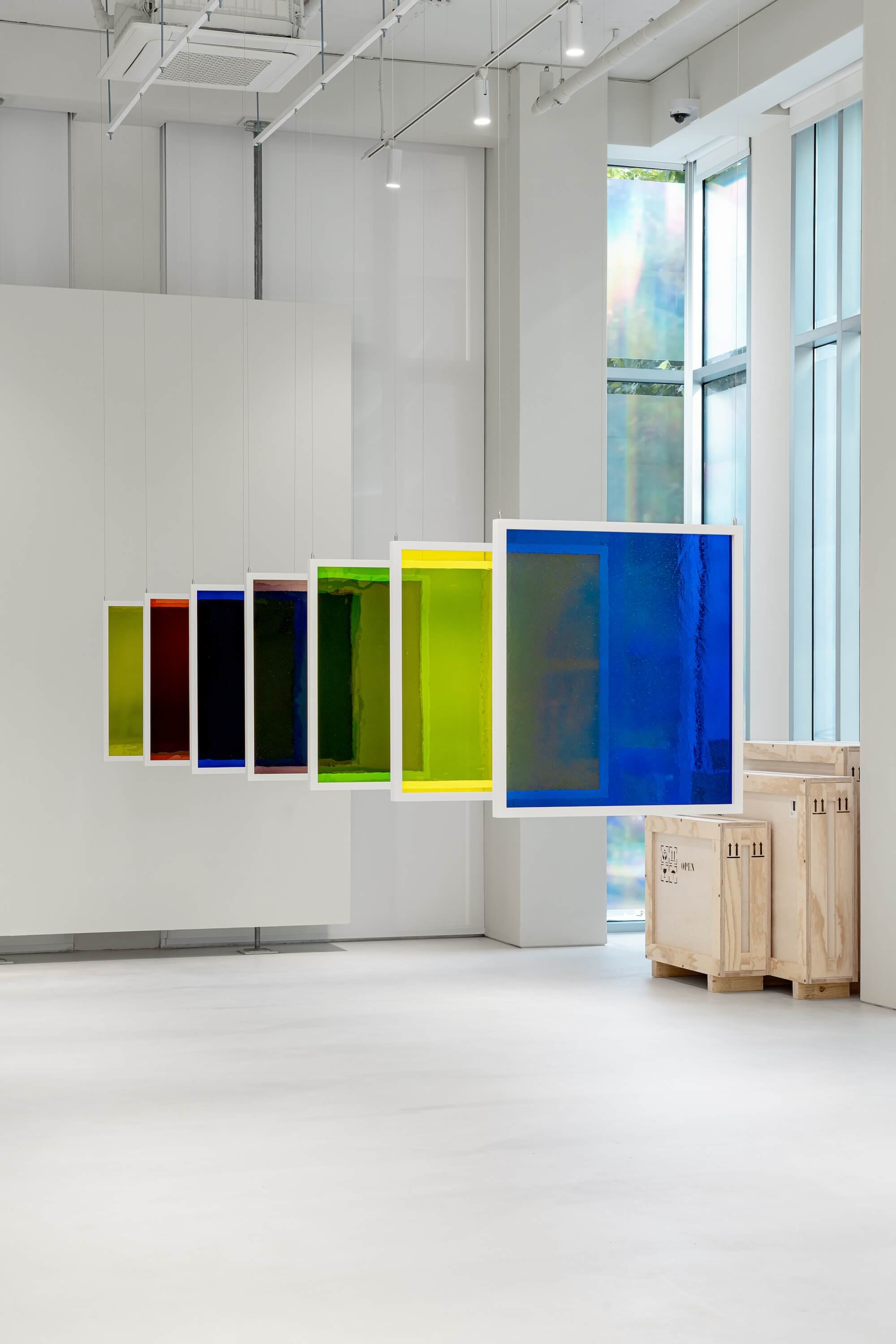
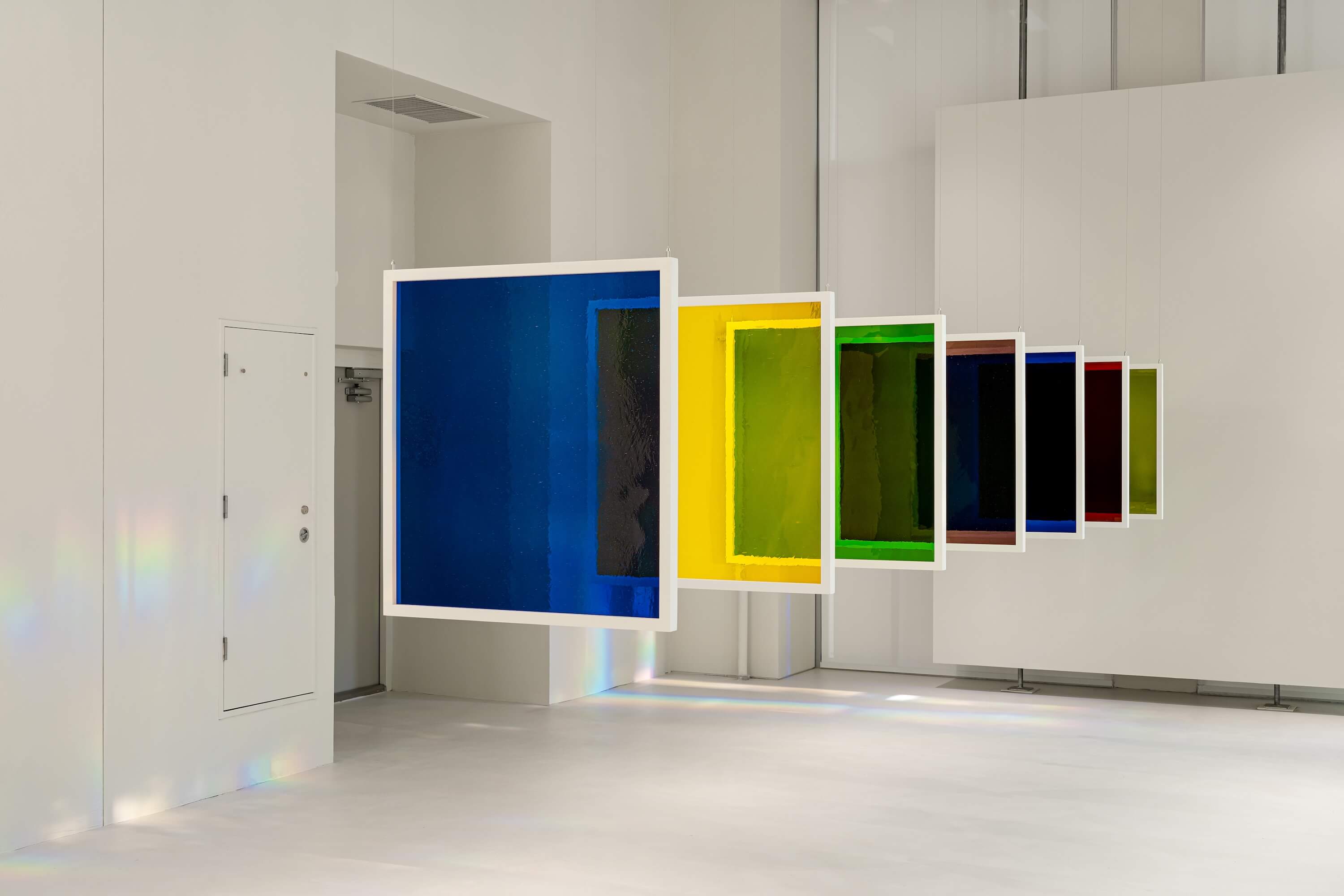
In this work, Kimsooja suspends a sequence of vertically aligned glass panels, each rendered in a distinct color, which overlap to dissolve into a final black hue. The convergence of chromatic differences into black extends her inquiry into unity, void, and transcendence, recalling her earlier use of color as mediation between spectrum and convergence. Her sustained exploration of ‘non-doing’ and ‘non-making’—as the glass panels remain unaltered two-dimensional planes—opens onto a spatial expansion into a three-dimensional vacuum, where minimal intervention transforms into a contemplative field that enfolds light, color, and perception. In doing so, Kimsooja expands the traditional notion of painting, reconfiguring the surface into an ever-changing chromatic field.
Photo by Shim Kyuho
Installations at Studio Kimsooja, Seoul
Kimsooja, Meta Painting – Seven Colors, 2025, glass, each 80 x 73 cm
To Breathe – Coachella Valley | 2025
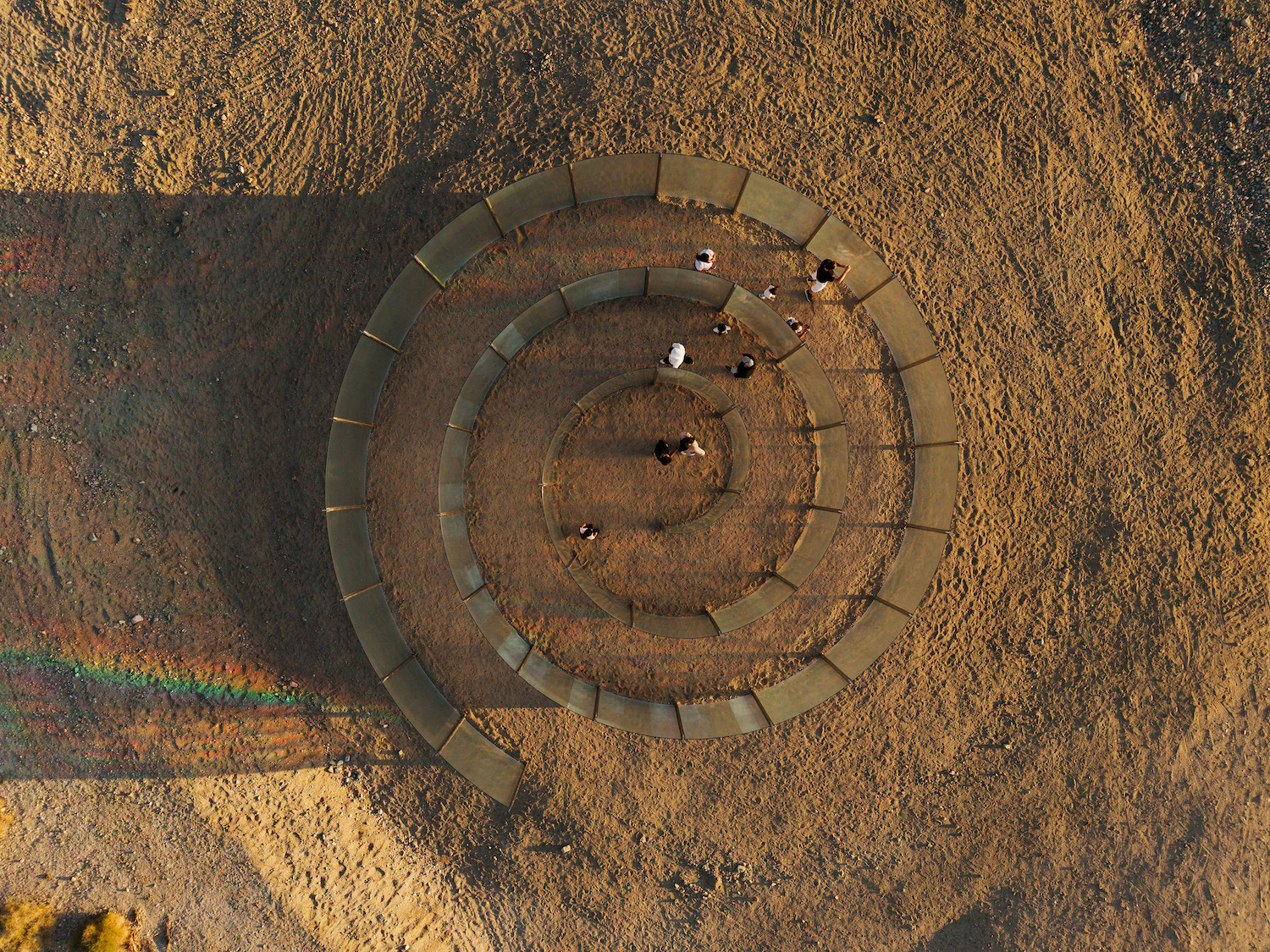
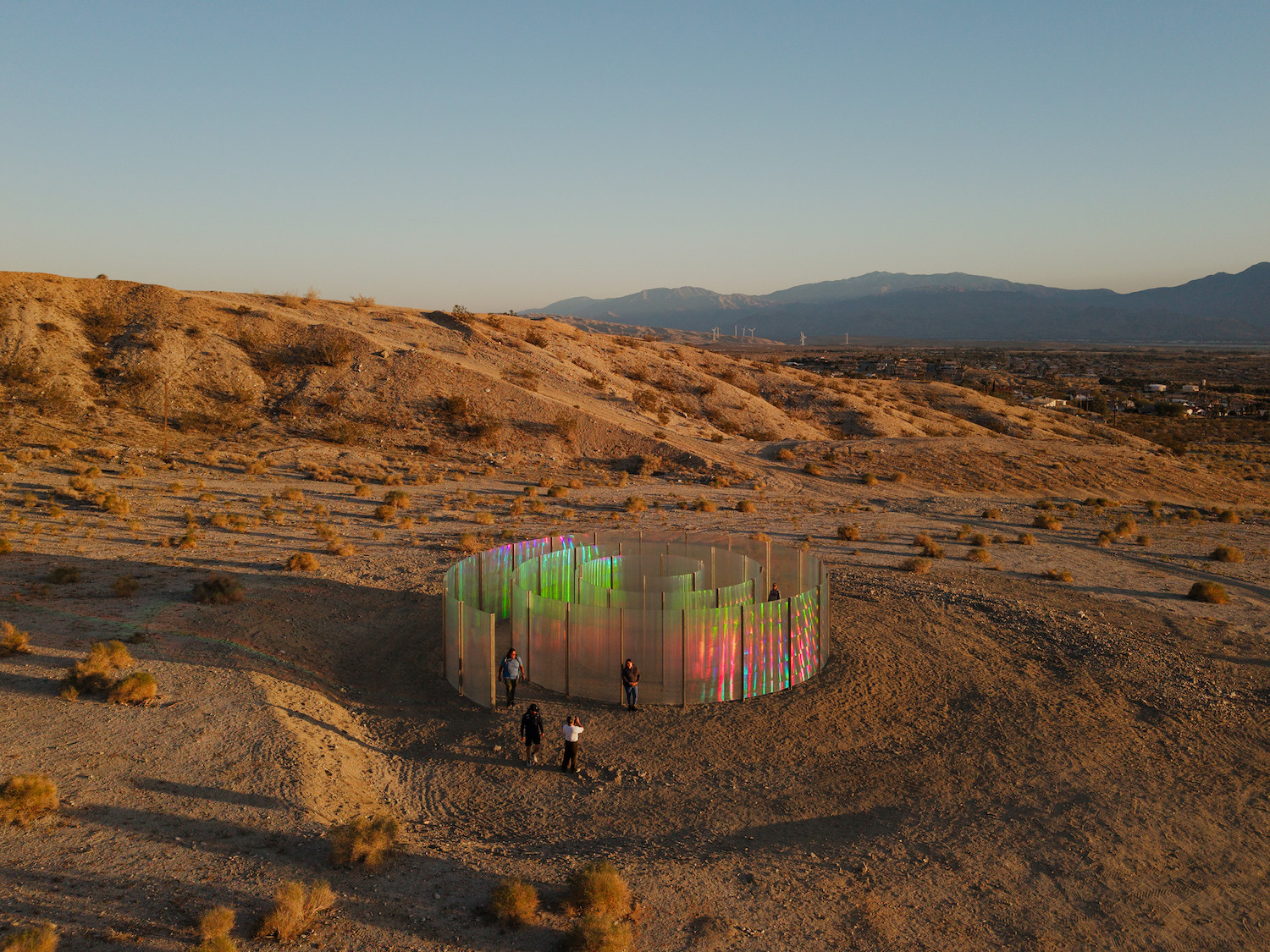
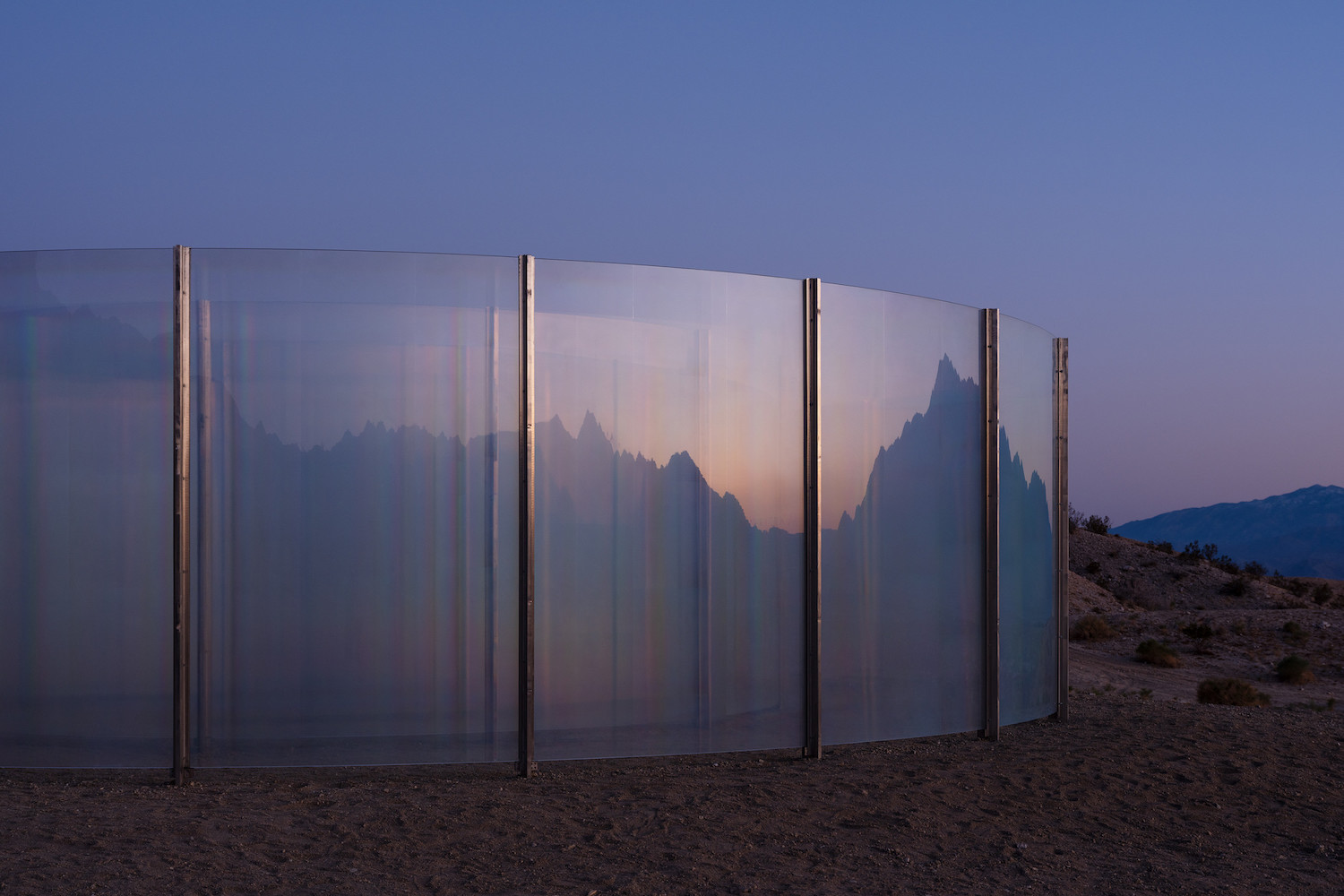
To Breathe – Coachella Valley
Desert X 2025 Coachella Valley, Desert Hot Springs, CA
March 8 - May 11 2025
For more information click HERE.
Our cultures, lifestyles, rituals, and belief systems may differ, but we are all connected by the air we breathe, the planet’s circular rotations, and the cycles of life and death that it sustains. This interconnectedness runs through a diverse body of Kimsooja’s work that includes sculpture, painting, film, performance, and installation.
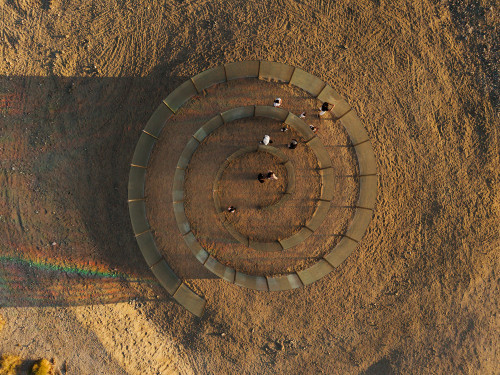
In her latest installation, To Breathe – Coachella Valley, Kimsooja integrates various ideas from her broader practice. The glass structure serves to define a performance space, inviting the audience to interact with the essential elements of the desert: the texture of sand underfoot, the air we breathe, and the light around us. Drawing inspiration from bottaris, the fabric-encased bundles of belongings prominent in her work and in Korean culture, Kimsooja describes this installation as a “bottari of light.” By wrapping the glass surface in a unique optical film, she transforms the physical architecture into a dynamic spectrum of light and color. “This diffraction film acts as a transparent textile, featuring thousands of vertical and horizontal scratch lines akin to warp and weft, and envelops the architecture in light.”
Mirrors have also played a significant role in her exploration of light’s ephemerality. To Breathe – Coachella Valley reflects another work located in the desert of AlUla, Saudi Arabia. Connected by the air that sustains us, this iteration not only references its counterpart nearly 8,000 miles away but also acknowledges the historical origins of the Light and Space movement on the U.S. West Coast. With its ever-changing approach based on color spectrum theory from Chinese Taoism, Confucianism, and Buddhism, To Breathe – Coachella Valley enriches these traditions by incorporating the female perspective of East Asia. The result is an experience that is both ephemeral and profound.
Generous support is provided by Ed Campanaro and Alan Weisberg, Ron Florance, Marcy and Harry Harczak, the Posner Foundation, Janelle Reiring, Melissa and John Russo, Roswitha Smale, and Richard H. Wood.
Photo by Lance Gerber
© 2025 Artists Rights Society (ARS), New York / ADAGP, Paris. Courtesy of Desert X and Studio Kimsooja
To Breathe – Coachella Valley
Site-specific Installation with Steel, Diffraction Grating Films, 42 panels of 2.80 x 1.80m
Courtesy of Desert X and Studio Kimsooja
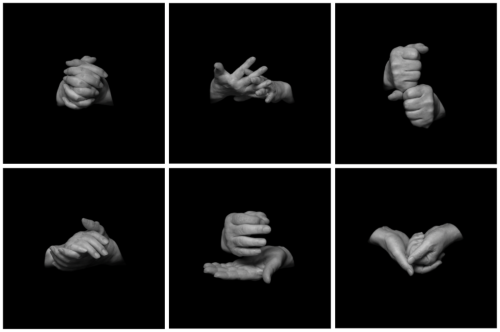
Deductive Language, 2024-2025
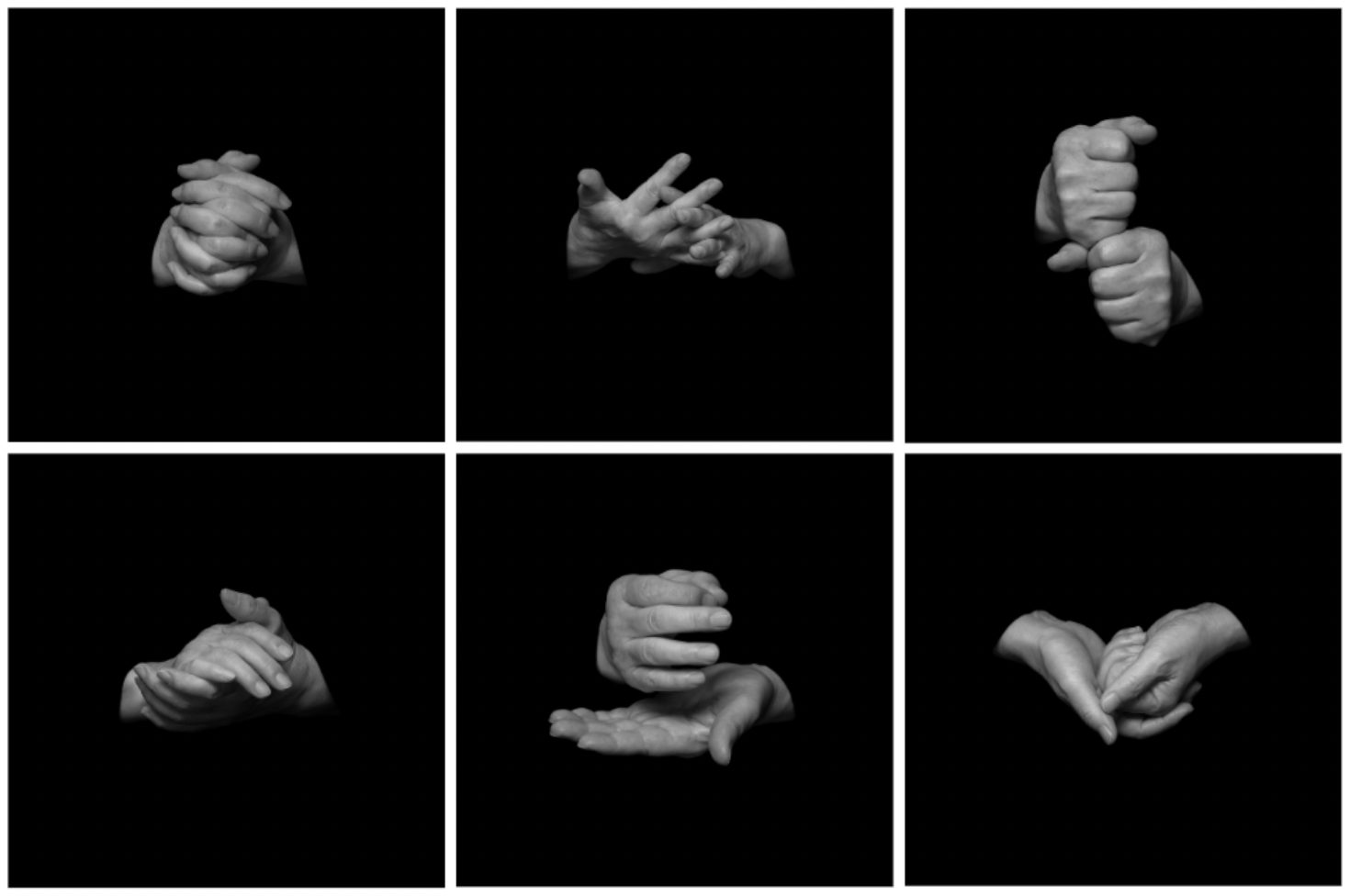
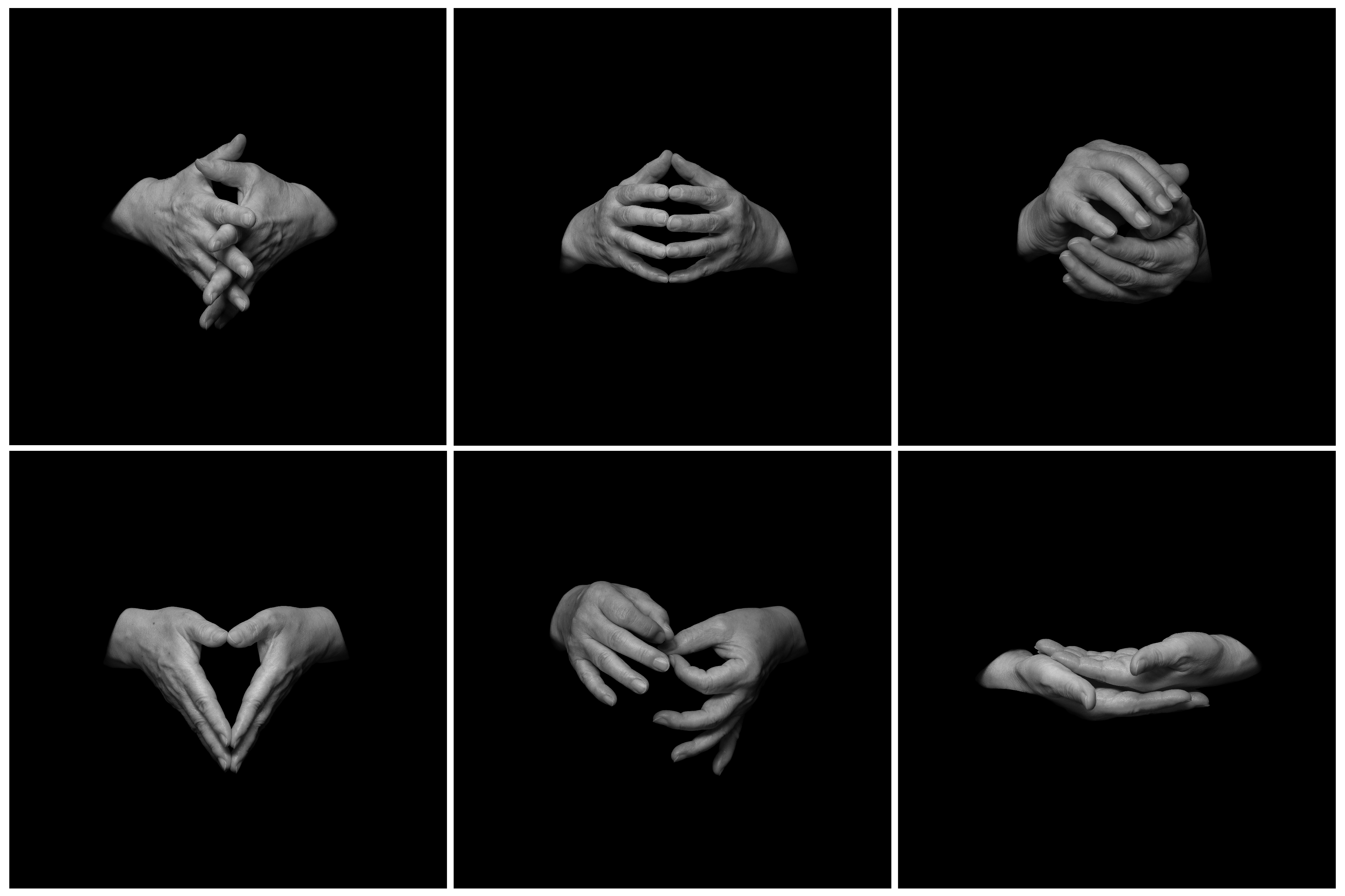
Deductive Language, 2024-2025
Deductive Language (2024-2025)
Kimsooja has long examined the psychological dimension of the hands, observing them and creating films and sculptures that treat the two hands as distinct entities. Each image captures a single gesture, performed in real time by the artist. The hands may rest apart, or move independently or together, sometimes touching one another. They are placed, intertwined, directed, or crossed; they may wrap around, support, or caress parts of the face or body, acting as creative extensions of thought. At times highly independent, the hands can also emerge as instruments of violence, difficult to control. Yet, inseparably connected to the brain’s neural system, they function as a corporeal organ of language, inscribing sensation and thought with immediacy.
Deductive Language, 2024-2025, Artist’s hand photos, Archival pigment print, set of 6 prints, each 41.8 x 41.8 cm
Deductive Object – Black Garden | 2024
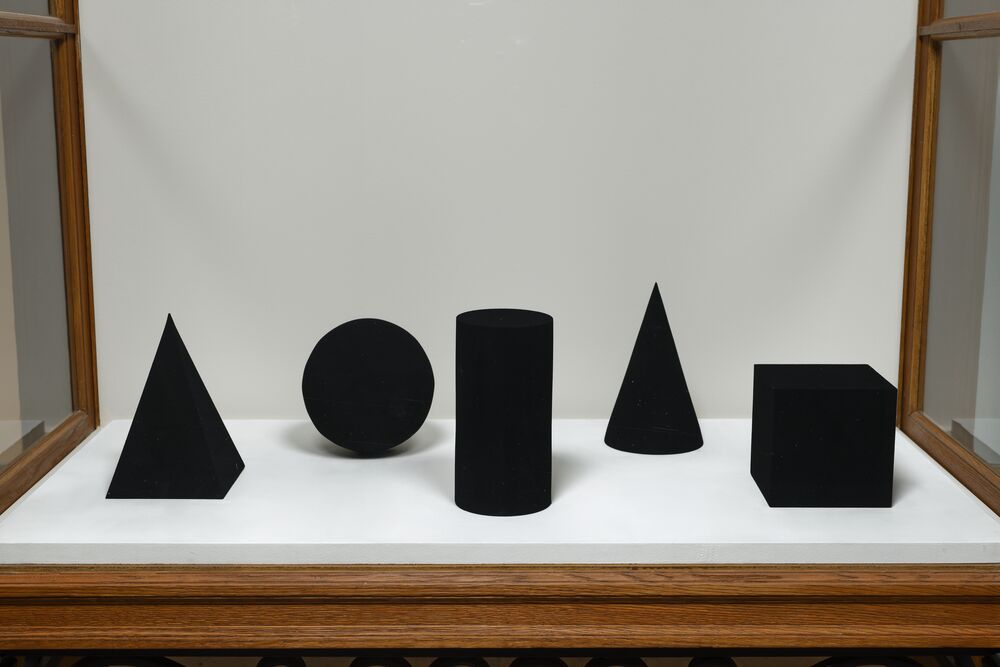
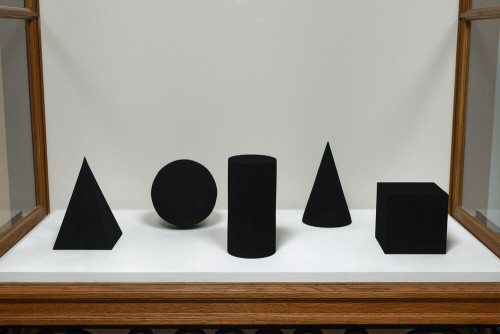
Deductive Object – Black Garden
Deductive Object – Black Garden, 2024
Matte black paint on 5 wooden sculptures, wooden board
Courtesy Kimsooja Studio
Deductive Object – Black Garden comprises five geometric forms painted in a deep black hue. The surface of these forms absorbs enough light to make them appear bi-dimensional, opening a space of uncertainty. Though it is black, there is an absence of shadow, and thus an absence of light; it embraces all colors, but resists our discernment. This investigation into color, light, and primitive symbols resonates with the notion of duality, which has been a recurring motif in Kimsooja’s body of work. The geometric structures present in Kimsooja’s art often disclose contrasting forces inherent in art and life—light and shadow, interiority and exteriority, and life and death.
–
짙은 흑색으로 채색된 다섯 개의 기하학적 형태로 이루어져 있는 이 구조물들의 표면은 빛을 흡수하여 마치 이차원적 평면처럼 보이게 만듦으로써 불확실성의 공간을 열어 둔다. 비록 검은색이지만, 그림자가 존재하지 않기에 빛도 부재하며 모든 색을 포용하면서도 우리의 인지를 끊임없이 거부한다. 이는 색과 빛, 그리고 원초적 상징에 대한 탐구로 김수자 작업 전반에 반복적으로 등장하는 이중성의 개념과 깊이 공명한다. 김수자의 작업에 자주 나타나는 기하학적 구조는 예술과 삶 속에 내재한 대립적 힘, 즉 빛과 그림자, 내면과 외부, 삶과 죽음 등을 드러내는 장치로 기능한다. 이러한 대비는 작가의 사유가 지향하는 근원적 질문을 시각화하며, 형태와 색채 너머의 존재론적 깊이를 제시한다.
View of the exhibition To Breathe – Constellation , Bourse de Commerce – Pinault Collection, Paris, 2024.
© Tadao Ando Architect & Associates, Niney et Marca Architectes, agence Pierre-Antoine Gatier.
Photo: Aurélien Mole / Pinault Collection.
© Kimsooja/ADAGP, Paris, 2024.
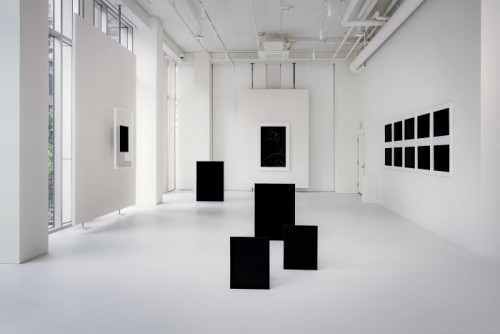
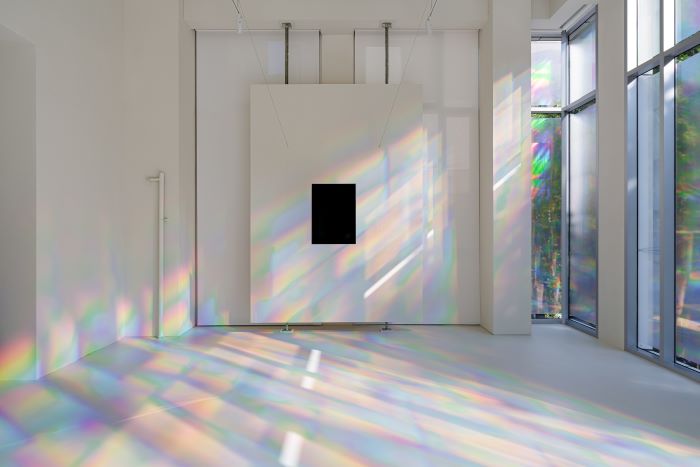
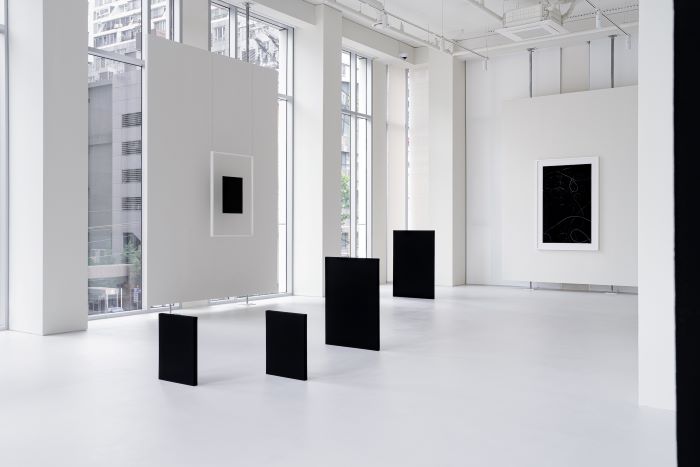
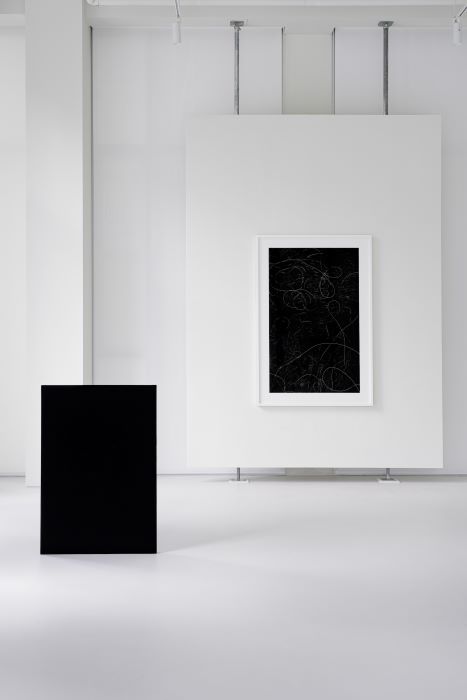
Meta-Painting series | 2024
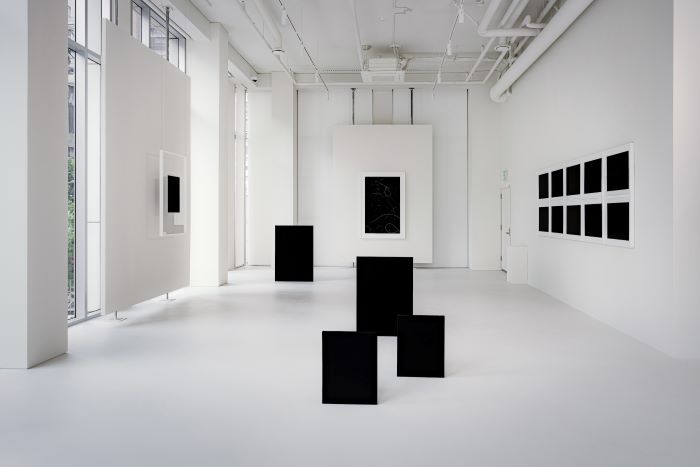
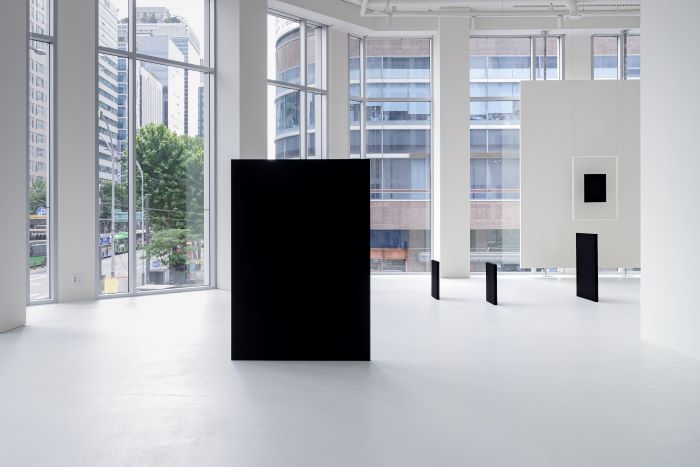
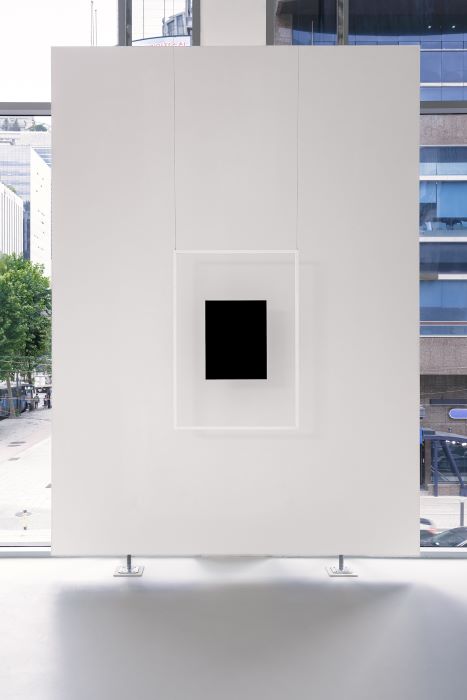
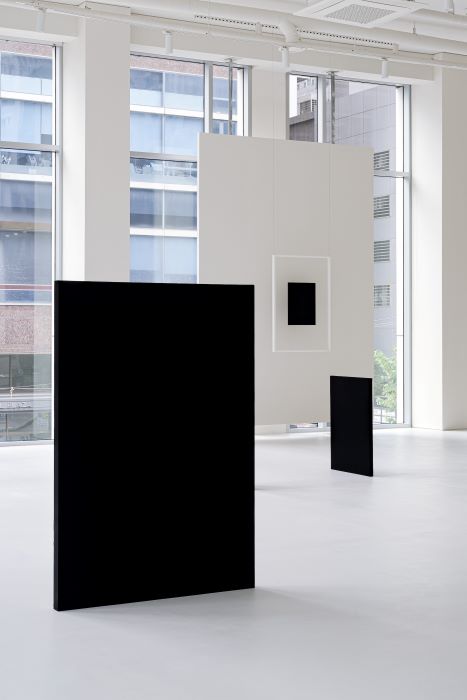
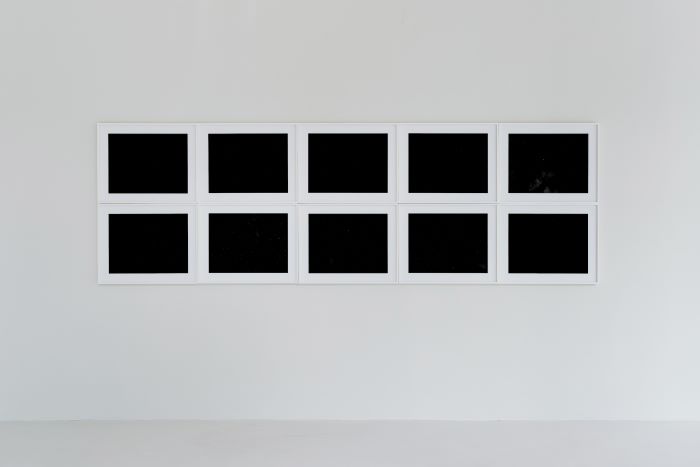
Meta-Painting series
Meta-Painting (2020) started as an exploration into the origins and fundamental principles of painting at Wanås Konst Sculpture Park in Sweden, where Kimsooja planted, cultivated, and harvested flax. While the flax fibers were woven into linen canvas (the surface of oil paintings), its seeds were made into linseed oil (a key solvent in oil paint). Through the cultivation and harvesting of flax, the project reconstructed painting as a life-generating cycle —a notion that has been integral to Kimsooja’s practice since the beginning of her career as a painter. With Meta-Painting (2020), Kimsooja proposed a conceptual relationship between the unpainted canvas, agriculture and textiles, a recurring theme that can be traced back to works such as Agriculture from 1988, establishing a form of painting that transcends the traditional act of painting itself.
Kimsooja’s black Meta-Painting (2025) series extends this notion of ‚non-doing’ that both resists and stores markers of time. The works take form as both a flat and multidimensional surface, composed of countless invisible layers of sprayed dots, continuing the formalistic trajectory of Kimsooja’s folded and unfolded Bottari: fabric bundles which embody the act of wrapping people’s lives and memories. While the depth of black color absorbs nearly all traces of light and shadow, its surface resists our discernment. The series thus conceptualizes and brings to reality the absence of light, encapsulating both the void and the sum of all colors. Much like light, which manifests as localized particles and all-encompassing waves, Kimsooja's Meta-Painting (2025) superimposes states of presence and absence, life and death, revealing that what seems absent can still hold the entirety of what exists.
〈메타-페인팅〉(2020)은 스웨덴 바노스 콘스트 조각공원(Wanås Konst Sculpture Park)에서 김수자가 아마(flax)를 직접 심고 재배하며 수확하는 과정을 통해 회화의 기원과 근본 원리를 탐구하는 프로젝트로 시작되었다. 아마 섬유는 린넨 캔버스로 짜였고, 씨앗은 유화 물감의 주요 용제인 린시드 오일로 만들어졌다. 아마를 경작하고 수확하는 과정을 통해서 이 프로젝트는 회화를 생명 생성의 순환 과정으로 재구성했는데, 이는 김수자가 화가로서의 경력 초창기부터 지속해 온 중요한 사유이기도 하다. 〈메타-페인팅〉(2020)을 통해 김수자는 채색되지 않은 캔버스, 농경, 텍스타일 사이의 개념적 관계를 제시했는데, 이는 1988년 작 〈농경〉 등 초기 작업으로까지 거슬러 올라가는, 자주 등장해 온 주제다. 이로써 작가는 전통적인 ‘그리는 행위’를 넘어서는 새로운 형식의 회화를 구축한다.
김수자의 〈메타-페인팅〉(2025) 흑색 회화 연작은 시간의 흔적을 품으면서도 그에 저항하는 ‘비-행위(non-doing)’의 개념을 더욱 확장한다. 이 작품들은 수많은 보이지 않는 분사(噴射) 점층들이 겹겹이 쌓여 이루어진 평면이자 다차원적 표면들로 구성되며, 접고 펼쳐지는 보따리 – 사람들의 삶과 기억을 감싸는 행위를 내포한 천 보따리 – 의 형식적 궤적을 잇는다. 검은색의 깊이는 거의 모든 빛과 그림자를 흡수하지만, 그 표면은 우리의 시각적 판독을 거부한다. 따라서 이 연작은 빛의 부재를 개념화하고 그것을 실재를 통해 구현함으로써 ‘비어 있음’과 모든 색의 총합을 동시에 담아낸다. 미세한 입자이면서도 모든 곳에 파동으로 퍼지는 빛처럼, 〈메타-페인팅〉(2025)은 존재와 부재, 삶과 죽음이라는 상태를 겹쳐서 보여준다. 그 결과, 비어 있는 것처럼 보이는 자리에도 존재의 총체가 머무를 수 있음을 시사한다.
Photo by Shim Kyuho
Installations at Studio Kimsooja, Seoul
(Left to Right:)
1 Kimsooja, Meta-Painting, 2024, Black paint on glass, 160 x 112 cm
2 Kimsooja, To Breathe, 2024, Site-specific installation with diffraction grating film, Dimensions variable
3 Kimsooja, Meta-Painting, 2024, Black paint on linen canvas, 162.2 x 112.1 x 6 cm
4 Kimsooja, Meta-Painting, 2024, Black paint on linen canvas, 53 x 40.9 x 4 cm
5 Kimsooja, Meta-Painting, 2024, Black paint on linen canvas, 53 x 40.9 x 4 cm
6 Kimsooja, Meta-Painting, 2024, Black paint on linen canvas, 90.9 x 65.1 x 4 cm
7 Kimsooja, Meta-Painting, 2024, Black paint on linen canvas, 116.8 x 80.3 cm
8 Kimsooja, Meta-Painting, 2024, Black paint on glass, 116.7 x 80.3 cm
9 Kimsooja, Sewing into Darkness, 2023, Archival pigment print, each 59 x 74cm
10 Kimsooja, Topology of Time, 2016, Giclée (Inkjet) Print, Print: 170.5 x 114.1 cm, Image: 147.9 x 91.4 cm
To Breathe – Archive of Prototype | 2023
To Breathe – Archive of Prototype
Kimsooja, To Breathe - Archive of Prototype, Axel Vervoordt, Patio Gallery
16 March to 31 August 2024
For more information click HERE.
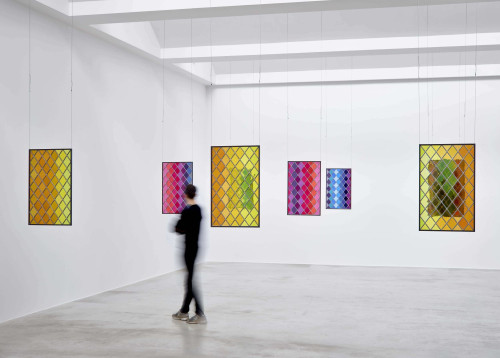
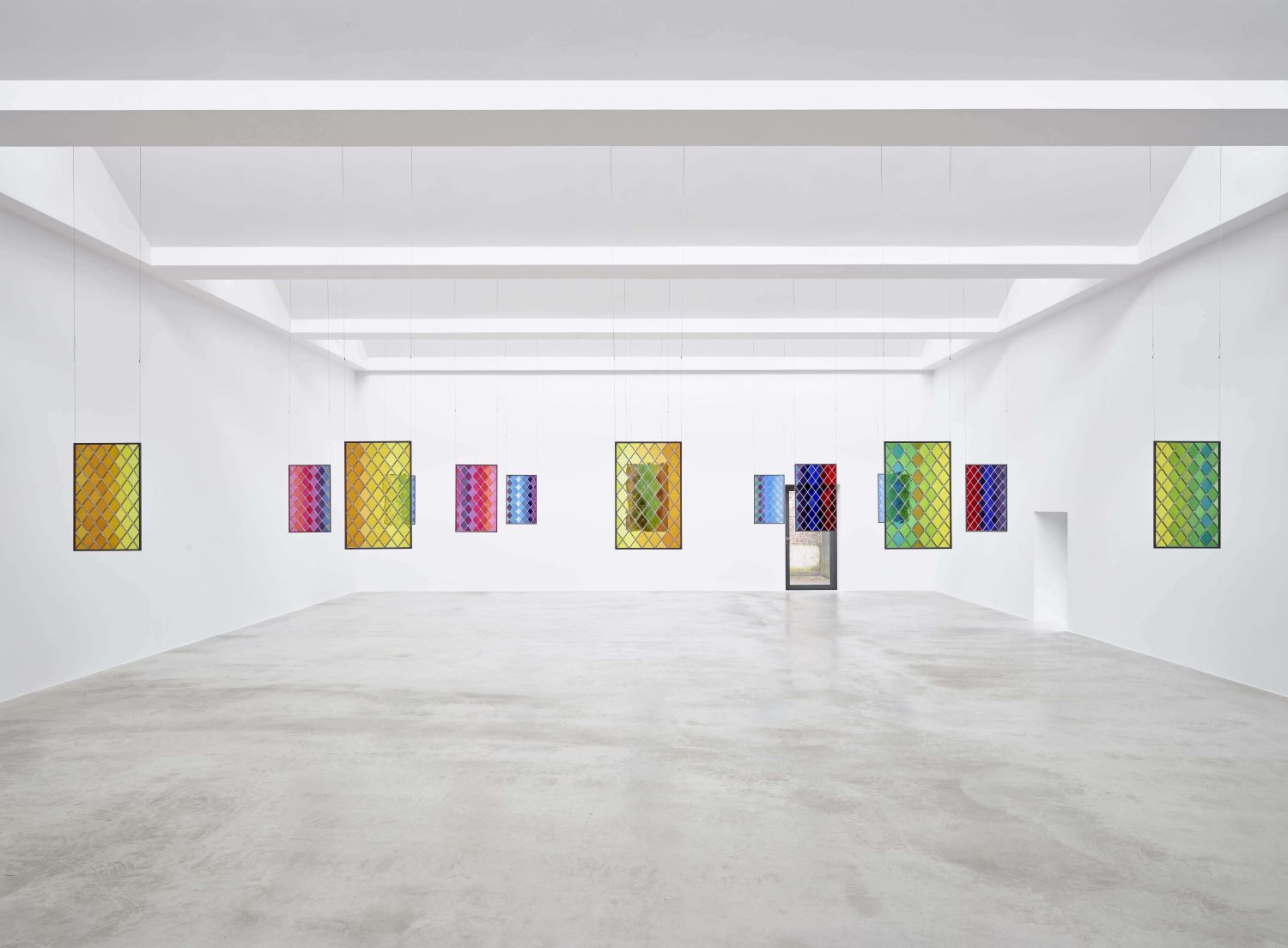
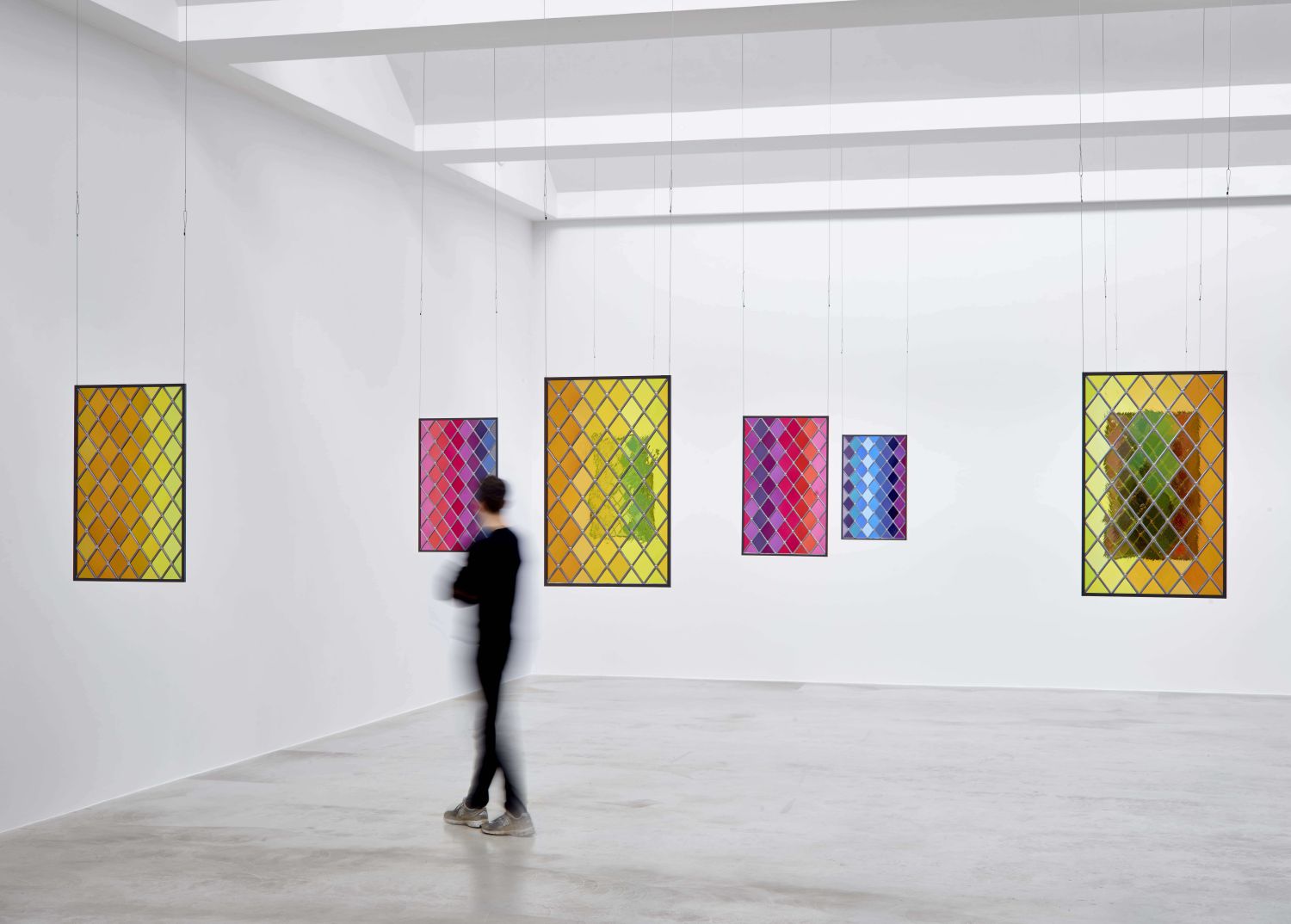
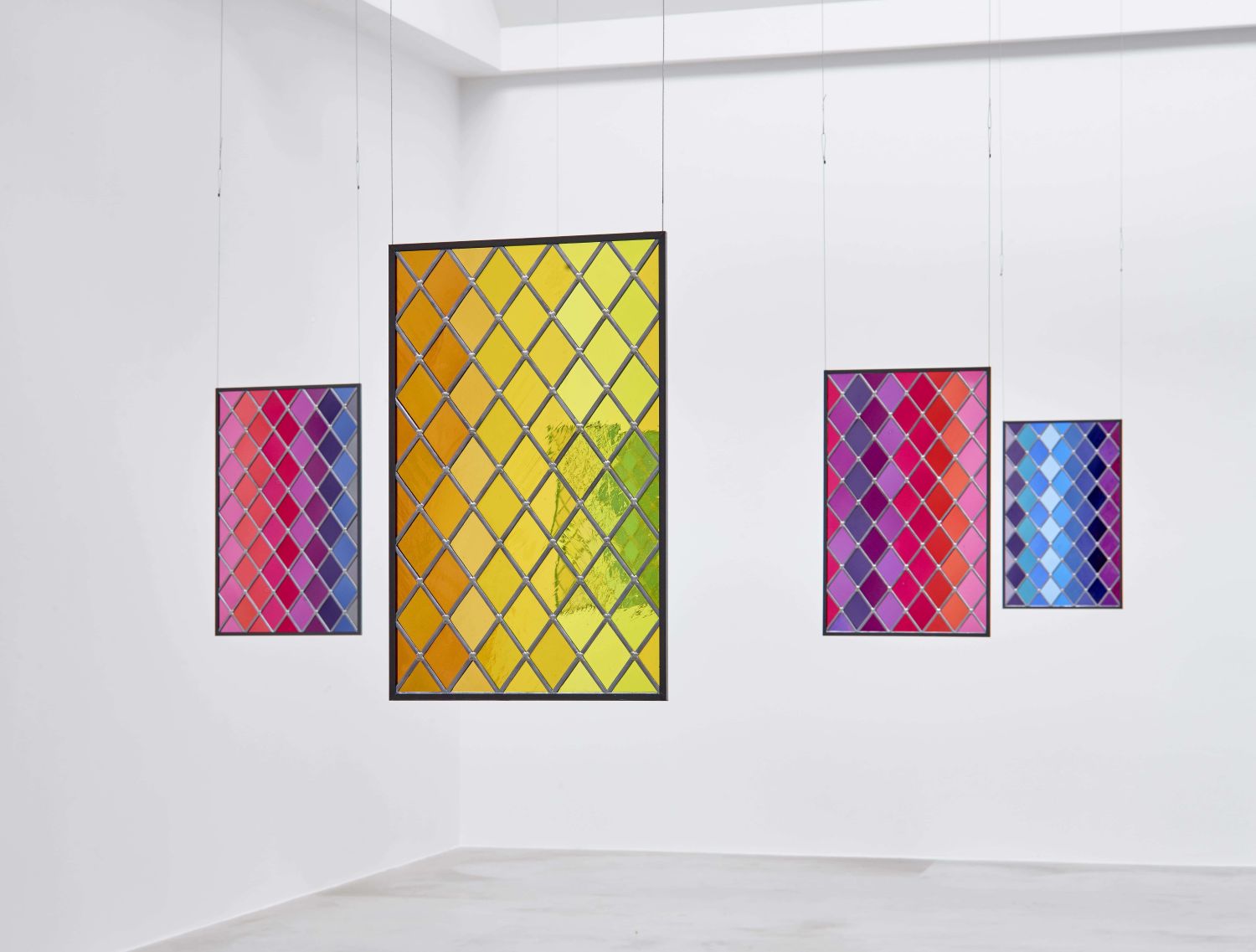
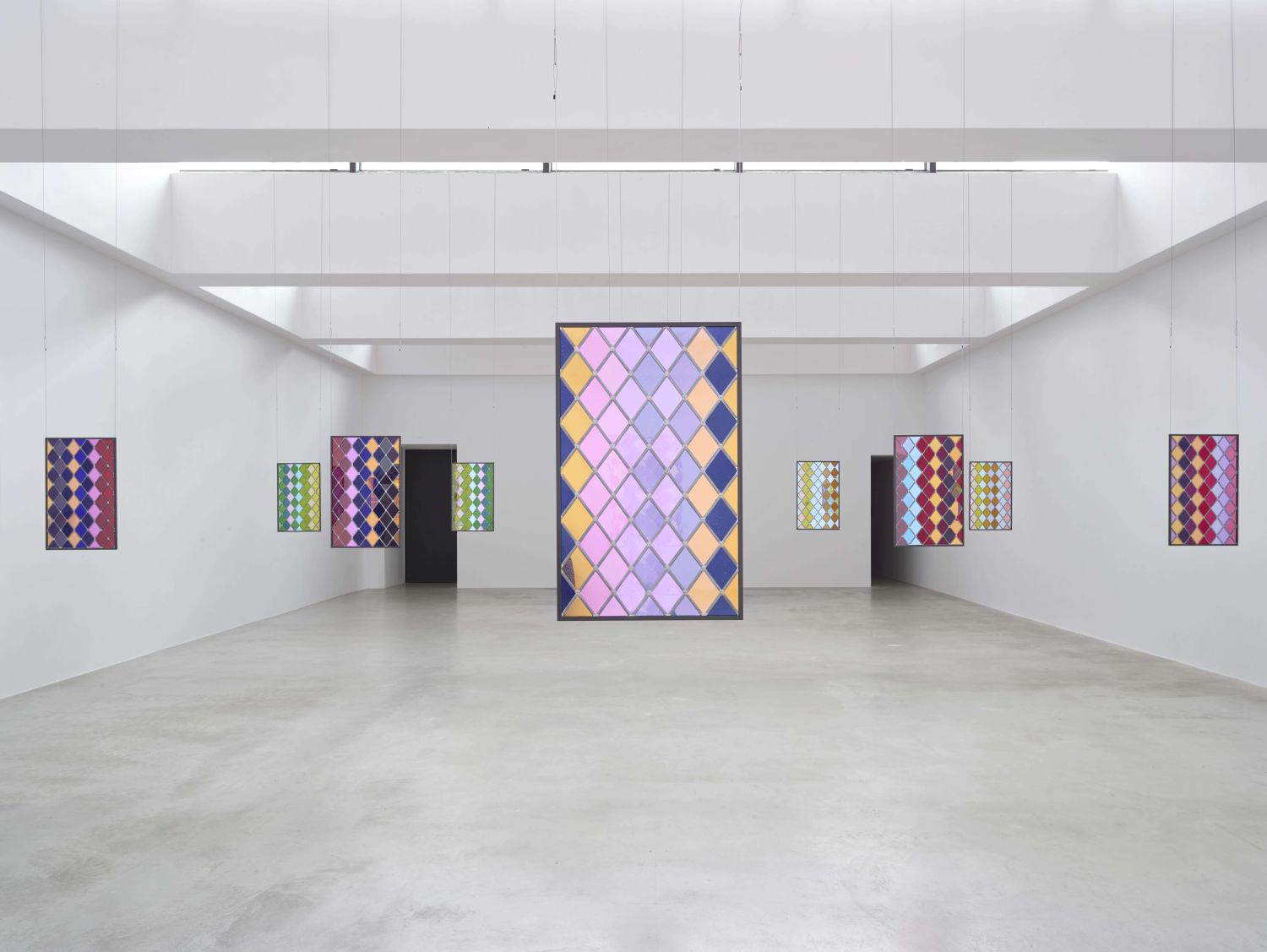
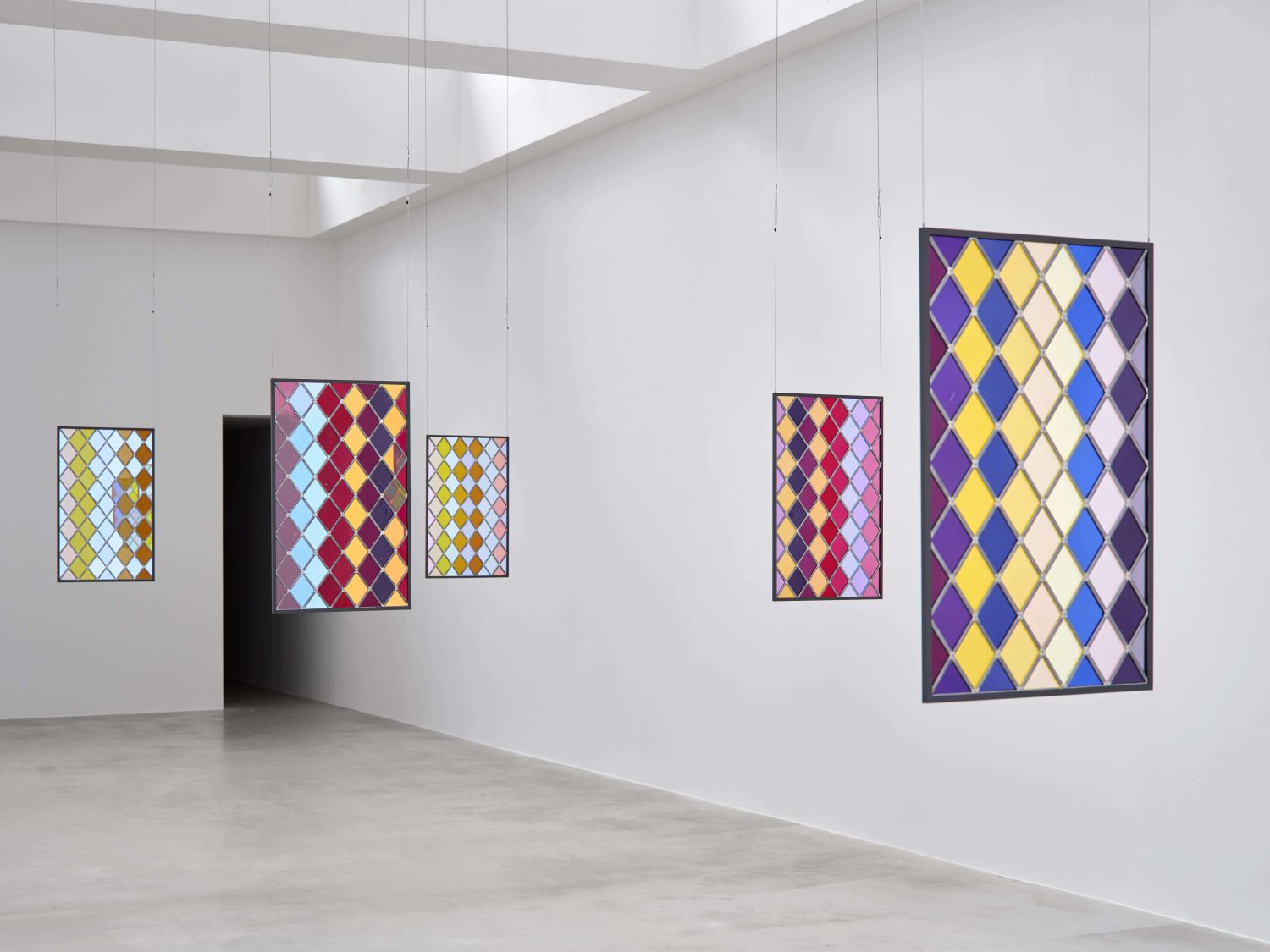
This exhibition, To Breathe - Archive of Prototype, features two central interventions from Kimsooja's oeuvre: her permanent stained-glass windows in Metz Cathedral (2022), and her fourteen-metre-high steel sculpture in the form of a needle, realised for Cornell University (2014) and on display today in Yorkshire Sculpture Park. Both installations uniquely engage with air and light, with our perspective on the universe, with collective memory, and with traditional and scientific industries such as glassblowing and nanotechnology.
This exhibition is the fifth in collaboration with Axel Vervoordt Gallery, and celebrates Kimsooja's solo exhibitions at De Lakenhal, Leiden and Bourse de Commerce, Paris, and her installation at the exhibition Jef Verheyen - Window on Infinity, KMSKA, Antwerp. Her work is also currently on display in the acclaimed exhibition Unravel at Barbican, London.
Photo by Jan Liégeois
To Breathe – Archive of Prototype
2019-2023, Traditional stained glass and dichroic glass, Set of 3, each 80 x 50cm
Courtesy of Axel Vervoordt Gallery and Kimsooja Studio
To Breathe – AlUla | 2024
To Breathe – AlUla
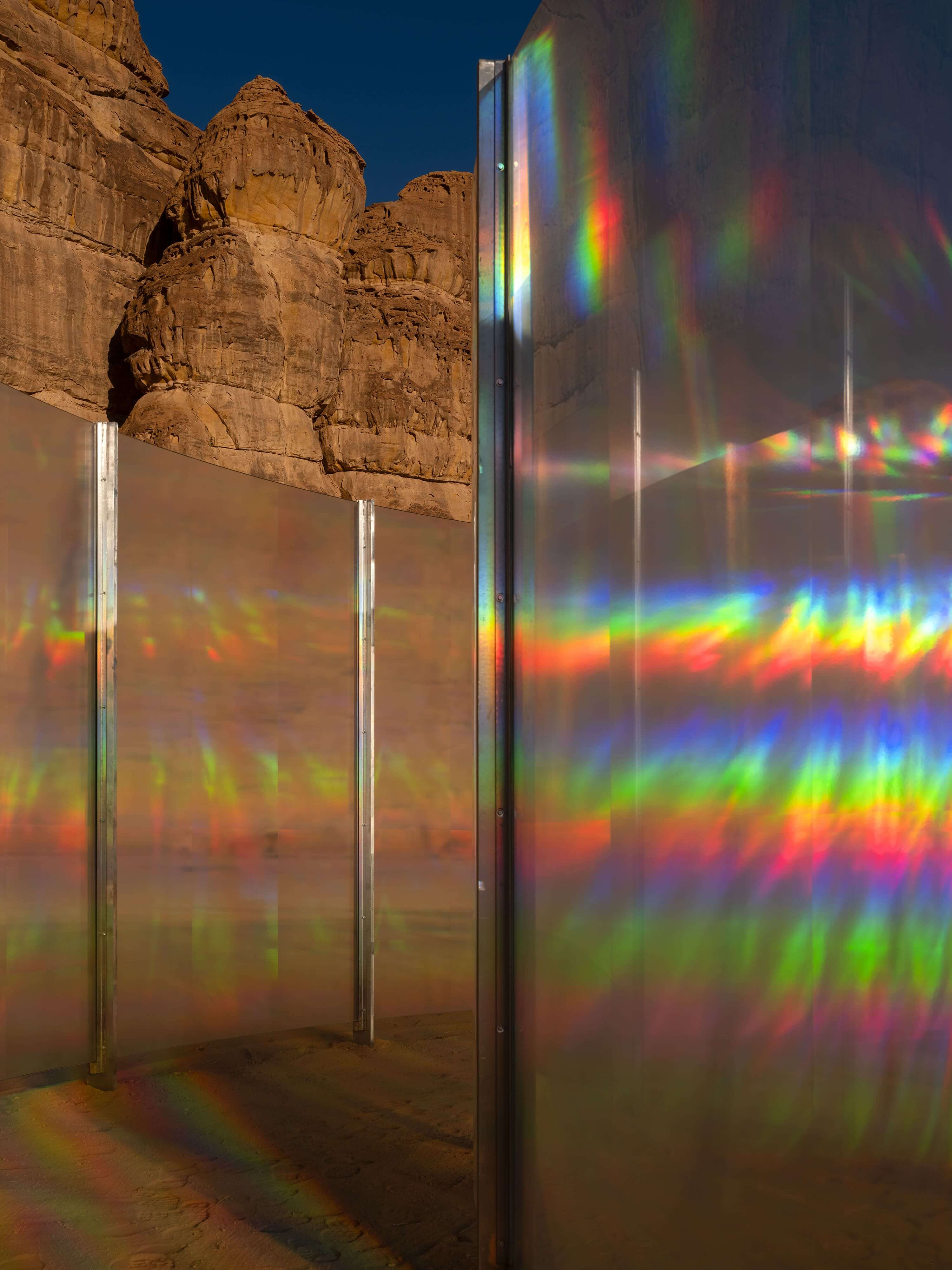
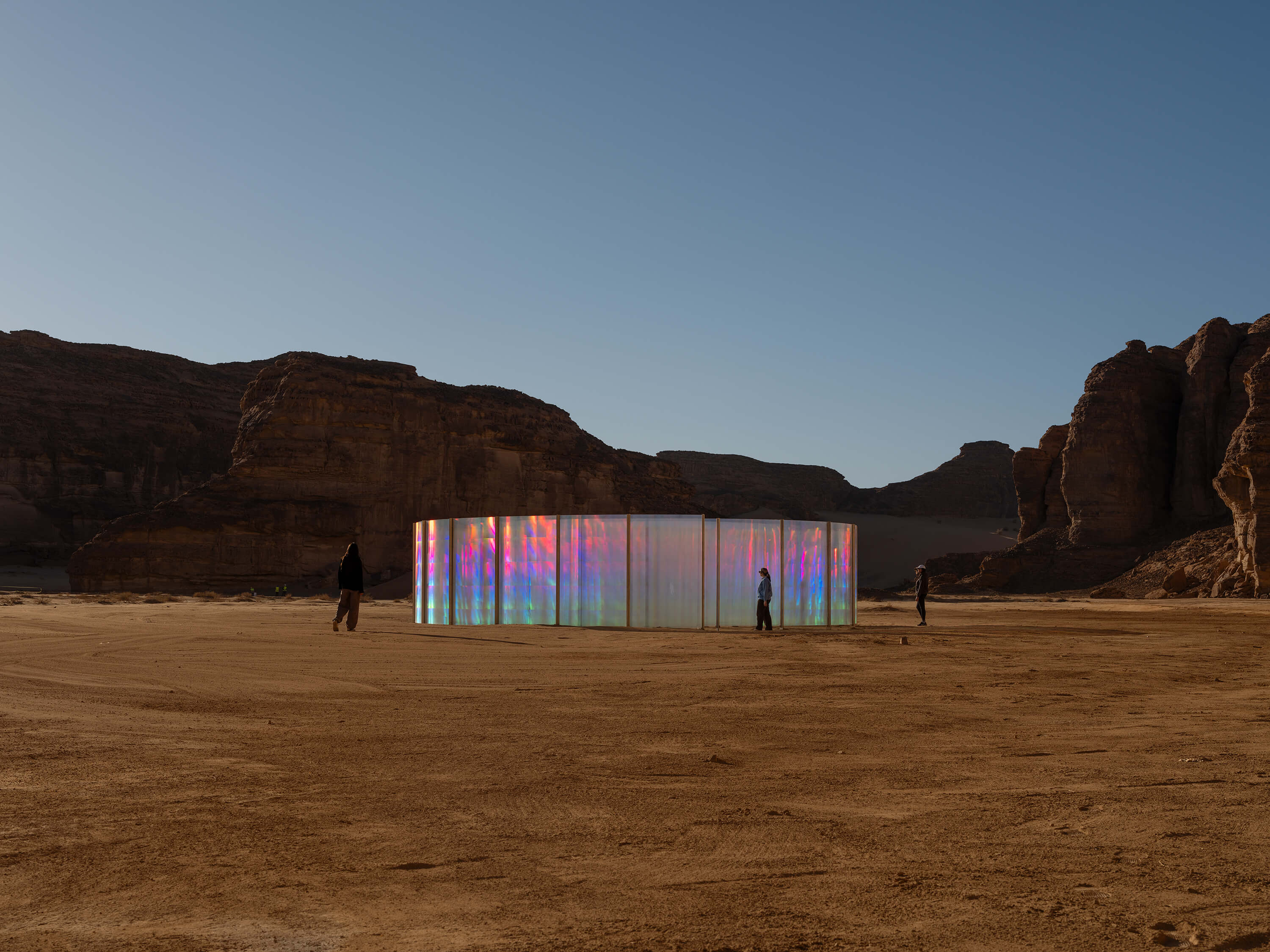
In the Presence of Absence, Desert X AlUla 2024, Alula, Saudi Arabia
9 Feb 2024 to 23 March 2024
For more information click HERE.
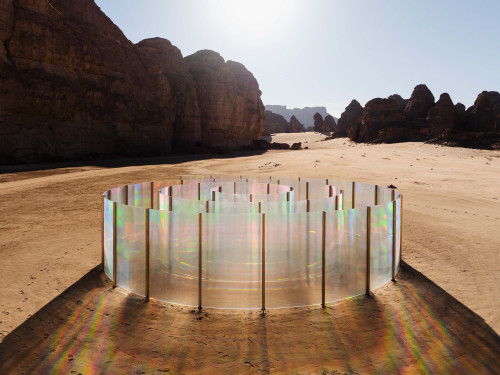
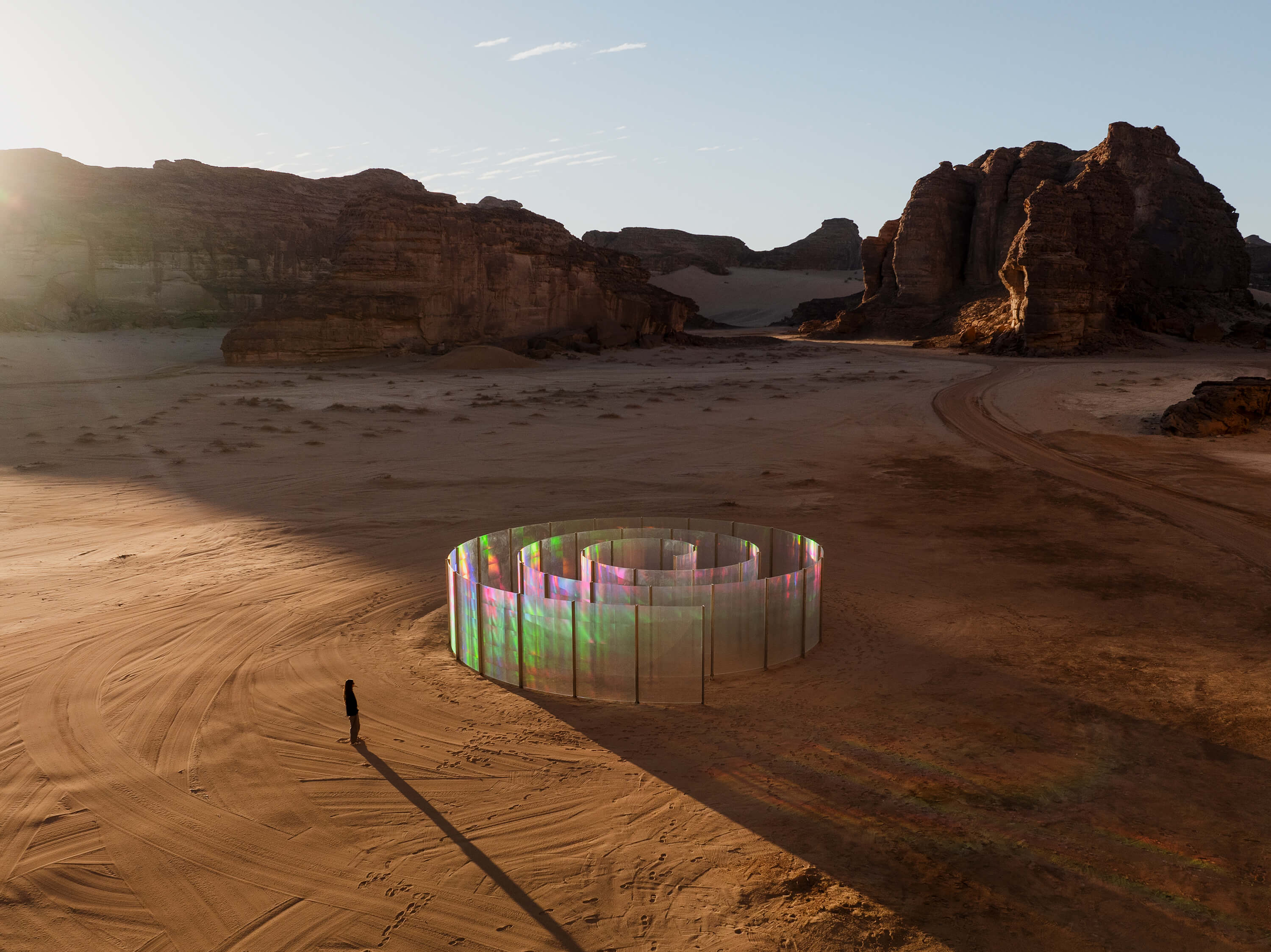
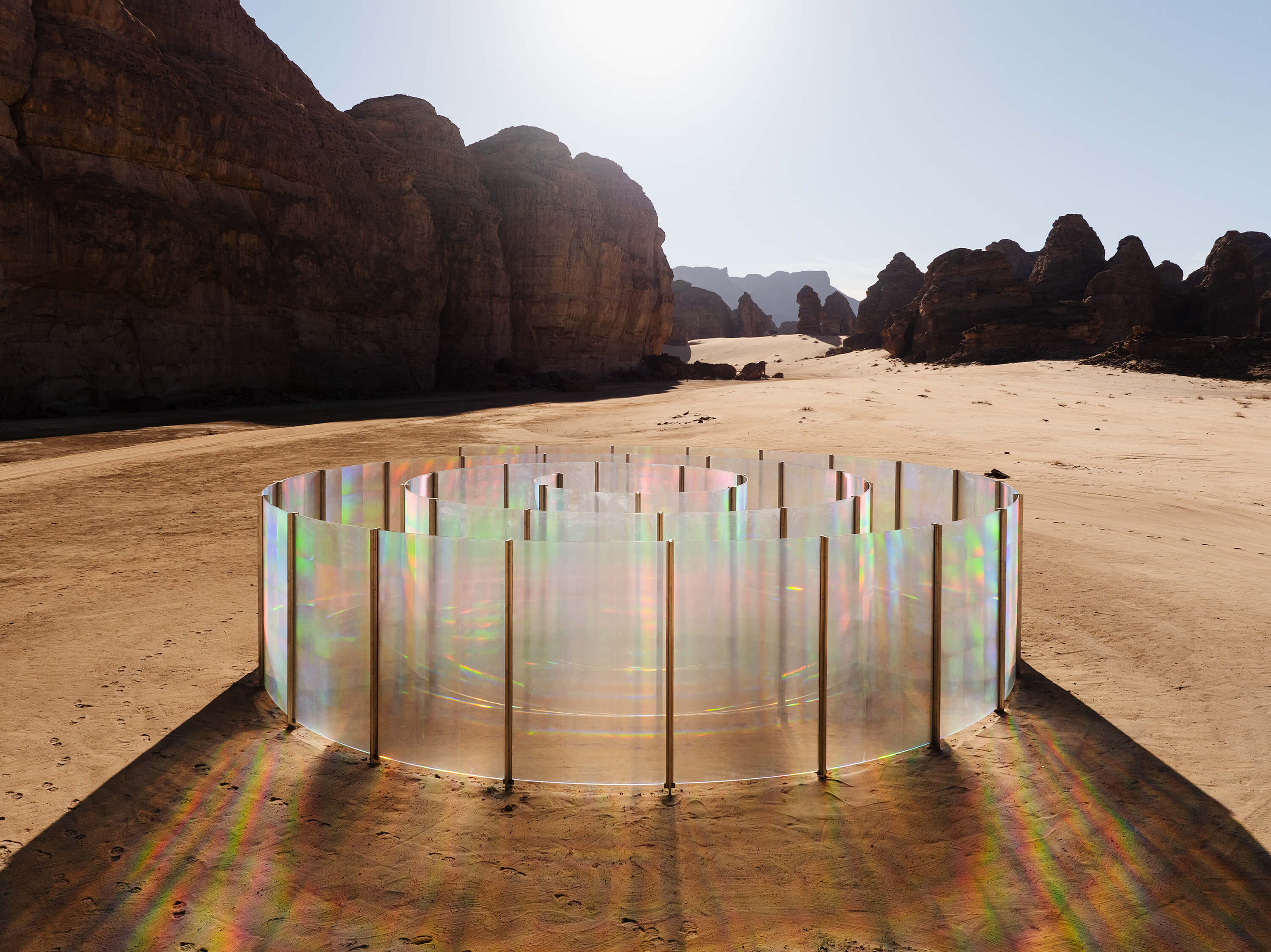
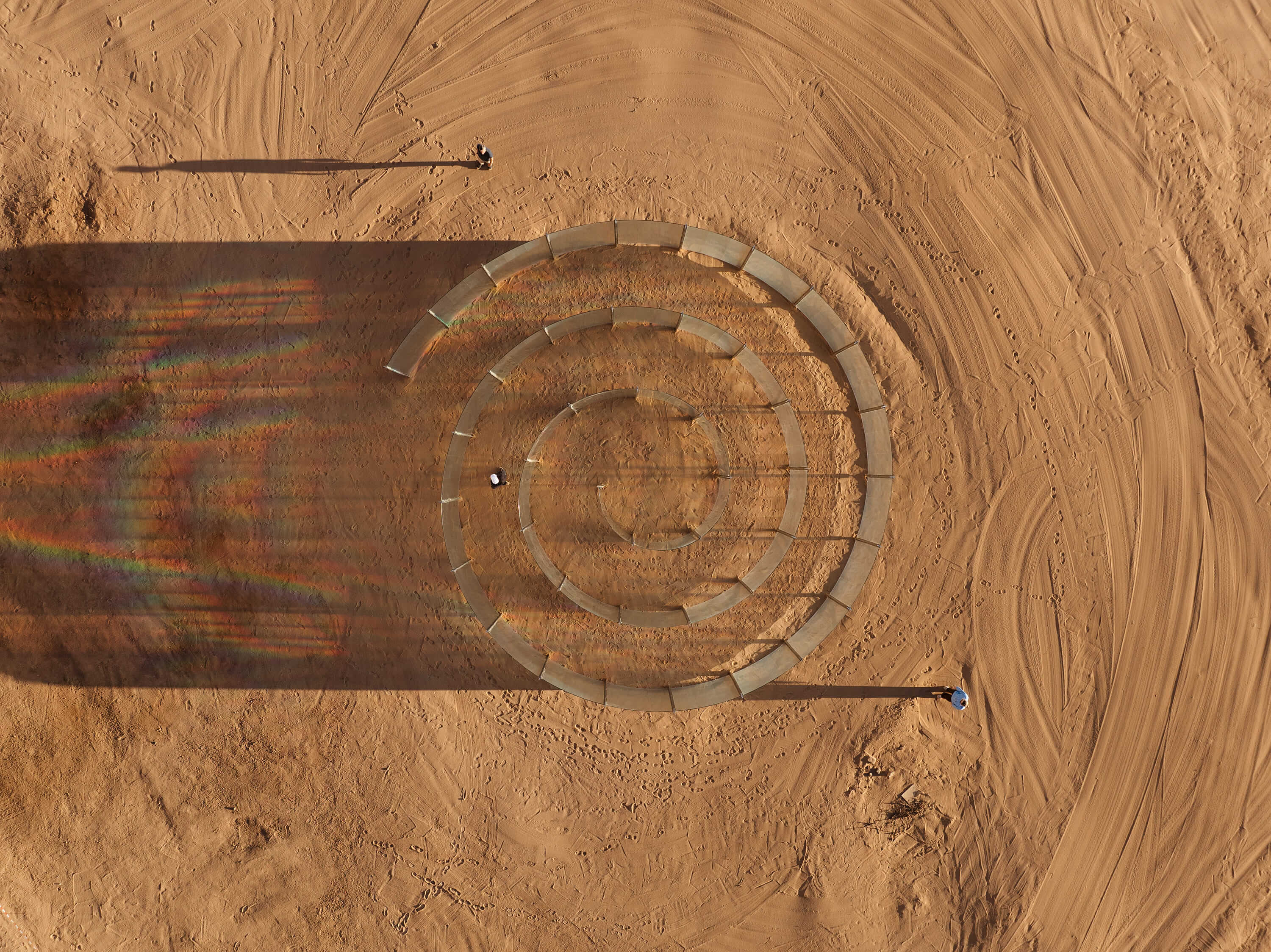
To Breathe – AlUla encapsulates Kimsooja’s contemplation of the original geographical forms and elements that shaped the region’s distinct desert and volcanic landscape. The core natural elements that took shape within this topography – from cracks in the volcanic stones and monumental sandstone mountains, to the delicate leaves of grass that, with the help of the wind, brush circular forms onto the soil – draw life through a phenomenon of contraction and expansion. As the artist explains, “it is nature’s breathing that transforms the earth’s surface across a deep arc of time.” The life cycle of the Earth in space and time has been Kimsooja’s inspiration and leaves a strong impact on her artistic vision.
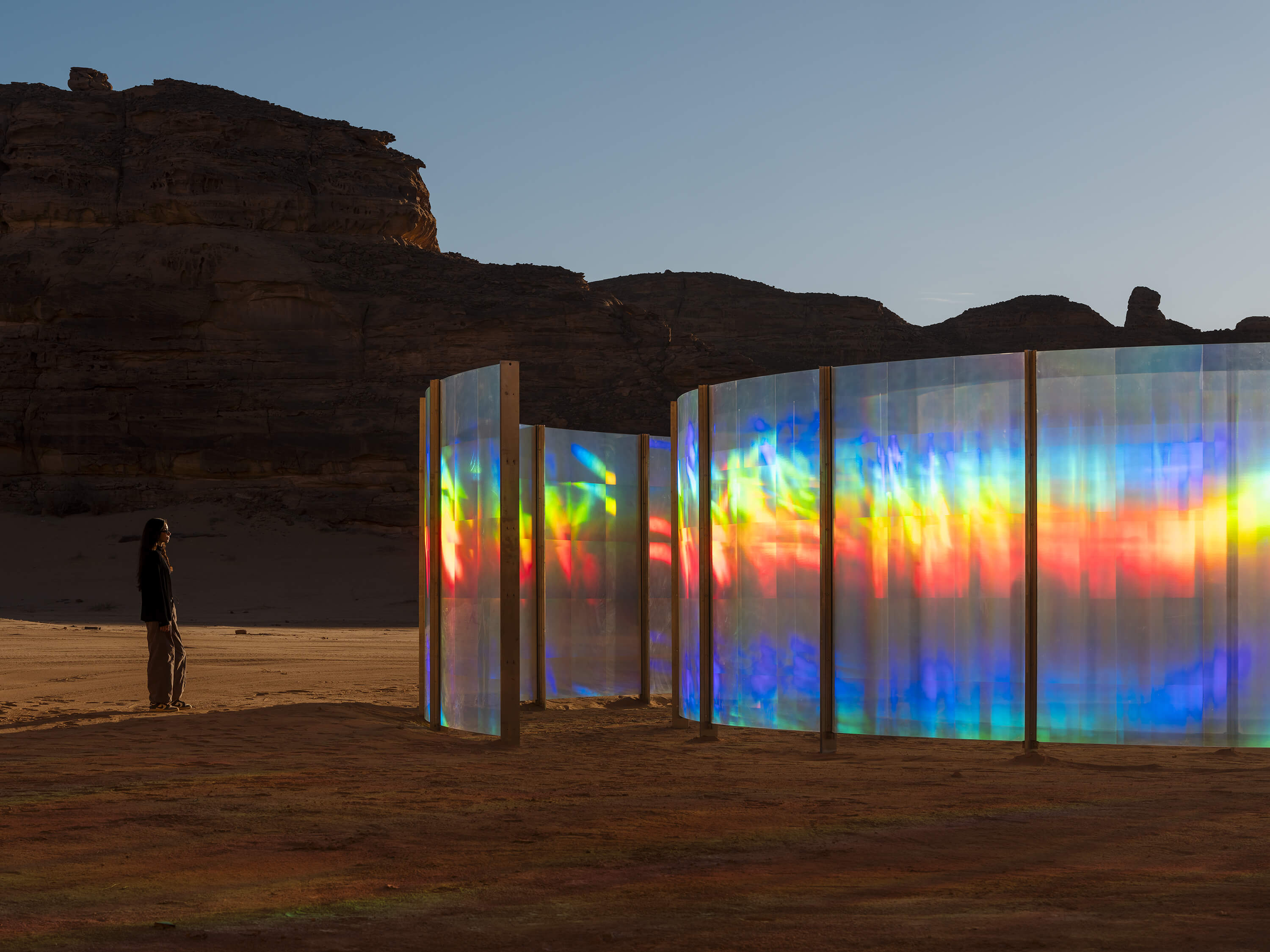
The movement of wind and the path of light – which reflects, refracts, and traverses through the spiral paths of To Breathe – AlUla’s glass walls – echo the conceptual and geometrical formation of the desert landscape. Coated with a special film, the glass is a translucent canvas with a microstructure of thousands of vertical and horizontal grooves that function as prisms. Sunlight refracts through this surface into an iridescent color spectrum, casting rainbow-colored shadows and circular brushstrokes onto the sandy earth. Audiences partake in a contemplative performance by walking through and gazing at the shifting light spectrums that render visible the vibrations of colors normally invisible to the naked eyes. With Kimsooja’s words, “it is a walk in and out of a contained yet open spiral path that unfolds an abstract ‘lightscape’ – at once a drawing, a painting, and a sculpture.”
Photo by Lance Gerber
To Breathe – AlUla
Site-specific Installation with Steel, Diffraction Grating Films, 42 panels of 2.80 x 1.80m
Courtesy of The Royal Commission for AlUla and Studio Kimsooja
To Breathe – Constellation | 2024
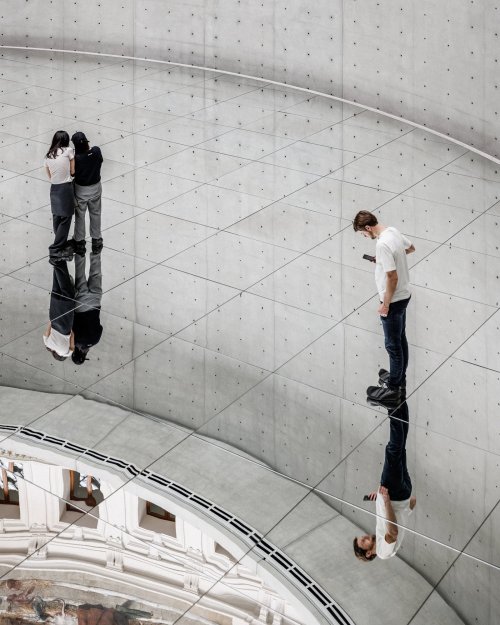
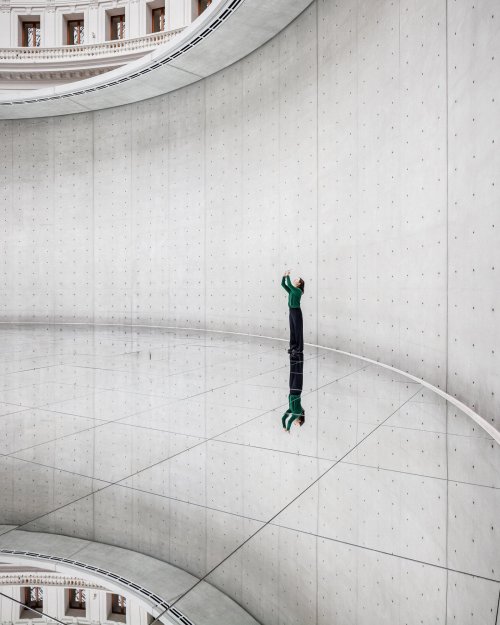
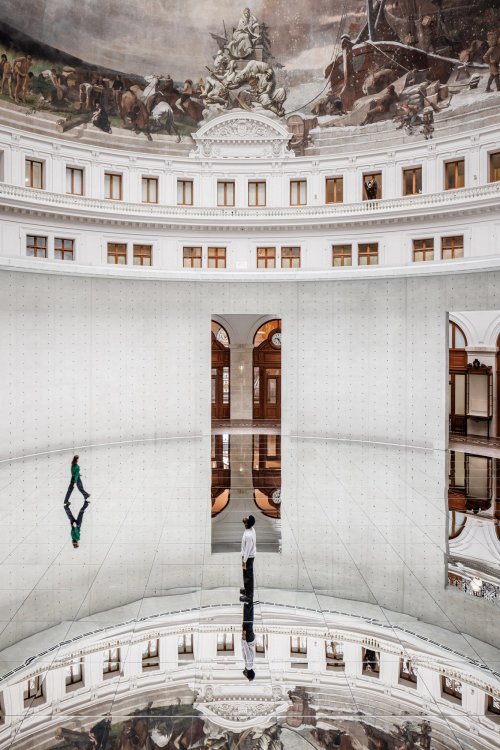
To Breathe – Constellation
To Breathe – Constellation
20 March to 2 September 2024
For more information click HERE
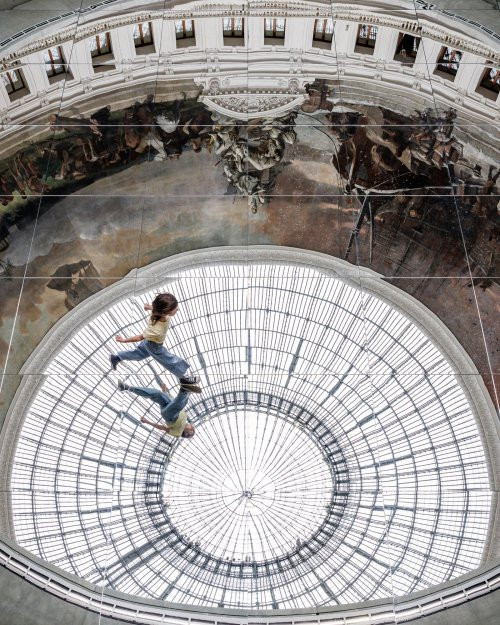
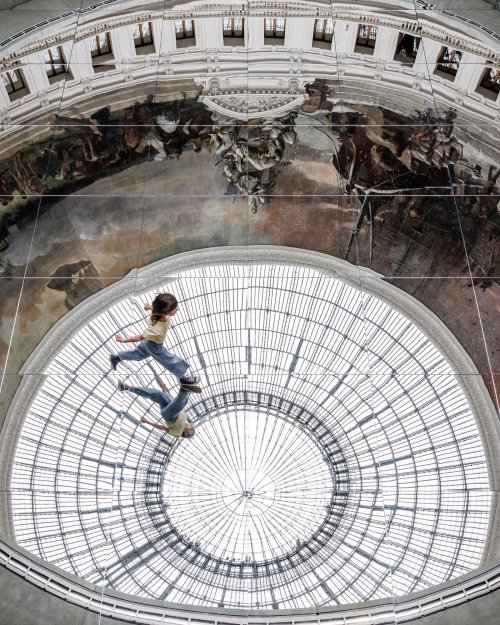
Her installation in the Rotunda of the Bourse de Commerce is both monumental and ethereal: an immense mirror on the floor that, as one approaches, inverts the architecture and the order of the world with it, the sky opening up in the middle of the building, beneath our feet. Kimsooja is also taking over the 24 display cases in the Passage and the lower level of the museum with works and video installations that address her favourite themes: identity, borders, memory, exile, movement, and weaving.
“I would like to create works that are like water and air, which we cannot possess but which can be shared with everyone”, Kimsooja says. Since the late 70s, her work has asserted itself on the international art scene as an essential, universal experience. After studying painting in Seoul, she distanced herself from all art teachings and practice, embracing everyday gestures such as sewing to explore the issues of identity, involvement, individual and collective memory, and the individual’s place in the world. In the performance in 1997 that made her famous, she spent eleven days travelling across Korea perched atop a lorry loaded with bottaris, the traditional, shimmering Korean fabric bundles used to mark major events in people’s lives, from birth to marriage to death.
As a nomadic artist, a “cosmopolitan anarchist” as she calls herself, Kimsooja metaphorically uses her own body like an anonymous, almost invisible presence whose immobility and verticality become a kind of needle that threads through the fabric of the world.
The mirror that she has used to cover the floor of the Rotunda of the Bourse de Commerce plays a similar role to that of the needle or of her own body.
View of the exhibition To Breathe – Constellation, Bourse de Commerce – Pinault Collection, Paris, 2024.
© Tadao Ando Architect & Associates, Niney et Marca Architectes, agence Pierre-Antoine Gatier.
Photo: Aurélien Mole / Pinault Collection.
© Kimsooja/ADAGP, Paris, 2024.
To Breathe – Constellation
Site-specific installation with mirror panels
Courtesy of Bourse de Commerce – Pinault Collection, Axel Vervoordt Gallery, Galerie Tschudi and Studio Kimsooja
To Breathe, RATP | 2023
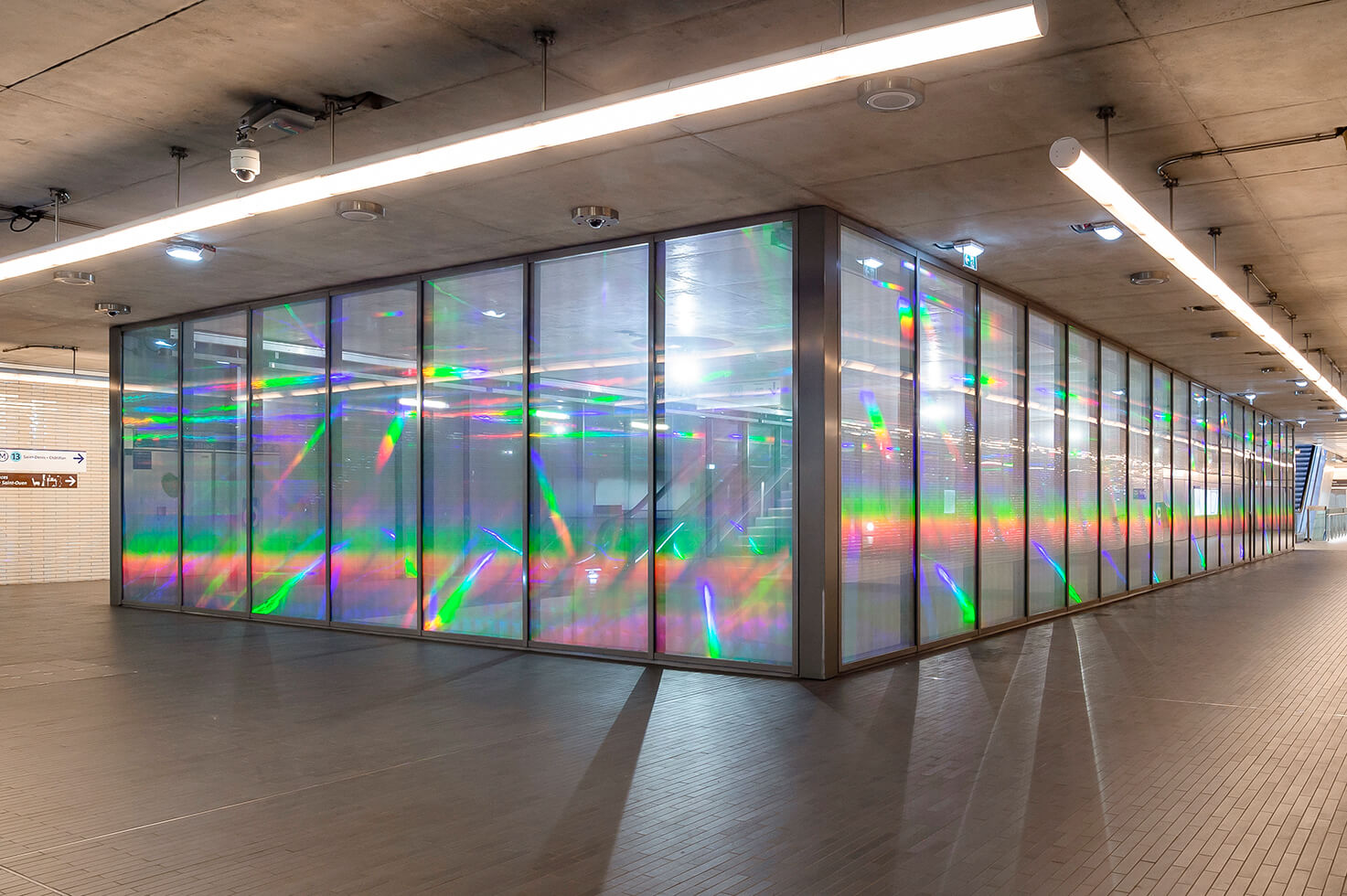
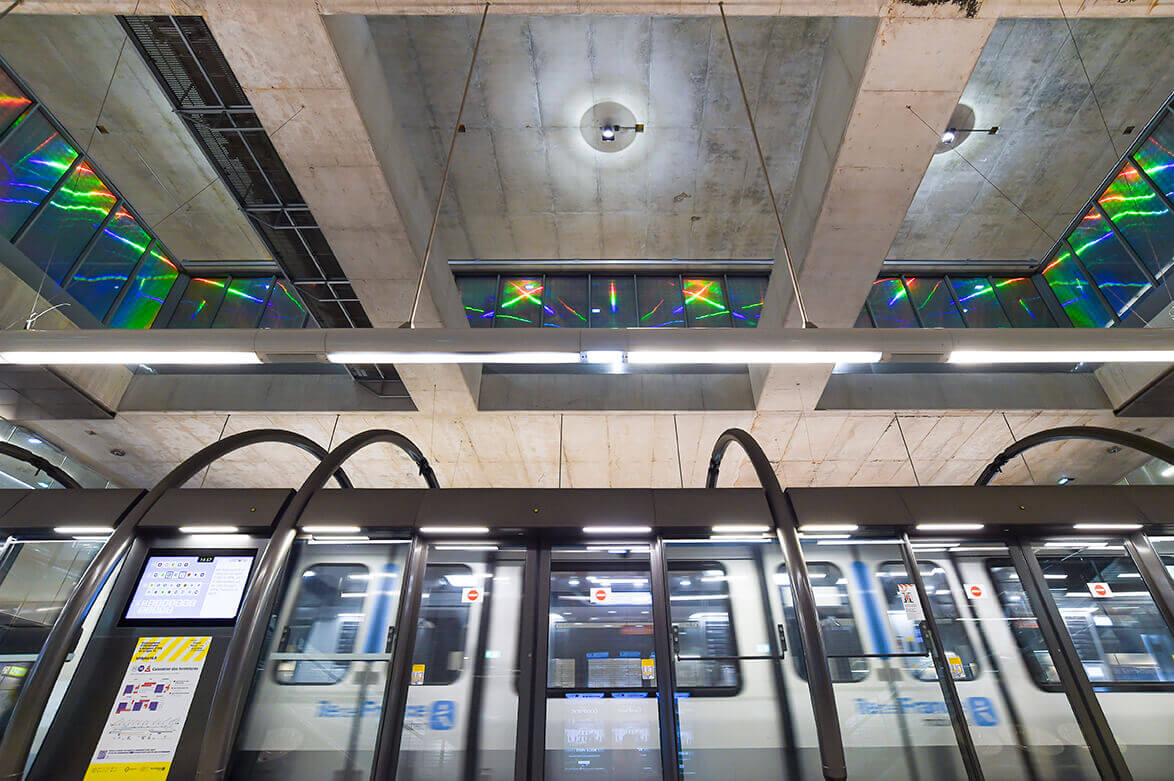
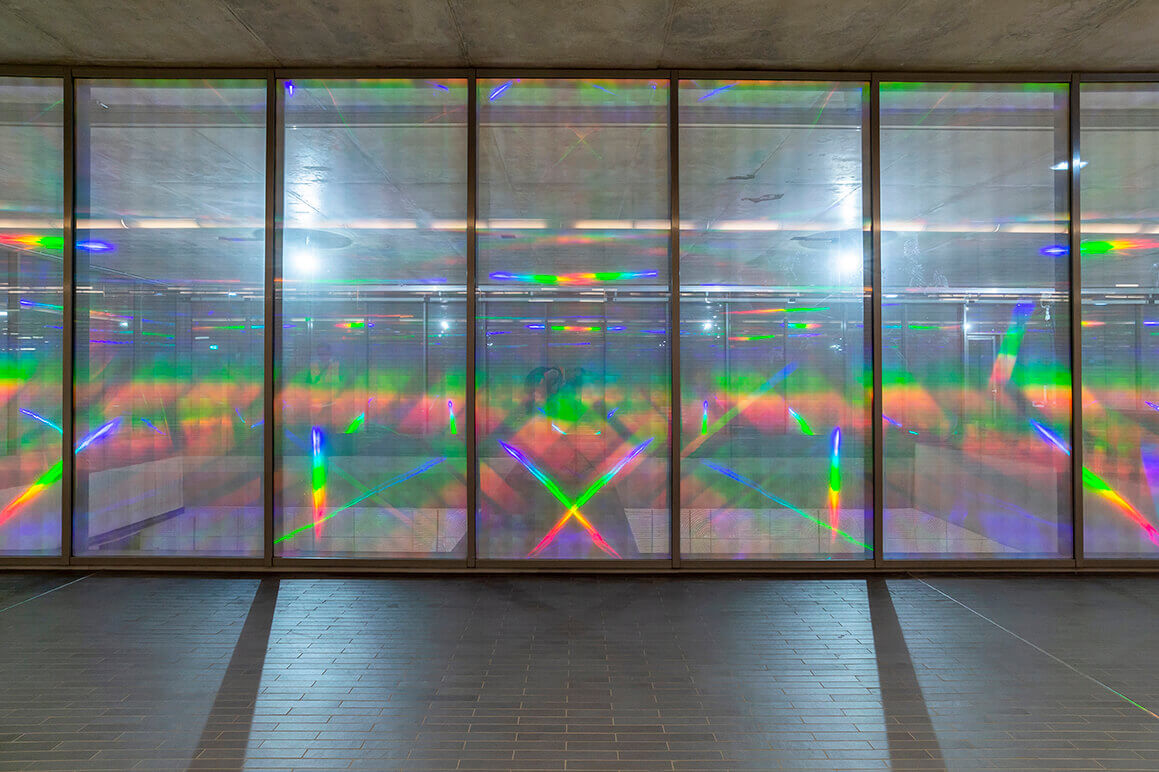
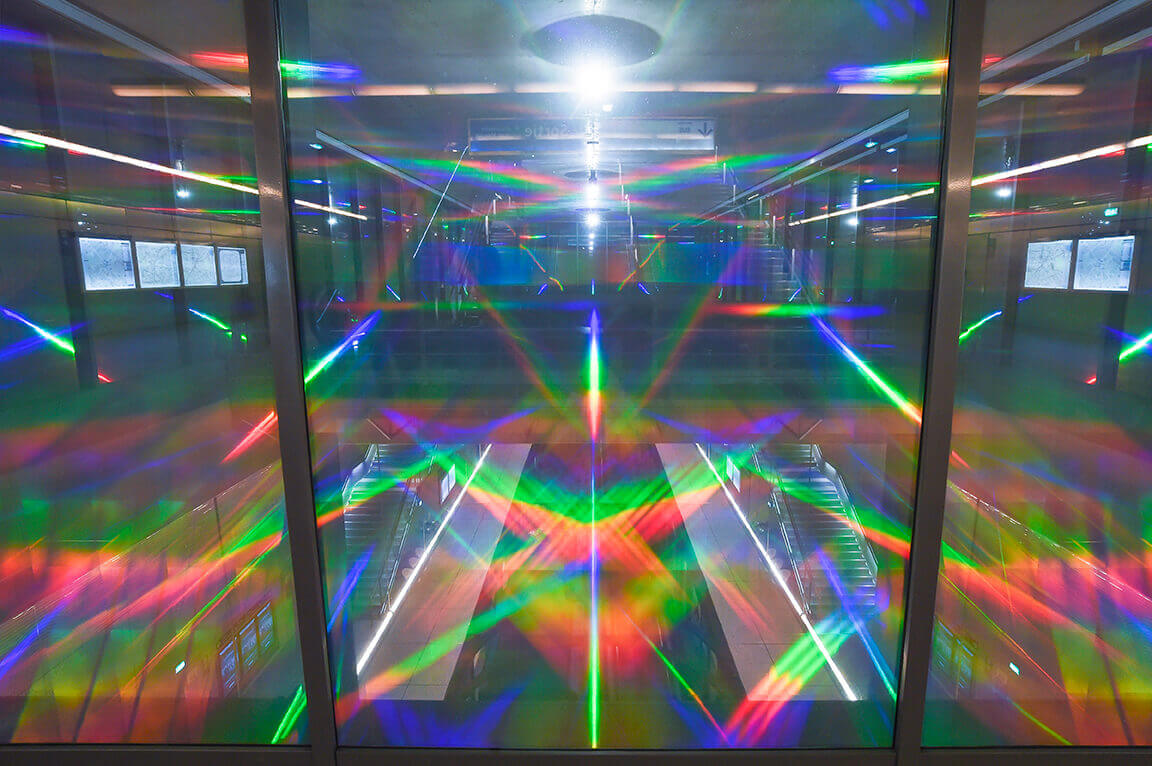
To Breathe, RATP
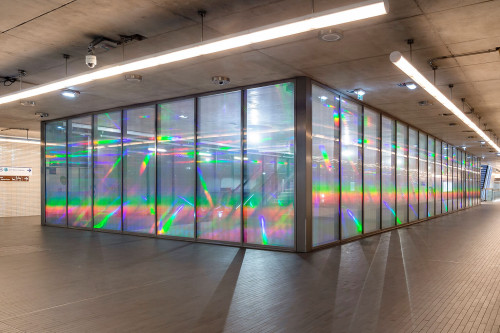
Kimsooja's site-specific installation with diffraction grating film, To Breathe is integrated into the Mairie de Saint-Ouen station's exchange hall(Paris Métro - line 13&14). To Breathe is an immersive installation, using the principle of light diffraction to create a sensory and poetic atmosphere designed to resonate with travelers of all ages. On the glass walls that surround the void of the exchange room overlooking the metro tracks, the rays of light break down into multiple spectrums of color, acting as a three-dimensional painting that redefines the space. Each moment within this installation promises a distinct encounter.
For more information click HERE.
Photo by Pierre Charlier
To Breathe
2023, Site specific installation with diffraction grating film, Dimensions Variable
Permanent installation view at Marie de Saint-Ouen station, Saint-Ouen-sur-Seine, France
Courtesy of Régie Autonome des Transports Parisiens(RATP) and Kimsooja Studio.
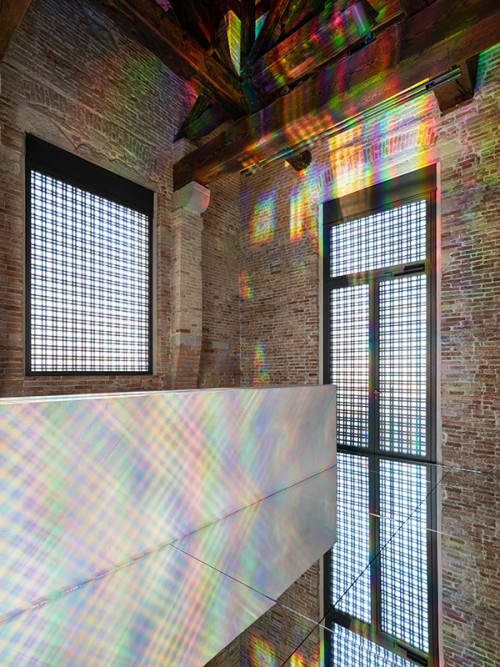
To Breathe – Venice | 2023
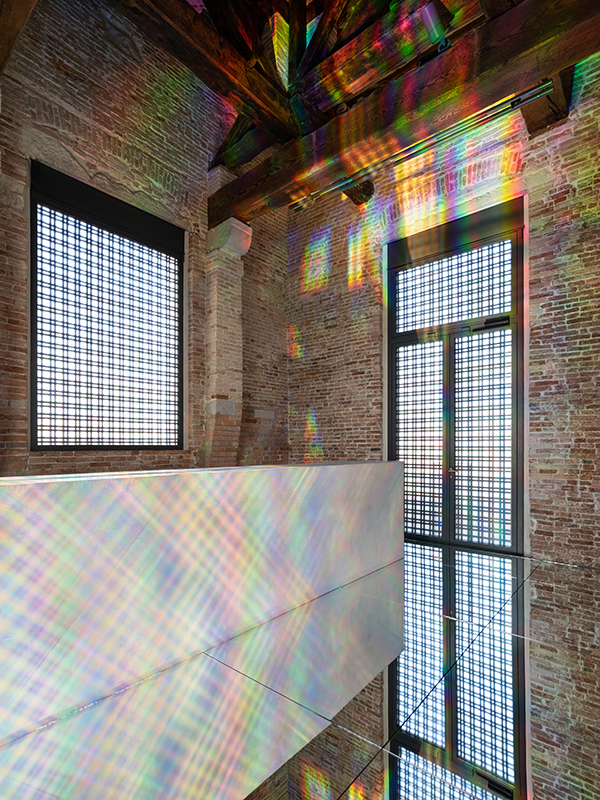
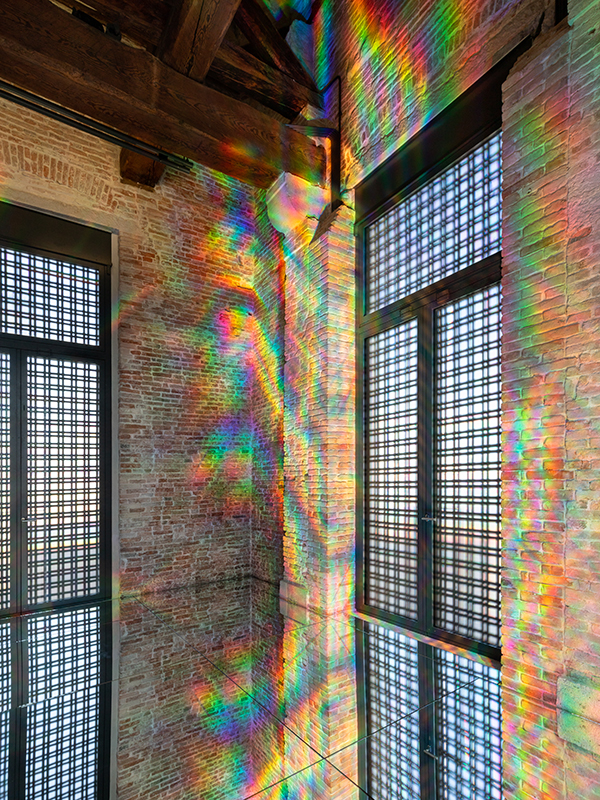
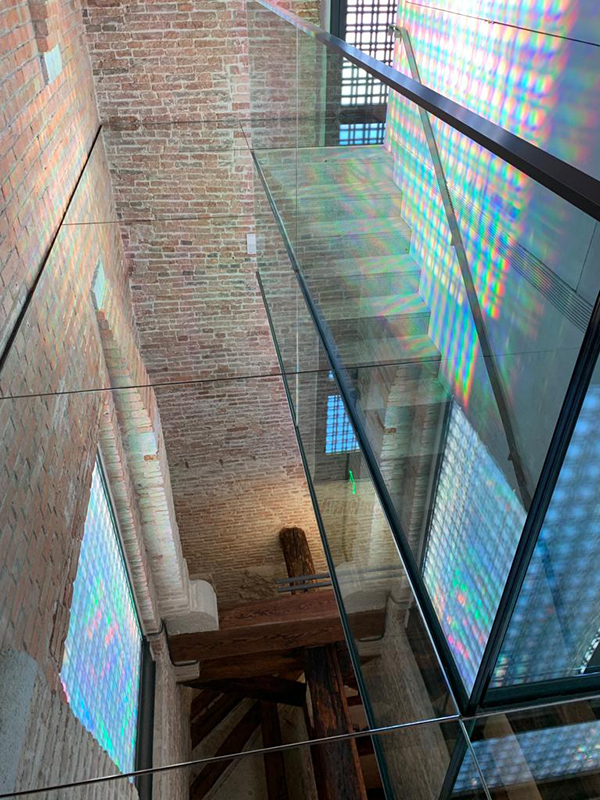
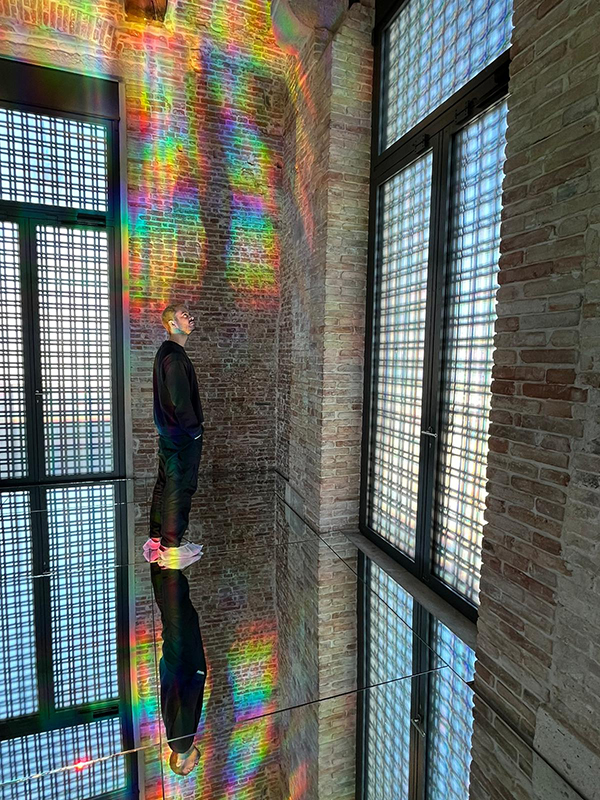
To Breathe – Venice
Installation view at Group Exhibition Icônes, Punta della Dogana, Venice, Italy
2 April 2023 - 26 November 2023
For more information about the exhibition, please click HERE.
To Breathe - Venice, 2023, Site specific installation consisting of diffraction grating film and mirror panel.
Courtesy of Punta della Dogana and Kimsooja Studio. Photo by Marco Cappelletti e Filippo Rossi
To Breathe | 2023
To Breathe
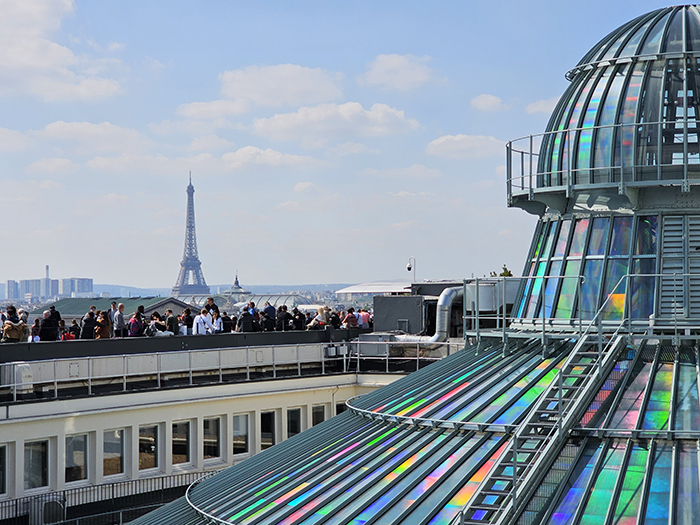
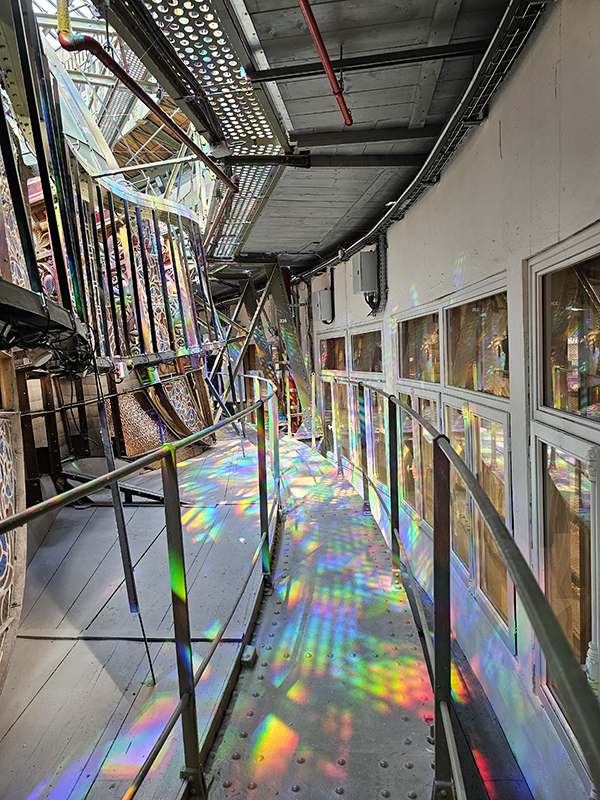
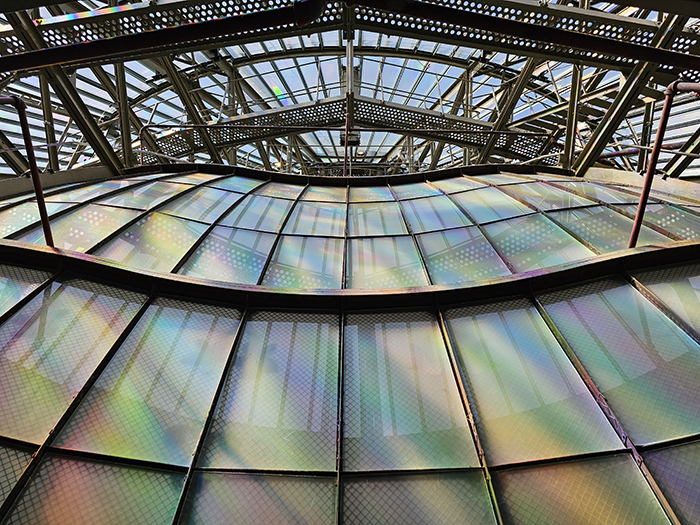
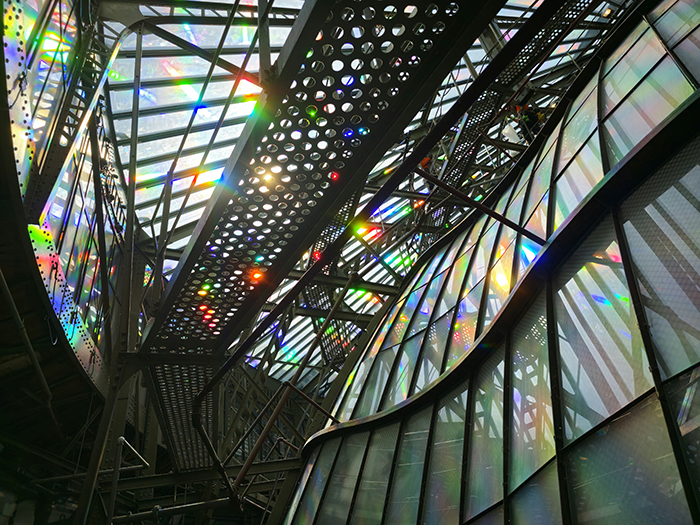
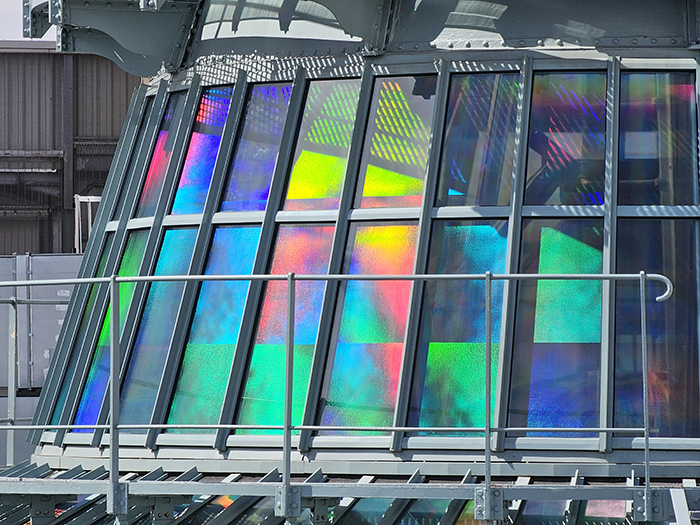
On Galeries Lafayette’s invitation, Kimsooja illuminates the department store’s magnificent architecture with her light-oriented installation To Breathe. By covering the iconic glass dome in Galeries Lafayette’s Paris Haussmann store with diffraction grating film, Kimsooja transforms the dome’s external surfaces and internal spaces into iridescent landscapes that shift and change throughout the day. For this site-specific installation (the first in Paris on this scale), Kimsooja explores the building’s sensory and meditative qualities by focusing visitors’ attention on light to create an environment conducive to contemplation. Space in between double dome on the 5th floor is exceptionally opened to the public for the installation.
For more information click HERE.
Galeries Lafayette, Paris, France
Photo by Jaeho Chong
To Breathe
2023, Diffraction grating film installation, Dimensions Variable
Installation view at Galeries Lafayette Haussmann, Paris, 2023.
Courtesy of the Galeries Lafayette Group and Kimsooja Studio.
Weaving the Light | 2023
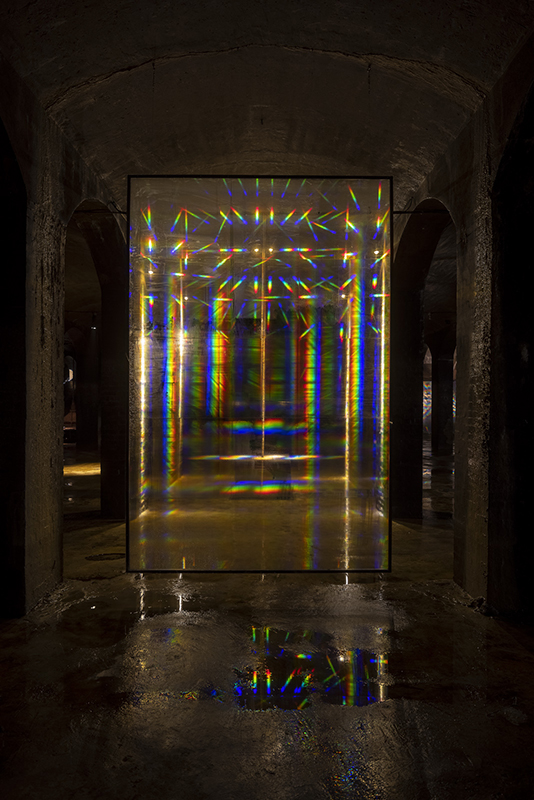
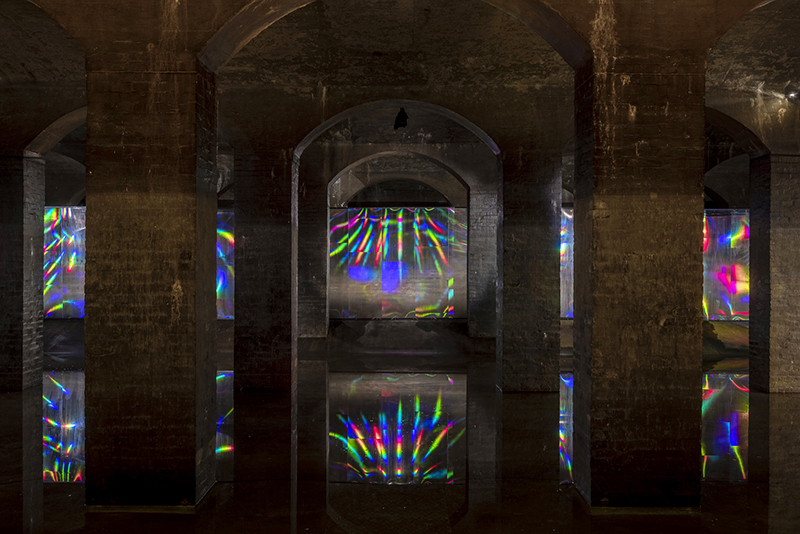
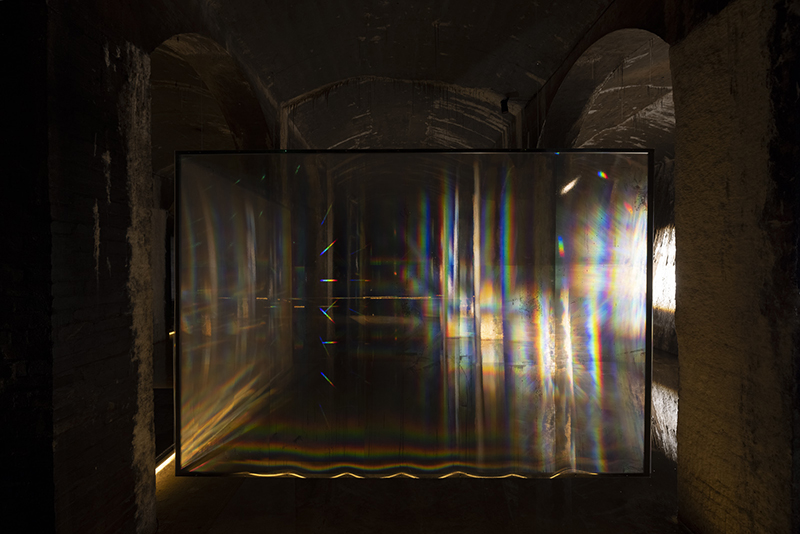
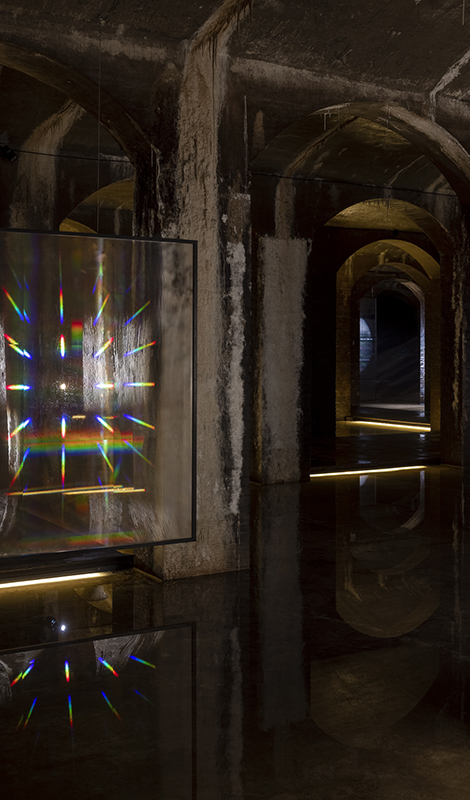
Weaving the Light
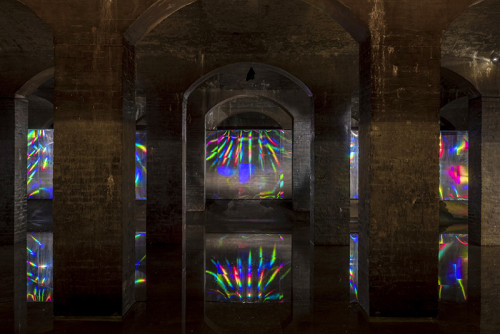
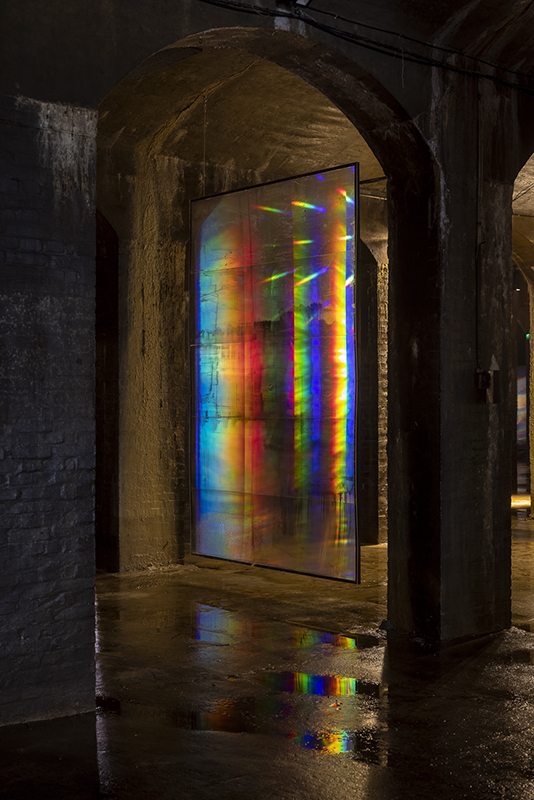
In 2023, Kimsooja captures the underground space of Cisternerne. The audience is invited into an etheral space where light, projected into iridescent color spectra, transforms the former water reservoir into a sacred sea of light. Every year, the Frederiksberg Museums invites an artist to create a site-specific work for the 4,400 square meters of Cisternerne, into which the daylight never reaches, the humidity is close to 100%, the reverberation is of 17 seconds, and the temperature fluctuates between 4 and 16 degrees Celsius. In an extensive installation of light and color, Kimsooja transforms Cisternerne into an ephemeral universe, where the light radiates like brushstrokes on transparent canvases and breaks the darkness. The work is comprised of diffraction grating film that is mounted on transparent panels, which altogether let light pass through a microscopic surface of horizontal and vertical prisms. Rays of light split into vibrant colors that dynamically weave in and out of the subterranean colonnades.
For more information click HERE.
Cisternerne, Frederiksberg Museum, Copenhagen, Denmark
Photo by Torben Eskerod
Weaving the Light
2023, site-specific installation consisting of 48 diffraction panels, Cisternerne, Frederiksberg Museum, Denmark.
Courtesy of Frederiksberg Museum and Kimsooja Studio.
Deductive Object: (Un)fold | 2023
Deductive Object: (Un)fold
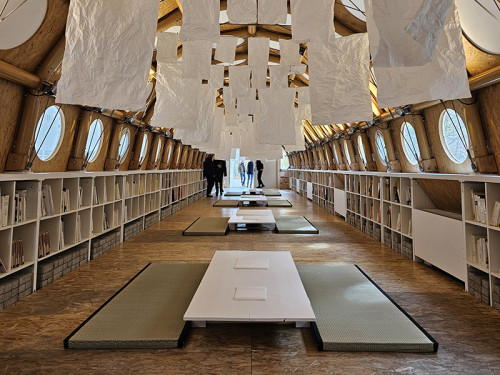
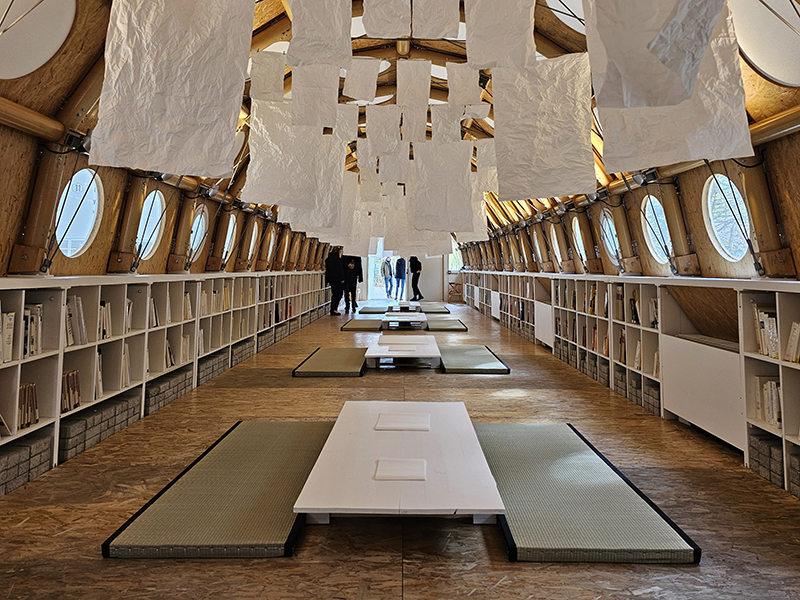
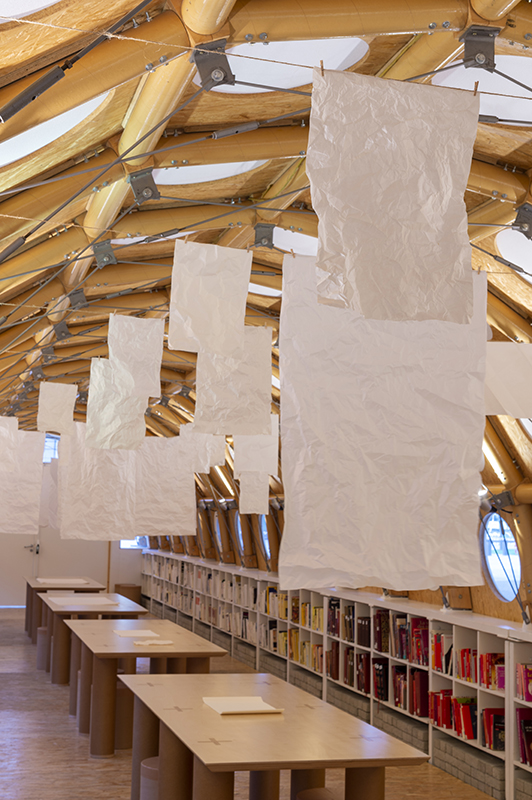
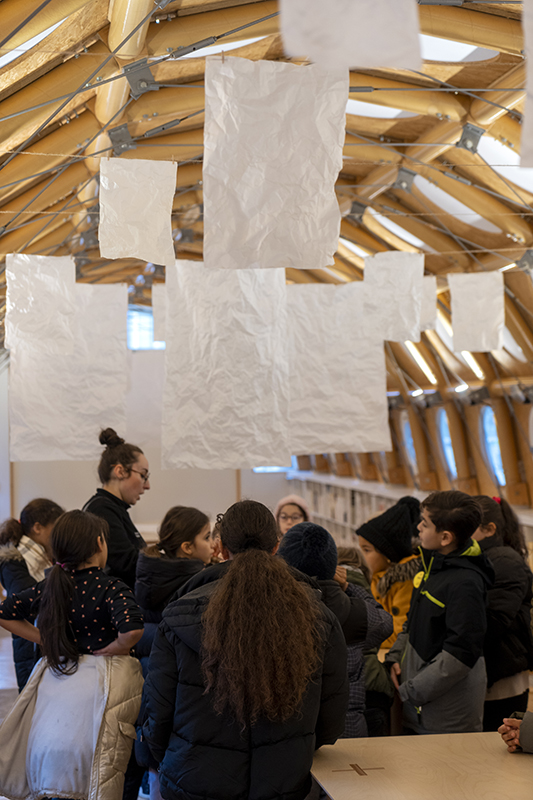
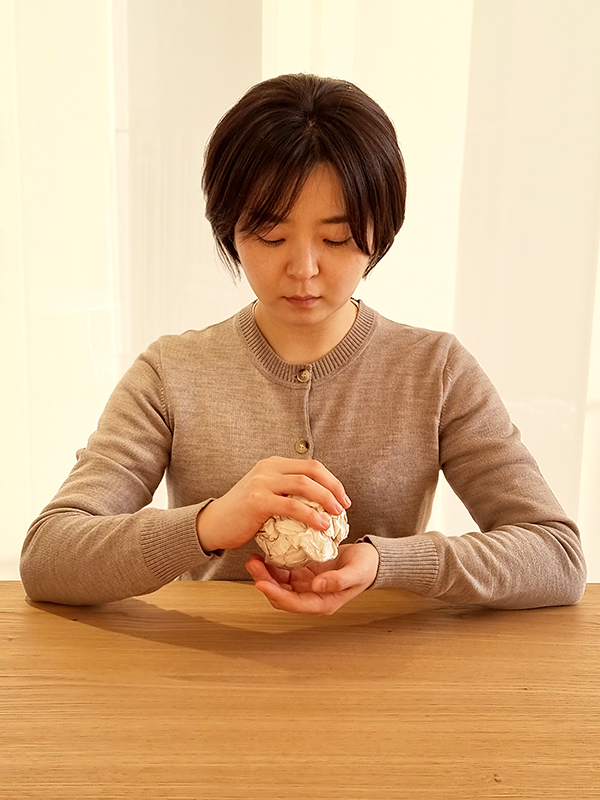
The workshop Kimsooja conceived for Paper Tube Studio originates in her previous body of work, notably the Bottari. It is a “life sculpture”. This surface is used to wrap, or internalize the memory of self and others through the act of making a single knot. It is a work that is at once a painting, a sculpture, and action. In this context, Deductive Object: (Un)fold offers visitors to participate in making a painting that transforms through the physical and emotional dimensions impressed onto the tactile surface of rice paper in the palms of their hands.
In the participatory workshop Deductive Object: (Un)Fold, she gives visitors the opportunity to create a picture that evolves over time according to the physical and emotional experience of the imprint of rice paper in the palm of the hand. Visitors will be invited to freely fold and unfold sheets of rice paper by rolling them between their hands,
pressing the material to form balls in a shared meditative activity. The balls are then placed on long shelves, on the floor or hung from small pegs as in a laundry. Folded then
unfolded, the paper balls will collectively form compositions that are constantly metamorphosing, gradually occupying the space according to the actions of visitors.
With the participation of the Korean Cultural Centre
Paper Tube Studio, Centre Pompidou-Metz, Metz, France
Photo by Jaeho Chong
Deductive Object: (Un)fold at Paper Tube Studio, Centre Pompidou-Metz, 2023.
The workshop was conceived and realized by Kimsooja at the invitation of the Centre Pompidou-Metz, Production Centre Pompidou-Metz and Kimsooja.
To Breathe – Zurich | 2023
To Breathe – Zurich
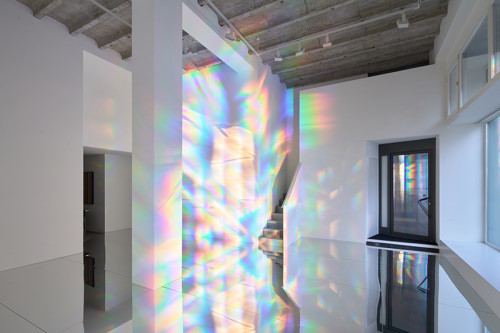
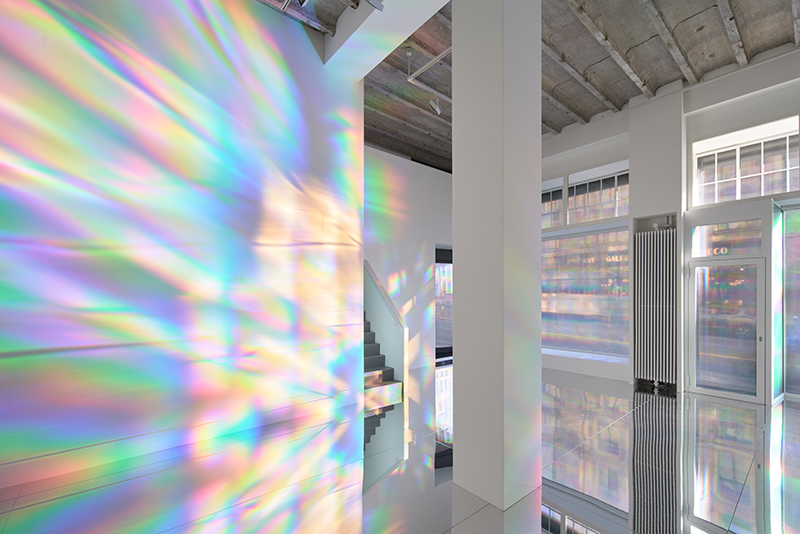
Kimsooja, To Breathe – Zurich, Galerie Tschudi, Zürich, Switzerland
21 January to 11 March 2023
For more information click HERE.
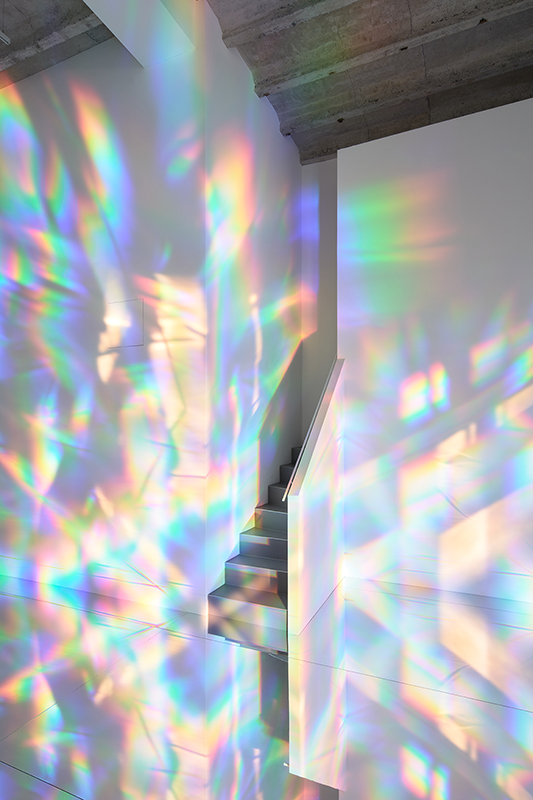
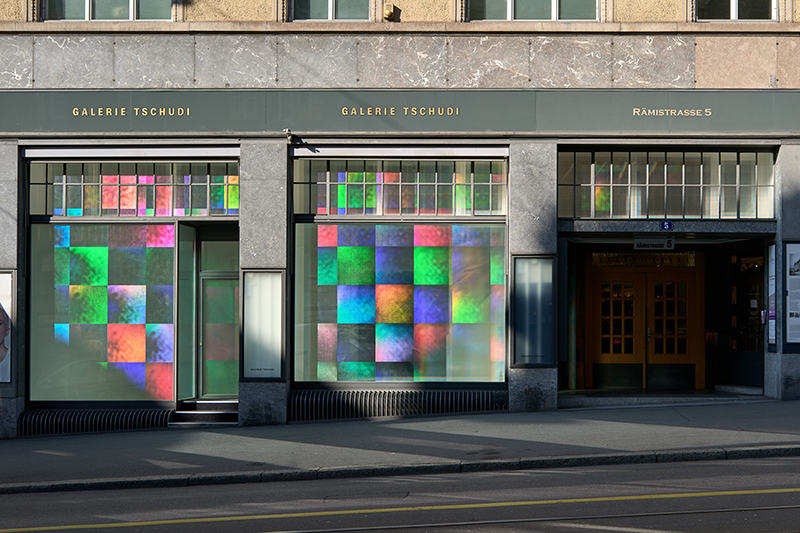
With her installation To Breathe – Zurich Kimsooja inscribes her work in the architecture of Galerie Tschudi. She utilizes the architectural surfaces of the space as the material support for her ‘painting’. All the windows facing the street have been covered in light-diffraction grating film: “This particular film has thousands of vertical and horizontal lines in every inch. It has a woven structure and functions like a prism, creating iridescent light when light passes through it.” (Kimsooja in conversation with Hou Hanru, 2017). The artist also tiled the floor of the gallery with mirror panels. These reflect the ceiling of the space downwards and create the illusion of a dizzying depth. The floor seems almost to dissolve: it appears like a liquid surface, in which the viewers are simultaneously reflected on an unfamiliar vertical axis. The space is otherwise empty – and yet, it is full.
Galerie Tschudi, Zurich, Switzerland
Photo by Max Ehrengruber
To Breathe – Zurich
2023, Site specific installation consisting of diffraction grating film and mirror floor panels, size variable.
Courtesy of Galerie Tschudi, Zurich, Kimsooja Studio.
A Needle Woman – Jaoseon | 2023
A Needle Woman – Jaoseon
A Needle Woman – Jaoseon, 2023
Performance
Courtesy of Meridiano and Kimsooja Studio.
–
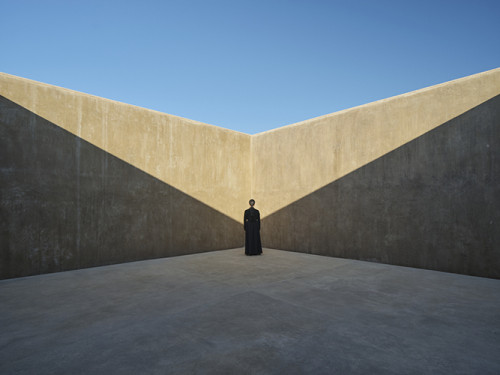
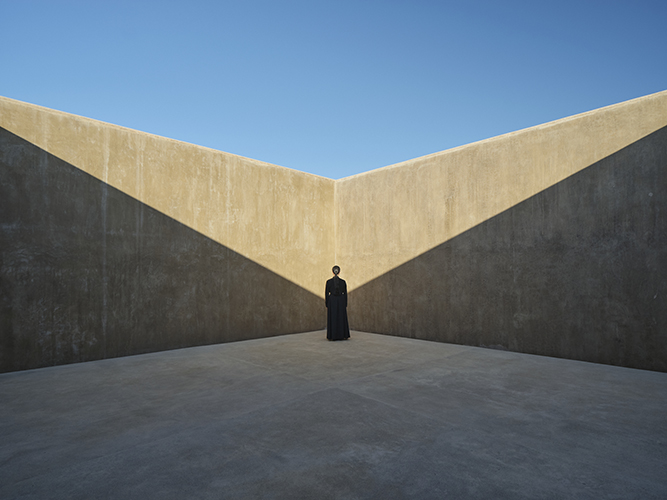
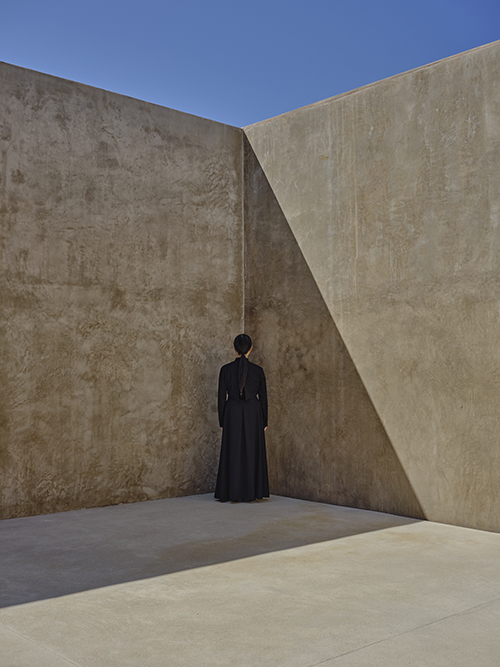
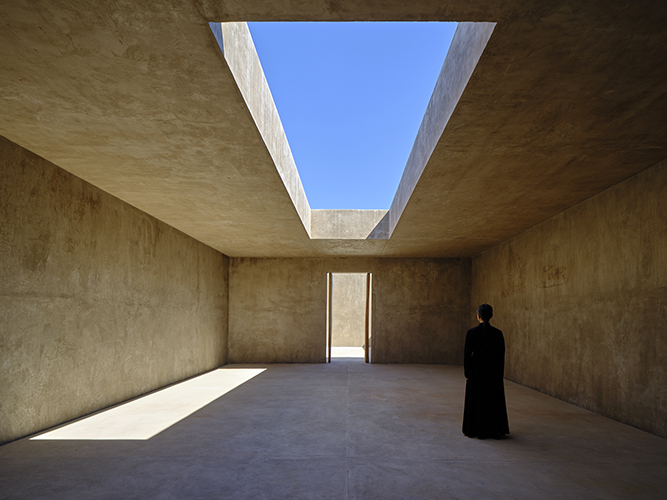
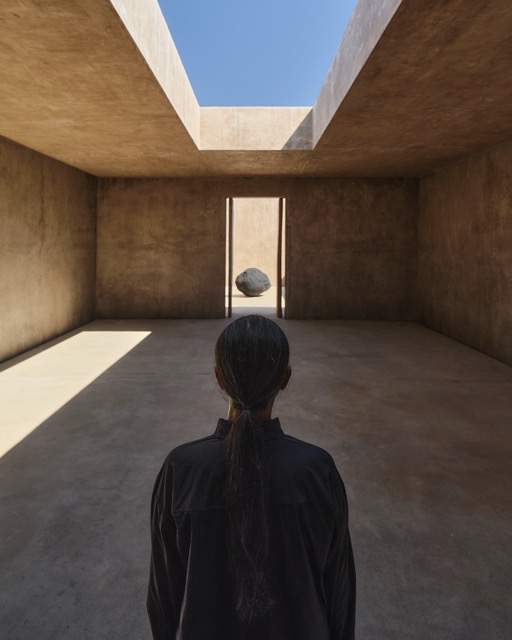
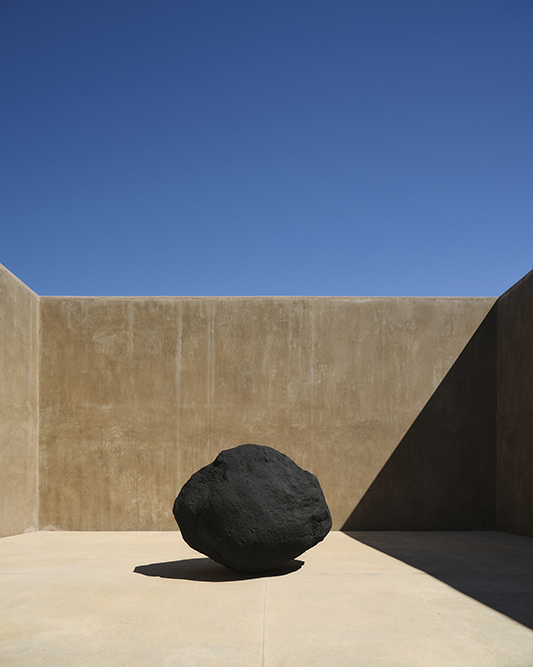
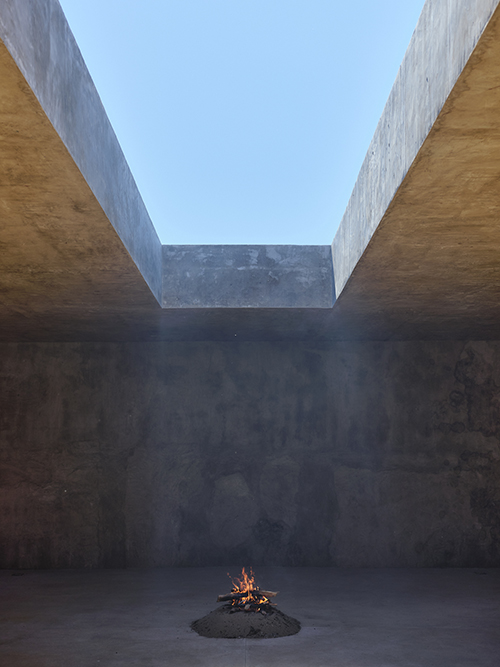
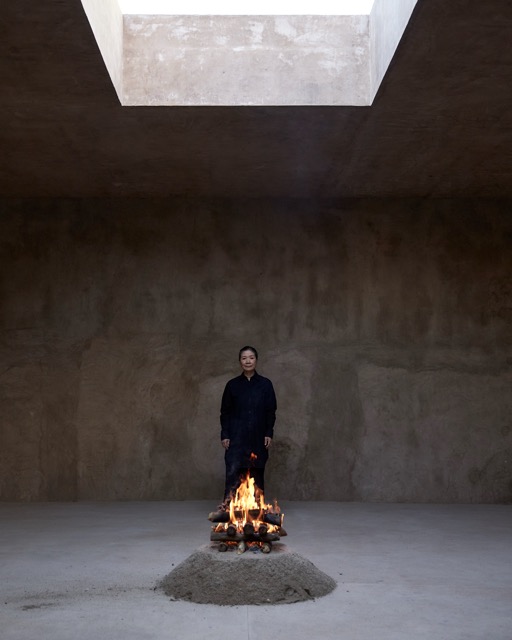
Kimsooja made a series of performances responding to the unique space of Meridiano in Puerto Escondido, Mexico, on the occasion of its inauguration. The word “jaoseon” in the title means meridian in Korean. The artist stands as a symbolic needle and a vertical axis inside Meridiano's architecture defining the geometry of light and shadow under celestial bodies.
김수자는 멕시코 푸에르토 에스콘디도의 메리디아노 공간 개관을 맞아, 그 장소의 고유한 건축적 특성에 반응하는 일련의 퍼포먼스를 선보였다. 제목에 사용된 ‘자오선’은 ‘meridian’을 뜻한다. 작가는 건축 내부에서 상징적 바늘이자 수직적 축으로 서서, 천체의 움직임 아래에서 빛과 그림자가 형성하는 기하학을 규정하는 존재로 자리한다.
Meridiano, Puerto Escondido, Mexico
Photo by Sergio López
Meta-Painting, 2019-2023
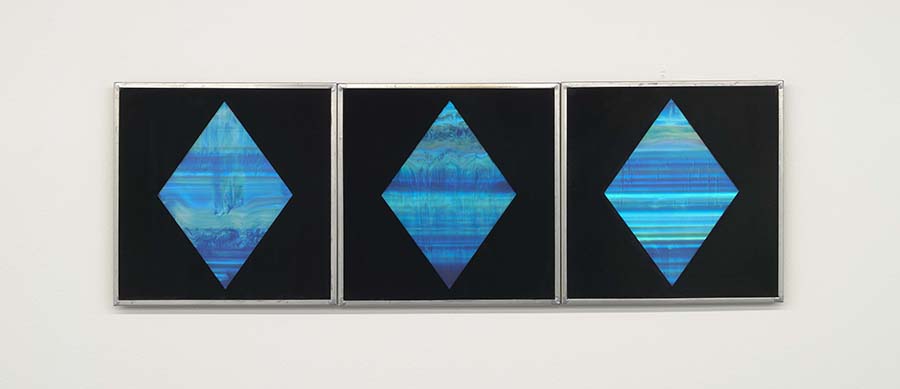
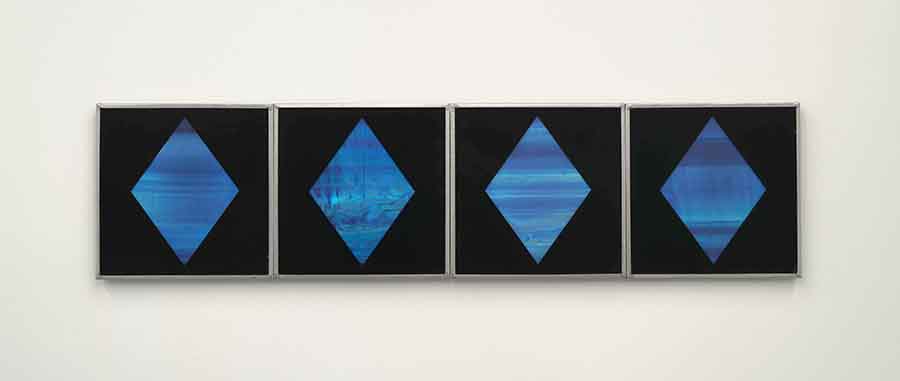
Meta-Painting, 2019-2023
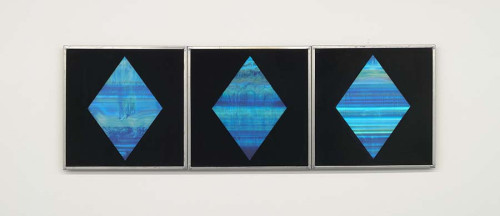
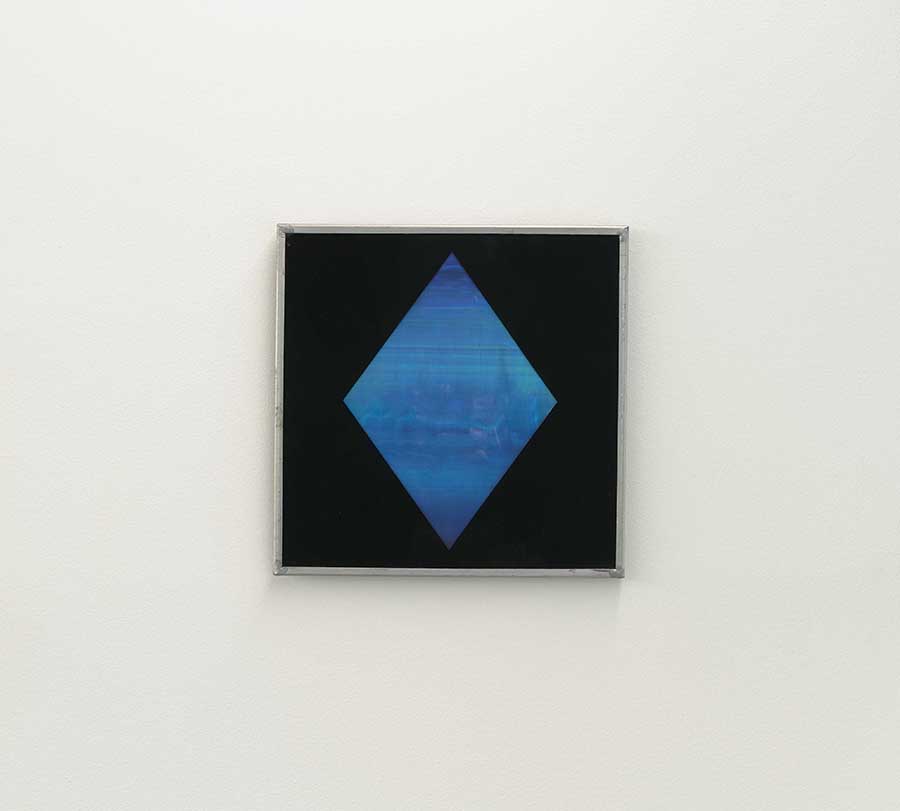
The diamond shapes also have a Buddhist connotation, in the sense of seeking self-completion. In Patio Gallery's small exhibition room are three additional works titled Meta-Painting. The paintings dynamically encapsulate natural light across the visible spectrum by refracting different wavelengths of light through specific undulation of molecular structure. What results is an iridescent material fabric, woven in light. Kimsooja first used nanopolymer in 2014 for the work "A Needle Woman: Galaxy was a Memory, Earth is a Souvenir". In close collaboration with Ulrich Wiesner, nanomaterials engineer and chemist at Cornell University, Stephanie Owens, curator, and architect Jaeho Chong, the artist created a 14-meter-high needle-shaped nanopolymer steel structure. With a mirrored floor, the environment within the sculpture is remarkable as its space appears simultaneously to extend deep into the earth and to reach high into the sky.
The use of intricate, nano-scale materials demonstrates the reflective characteristics of natural sunlight. The structure's grid-like, sleek, volumetric spine is fleshed out with acrylic panels to form a crystalline pavilion that is transparent to direct view. At a raking light, each of the panels, which have been individually treated with an iridescent nanopolymer, transforms the transparent pavilion into a radiant spectrum with colour as the polymer refracts various wavelengths of natural light dependent on the angle from which it is viewed. Like iridescence that occurs in nature on the wings of butterflies or shells of beetles, the colour of the pavilion is physically interactive, where the blue, red, orange, pink, yellow, green, violet, and other spectral colours appear as a radiant glitch in the fabric of reality. These colours were expressed by using the refraction of light itself in the molecular structure rather than by pigments.
Materialising the shapes, colours, and effects of nature's beauty, Kimsooja considers the earth as a memory. So, too, do the works exhibited in To Breathe - Archive of Prototype, connecting the elusive realms of science and technology with artistic, cultural, and philosophical components from global life.
Meta-Painting
2019-2023, Nanopolymer Glass, Black Lead Paint, Lead
each 17.5 x 17.5 x 0.5 cm
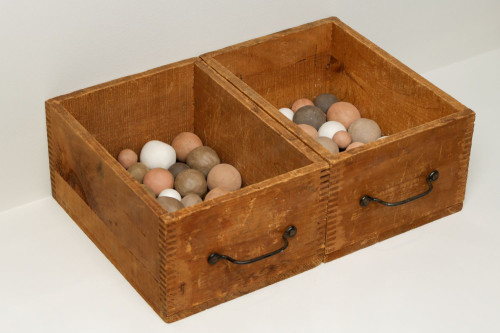
Deductive Object | 2023
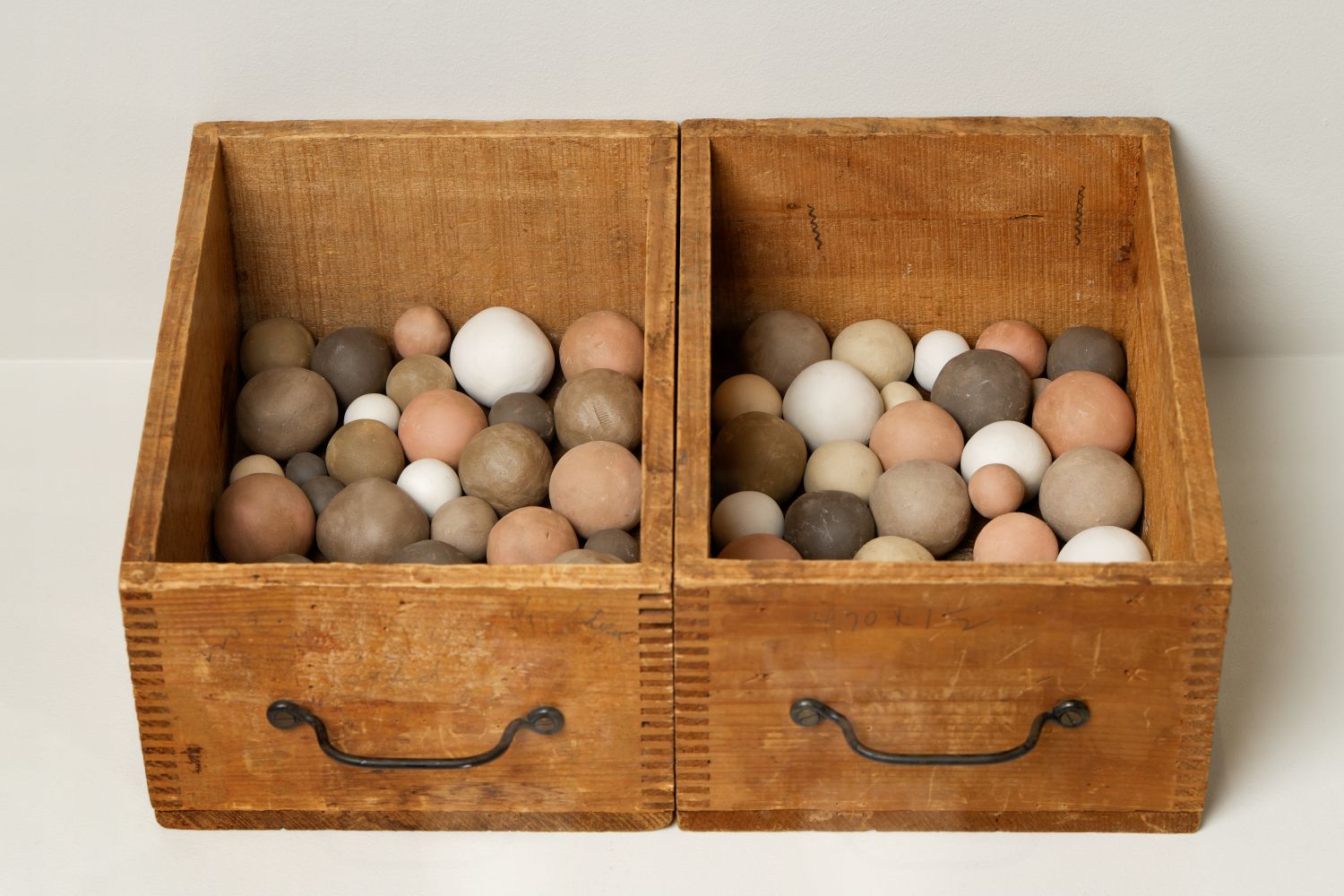
Deductive Object
Deductive Object, 2023
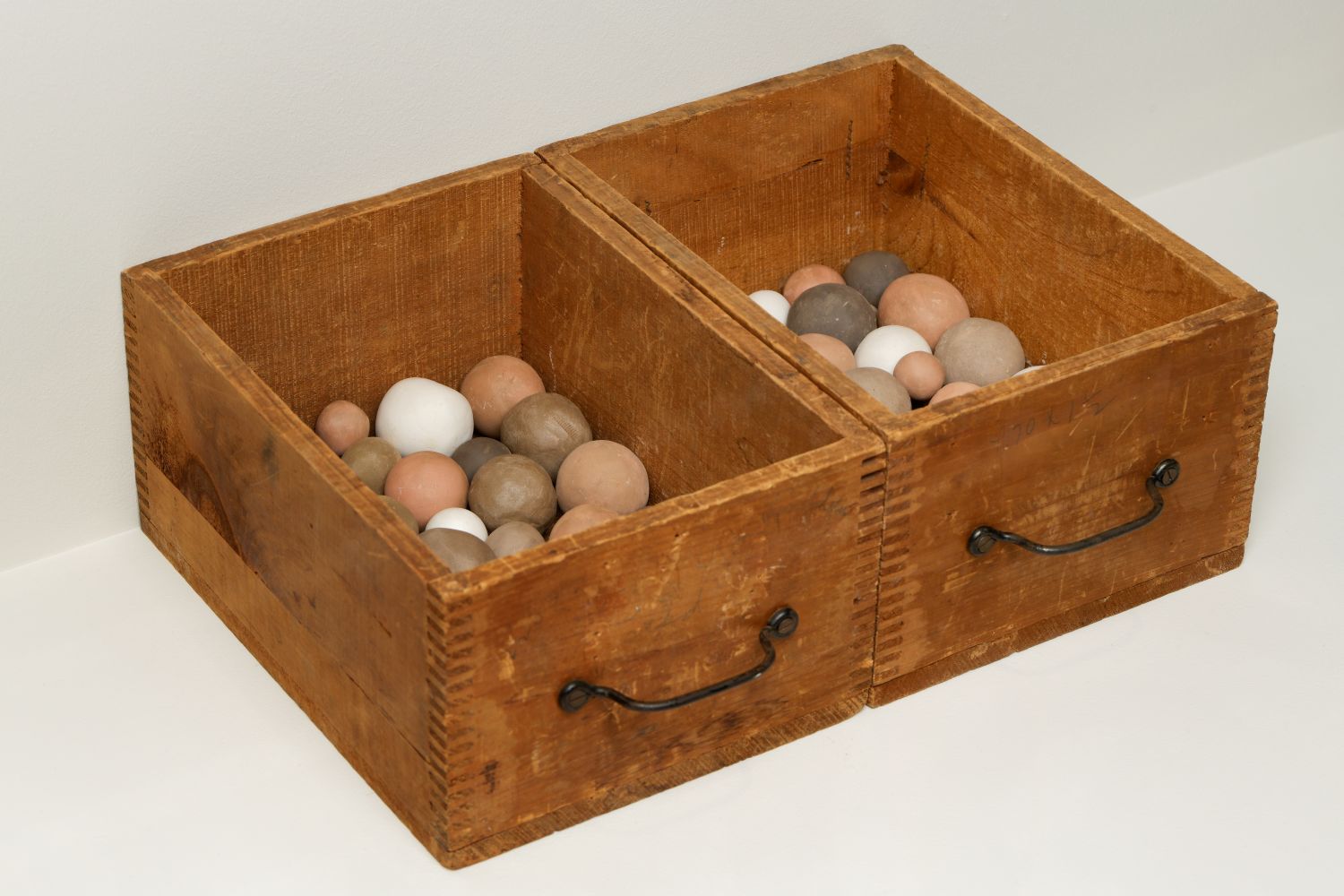
Argile / Clay
Courtesy Kimsooja Studio et Axel Vervoordt Gallery, Anvers /Hong Kong
This piece was conceived following the participatory performance Archive of Mind, MMCA Hyundai Motors Series 2016. The artist invited visitors to sit around a 19-meter-long elliptical table and form a sphere with a handful of clay before leaving them in place as part of a collective constellation. In Deductive Object series, Kimsooja places her clay balls in found objects and transforms them into vessels of collective memory. This particular piece was made with local clays at Axel Vervoordt Gallery Hong Kong when the artist had a solo show in 2023.
–
〈연역적 오브제〉는 참여형 퍼포먼스 〈마음의 기하학〉(MMCA 현대자동차 시리즈, 2016) 이후 구상된 작업이다. 당시 작가는 관람객들을 길이 19미터에 이르는 타원형 테이블에 앉게 한 뒤 그들에게 한 줌의 점토를 손으로 빚어 구체를 만들도록 요청하였고, 이렇게 만들어진 점토 구체들은 자리에 남아 거대한 별자리의 일부로 축적되었다. 〈연역적 오브제〉 연작에서 김수자는 이러한 점토 구체들을 발견된 오브제 안에 배치함으로써 집합적 기억을 담은 하나의 그릇으로 변환시켰다. 본 작품은 2023년 홍콩의 악셀 베르보르트 갤러리에서 열린 개인전 당시, 현지 점토를 사용해 제작된 것이다.
View of the exhibition “Le monde comme il va”, Bourse de Commerce – Pinault Collection, Paris, 2024.
© Tadao Ando Architect & Associates, Niney et Marca Architectes, agence Pierre-Antoine Gatier.
Photo: Aurélien Mole / Pinault Collection.
© Kimsooja/ADAGP, Paris, 2024.
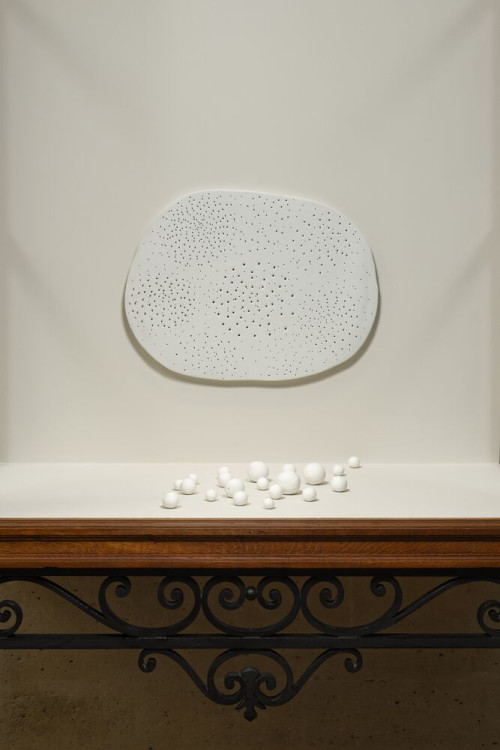
Sewing into Soil: Invisible Needle, Invisible Thread, 2023 / Deductive Object, 2019
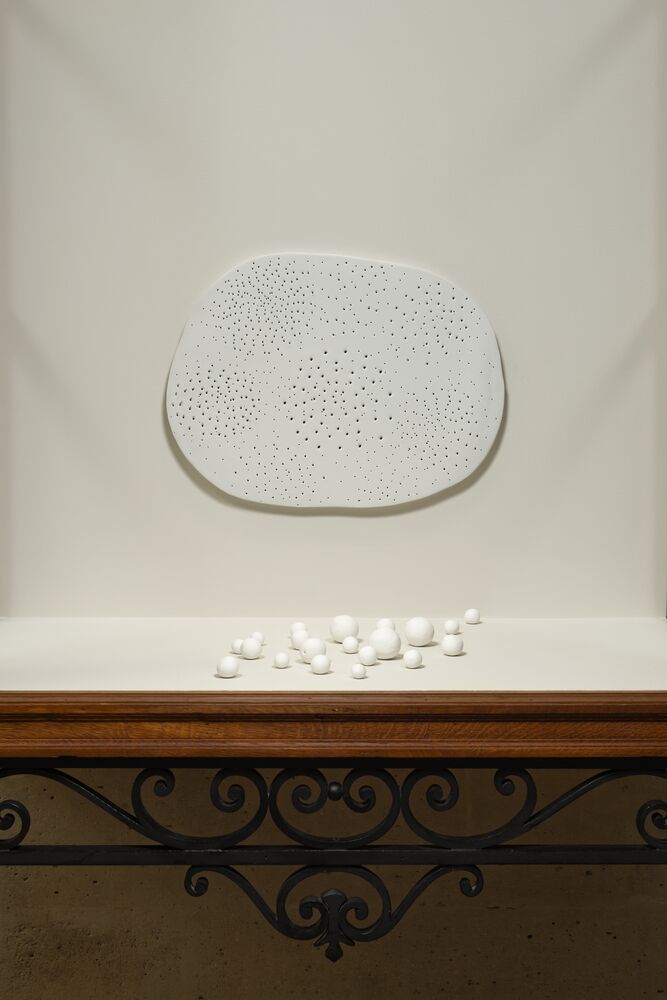
Sewing into Soil: Invisible Needle, Invisible Thread, 2023 / Deductive Object, 2019
Sewing Into Soil: Invisible Needle, Invisible Thread, 2023
Porcelaine
Courtesy Kimsooja Studio; KEWENIG, Berlin; Staatliche Museen zu Berlin, Museum für Asiatische Kunst, Berlin, Staatliche Porzellan-Manufaktur Meissen, Germany
–
Deductive Object, 2019
Porcelaine
Courtesy Kimsooja Studio et Manufacture de Sèvres – Cité de la Céramique
In Sewing Into Soil: Invisible Needle, Invisible Thread Kimsooja needles a slab of porcelain as if sewing into a fabric. The needle doubles as a paint brush and shapes an irregular surface that registers the artist’s physical action. Like on a landscape, or a freshly planted field, she associates the act of piercing into the porcelain mass with that of sowing seeds in the earth.
The porcelain balls of Deductive Object form through contrasting forces of the body. When making them, the two palms press into and rotate about a center, a point of gravitational pull, where the earthen matter absorbs the temperature and temperament of the person shaping it. The two works seen side by side draw a field of voids out of spheres, both contained and empty.
–
〈흙으로 바느질하기: 보이지 않는 바늘, 보이지 않는 실〉에서 김수자는 도자판을 천을 꿰매듯 바늘로 찌르고 꿰뚫는 행위를 수행한다. 이 바늘은 동시에 붓처럼 기능하며, 작가의 신체적 행위가 고스란히 새겨진 불규칙한 표면을 만들어낸다. 마치 풍경 위에 자국을 남기거나 막 파종을 마친 밭고랑을 형성하듯, 작가는 도자 덩어리를 관통하는 바느질을 땅에 씨앗을 심는 행위와 겹쳐 사유한다.
〈연역적 오브제〉의 도자 구체는 신체의 상반된 힘을 통해 형성된다. 양손은 흙의 중심점을 향해 눌러붙고 회전하며, 그 중력의 중심에서 흙덩어리는 이를 빚는 사람의 체온과 기질을 흡수한다. 나란히 놓인 두 작품은 비어 있으면서도 품고 있는, 공백의 장을 그려낸다.
View of the exhibition To Breathe – Constellation, Bourse de Commerce – Pinault Collection, Paris, 2024.
© Tadao Ando Architect & Associates, Niney et Marca Architectes, agence Pierre-Antoine Gatier.
Photo: Aurélien Mole / Pinault Collection.
© Kimsooja/ADAGP, Paris, 2024.
Deductive Object – Bottari | 2023
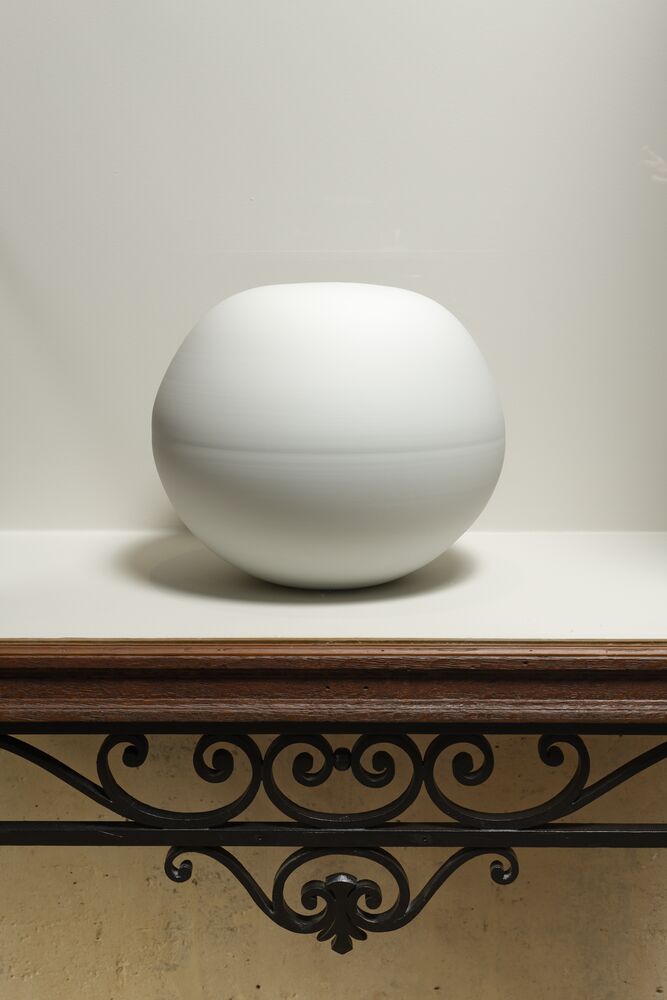
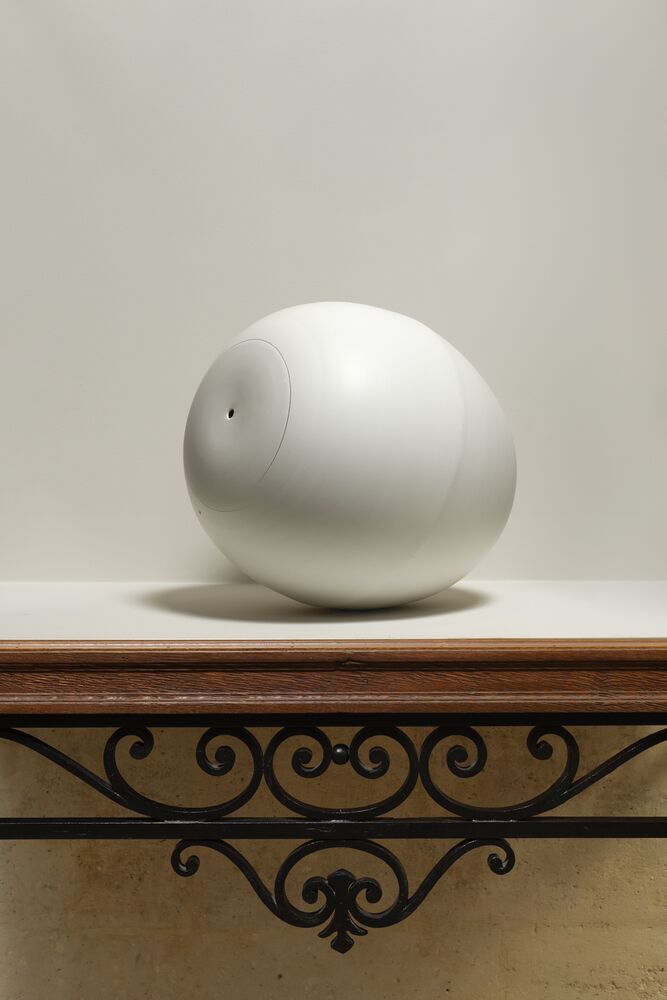
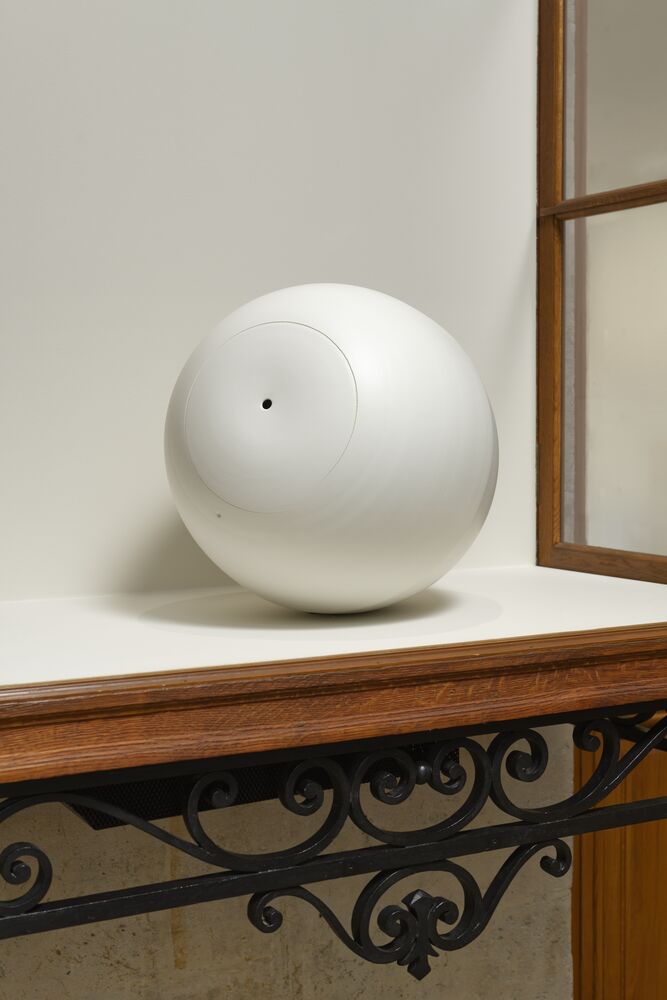
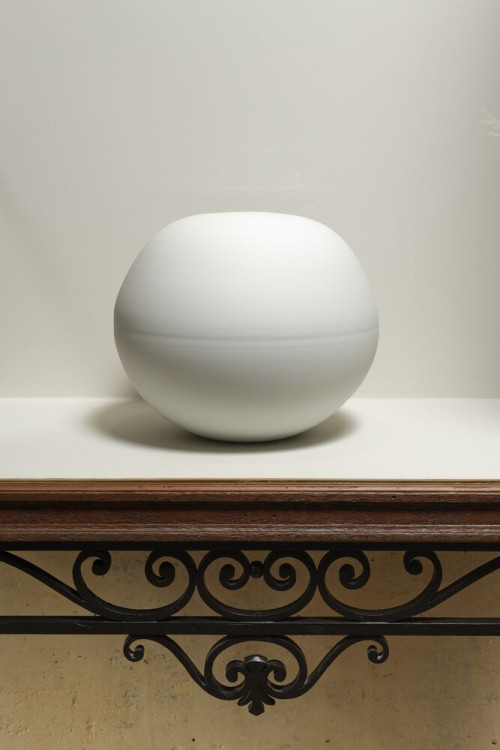
Deductive Object – Bottari
Deductive Object – Bottari, 2023
Bisque porcelain
Courtesy Kimsooja Studio; KEWENIG, Berlin; Staatliche Museen zu Berlin, Museum für Asiatische Kunst, Berlin, Staatliche Porzellan-Manufaktur Meissen, Germany
–
Kimsooja began the Deductive Object series in 1990. She stitched and wrapped used pieces of fabric around commonly found domestic objects, such as a window frame, a ladder, and farming tools. The wrapping of used cloth reaffirms the object's structure and its existence.
Here conceptualized as bottari, moon jars are made by putting together top and bottom halves of a sphere, joining two polarities into a singular whole. What was once a lump of clay gains vertical and horizontal breadth, expanding an inner space through continuous orbital movement around its center. Upon full enclosure, the artist opens a small hole at the top using the tip of a wooden needle. The vestigial surface embraces a breath of air contained within, in the form of a wrapped void.
Many of the works in the vitrines explore the link between the body’s traces (hand-shaped ceramics, fingerprint, hair) and the infinitely large (the sun and the moon, celestial bodies). Their relationships hinge on a state of duality alluded by the logic of its construct: movement and stillness, fullness and emptiness, and life and death. Produced in collaboration with the Manufacture de Sèvres, this porcelain sculpture takes the form of a traditional Korean moon jar, but without any of its functional traits. Kimsooja uses only a needle to pierce into the vertical axis that generated this spherical form, releasing the heat and air that breathes life into this earthen body during its firing process.
김수자는 1990년 〈연역적 오브제〉 연작을 시작했다. 그녀는 창틀, 사다리, 농기구와 같이 쉽게 볼 수 있는 일상 물건에 천 조각을 활용해 바느질하고 감싸는 방식을 취했다. 천으로 물건을 감싸는 행위는 오브제의 구조와 존재를 다시금 확인시켰다.
여기서 보따리로 개념화된 달항아리는 반구체(그릇, vase)의 윗부분과 아랫부분을 결합하여 두 양극을 하나의 전체로 이어 붙임으로써 만들어진다. 한 덩어리의 점토는 중심을 축으로 한 지속적인 회전 운동을 통해 상하(수직)와 좌우(수평)의 폭을 획득하며, 그 내부 공간을 확장해 나간다. 두 부분을 완전히 봉합한 뒤, 작가는 나무 바늘 끝을 이용하여 상단에 작은 구멍을 낸다. 이렇게 남겨진 흔적의 표면은 그 안에 머무는 공기의 숨결을, ‘감싸진 비어 있음’의 형태로 품어낸다.
진열장에 놓인 많은 작품들은 신체의 흔적(손 모양의 도자, 지문, 머리카락)과 태양과 달 같은 천체적 규모의 무한성과의 연결을 탐구한다. 이 관계는 움직임과 정지, 충만함과 비어 있음, 삶과 죽음이라는 구조적 논리가 암시하는 이중적 상태에 기반한다. 세브르 도자 제작소(Manufacture de Sèvres)와의 협업으로 제작된 이 도자 조각은 전통적인 한국의 달항아리 형태를 취하지만, 그 기능적 특성은 갖추고 있지 않다. 김수자는 바늘을 구형의 수직축을 따라 관통시킴으로써 소성 과정 동안 이 흙에 생명을 불어넣었던 열과 공기를 해방시킨다.
View of the exhibition To Breathe – Constellation, Bourse de Commerce – Pinault Collection, Paris, 2024.
© Tadao Ando Architect & Associates, Niney et Marca Architectes, agence Pierre-Antoine Gatier.
Photo: Aurélien Mole / Pinault Collection.
© Kimsooja/ADAGP, Paris, 2024.
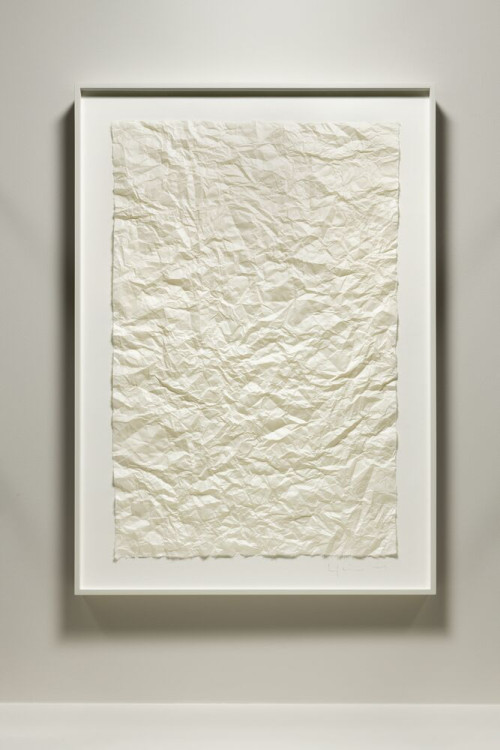
Deductive Object : (Un)fold, 2023
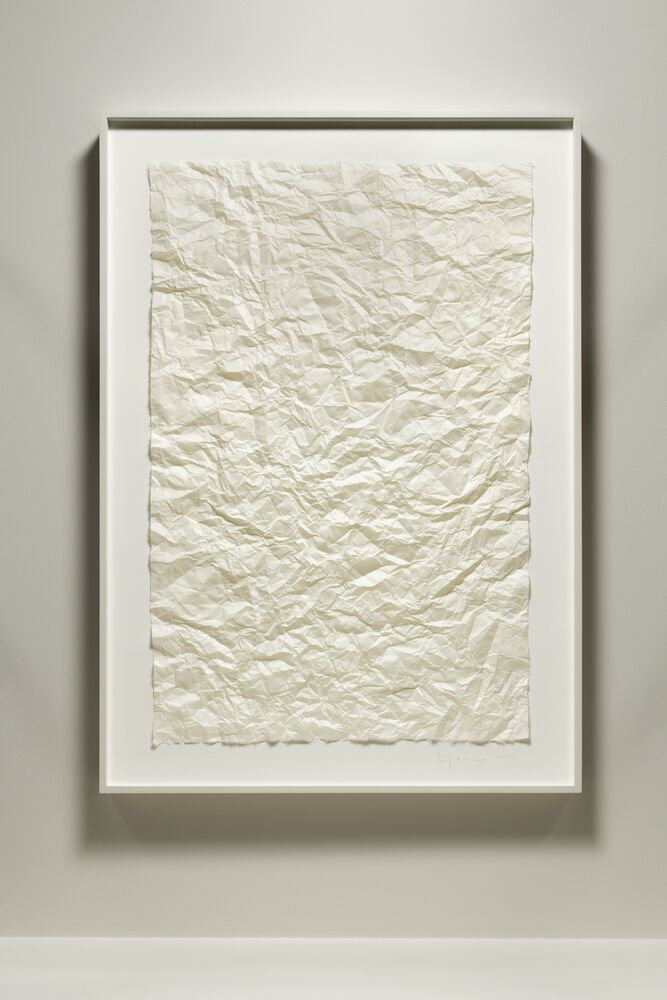
Deductive Object : (Un)fold, 2023
Deductive Object : (Un)fold, 2023
Papier de riz coréen / Korean rice paper
Courtesy Kimsooja Studio et Axel Vervoordt Gallery, Anvers / Hong Kong
–
The artist hand-pressed a sheet of hanji (traditional Korean rice paper) into a ball and then unfolded it back into a surface. The geometry of her hand and sphere translates into a landscape-like vertical dimension. In a sense, the work mirrors itself at a different state of existence. As if folding and unfolding fabric into a bottari, Kimsooja couples the structure of painting with that of sculpture in one continuum.
작가는 한 장의 전통 한지를 손으로 단단히 쥐어 구체로 만든 뒤, 다시 펼쳐 평면의 표면으로 되돌렸다. 손과 구의 기하학적 형태는 펼쳐진 한지 위에서 마치 풍경을 닮은 수직적 차원으로 전환된다. 어떤 의미에서 이 작업은 하나의 존재가 여러 상태로 존재하며 스스로를 비추는 구조를 지닌다. 천을 접고 펼쳐 보따리로 만드는 과정처럼, 김수자는 회화의 구조와 조각의 구조를 하나의 연속체 안에서 결합한다.
View of the exhibition To Breathe – Constellation, Bourse de Commerce – Pinault Collection, Paris, 2024.
© Tadao Ando Architect & Associates, Niney et Marca Architectes, agence Pierre-Antoine Gatier.
Photo: Aurélien Mole / Pinault Collection.
© Kimsooja/ADAGP, Paris, 2024.
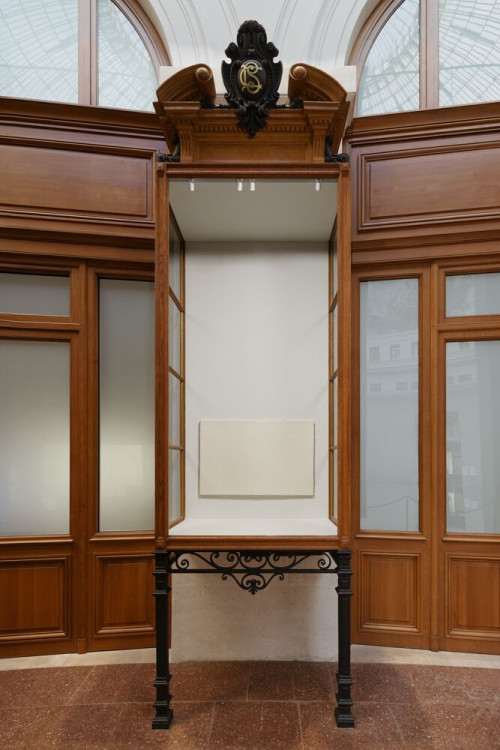
Meta Painting | 2022
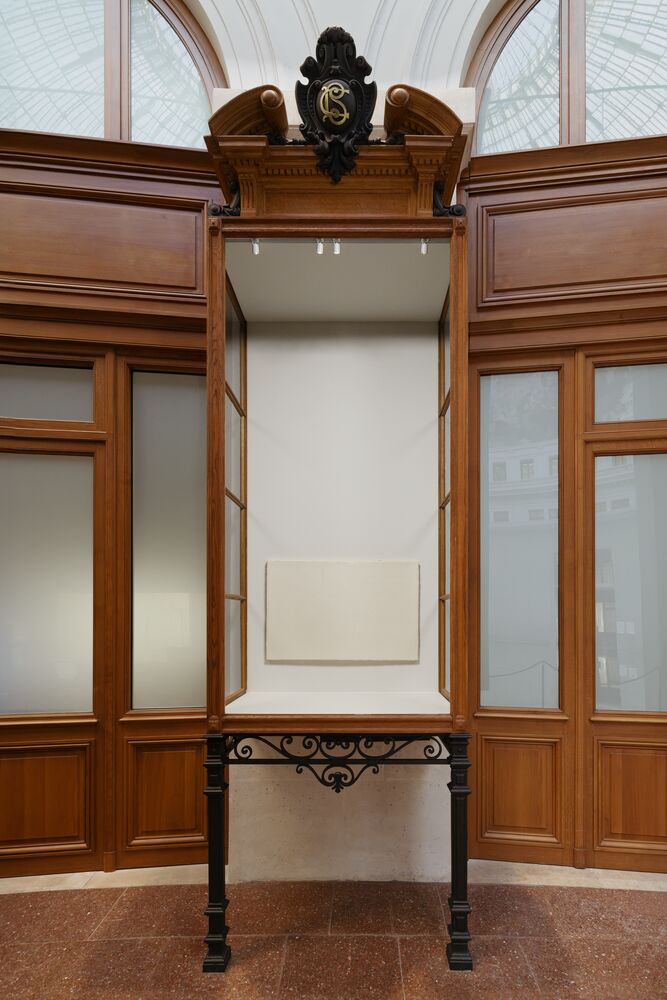
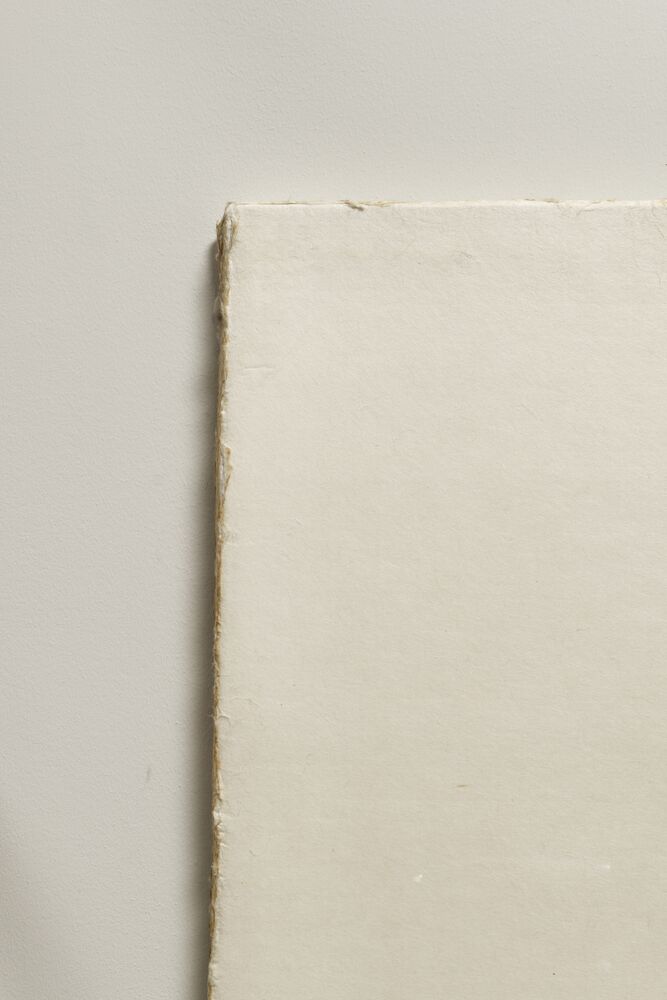
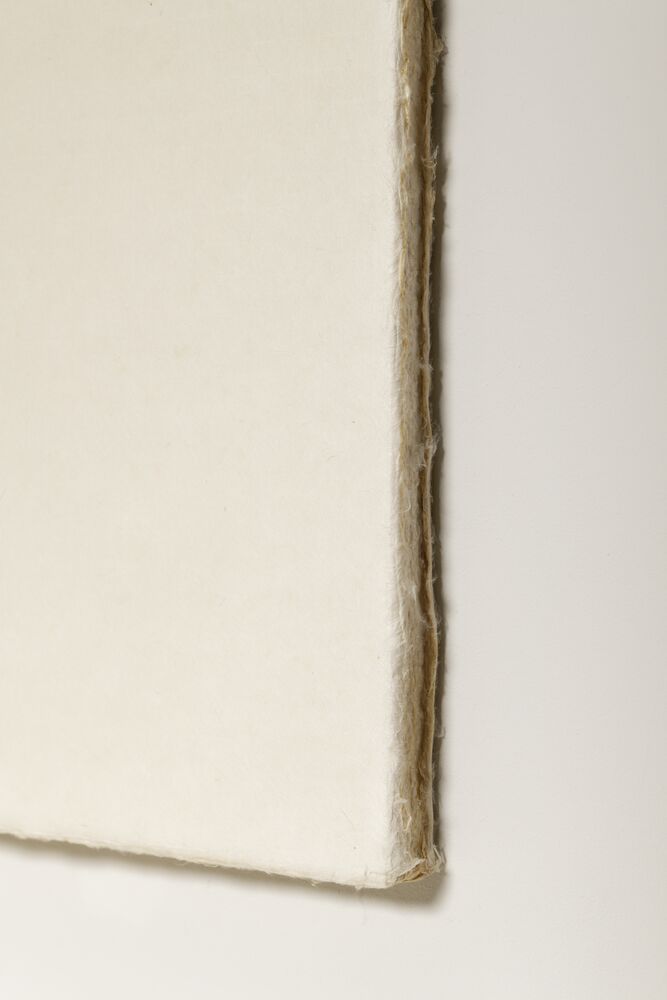
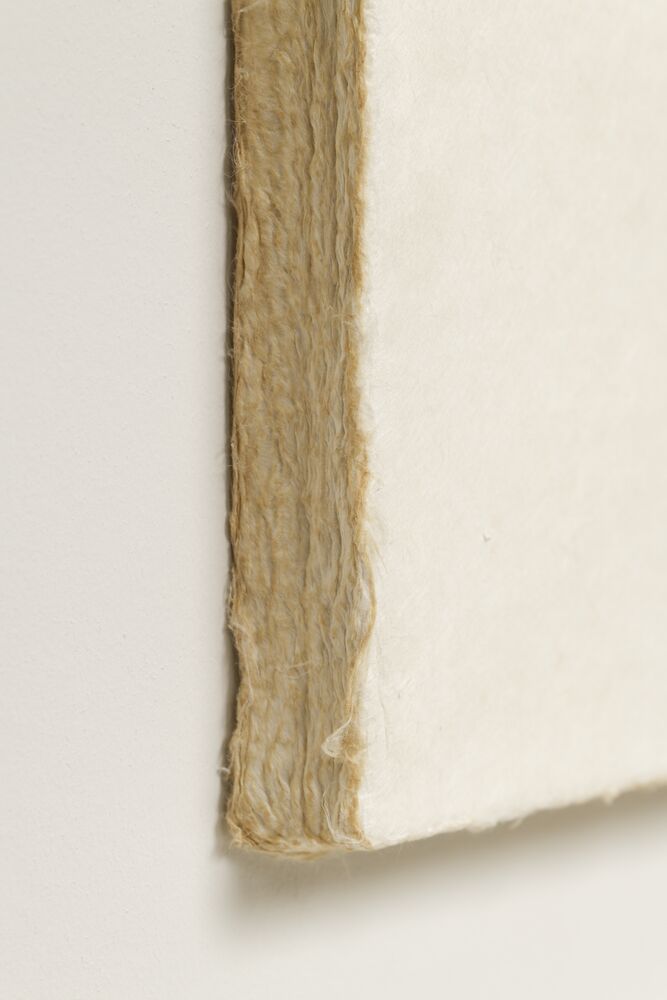
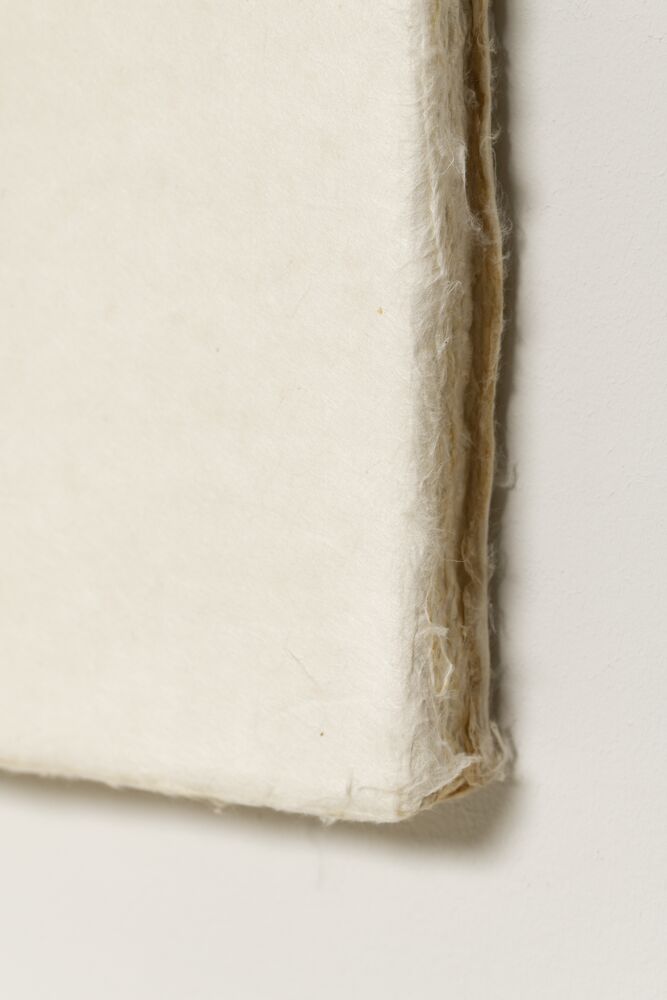
Meta Painting
Meta Painting, 2022
250 feuilles de papier de riz coréen / 250 Sheets of Korean rice paper
Courtesy de Kimsooja Studio et Axel Vervoordt Gallery, Anvers / Hong Kong
Kimsooja is first and foremost a painter. She approaches all of her work through a set of questions that originate in the act of painting on the surface of canvas. The cruciform, or the horizontal and vertical weave supporting the structure of painting remains a foundation upon which Kimsooja builds her artistic language. This work is made up of 250 sheets of hanji (traditional Korean rice paper) stacked into a single layer. Like a woven canvas, hanji is made by sifting a bath of dak tree fibres with a wooden sieve in vertical and horizontal directions. It is the result of a geometric performance. This painting-object, a manifestation of countless fibers intersecting in axial directions, reflects the artist’s vision of the world as a vast weave and a tableau undone.
–
김수자는 무엇이든 회화에서 출발하는, 그야말로 화가이다. 그녀는 모든 작업은 캔버스 표면에 그려 나가는 회화 행위에서 비롯된 일련의 질문에서부터 뻗어 나간다. 그렇기에 회화를 지탱하는 수평과 수직의 직조, 즉 십자 형태의 구성은 여전히 김수자의 예술 언어를 구축하는 기반으로, 그녀의 예술 언어를 구축하는 토대가 된다. 이 작품은 전통 한지 250장을 하나의 평면으로 층층이 쌓아 구성된 것이다. 가로세로의 방향으로 실이 교차되며 캔버스가 직조되듯, 한지도 닥섬유를 물 위에서 수직과 수평 방향으로 건져 올리는 기하학적 퍼포먼스를 통해 만들어진다. 수많은 섬유가 축을 따라 교차하며 탄생한 이 회화적 오브제는, 세계를 거대한 직조물이자 풀려버린 하나의 장면으로 바라보는 작가의 시선을 반영한다.
View of the exhibition To Breathe – Constellation, Bourse de Commerce – Pinault Collection, Paris, 2024.
© Tadao Ando Architect & Associates, Niney et Marca Architectes, agence Pierre-Antoine Gatier.
Photo: Aurélien Mole / Pinault Collection.
© Kimsooja/ADAGP, Paris, 2024.
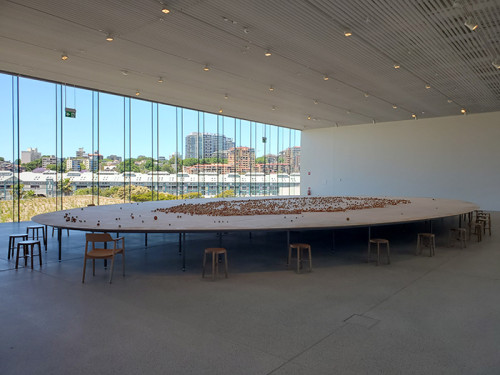
Archive of Mind, 2016/2022
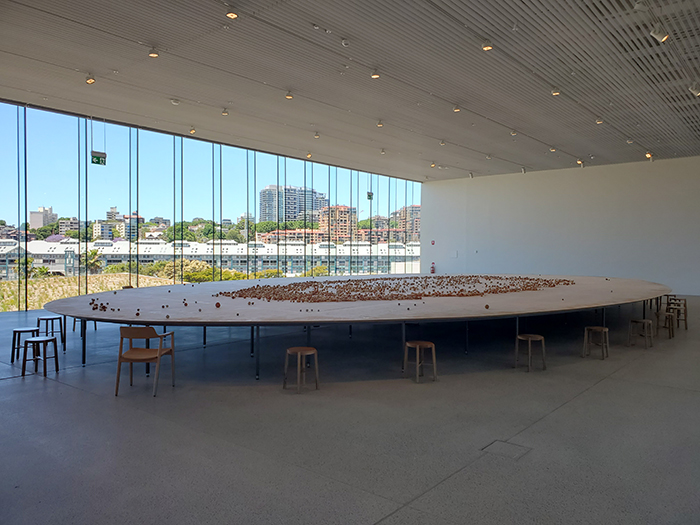
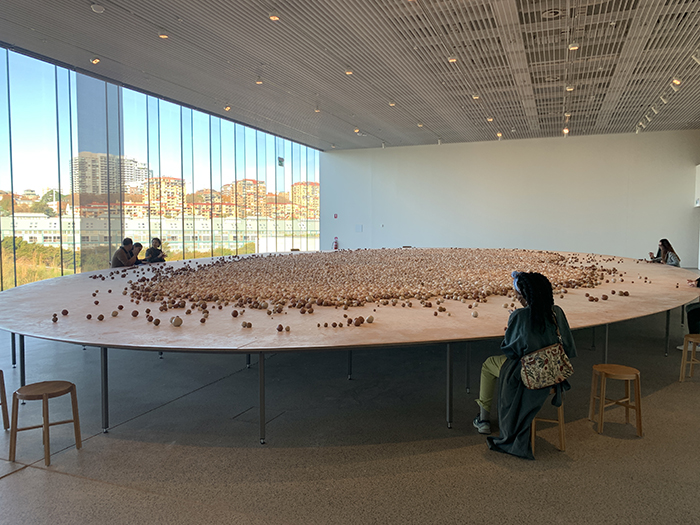
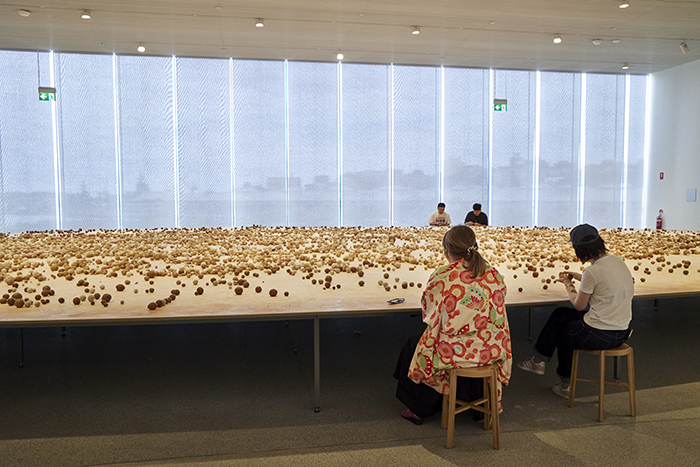
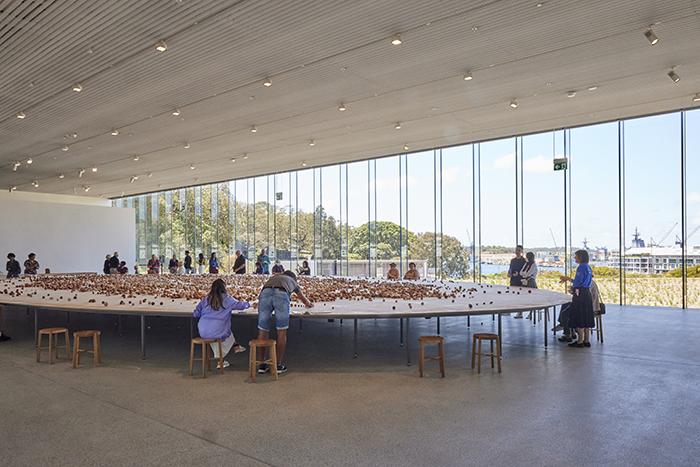
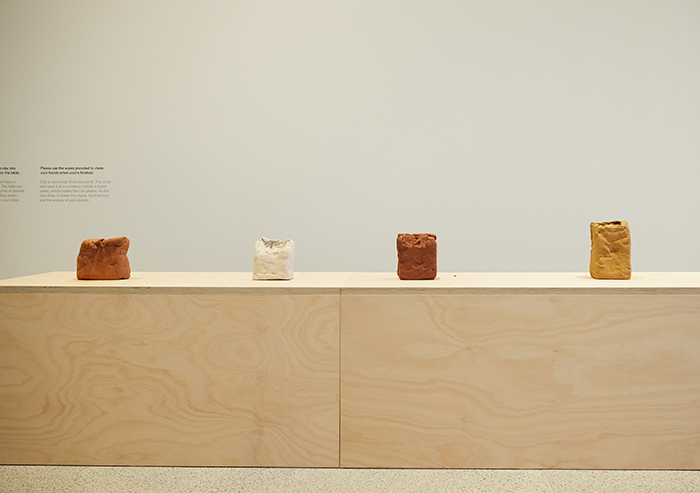
Archive of Mind, 2016/2022
Making Worlds, Art Gallery of New South Wales, Sydney, Australia
For more information, click HERE
In occasion of Sydney Modern Project's inauguration, Archive of Mind is now on view at Art Gallery of New South Wales in Australia. With the artwork, Kimsooja invites visitors to collect a handful of clay, sit at the large work surface, and empty their minds of distraction; to sink into the experience of forming a ball of clay between the hands, rolling and wrapping it into itself like an infinite Bottari. The process transforms simple, everyday actions into moments of meditation and transcendence. As each sphere is completed, it is added to the table, forming an organic arrangement that holds the imprint of each maker. Archive of mind is accompanied by Unfolding Sphere, a subtle soundscape composed of two sounds: the artist gurgling water and clay balls being pressed, rolled and colliding with one another. At some moments it recalls a distant thunderstorm, at others, a burbling stream.
This presentation of Archive of Mind is supported by a grant from the Australia-Korea Foundation, Department of Foreign Affairs and Trade.
Purchase with funds provided by the Art Gallery of New South Wales Foundation 2018
Photo by Jaeho Chong, Image Copyright AGNSW, Christopher Snee
Archive of mind
2016/2022, Participatory Installation with Clay Ball, Wooden Table and Stools, Sound Performance Unfolding Sphere(2016), 16 Channel 15:35, loop
Courtesy of Kimsooja Studio
First exhibited in a different configuration at the the Kimsooja, Archive of Mind, National Museum of Modern and Contemporary Art, Korea(MMCA), Seoul, Korea